Museo de Navarra

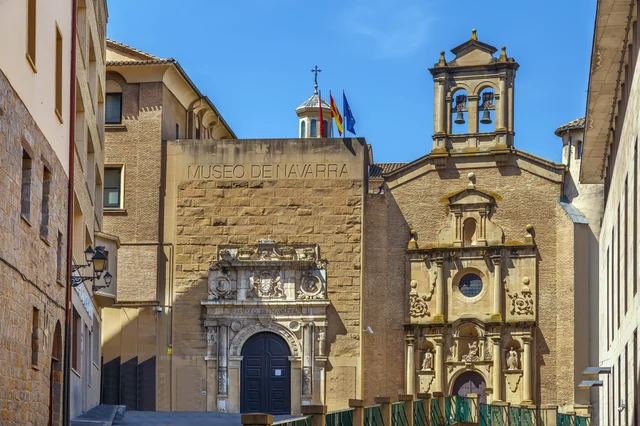
“To make the past present” is this museum’s motto, written large above the entrance of what was once a hospital. Its earliest piece, a stone carving called the Mapa de Abauntz, dates from roughly 12,000 years ago, when much of Navarra was covered by glaciers. This carving is a landscape map, leading from the cave where it was found to a spot where hunters would find a herd of goats. Marvelous stone carvings from the 2nd century a.d. indicate the assimilation of Roman art in the area. A particularly beautiful mosaic shows Bacchus returning in triumph from India. And don’t miss the splendid Muslim elephant-ivory casket from Leire, dignified Gothic religious paintings brought from the cathedral, and Goya’s excellent portrait of the Marqués de San Adrián painted in 1804. Local Navarrese artists and sculptors also feature.
“To make the past present” is this museum’s motto, written large above the entrance of what was once a hospital. Its earliest piece, a stone carving called the Mapa de Abauntz, dates from roughly 12,000 years ago, when much of Navarra was covered by glaciers. This carving is a landscape map, leading from the cave where it was found to a spot where hunters would find a herd of goats. Marvelous stone carvings from the 2nd century a.d. indicate the assimilation of Roman art in the area. A particularly beautiful mosaic shows Bacchus returning in triumph from India. And don’t miss the splendid Muslim elephant-ivory casket from Leire, dignified Gothic religious paintings brought from the cathedral, and Goya’s excellent portrait of the Marqués de San Adrián painted in 1804. Local Navarrese artists and sculptors also feature.
Details
Bookstore
Available as paperback
and as e-book.