Bookstore
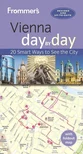
Available as paperback
and as e-book.
Salzburg Attractions
The Old Town lies between the left bank of the Salzach River and the ridge known as the Mönchsberg, which rises to a height of 503m (1,650 ft.) and is the site of Salzburg's casino. The main street of the Old Town is Getreidegasse, a narrow thoroughfare lined with five- and six-story burghers' buildings. Most of the houses along the street date from the 17th and 18th centuries. Mozart was born at no. 9. Many of the houses display lacy-looking wrought-iron signs over carved windows.
You might begin your explorations at Mozartplatz, with its outdoor cafes. From here you can walk to the even more expansive Residenzplatz, where torchlight dancing is staged every year, along with outdoor performances.
In Mozart's Footsteps
Wolfgang Amadeus Mozart was born in Salzburg on January 27, 1756, son of an overly managerial father, Leopold Mozart, whose controlling power he eventually fled. Amadeus was a child prodigy, writing musical notes at the age of 4, before he could even shape the letters of the alphabet. By the time he'd reached the ripe old age of 6, he was performing at the Schönbrunn Palace in Vienna before assembled royalty and aristocrats.
For a time he pleased the audiences of Vienna, but he once complained that the audiences in his hometown of Salzburg were rather wooden and no more responsive than "tables and chairs." Ironically, while Salzburg today pays great tribute to Mozart -- many merchants live solely off his reputation -- he was not appreciated here in his lifetime and often struggled to make ends meet. In spite of the success of The Magic Flute in 1791, his career ended in obscurity.
Mozart's image is everywhere in Salzburg. In the heart of town, Mozartplatz bears his name, with a statue of the composer erected in 1842, the first recognition of his birth he'd received in the town since his death.
A music academy in Salzburg is named after Mozart, and, of course, his music dominates the Salzburg Festival. Too bad he couldn't have been more honored during his lifetime. He died in Vienna on December 5, 1791, and the body of the 35-year-old musical genius was carried in a pauper's hearse to a common grave in the cemetery of Vienna's St. Marx. Today, if his grave site had been better marked, it would be a world-class memorial.
You can visit Mozart Geburtshaus (Birthplace), Getreidegasse 9 (tel. 0662/844313; www.gasthofschorn.at). He lived here until he was 17 -- that is, when he was in Salzburg at all and wasn't touring such cities as Prague or Vienna. There are three floors of exhibition rooms, which include the Mozart family apartment. The main treasures are the valuable paintings (such as the well-known oil painting Mozart and the Piano, left unfinished by Joseph Lange) and the original instruments: the violin Mozart used as a child, his concert violin, and his viola, fortepiano, and clavichord. It's open daily from 9am to 6pm. Admission is 5.50€ ($8.80) for adults and 1.50€ ($2.40) for children.
You can also visit the restored Mozart Wohnhaus, Makartplatz 8 (tel. 0662/87422740), where the composer lived from 1773 to 1780. Damaged in World War II air raids, the house reopened in 1996, honoring the year of Mozart's 240th birthday. In 1773, the Mozart family vacated the cramped quarters of Mozart's birthplace for this haunt on Makartplatz. In the rooms of these former apartments, a museum documents the history of the house, life, and work of Wolfgang Amadeus Mozart. There's a mechanized audio tour in six languages with musical samples. The museum is open June to September daily 9am to 5pm and October to May daily 9am to 6pm. Admission is 6.50€ ($10) for adults, 5.50€ ($8.80) for students, and 1.50€ ($2.40) for children.
Mozart aficionados will want to stop by the International Mozarteum Foundation's Mozart Audio & Film Museum, Makartplatz 8 (tel. 0662/883454). Here is a collection of 11,000 audio and 1,000 video titles, all concerned with Mozart's compositions. There are also sections devoted to the work of contemporary Salzburg composers. You can watch and listen to eight video and 10 audio stations, and there's a large-scale screen for groups. The museum, which is free, is open Monday, Tuesday, and Friday 9am to 1pm and Wednesday and Thursday 1 to 5pm.
You have to make an appointment to visit the Mozarteum, Schwarzstrasse 26 (tel. 0662/8894030). This is the center of the International Mozarteum Foundation, an edifice in Munich Jugendstil architecture, built from 1910 to 1914. The jewel on the second floor is the library -- a Bibliotheca Mozartiana -- with approximately 12,000 titles devoted to Mozart. The Viennese Hall seats 200 people and provides an intimate atmosphere for concerts and conferences. The wing at Schwarzstrasse 28 houses the larger concert hall, where up to 800 guests enjoy concerts held throughout the year. The highlight is the celebratory festival Mozartwoche, which commemorates Mozart's birthday (Jan 27) with 10 days of concerts and operas. It's open Monday to Friday from 9am to 5pm.
In the garden stands the Magic Flute House, a little wood structure in which Mozart composed The Magic Flute in 1791. It was shipped here from the Naschmarkt in Vienna. In 1971, the Mozarteum was designated as the College of Music and the Performing Arts.
Mozart Cycle Path
A new cycle path, named for hometown boy Wolfgang Amadeus Mozart, now runs from the city of Salzburg through the Salzburg Lake District and on to Bavaria and its lakes, such as Ciemsee, before ending at Berchtesgaden, near Hitler's former vacation retreat. The route stretches more than 410km (255 miles) and is primarily flat, with just a few hills along the way. It's ideal for families. Salzburg tourist offices will provide trail maps.
Especially for Kids
Of all the attractions we've reviewed, those that children will most like include the Glockenspiel, Hohensalzburg Fortress, Mönchsberg, and, on the outskirts, the Hellbrunn Zoo. Kids will also enjoy the Salzburger Marionetten Theater.

21 Results
- The Performing Arts
Festspielhaus
After a few decades, the scope of the Salzburg Festival outgrew the theaters and concert halls of its tiny host town. In 1960, one of Austria's most renowned 20th-century architects, Clemens Holzmeister, built this music house. It features a modern and relatively nondescript façade,…$$Left Bank (Old Town)
- Museum
Festung Hohensalzburg
Gazing down from this fortress's rocky dolomite ledge toward the Salzach River below, you could definitely see an enemy approaching. The building crowns the Festungsberg and dominates the town of Salzburg. Besides being the means of defense, the prince-archbishops resided and ruled…$$Left Bank (Old Town) - Religious Site
Friedhof St. Sebastian
Prince-Archbishop Wolf Dietrich commissioned this cemetery in 1595 to be laid out like an Italian campo santo. The tombs of Mozart's wife and his father, Leopold, are here. In the middle of the cemetery is St. Gabriel's Chapel, containing the mausoleum of Dietrich. The mausoleum's… - Landmark
Glockenspiel (Carillon)
The celebrated glockenspiel with its 35 bells stands across from the Residenz. You can hear this 18th-century carillon at 7 and 11am, and 6pm. Currently, access to the interior is prohibited. The ideal way to hear the chimes is from one of the cafes lining the edges of the… - Museum
Hangar-7 Flugzeugmuseum
Didi Mateschitz has placed the nucleus of his Red Bull empire in Salzburg, and Hangar-7 at the Salzburg Airport is where his "Flying Bulls" keep their flock of historic aircraft. This architecturally stunning "museum" more accurately resembles a showroom…$Outskirts of Salzburg - Museum
Haus der Natur
This natural history and science museum is so impressive in size and scope, it seems to belong to a much bigger city. Spanning five floors, the "House of Nature" has artistically phenomenal dioramas, detailed exhibits on the wildlife and natural phenomena of the alpine region,…$$Left Bank (Old Town) - Landmark
Hohensalzburg Fortress
The stronghold of the ruling prince-archbishops before they moved "downtown" to the Residenz, this fortress towers 122m (400 ft.) above the Salzach River on a rocky dolomite ledge. The massive fortress crowns the Festungsberg and literally dominates Salzburg. To get here, you can… - Religious Site
Kollegienkirche
Opening onto an open-air marketplace, Collegiate Church was built between 1694 and 1707 for the Benedictine university founded in 1622 and designed by the great baroque architect Fischer von Erlach. The university, disbanded in 1810, was reopened in 1962 as part of the University of… - The Performing Arts
Mozarteum
On the right bank of the Salzach River, near Mirabell Gardens, is the Mozarteum, Salzburg's major music and concert hall. All the big orchestra concerts, as well as organ recitals and chamber-music evenings, are presented here. In the old building at Schwarzstrasse, there are two… - Museum
Mozarts Geburtshaus
Even if you're not a Mozart fanatic, his birthplace on the busy pedestrian shopping street Getreidegasse is worth a visit. At this museum, you'll see his adorable childhood violin, his clavichord, and rooms decorated to reflect a bourgeois apartment in the…$$Left Bank (Old Town) - Museum
Museum der Moderne
Salzburg is becoming more aware of its role in the contemporary art world, with exhibits, installations, and art hotels popping up all over town. This bastion of contemporary art is built on the side of Mönchsberg, overlooking the city—visitors travel here via an elevator. Atop the…$$Left Bank (Old Town) - Landmark
Petersfriedhof
St. Peter's Cemetery lies at the stone wall that merges into the bottom of the rock called the Mönchsberg. Many of the aristocratic families of Salzburg lie buried here alongside many other noted persons, including Nannerl Mozart, sister of Wolfgang Amadeus (4 years older than her… - Museum
Residenz Palace/Residenzgalerie
This lavish palace in the pedestrian zone at the center of the old town was the "downtown" home of the Salzburg prince-archbishops after they no longer needed the protection of cheerless Hohensalzburg Fortress. The Residenz dates from 1120, but the baroque rebuilding was originally…$$Left Bank (Old Town) - Religious Site
Salzburg Dom
Located where Residenzplatz flows into Domplatz (where you'll see a 1771 statue of the Virgin), this cathedral is world-renowned for its 4,000-pipe organ. The original building from A.D. 774 was superseded by a late-Romanesque structure erected from 1181 to 1200. When this edifice… - Museum
Salzburg Museum Neue Residenz
In a city of winding alleys and passageways, this imposing "New Residence" isn't all that new. It was built at the end of the 16th century for the archbishops of Salzburg, who were some of the richest people in the Holy Roman Empire. Wolf Dietrich, Prince-Bishop…$Left Bank (Old Town) - The Performing Arts
Salzburger Schlosskonzerte
The Salzburger Schlosskonzerte (Palace Concerts) are privately owned by Salzburg violinist Luz Leskowitz, who carries on the 44-year-old tradition of presenting the best ensembles. The carefully chosen programs combine with the beautiful, historic venue (the Marmorsaal, where Mozart… - Zoo/Aquarium
Salzburger Tiergarten Hellbrunn
The beautiful landscape provides a wonderful setting for viewing the diverse animals of the Zoo Hellbrunn, located just south of Salzburg. Chamois, otter, white rhinoceros, and antelope share large outdoor enclosures. You can also see cheetahs and free-flying griffin vultures.… - Historic Site
Schloss Hellbrunn
A popular spot for outings from Salzburg, this palace dates from the early 17th century and was built as a hunting lodge and summer residence for Prince-Archbishop Markus Sittikus. The Hellbrunn Zoo, also here, was formerly the palace deer park. It's a 20-minute drive from Salzburg;… - Historic Site
Schloss Mirabell
This palace and its gardens were originally built as a luxurious private residence called Altenau. Prince-Archbishop Wolf Dietrich had it constructed in 1606 for his mistress and the mother of his children, Salome Alt. Unfortunately, not much remains of the original grand structure.… - Religious Site
Stiftskirche St. Peter
Founded in A.D. 696 by St. Rupert, whose tomb is here, this is the church of St. Peter's Abbey and Benedictine Monastery. Once a Romanesque basilica with three aisles, the church was completely overhauled in the 17th and 18th centuries in an elegant baroque style. The west door dates… - Museum
Toy Museum
One of the various mini-museums inside the Salzburg Museum, the small and charming Toy Museum runs on a joint ticket with the Museum of Historic Musical Instruments. Founded in 1978, this is Austria's largest collection of historical European toys, starting with antique dolls and…$Left Bank (Old Town)
More About Salzburg Attractions
Salzburg Shopping
While Salzburg doesn't have Vienna's wide range of merchandise, there's still plenty of shopping here. Good buys in Salzburg include souvenirs of Land Salzburg (dirndls, lederhosen, and petit point) and all types of sports gear. Getreidegasse is a main shopping thoroughfare, but you'll also find some intriguing little shops on Residenzplatz.
Most stores are open Monday through Friday from 9am to 6pm, but note that many stores, especially smaller shops, take a 1- or 2-hour break for lunch. On weekends, stores are generally open only Saturday mornings.
Salzburg Nightlife
The annual cultural events, which reach their peak at the Salzburg Festival, overshadow any after-dark amusements such as dance clubs and beer halls. Clubs come and go in Salzburg fairly rapidly.
It's said that there's a musical event -- often a Mozart concert -- staged virtually every night in Salzburg. To find out what's playing, visit the Salzburg tourist office, Mozartplatz 5 (tel. 0662/889870; www.2.salzburg.info), or get a free copy of Offizieller Wochenspiegel, a monthly pamphlet listing all major and many minor local cultural events; it's available in most hotels. The annual Mozart Week is in January.
Free Concerts & Special Events -- Free concerts are frequently presented by students in the Mozarteum, Schwarzstrasse 26 (tel. 0662/8894030; bus: 1 or 5). In summer, free brass-band concerts are performed in the Mirabell Gardens on Wednesday at 8:30pm and, depending on the venue, either Saturday or Sunday at 10:30am; Sunday chamber-music concerts are held throughout the city at major landmarks such as the Residenz.
The second-most famous music festival in Salzburg is the Osterfestspiele (Easter Festival), which features high-quality operas and concerts performed in the Festspielhaus. Some, but not all, of the music focuses on works associated with the resurrection of Christ as interpreted by the great 18th- and 19th-century composers. Established by Herbert von Karajan in the 1960s, the festival requires that spectators purchase tickets to the opera and each of the three concerts associated with the event. Prices for the series are anything but cheap: They range, per person, from 90€ to 720€ ($144-$1,152). For information and ticket purchases, contact the Osterfestspiele, Herbert von Karajan Platz 9, A-5020 Salzburg (tel. 0662/8045361; www.osterfestspiele-salzburg.at; bus: 1).
Christmas Eve in Salzburg is unforgettable. Traditionally, in the little chapel of Oberndorf, north of Salzburg, "Silent Night" is performed. Franz Gruber wrote the melody to that song here when he was an organist in the early 19th century.
Buying Tickets -- If you don't want to pay a ticket agent's commission, you can go directly to the box office of a theater or concert hall. However, many of the best seats might have already been sold, especially those at the Salzburg Festival. Despite the availability of ticket outlets in any of the below-mentioned theaters, many visitors head for the larger umbrella ticket agency, Salzburger Ticket Office, Mozartplatz 5 (tel. 0662/840310), which is affiliated with the city of Salzburg and adjacent to Salzburg's main tourist office. Open Monday to Saturday 9am to 6pm (to 7pm in midsummer) and Sunday 10am to 6pm, it's the single best source for cultural information and ticket sales in town, usually with tickets to virtually every musical event in the city on sale -- except, of course, to those events that are sold out long in advance.
Curiously, though Salzburg is known as a city of music and culture, it has no famed local troupes. However, it does attract visiting guest artists with blue-chip credentials in the world of performing arts.
The Salzburg Festival
One of the premier music attractions of Europe, the Salzburg Festival celebrates its 87th season in 2007. Composer Richard Strauss founded the festival, aided by director Max Reinhardt and writer Hugo von Hofmannsthal.
An annual event is Hofmannsthal's adaptation of the morality play Jedermann (Everyman), performed in German and staged outside the cathedral in Domplatz. Concerts are usually conducted in the Rittersaal of the Residenz Palace (Mozart conducted here) and in the marble salon of Mirabell Palace (Mozart's father, Leopold, conducted here). The Salzburger Marionetten Theater also presents performances. Ballet performances are usually given by the Vienna State Opera Ballet with the Vienna State Opera Chorus and the Vienna Philharmonic. International soloists are invited annually, and the London Symphony or the Berlin Philharmonic is also likely to be invited.
Festival tickets, however, are in great demand, and there never are enough of them. Don't arrive expecting to get into any of the major events unless you've already purchased tickets. Travel agents can often get tickets for you, and you can also go to branches of the Austrian National Tourist Office at home or abroad. Hotel concierges, particularly at the deluxe and first-class hotels of Salzburg, always have some tickets on hand, but expect to pay outrageous prices for them, depending on the particular performance you want to attend. At first-night performances of the major productions, remember that evening dress is de rigueur.
Subject to many exceptions and variations, and without agent commissions, drama tickets generally run 30€ to 200€ ($48-$320). Opera tickets can begin as low as 45€ ($72), ranging upward to 300€ ($480).
For festival details, contact the Salzburg Festival box office, Hofstallgasse 1, A-5020 Salzburg, Austria (tel. 0662/8045; www.salzburgfestival.at).
Theater
Although the Salzburger Landestheater, Schwarzstrasse 22 (tel. 0662/8715120; www.theater.co.at; bus: 3, 5, or 6), doesn't always play for summer visitors, you can see its regular repertoire of operas (not just Mozart) and operettas if you're in Salzburg from September to mid-June. You might see a thrilling performance of Verdi's Traviata. Opera tickets usually range from 25€ to 64€ ($40-$102). In July and August, Salzburg Festival performances are held here.
Salzburger Marionetten Theater, Schwarzstrasse 24 (tel. 0662/8724060; www.marionetten.at; bus: 3, 5, or 6), presents shows from Easter to September, as well as special shows at Christmas and during Mozart Week, the last week of January. The puppets perform both opera (usually Mozart) and ballet, to the delight of adults and children alike. Founded in 1913, the theater continues to be one of the most unusual and enjoyable theatrical experiences in Salzburg. You might forget that marionettes are onstage -- it's that realistic. Tickets are 20€ to 40€ ($32-$64).
The Club & Music Scene
The best alternative music spot is Rockhouse, Schallmooser Hauptstrasse 46 (tel. 0662/884914; www.rockhouse.at; bus: 1 or 4), which also has a cafe. Local and European bands are booked to play this tunnel-like venue, which offers everything from blues and funk to jazz and techno pop. Sometimes groups from the United States or even Africa appear here. The structure itself is from the 1840s, having once been a wine cellar and ice-storage depot. Cover is 9€ to 30€ ($14-$48), depending on the act. Call to see what's happening at the time of your visit.
There's something disheveled and disorganized about the Republic Cafe, Anton Neumayr Platz 2 (tel. 0664/841613; www.republic-cafe.at; bus: 2), but it's a hotbed of countercultural activities in Salzburg. It defines itself as a cross between a bar and a cafe, with a "radical performance space." Its nerve center is a battered street-level bar and cafe, open Sunday to Thursday from 8am to 1am, Friday and Saturday from 8am to 4pm. You can hang out at the bar, chatting with hard-rock music fans, rave participants, and all kinds of grunge musicians, and ordering mugs of beer costing 3€ to 4€ ($4.80-$6.40). Radiating from the cafe are several performance spaces which might or might not be booked by local jazz ensembles, avant-garde theater groups, performance artists, or nihilist poets, depending on the week's schedule. Frankly, there's a lot that's slipshod and disorganized about this place, but part of its charm derives from a haphazard schedule and its own sense that it's a cauldron for artistic-statements-in-the-making.
9 Results
- Nightlife
Augustiner Bräustübl
The Bräustübl, also called Müllner Bräu, is nothing less than Austria's largest beer hall, filling a massive space with vaulted ceilings, wood paneling, and 1,500 extra seats in the outdoor garden come summer. Beer has been brewed here since 1621 and the house seeps…$$Left Bank (Old Town) Casino Salzburg
The setting alone will have you drooling as you approach private castle Schloss Klessheim, designed by Austria's legendary Fischer von Erlach. A Baroque exterior and cascading staircase easing into manicured gardens and a burbling fountain are just the beginning. Inside there is…$$Outskirts of Salzburg- Bars & Pubs
Half Moon
Lovingly called "Haferl," Salzburg's first nightclub opened in 1972 and has seen plenty of legendary parties since. In 2007, the venue was renovated with well-matched modern furnishings and a purplish light scheme, which haven't detracted from the charm of the 600-year-old building.…$$Left Bank (Old Town) - Pub
O'Malley's
Along with a healthy sense of humor, O'Malley's takes its Irish roots seriously. When it opened in the '90s, the owners imported furnishings from Belfast, where they had been fashioned from the remnants of an abandoned church. The décor retains some of the church's design details,…$Left Bank (Old Town) - Bars & Pubs
Russ Bar
When Russ Bar opened in 2011, many locals were overjoyed to have a low-key and fun bar for patrons over 25. Today, with the Left Bank by Rudolfskai mostly overrun by the high school and college-age crowd, Russ is a welcome mature alternative to more expensive bars nearby.…$Left Bank (Old Town) - Bars & Pubs
Saitensprung
This infamous rustic bar is a Salzburg institution, but only after 11pm. Built into a cave, the place has been a legend since the '80s. You ring a bell to get inside, where you'll find a wooden bar and perhaps 10 tables in all. Cocktails are served, starting at around €6, but most of…$$Right Bank - Bars & Pubs
Steinterasse
With a postcard view over the old town from across the river, Steinterasse is a sublime spot to sit and sip bubbly. In summer, the sunsets over the fortress are breathtaking, and in the holiday season they serve mulled wine and hot punch on the terrace. The service has taken a turn…$$Right Bank - Bars & Pubs
Take 5
With dark furnishings and lots of mirrors, this swanky establishment is the little brother of Kitzbuehl's legendary club of the same name. Right off Getreidegasse on the edge of the old town, the clientele is a mixture of well-dressed big spenders, energetic night owls, and aging…$$$Old Town - Nightlife
Watzmann
As a summer bar choice this is high on the list, boasting lounge furniture, palm trees, and a great view over the river to the old town—it may be the nicest terrace along the Salzach. Famous for having over 120 delicious cocktails (for only €4,50), there's a …$Right Bank