Museu Cau Ferrat

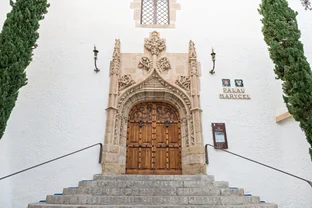
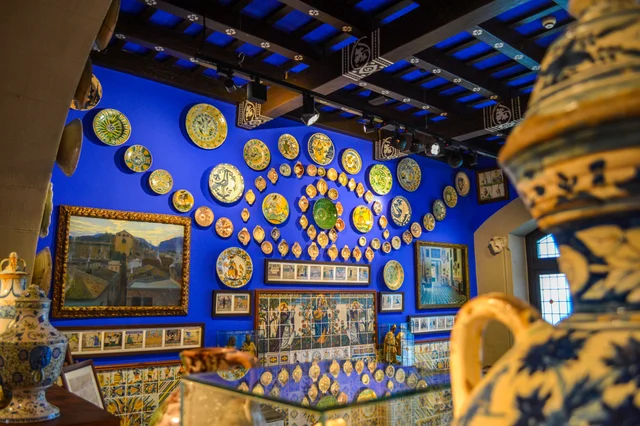
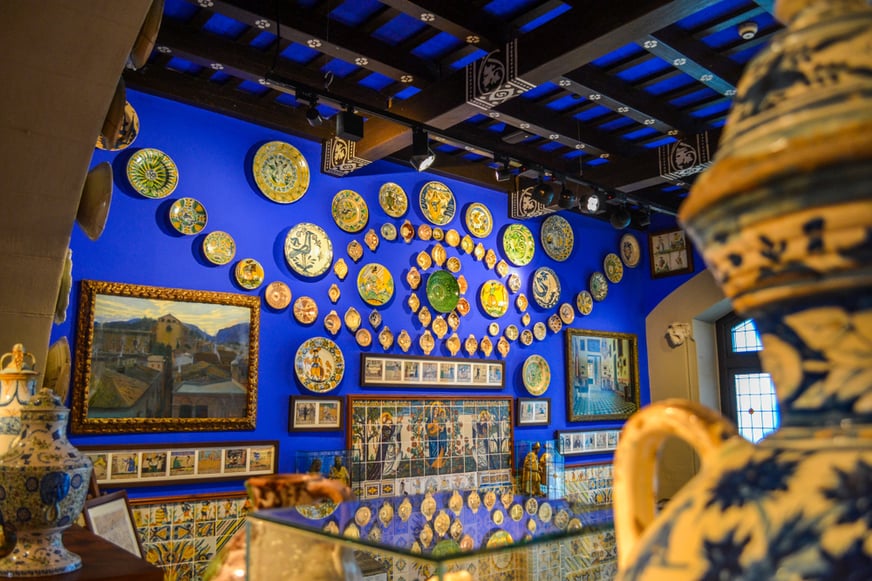
This museum brilliantly captures the life, lifestyle, and art of the early years of Sitges as an art colony. In the late 19th century, modern artist Santiago Rusiñol (1861–1931) joined two 16th-century fishermen’s cottages to create a combined studio, home, and art gallery. His unique property soon attracted Catalan bohemians whose presence helped transform the town into a popular seaside resort. Upon his death in 1931, Rusiñol willed the house and his collection to the city, and visitors can see examples of his work as well as work by his contemporaries. The collection includes a few notable pieces by Picasso and El Greco. But the appeal of the museum lies less in any individual artwork than in how it captures the excitement, allure, and tensions of an avant-garde artistic salon in the years before the Spanish Civil War.
This museum brilliantly captures the life, lifestyle, and art of the early years of Sitges as an art colony. In the late 19th century, modern artist Santiago Rusiñol (1861–1931) joined two 16th-century fishermen’s cottages to create a combined studio, home, and art gallery. His unique property soon attracted Catalan bohemians whose presence helped transform the town into a popular seaside resort. Upon his death in 1931, Rusiñol willed the house and his collection to the city, and visitors can see examples of his work as well as work by his contemporaries. The collection includes a few notable pieces by Picasso and El Greco. But the appeal of the museum lies less in any individual artwork than in how it captures the excitement, allure, and tensions of an avant-garde artistic salon in the years before the Spanish Civil War.
Details
Bookstore
Available as paperback
and as e-book.