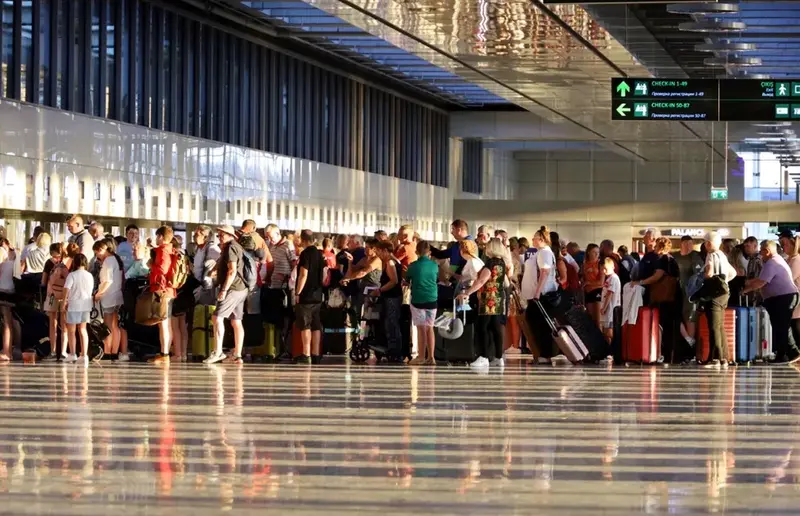
We don't yet know why the U.S. government decided to shut down the national airspace on November 13, nor do we yet know the technical details about the outage that stopped United Airlines from flying on the afternoon of on November 16.
But with surprise tech disruptions affecting everything from major banks to Microsoft and Apple, chaos may be the new norm.
When things go kablooey, I can’t think of a worse place to be than in an airport—except maybe inside a plane that's stranded for hours on a tarmac.
If you are flying in the next days, weeks, or months, it may be wise to prep for the experience a little more thoroughly than you have in the past.
Here are a few things you can do to smooth airport disruptions and make flying easier.
Book the first flight of the day.
When things go wrong, whether it's from malicious AI exploiting software weaknesses or storms flooding runways, delays will ripple through the air traffic network. There's a simple thing you can do to mitigate that, particularly if your flight is nonstop.
By taking the first flight in the morning, you'll know that your plane has already been parked at the airport overnight, and you won't have to wait while it wings its way to you from an area that might be experiencing a bad day.
If you wait to fly later in the day, after issues start holding planes in cities where they're not scheduled to be, then the problems of delayed and/or cancelled flights are more likely to affect your aircraft.
Make a note of other flights you could have taken.
When you book your flights, take screenshots or take notes of the other options that day. You should do this so that, should you have to rebook yourself with unexpectedly, you will quickly know which specific alternate flights are available.
It’s a good idea to not just have one Plan B, but also a Plan C and even a Plan D. One or two of of your choices might be booked up by the time you need them, and time matters when flights are cancelled and you’re competing with other stranded flyers for a seat. Knowing the flights you want will also help keep you off of lousy itineraries.
Be sure you have not only the alternate flight times, but also the flight numbers. Again: Speed will count, so have your targets ready!
Also be sure to have the correct phone number for each airline in your notes. Unfortunately, because scammers have been known to buy the first result for some search results and use it to post bogus phone numbers, it’s best to get the number directly off each airline’s website.
Pack your carry-on bags strategically.
You'll want to have snacks easily accessible so that you don’t have to wait in enormous lines for airport food, rely on the overpriced options, or be left hungry in a packed cabin that gets stranded on the tarmac.
Also make sure you have your medications with you, and not just enough for the flight. Bring enough to last you into the next day in case you’re stranded.
Bring a layer to keep you warm (a sweater or a jacket), a charger to keep your devices juiced, and, if you’re traveling with kids, extra toys and a change of clothes for you and them. I don’t have to explain to other moms why the latter is crucial.
Get to the airport earlier than you did in the past.
When things go wrong, the flow of everything at the airport changes. Because of that, you might encounter crowds of people trying to park at the airport’s garage, or too many people at the check-in desks, or unexpected lines at TSA. It's better to build in a buffer, if you can.
Two apps can help: SpotHero (https://spothero.com/get-spothero-app) will reserve you a parking space at many airport lots. And if you get the TSA’s app, you’ll be able to suss out the length of the lines in advance. One warning: We're seeing more reports that the government has not been updating the TSA app wait times correctly lately, so also check your airport's official website to see if it maintains its own estimates.
Good luck… to us all!