

New high-tech equipment being used by the Transportation Security Administration is supposed to make life easier for airport security screeners as well as passengers, but some flyers will likely experience the opposite effect.
As part of a nationwide rollout, the TSA is installing computed tomography (CT) scanners at airports. In place of the old X-ray machines, the more modern technology can "generate a 3-D image of the contents of carry-on bags," as the TSA explains.
Because that image is so clear, passengers who send their belongings through the CT scanners don't have to remove laptops and other electronic devices from carry-on bags, or take out approved travel-sized liquids, either.
There's just one problem: The openings of the new machines are smaller than the openings on the old ones.
How much narrower are the TSA's new CT scanners?
The difference is less than an inch, according to TSA officials, but, as anyone who has ever packed a suitcase knows, every bit of space matters—especially when you're trying to stuff everything into a carry-on in order to avoid checked luggage fees.
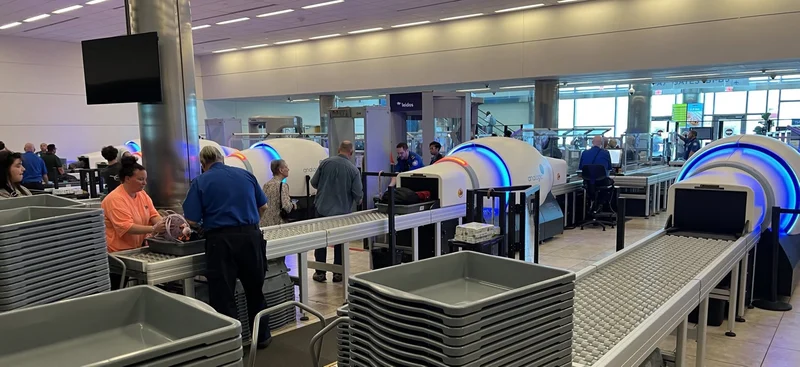
The dimensions of the new CT scanners' tunnel openings are 24.5 inches wide by 16.5 inches tall, reports the aviation news site Simple Flying. That shaves off about 0.4 to 0.7 inches per side when compared with the old machines.
The CT scanners will still accommodate the standard allowance most airlines permit for a carry-on bag: 22 inches by 14 inches by 9 inches.
But there's very little wiggle room. And a fully packed bag tends to bulge, even if it falls within the mandated size when empty.
What happens if your carry-on doesn't fit through the narrower checkpoint scanner opening?
You could be sent back to the ticketing counter to check the bag, meaning you'll have to get out of the security line, pay the airline's higher same-day bag-checking fee, and go back through security all over again.
Alternatively, TSA officers have the option of inspecting your larger carry-on by hand or instructing you to send your stuff through an old-school scanner if available.
But Simple Flying has found that sending passengers back to check their bags is "becoming the default outcome at many CT-equipped checkpoints, since the [TSA] has been explicit that some larger carry-ons simply will not fit, full stop."
What's more, you'll need to make sure your carry-on bag fits into the bins at the checkpoint area because the CT machines don't allow for putting luggage directly onto the belt.
How to avoid checking a carry-on that won't fit through the TSA's new scanners
As of this writing, about 1,200 CT scanners have been installed at nearly 300 U.S. airports, with more on the way.
Unless you want to run the risk of having to check your carry-on bag because it won't squeeze through the security scanner, it's more important than ever to make sure your bag falls within the approved dimensions when packed, not just when it's empty.
It's even better if your bag is smaller than approved airline dimensions, like these are.
Don't use the zippers that expand the bag to give you more space, either. And avoid filling the external pockets with bulky items that will swell your carry-on past the size of TSA bins or CT scanner tunnels.
The TSA is putting the squeeze on us. Think thin.