

Pope Leo XIV, formerly Bishop Robert Prevost, was born in Chicago in 1955 and first traveled to Peru as a missionary in 1985.
After working in several regions of the South American country, Prevost settled in Chiclayo, a city on the northern coast where he was named bishop in 2015.
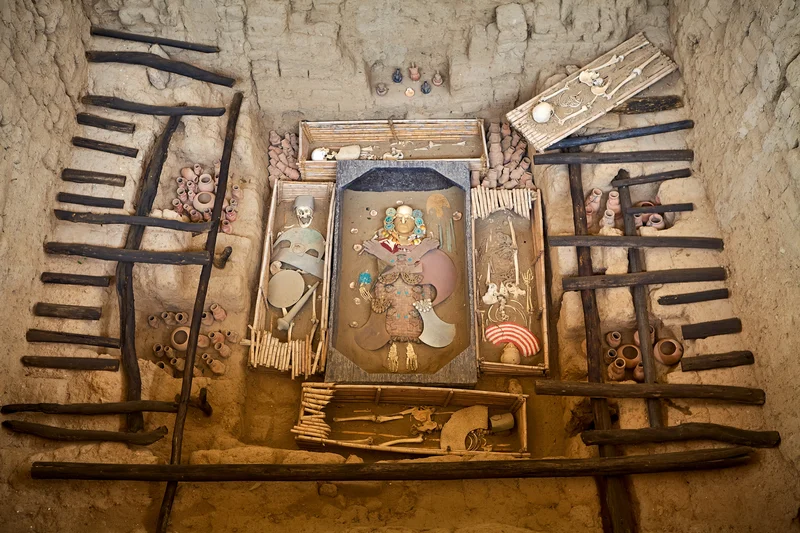
Before its new connection to the Vatican, Chiclayo was most famous for being near the Tombs of Sipán, which are elaborate, gold-filled 3rd century burial places that have only recently been excavated.
Chiclayo’s archeological claim to fame already made the city worth visiting, and the city has plenty of excellent restaurants, historic buildings, and beautiful churches to see. But all that is quickly becoming a side show for the millions of people around the world who wonder where Pope Leo XIV, as Robert Prevost, lived as missionary, priest, and bishop and where he worked and ministered to the poor.
Traveling to Chiclayo, Peru
Chiclayo is an hour’s flight north of Lima, and several flights depart daily on LATAM, JetSMART, and Star Perú. Driving from Lima takes about 12 hours, so if you take that route, plan stops along the way at Caral, Chimbote, and Trujillo.
In the center of Chiclayo, Costal del Sol Wyndham Chiclayo is centrally located if you like to walk everywhere. Casa Andina Select Chiclayo is in a quieter neighborhood farther from the center, so its guests tend to take taxis more. Both hotels have swimming pools and excellent buffet breakfasts.
All locations in and around Chiclayo are easily accessible by group tour or taxi. Taxis are plentiful and inexpensive, but if you don’t speak Spanish, ask the hotel staff to arrange a pickup and notify you of the price. Expect short rides in town to cost the equivalent of $3–4 and rides between nearby towns to cost $10–15. Though hotel staff and tour guides speak English, most taxi drivers don’t.
The first tour agencies to have trained their guides for the new pontiff-related tourist trail, called Los Caminos del Papa, or the “Paths of the Pope,” are Sipán Tours and Ecoserv Perú. One advantage to taking a guided tour is church caretakers and priests will be notified in advance of your arrival and they’ll be ready to welcome you with stories about their former bishop.
Pope Leo’s landmarks in Chiclayo
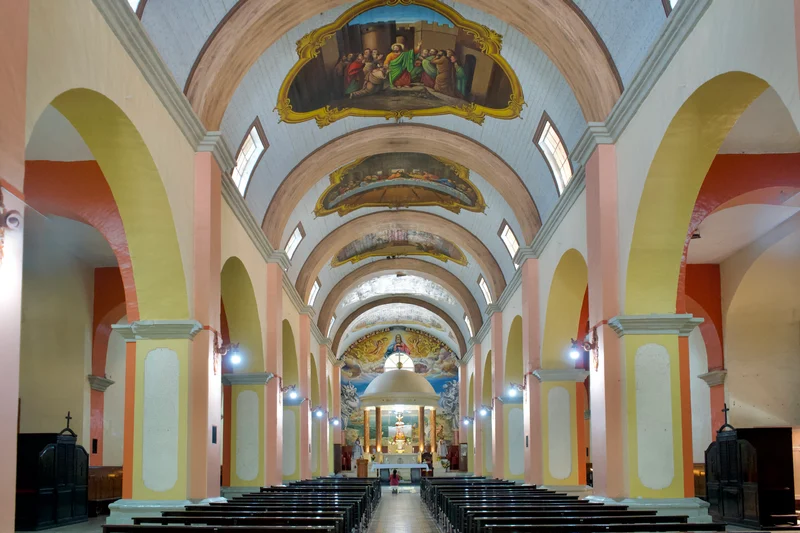
The first stop for the Pope-curious is the Iglesia Santa María Catedral, on the main square. A soaring building, it’s painted a soft butter yellow and has a bell tower and a clock tower, each topped with picturesque red domes.
Locals consider the square out front to be a park and they are quick to point out that Chiclayo was not a colonial Spanish city, so it doesn’t have a Plaza de Armas like Lima or Cusco, which had to accommodate grounds for colonial militaries. Instead, Chiclayo has green space. In Mochica, the ancient language of Peru’s northern coast, Chiclayo means “place with green branches”—an apt name for this oasis on what is otherwise a desert coast. In the park’s trees, you might spot bright green Pacific parrotlets and Blue-gray tanagers, brightly colored birds that are endemic to this part of the world.
Next to the cathedral is the town hall, called the Palacio Municipal, that contains a small museum that highlights some of Robert Prevost’s activities around Chiclayo, such as photos of his early days as a missionary, riding a horse surrounded by children.
Across from the Palacio Municipal are two restaurants Prevost frequented, Trébol and Las Américas, both of them known for local dishes like duck with cilantro-infused rice and fried pork chicharrón. Though he was more likely to serve and eat in soup kitchens, during his years in Peru, Prevost dined at many of the restaurants in town, so you can be sure many proprietors, like the local clergy, will have personal stories about him that they’ll be eager to share.
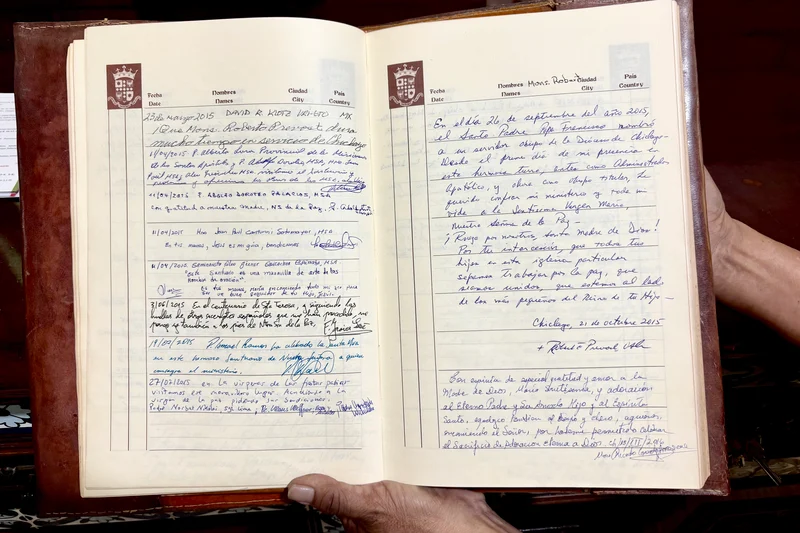
After the historic center, head to the Santuario Nuestra Señora de la Paz church, where, as bishop, Robert Prevost presided over the Profession of Vows for some of the sanctuary’s cloistered nuns. Descend into the small basement chapel to see where Bishop Prevost prayed in solitude and ask the caretaker, César del Santuario, to show you where Prevost wrote a prayer “that all in this church work for peace, that we be united next to the smallest ones,” foreshadowing his commitment to the poor then as bishop and now as pope.
The next stops are in small towns just south of Chiclayo on the road to the coast: Monsefú and Ciudad Eten. At the Parroquia de San Pedro de Monsefú, look for the image of Jesús Nazareno Cautivo and a small chapel next to the church which has a historical display of photos from the early 1900s and documents signed by Bishop Prevost.
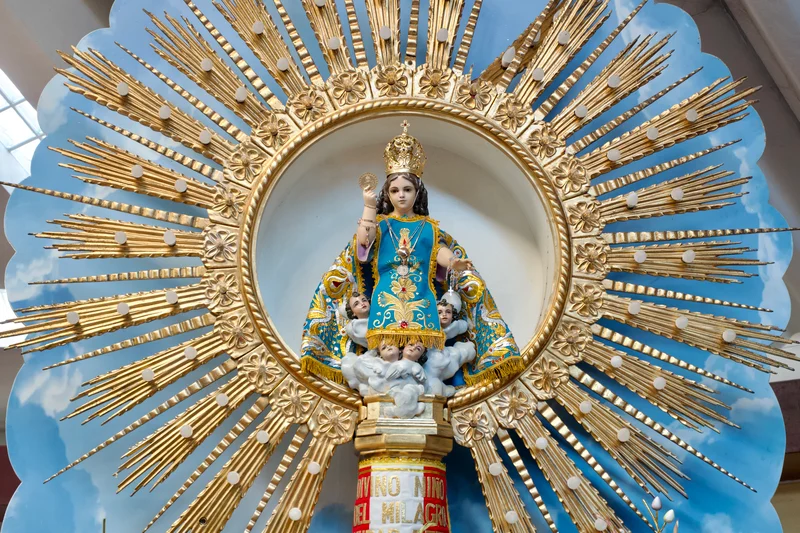
In Ciudad Eten, visit the Iglesia de Santa María Magdalena, known for the miracles of its image of Christ as a child. As bishop, Robert Prevost presented evidence of the miracles to Pope Francis in 2019, so the congregation is hopeful that as Pope Leo XIV, he complete the process to certify the miracles.
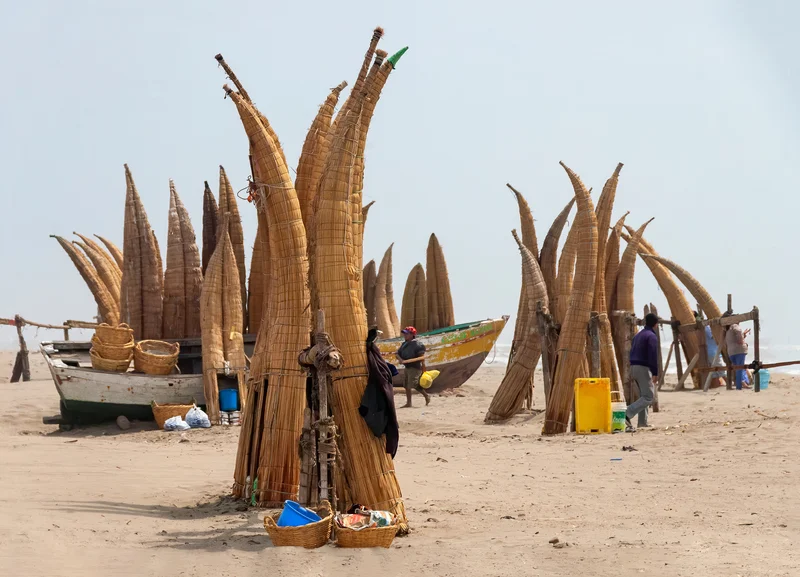
After the churches, head to the nearby beaches for a walk at the water’s edge. Playa Pimentel and Playa Santa Rosa have long, sandy beaches, perfect for stretching your legs and for admiring caballitos de totora, which are fishing craft made from reeds using methods that have been virtually unchanged for at least 3,500 years.
You should also have a fresh seafood lunch at one of the local restaurants; every afternoon, the fishermen’s families sell the morning’s catch on the beach. If you start your touring day here early enough, you’ll see the boaters paddling their caballitos over the waves as they head out to make the day’s catch.
Adding the Tombs of Sipán to a Pope Leo Peru tour
On your second day in Chiclayo, visit the extravagant Tombs of Sipán. The Lord of Sipán was a 3rd-century ruler of the Mochica civilization, and his burial site rivals some of Egypt’s most impressive burial sites.
Sipán was almost discovered by grave robbers in 1987, who were looting a nearby tomb, and it was later meticulously excavated by archeologists over several years, after which everything was moved to a museum with security in the town of Lambayeque, on the north side of Chiclayo.
With half a day, you can get a close look at the golden discoveries at the Royal Tombs of Sipán Museum and then visit the King Kong Real factory a few miles northwest of Chiclayo, to see where Peru’s northern coast’s most traditional sweets, filled cookies called king kong, are made. With a full day, you also add Huaca Rajada, an hour east of Chiclayo, where the tombs were found and excavated.