

The interview that follows is the second part of a conversation between Pauline Frommer and Frommer's Japan author David McElhinney, a recent guest on the Frommer's Travel Show podcast. You can read part one here.
The interview has been edited for length and clarity.
Pauline Frommer: It's been 7 years now that you've been living in Japan and writing about it extensively. And as a writer—I don't think this will come as a surprise to anybody—you do not have unlimited funding. Japan can be a very, very expensive country. It’s less expensive now because the Japanese yen is much weaker against many world currencies, including the U.S. dollar. But still, it is an overall expensive place.
So what are some of the ways that you, in the book and in your daily life, tell people they can save money in Japan?
David McElhinney: Expensive is a relative term. I mean, Japan certainly was more expensive than it is now. But I think people always want to try and save money where they can. And there are certain things in the country which are still quite pricey.
The two biggest expenses are accommodation and transport. With transport specifically, what's expensive are the bullet trains, which are more expensive than flying but more convenient. And I think people see the bullet train as a travel experience in and of itself.
Frommer: I felt that way when I did it. ... There was this moment where you were pressed back into your seat and then you suddenly rocketed forward. I could feel the speed.
McElhinney: Now that you mention it, you do get that sensation the first time you take the bullet train.
But it's weird—you know, like anything, when you start to do it quite regularly, you sort of forget about that. It's an experience in and of itself.
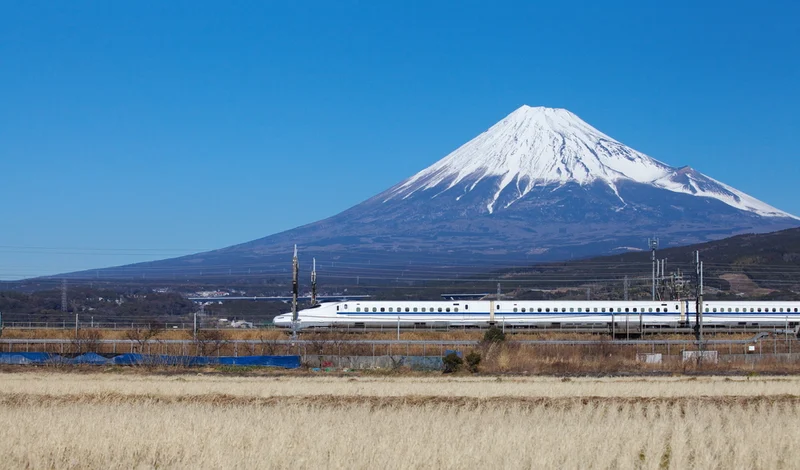
So people will almost certainly use the bullet train as their primary method for getting around the country. A good way to save money on that is through the Japan Rail Pass, which you have to get before you come to the country. It basically gives you one all-encompassing ticket that you can use on all of the different bullet trains and local trains, provided they're operated by Japan Rail.
Now, it gets a little bit confusing in the cities because sometimes a train might be run by a private operator or might be a metro line. But in general it means that you have one ticket that you can use on the majority of trains in the country.
You can go online to the Japan Rail Pass fare calculator, [add] up the journeys you think you're probably going to do, see how much that's going to cost, and then cross-reference that with the price of the 7-, 14-, or 21-day ticket. Sometimes the 7-day ticket might be a little bit more expensive than the amount of trains you want to ride in a 7-day period.
But you also might say, well, it's only a 2,300–yen difference and that's negligible given that I don't have to go through the stress of getting a ticket for each train.
People who are thinking about going to Japan might have read that there was a big price hike in the JR Pass recently. It was a 69% price hike, which is yikes. But to put that into perspective, it was the first time they had increased the price since the '80s. And I think it was also kind of in line with the fact that the yen had already weakened by that stage and they were trying to capitalize on tourists' increased purchasing power.
I still think it's a good value pass, but you can decide yourself depending on where you plan on going.
Frommer: And it's a pass that is only for tourists. Usually there's something that we think of as the tourist tax, where tourists are charged more. This has always been a very generous program, I thought, on behalf of the railroad.
McElhinney: I would say tourists are taxed in other ways, but when it comes to riding the bullet train, yeah, they certainly get a good deal.
Frommer: Before I let you go on that, how are tourists taxed in other ways?
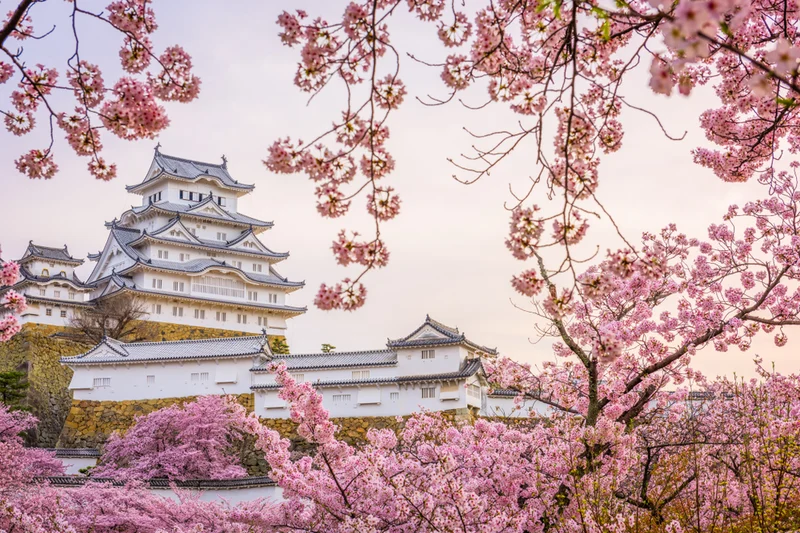
McElhinney: I guess one good example to use is Himeji Castle, which is probably the most beautiful castle in Japan. It's in this city that's between Kobe and Hiroshima.
A lot of people go to Himeji just to see the castle. I think it was the city mayor, but someone from officialdom was trying to make tourists pay five times the amount that locals would pay. Which seems like a huge hike.
But at the same time, I think the purpose of it is to only entice people who really want to go and see the castle, rather than people who are walking past. I think if it's used in that way it does manage the crowds a little bit. I don't have much of a problem with it.
But there is the moral aspect of, well, if tourists have to pay crazy money for everything, you know, that's its own issue. In fact, I think some restaurants did implement different prices [for tourists].
Frommer: On the English-language menu?
McElhinney: Some of them were caught sneakily doing that, unfortunately. I think there were some restaurants in smaller towns that basically said locals will only pay this price and nonlocals will pay a bit more. It certainly hasn't caught fire and spread all around the country, but there are little stories like that.
And there is a growing unrest in certain corners of the country about the amount of foreigners coming in on a yearly basis. The numbers are increasing each year, so stories like that will be in the news.
Frommer: All right, we'll go back to saving money.
You also need to save money on accommodations, and there are hotels, or hotel types, [in Japan] that don't exist [in other countries], like capsule hotels. Do you recommend those for visitors and can you give a definition of what those are? Or are those really just for Japanese businessmen?
McElhinney: Well, that's how they started—as stopover places for Japanese businessmen. If you go to some of the old ones, they still have corded telephones.
They're used by younger tourists, I would say. I see them as more of a novelty thing. I personally wouldn't book one myself. But they’re worth seeing.
Frommer: Can you give a description of what those are?
McElhinney: I guess the best visual aid I can give is imagine a morgue that was a hotel. [Guest rooms] are just sort of like cubbyholes that you enter into. You have the entire space, but [there’s only room for] a bed with maybe a side shelf. You can't stand up. And down the hall somewhere will be the locker area where you can put your bag and all that kind of stuff.
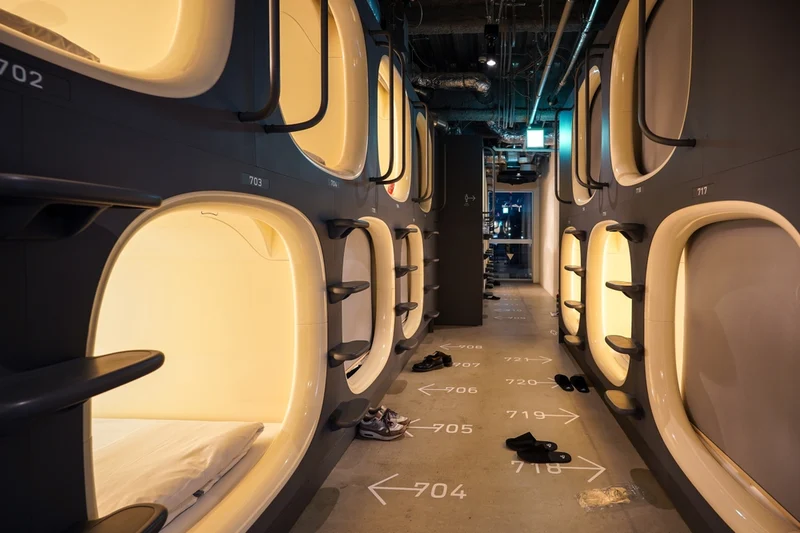
Frommer: So is it curtained off or is there more of a solid door to your cubby?
McElhinney: It depends. A lot of them have pull-down blinds which you hook at the bottom. It's sort of like a hostel room, but a bit more private. That also means the attendant noise that you get in a hostel room but by a factor of 10 because there's 40 people sleeping in the area. So you hear every snore and fart and burp and rustling pillow and all the rest of it.
But yeah, they're cheap—certainly cheaper than most other accommodation options.
If you are claustrophobic or you really like home comforts, maybe give them a miss.
Another thing: They're basically designed for 1-night stays, so if you're between the usual checkout and check-in time, you have to take all of your stuff out of [the hotel] and back in again, which is super-inconvenient. It kind of defeats the purpose of staying in a hotel to begin with.
There are some really nice [noncapsule] chain hotels you can stay in. One of the most famous ones is APA, another one called Mystays. They're basic chain hotels, but done well. They're pretty comfortable and the amenities are quite good. [Staying in one of them is] often a good way to cut costs.
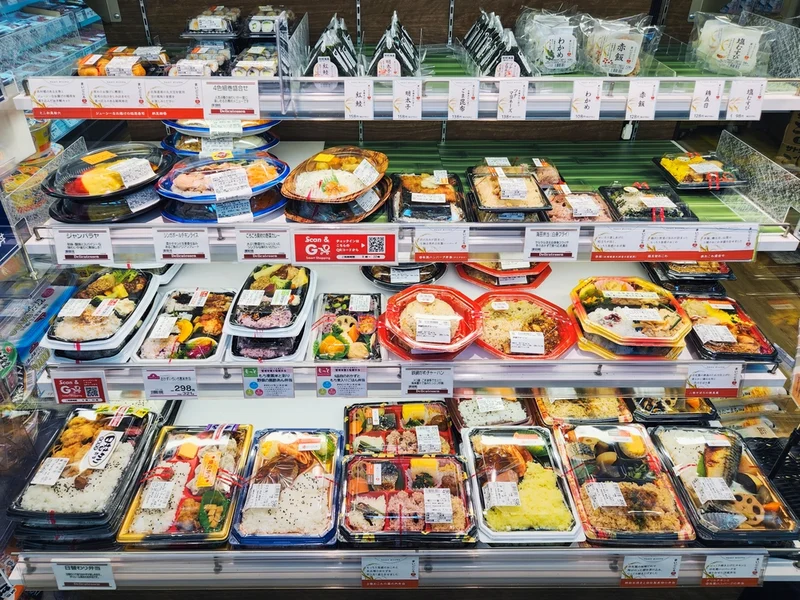
Frommer: One of the things that, surprisingly, isn't expensive in Japan is food. You can get very decent food in convenience stores. You can get a wonderful meal for less than the equivalent of $10 at a noodle place.
McElhinney: I completely agree. Japanese food is, for me, probably the greatest food culture on earth.
When I moved there, I thought [it was only] sushi and ramen. But there's amazing depth and complexity.
And every region will have a meibutsu, which is sort of like a regional specialty. It might just be like noodles made a certain way or a certain type of pounded rice cake, or maybe it's a certain fish or beef that they do a certain way. Often they'll have multiple specialities.
So that aspect is really cool, as is the fact that you can get good food at every price range.
Like you said, you can go to some of the best ramen shops you'll ever eat in in your life, and you're paying 10 bucks, probably less, for a bowl of ramen. That's a big, hearty plate of food that’s been simmering for 14 hours. It’s incredible, really, what you can get for very little money.
And like you mentioned, even the convenience store foods [are good]. In the U.K. and from my experience in America, you go to 7-Eleven or something like that, the food's usually pretty bad.
Frommer: Oh, terrible.
McElhinney: Whereas in Japan, that food is very cheap because of the type of food that is. But, like, the hot chicken, actually is really good.
Frommer: The sandwiches are nice.
McElhinney: [Convenience stores are] famous to the point that there's loads of YouTube vlogs that cover the subculture of Japanese convenience store food. If you're interested, it's worth checking some of them out.
They do fruit sandwiches and all these strange flavors of Kit Kats and things like that. And they're all open 24/7, so a great place to stop late at night if you need a bite to eat before you go to bed.

Frommer's Japan
Frommer’s books aren’t written by committee, by A.I., or by travel writers who simply pop in briefly to a destination and then consider the job done. We use seasoned, locally-based journalists like David McElhinney, who lives in Japan, and has been published widely, covering the country’s extraordin...
Get the bookFrommer's Japan
Frommer’s books aren’t written by committee, by A.I., or by travel writers who simply pop in briefly to a destination and then consider the job done. We use seasoned, locally-based journalists like David McElhinney, who lives in Japan, and has been published widely, covering the country’s extraordin...
To read or listen to the first part of this interview—covering the culture and cuisine of Japan in greater depth—click here.