

Norway has some of the world’s most striking natural beauty—especially if you like fjords and tall blond dudes—and some of the world’s highest prices.
Take Oslo, for instance. The country’s capital city is set along a scenic fjord, it’s crawling with tall blond dudes, and it’s so expensive to visit you’ll wish your phrase book included more Norwegian curse words.
We’re not being dramatic here. In its 2026 City Costs Barometer ranking European cities by the prices of “everyday tourist items” such as meals and accommodations, the U.K.’s Post Office Travel Money service named Oslo the continent’s most expensive urban destination, with the total cost of a 2-night stay for two, including lodging, meals, beverages, sightseeing, and public transit, coming out to £734—or about $991.
That’s almost three times what researchers determined travelers would pay in Europe's cheapest city, Sarajevo. [Norwegian expletive deleted]
The reasons for the high cost of living in Norway have to do with the nation’s wealth (much of it derived from oil and natural gas), high wages, and legendarily comfy social safety net, which is funded in part by famously high taxes, including on stuff that affects tourists such as a 25% value-added tax (VAT) on goods and services.
Norwegians are apparently pretty pleased with this state of things, judging by the country’s frequent appearance near the top of lists ranking the planet’s happiest places.
Well, bully for them.
Most visitors from elsewhere, meanwhile, will be looking for ways to cut expenses. And we’re going to level with you: There aren’t a ton of budget-friendly moves to make, especially in Oslo.
Still, there are a few key options for saving money that will make you feel better about your beleaguered vacation budget.
Here are some we relied on during a recent Scandinavian sojourn.
Get the Oslo Pass.
City sightseeing passes aren't always worth your while because they don't cover enough attractions or because they're priced in such a way to require overstuffing your schedule with too many sights in order to come out even.
But the Oslo Pass from the city's tourism office is a very good deal.
For starters, the pass grants you entry to more than 30 museums and attractions, including all the biggies: the National Museum, the Munch Museum, the Holmenkollen ski jump, and the cluster of institutions on the Bygdøy peninsula (the Norwegian Folk Museum and the pair of facilities housing the Fram and Kon-Tiki ships among them).
If you visit more than three of those during a 2-day stay in Oslo, you'll make up for the cost of a 48-hour pass (845 krone, or about $89). And that's before we even consider that the Oslo Pass also gives holders full, unfettered access to the city's public transit system—the Metro (subway) as well as all trams, buses, and ferries.
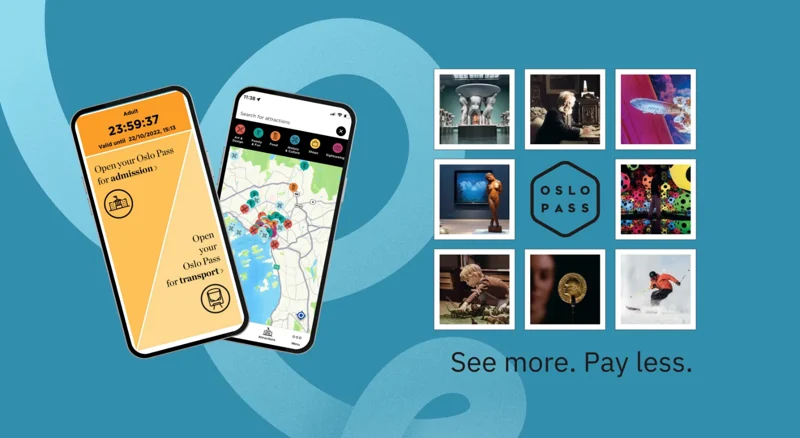
To get a pass, you simply download the Oslo Pass mobile app on your phone and purchase a 24-, 48-, or 72-hour option. When you're ready to start exploring the city, activate your pass to start the countdown clock on its validity.
In the app, you'll get a QR code to present to ticket desks at attractions and another QR code to use on public transit.
And speaking of public transit . . .
Don't you dare get in a cab.
Taxi rates are absurd, and prices for ride-hailing apps like Uber and Bolt are only a little better.
Fortunately, Oslo's transit system is well-maintained, easy to use, and rarely behind schedule. The name of the transit authority is Ruter, which operates ferries, buses, trams, and the T-bane (that's the subway, or Tunnelbane in Norwegian).

A one-hour ticket costs 46 krone ($4.85), or you can make sure all your rides are covered by getting the Oslo Pass.
A page on Ruter's website has helpful planning info for tourists, including maps and directions for getting to popular sightseeing attractions.
There are lots of subway stops in the city center. As in Boston, stations are marked by signs with an encircled capital T. (Neither transit system will get you to Fenway Park in a timely fashion, but at least Oslo has a reasonable excuse.)

Ruter's ferries (also covered by the Oslo Pass) can be used for a self-guided cruise to the islands in the Oslofjord or to reach the cultural institutions in Bygdøy.
Rely on transit as well to get from the airport to the center of town—specifically, aboard local trains operated by Vy. The 23-minute journey costs roughly 130 krone ($13.70) and is covered by your good ol' trusty Oslo Pass.
Skip the marginally faster but more-than-twice-as-expensive Flytoget Airport Express Train.
Another fun, affordable, and healthy way to get around town: the public bike-sharing system, Oslo City Bike. The program's "Discover Oslo" option gives you 3 days of access to bikes at docking stations throughout the city for 119 krone ($12.54). Payment, bike retrieval, and return are handled via mobile app. (For once, the Oslo Pass doesn't apply here.)

Minimize your time in restaurants.
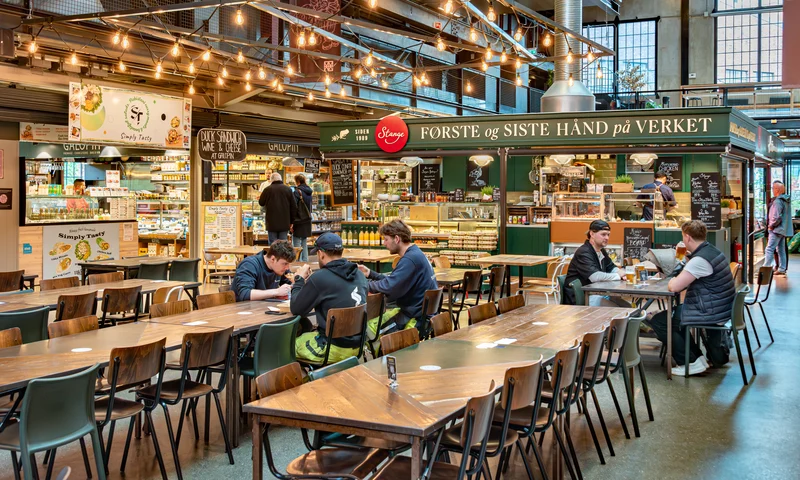
On the dining front, Oslo presents a good opportunity for budget-conscious travelers to familiarize themselves with the city's street food, grocery stores, and food halls.
That doesn't have to mean settling for dreary, prepackaged supermarket sandwiches. Flatbread-encased hot dogs at the beloved Syverkiosken stand, eclectic eats amid the industrial-chic environs of the Vippa and Mathallen food courts, South Asian fare in the diverse Grønland neighborhood, and baked goods such as cinnamon rolls and sticky buns all fall within the relatively affordable range (less than 200 krone/about $20).

A further incentive for shifting toward takeaway meals as opposed to sit-down service is that the latter comes with that value-added tax of 25%, while to-go food is taxed at a lower rate of 15%.
High excise taxes on alcohol make wine, beer, and spirits unusually expensive, too, especially at bars and restaurants. To purchase slightly cheaper booze for pregaming and nightcap purposes in your hotel room, you'll have to go to Vinmonopolet, the government-owned chain that has exclusive rights to sell alcohol with ABV greater than 4.7% (grocery stores can sell weak beer, however).
Don't tip like an American.
The decent wages earned by Norway's service workers free you from the burden of doling out American-style 20% tips to all and sundry.
At sit-down restaurants, you can add a gratuity of 5% to 10% on top of the bill if you were wowed by the service, but a tip is not obligatory—and not necessary for casual eateries, takeout, or bar tabs (unless you get a fancy cocktail).
Likewise, you can express gratitude for exceptional service from hotel housekeeping staff and tour guides by leaving a small tip to the tune of, say, 50–100 krone ($5–$10). But you don't have to—and you probably won't have cash on hand anyway, since Norway relies almost entirely on digital payments and cards these days.
Don't worry about the rules for tipping taxi drivers. As we discussed, you're not taking any cabs.
Book a hotel with breakfast included.
This is another way to cut down on food costs and to fuel the day's sightseeing.
All the other standard strategies for snagging a semi-affordable hotel stay apply in Oslo as well: Consider hostels and other bare-bones budget accommodations. Widen your lodging search beyond the city center. If possible, book your trip for the less-touristed shoulder season of late spring or early fall.
Remembering that you were an early investor in Silicon Valley or discovering you're a long-lost member of Norway's royal family would probably help, too.