

You might have been aware that there was a fatal flash flood in Arizona's Grand Canyon National Park on Aug. 29. A sudden rush of water turned the popular Bright Angel Creek area into a massive maelstrom of muddy water, inundating the historic Phantom Ranch, the only park lodging located below the chasm's rim. Two people have been confirmed killed and at least one person is missing.
Because there are so many other things going on in the news, you might have missed the reports that although the deadly waters have receded, they also incapacitated the national park's ability to host visitors.
Park officials are already advising visitors about a list of closures including the entirety of Phantom Ranch, Bright Angel Campground (which appears to be wiped out), the Phantom Ranch Canteen and Phantom Ranch cabins, the Black Bridge and Silver Bridge across the Colorado River, and all of the North Kaibab Trail.
But the Saturday afternoon deluge also crippled the rest of Grand Canyon National Park, and the full extent of the catastrophe is only now becoming clear.
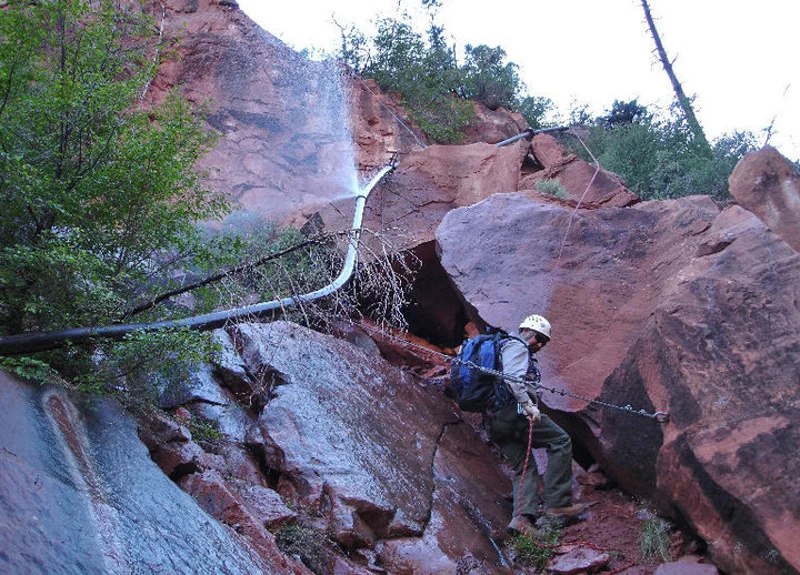
The flash flood severed the pipeline that provides water to the Grand Canyon's South Rim, where the majority of tourism amenities are located.
Full-time residents who operate the Grand Canyon's tourism from the South Rim have been taking to social media to alert outsiders about what's happening at the canyon—or, more accurately, isn't happening in response.
There's no water for tourists at the Grand Canyon
Instagram user Adriftintentions posted a video from the canyon's South Rim, where most tourists wind up.
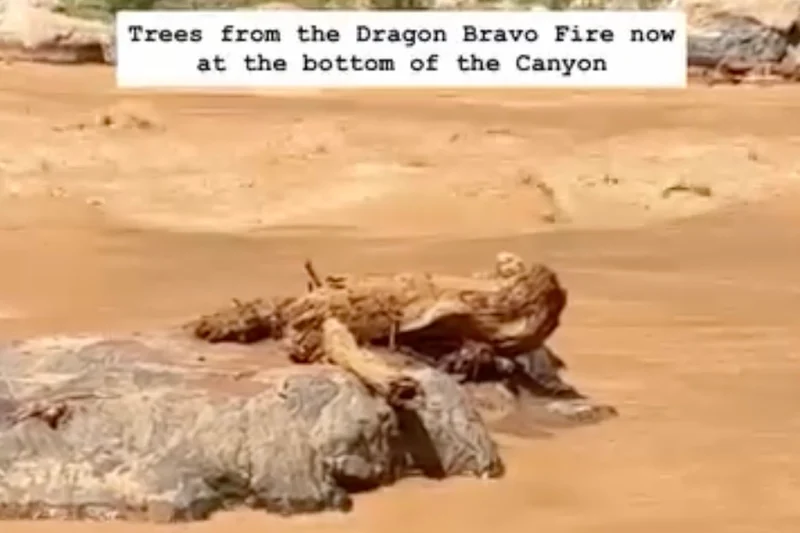
"This entire southern village—hotels, restaurants, a thousand permanent residents or more—all of it is fed by water that comes from the North Rim. ... Last year, there was a major Dragon Bravo fire [that] took out most of the structures on the North Rim."
That fire made Saturday's flood more possible by weakening 150,000 acres of soil. In turn, the flood took out the rickety pipeline, first installed in the 1960s, that usually transfers water from the North Rim, where there are water sources, to the tourist hub of the South Rim, which is in the desert.
While bottles of drinking water can always be brought in, other critical water-fed infrastructure is now running dry. That makes it impossible to supply the other systems that support tourism, such as toilets, showers, fire suppression sprinklers, and more.
As a result, all overnight lodging facilities in the park have been closed, the campgrounds are denying water to guests, and outdoor campfires are widely banned.
Facilities in the town of Tusayan, outside the park gates, are operating normally.
Where is the superintendent?
According to posts by locals inside the park, representatives from the Department of the Interior are either missing or not forthcoming about the assistance plan.
Grand Canyon park superintendent Ed Keable, a Trump administration appointee, has been noticeably absent since the flood, leaving deputy superintendents and the park's chief of interpretation and resource education to deal with the public response.
"Park officials say he is dealing with a personal family crisis, and there is no word on when he will be back at the park taking over recovery efforts," reported Fox 10 in Phoenix.
Park insiders have posted that Keable was absent for the 2025 fire as well.
“We just had our first town hall meeting where they were going to provide some answers,” said Adriftintentions in a video posted on Wednesday. “The answer is we are not going to get straight answers. ... They pretty much punted on every significant question."
Four days after the flood, Adriftintentions posted that residents asked the federal government whether they could expect "any federal aid, assistance, or emergency relief to work with, and the answer was probably the most cumbersome 'no' I've ever heard in my life."
Permanent residents have a few private tanks of reserve water for emergencies like this, but it's widely estimated that the supply will only hold out for 2 or 3 weeks.
"The fact is we have at best 40 days of water, at absolute best, and there is literally zero chance of that pipeline being fixed before that," Adriftintentions said in the post.
And that could result in a full park closure, he added.
During a press conference on Wednesday, deputy superintendent Brian Drapeaux implied that the government intends to keep the Grand Canyon open for visitors.
"We're a national park. We serve not only the nation, but international visitors to this place. And so it is part of our mission to allow access for the American public and the world population to experience Grand Canyon National Park," Drapeaux said.
Grand Canyon local Krocky Meshkin, who says he has lived at the park for over a decade, was not so optimistic in an Instagram post aimed at fellow park workers.
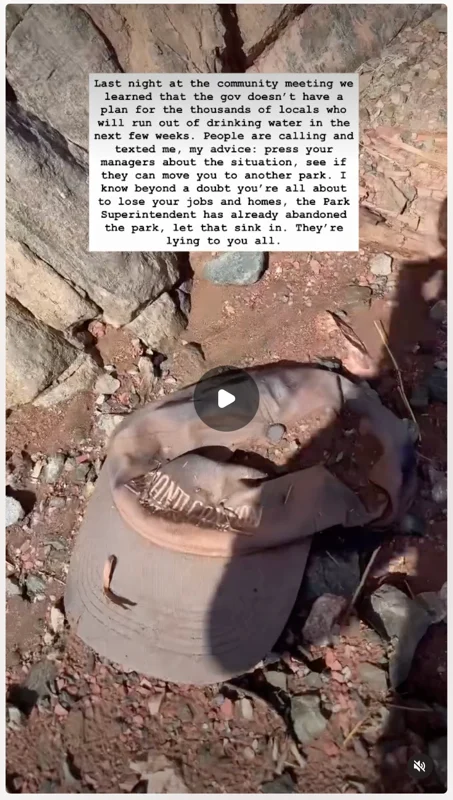
"People are calling and texted [sic] me, my advice: press your managers about the situation, see if they can move you to another park," Meshkin posted. "I know beyond a doubt you're all about to lose your jobs and homes, the Park Superintendent has already abandoned the park, let that sink in. They're lying to you all."
"The next thing that's going to happen is they're going to start to evacuate the locals," Meshkin predicted in a subsequent video post that's well worth a watch. "They're going to be asked to leave because there is just no possible way they're going to fix this pipeline in a couple weeks. We're basically witnessing the end of Grand Canyon National Park."
So if you intend to go to the Grand Canyon in the coming weeks, check the site's status ahead of time. Also bring plenty of water—and understand the tense environment with overstretched resources that you'd be walking into.
Staying safe from flash floods
With global weather patterns going haywire, sudden floods, like the one last week in Nepal that claimed the lives of nearly 1,300 people and counting, are projected to be a continued issue in many places tourists go.
Expert guide Nina Rehfeld, who co-owns Grand Canyon Journeys, gave CBS News tips for staying safe from flash floods if you're hiking in a canyon.
If a river or creek running alongside you "starts turning muddy and red, this is your first sign to get to high ground immediately and not walk into a narrow area," according to Rehfeld.
She also warns not to try to get a better view from a river crossing such as a bridge.
"I have to say I was taken aback a little bit [by] people who posted videos of themselves standing on a bridge watching these floods develop," Rehfeld said. "This is hugely dangerous because these floods can rise in a few seconds" and bridges are often washed out by flash floods.
The most essential advice is to stay abreast of weather forecasts (although even a dry forecast can be interrupted by an unexpected cloudburst) and to let other people, such as friends, family, and park rangers, know when you're hiking in the backcountry.