

Earlier in the year, the Frommer's podcast featured an interview Pauline Frommer did with Samantha Brown, host of the PBS show Places to Love. What follows is a transcript of that conversation, edited for length and clarity. To hear the complete episode, click here.
Pauline Frommer: We have a very special guest today. She is Samantha Brown. You know her from TV; you know her from the Travel & Adventure Shows. She has one of the most storied careers in the travel industry.
[But] I have a bone to pick with your publicist. They are spreading the most vicious lies about you. They are saying that this is your 25th anniversary as a TV host, and I know for a fact you did not start at the age of 10.
Samantha Brown: It is true, Pauline. It is my 25th year, and it snuck up on me as well. I feel like I've been doing this for 5.
Frommer: How has travel programming changed in [25 years], do you think?
Brown: When I started out with this job, we always went to the greatest-hits cities and we did what everybody knew happened in those cities. So greatest hits within the greatest hits.
And if we did anything that ventured off, sometimes we would get some pushback, like, Whoa, how could you go to Rome and not show this? How could you do this and not go here?
And that has completely dissolved. Everyone wants to know places that go beyond these top destinations. They want to know the smaller cities, the hidden gems, and they want to find out what they don't know. They want to be surprised.
I've really felt a change, a real shift in what people expect.
Frommer: That is a big, big change. Do you think it's a difference in that there's so much media around travel, or do you think it's that the viewers have been getting out there?
Brown: You know, I think it's a little bit of both, but I know that certainly social media has changed the game—people see places coming into their feeds every single day. They're inundated with those images of, say, the Trevi Fountain. I don't know why I'm picking on Rome. I just am. And people are just like, I don't want [the Trevi Fountain]. I'd like something else.
Or maybe since I've seen it—and I've seen it again and again and again—it loses some of its specialness, and people want to understand what's special.
But on top of that, Pauline, it's absolutely that more people are traveling.
I don't have any numbers to back that up, per se, but I just feel it myself that everyone wants to travel. It is an absolute aspiration in life, and people make it a reality.
Frommer: Those numbers are out there. I mean, we're seeing record travel numbers from the time my father started writing in 1957 through today.
I think in 1957—I had this at my fingertips a couple of weeks ago—I think there were 3 million Americans who would travel every year [outside the United States]. Now it's tens of millions [of Americans traveling internationally].
Brown: Wow.
Frommer: They get out there and hit the road, and they do that often. Following in your footsteps!
You have a wonderful show on PBS. It's called Places to Love. So what places are you loving this year? What are you going to show to your viewers?
Brown: Well, we really wanted to focus on places that, if it's well-known, maybe [consider] a different time to go, because I think travelers are fed up with excessive prices, crowds, heat.
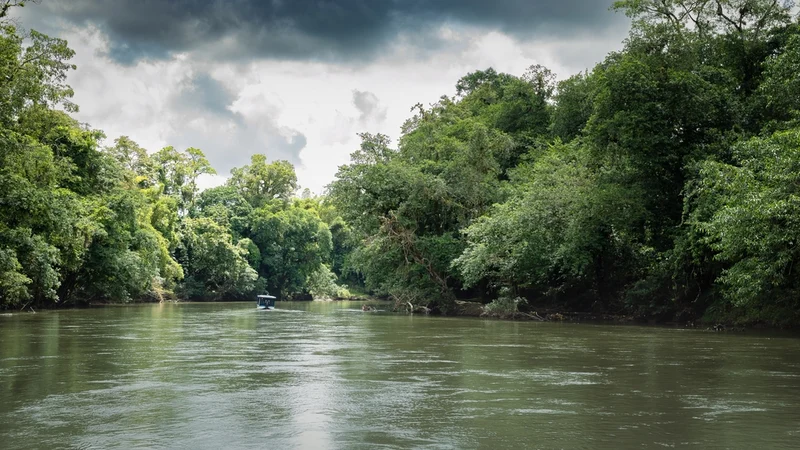
So, for instance, internationally, we went to Costa Rica, a very popular destination, especially in the winter, when everyone wants to escape these cold temps. But people avoid it in July when it's their rainy season. And so we went as a crew, and we shot it then.
And it was beautiful. Sure, it rained, but it always stopped. We found the temperatures lovely, and we were still able to enjoy everything.
I mean, okay—you can't lie on the beach if you're a beachgoer. But we were there to experience its natural beauty and the animals and the tropical experience that Costa Rica gives, that really natural experience.
Frommer: What part of Costa Rica were you in?
Brown: We were in what's considered the north, so sort of right there in the middle. So Rio Celeste and La Fortuna, which is a popular spot for spas. And even though we were there, we didn't show La Fortuna that much [on the show]. We used it as a place to kind of go off because we felt La Fortuna gets a lot of press. So let's go somewhere else. So we went to Rio Sarapiquí.
Frommer: How wet was it, though? I mean, what percentage of the day did it rain while you were there?
Brown: 30% to 40%.
Frommer: Well, that's not too bad. And was some of that while you were sleeping or was it daytime hours?
Brown: I would say daytime. But I was surprised because we were always able to shoot around it. I mean, at times we can't be shooting in pouring rain and we would just have a cup of coffee and we would wait and then head out. And a lot of times when you're in that tropical rainforest, you're being protected by the rainforest itself from all the rain. So the only reason why we stopped is because we had the equipment [to keep dry]. If I was a traveler, I would have kept going. Absolutely.
Frommer: You you also went to the Crystal Cape. Is that correct?
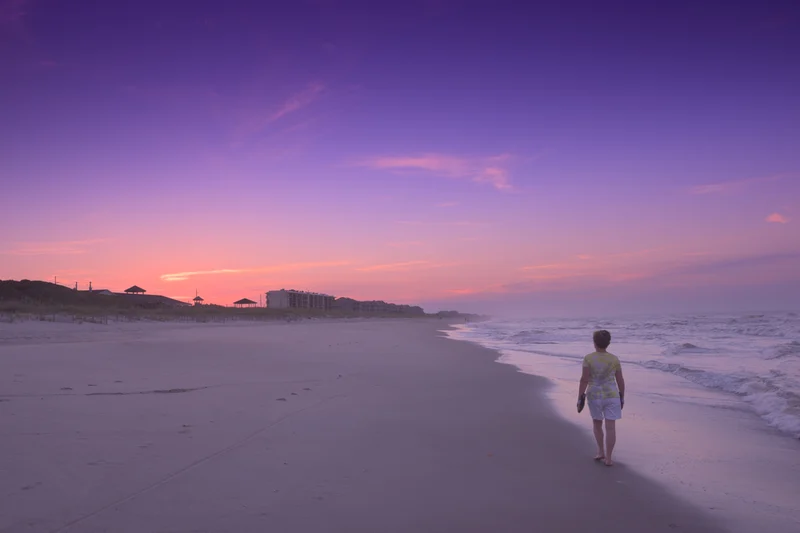
Brown: The Crystal Coast of North Carolina. You fly into Charlotte and it's like a 3-hour drive due east, straight shot east. And because of that drive, it really only gets a real local population visiting it.
Frommer: I'd never heard of it.
Brown: Yeah, it's not inundated with lots of outside travelers. And that makes it an absolute gem. It's beautiful.
It has a few really wonderful experiences that make it totally unique within the world. One, it's an International Dark Sky Place. It has that designation—the only one on the eastern seacoast from Florida, which I was so shocked [to hear]. To be an International Dark Sky [area] there are things you have to do to protect your night sky, which I think is beautiful. And because of that, they have a very active stargazing population. So we joined them.
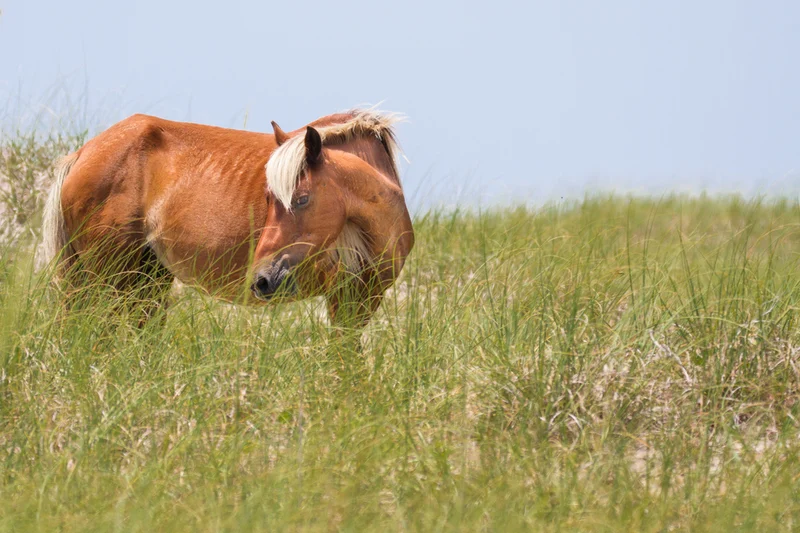
And then also a wild horse population. They have Shackleford Banks, which is for all intents and purposes an island, a bank, and these wild horses. They don't know exactly where they came from. Colonists could have brought them, but also the Spanish. They could have arrived even earlier than that.
[The horses] are managed by the National Park System and they keep them wild. They have someone who checks up on them.
Frommer: How do you [film] wild horses? Do you have to know where they are? Are you tracking them via satellite? I would think it would be hard to know how to get them or where to get them.
Brown: Yeah, great question because the bank was pretty large. There's 118 [horses]. But when we were with the national park rangers, he was saying, "We don't know; we'll go to the spot where we think they're going to be. It's an open meadow where there's lots of grasses and we’ll just hope for the best."
You can absolutely walk the entire bank. But it's like a 3-, 4-mile bank. That's a lot of ground to cover. So we were lucky. We stumbled upon four of [the horses].
And then I think our drone was able to pick up a few more, but it's kind of serendipitous if you meet up with them.
And of course there's all these rules of keeping your distance, which we had no problem doing.
Frommer: So that's two nature destinations. Did you also do an urban destination this year?
Brown: Oh, yes, we did. I love urban destinations—I think they're my wheelhouse. I just love going to cities.
We focused this year on sort-of unknown cities in Germany. Germany is a hot spot. Well, it's a hot spot because it's not so hot, I guess. I think people are starting to maybe rethink Italy, Spain, Portugal in the summer and go further north.
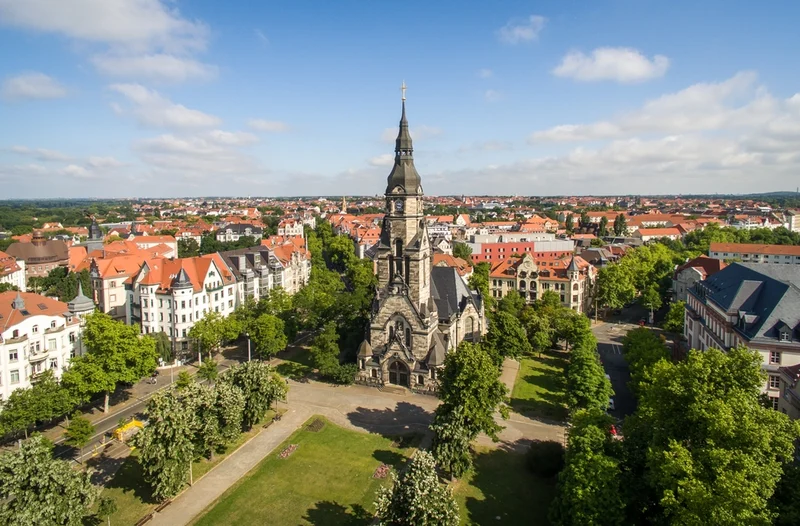
So we visited Leipzig, which doesn't get a lot of American travel love but is fascinating. This is where Johann Sebastian Bach went to be the [St.] Thomas Church cantor. He created some of his best masterpieces while in Leipzig.
It has a fascinating East German museum about that time. And what I had no idea, Pauline, is that it was the people of Leipzig, and their peaceful protests, that brought down the Berlin Wall. It was them that kept up [the protesting]. They came out [in the] hundreds of thousands after, like, 10 years of just maybe six people gathering and [then] 10 people and [then] 20 people. And then it was 1989 [and the wall fell].
[The city's] got the nickname “Hypezig" because everyone who kind of got priced out of Berlin—many artists—moved to Leipzig. So it has a very young population, very creative. At a wool-spinning factory [that] was decommissioned in the '90s [there are now] amazing artist studios. Dance and theater and art and glassmaking [are] there. So you go there and you're just sort of a part of this great creativity.
[It's] got the classical music of Mendelssohn, Bach, and then it has the creativity and the art of the younger generation. So just a lot to appreciate.
The Cold War is, to me, just fascinating. We grew up during the Cold War, and there's still so much that I find, like, wow. And so to go around the East German museum and see their perspective, the Eastern perspective, which is of course different from the Western perspective.
Frommer: Did you meet people who had grown up in that time or were alive and had insights to give you about living in eastern Germany?
Brown: Yeah, absolutely. Actually, the curator of the museum, a lovely woman my age, said, "The biggest misconception the West had with the East was that we were starving. We weren't starving at all. We had to line up for our food, but there was plenty of food."
And she said they wanted everyone to work, so women held jobs—they held important jobs. And they had days off and they had childcare and they had all of this stuff because they needed the women to work. So it was a little bit more equal than people give it credit to be.
Frommer: Interesting. I hear there's a lot of nostalgia in the East for the products that were around at that time, and some of them have even come back.
Brown: Yeah. When we were in Berlin, I [learned about that]. It was a West Berliner talking, saying, you know, when the wall came down and Germany reunified in one year, basically that reunification wiped out [much] of what the people of the East had worked towards. Whatever they did, it was seen as not as good as West Germany. So whole histories, whole efforts were seen [as] not good enough.
He said it was unfair and maybe if there [had been] more time incorporating both [sides], maybe we wouldn't see the sort of acrimony that they’re experiencing now.
And again, that's what I love about travel. [You learn about] perspectives we wouldn't have known unless you ask the people who live it.
Frommer: So your show is called Places to Love. Is there any destination that you think a lot of people would say, "Places to love?! I can't believe she picked that place."
Brown: Oh, my gosh, yeah: Huntsville, Alabama. That's still a place that people are like, Huh? Okay.
And then when they see the show, they're like, Wow!
And that's what I love to do: People have no expectation—actually a low expectation—and then they're very much surprised.
Huntsville, Alabama, I've always loved because it's the home of NASA. It's where they built the Saturn V rocket, the one that brought man to the moon. The U.S. Space and Rocket Center is there. Space Camp is there. Everyone's a rocket scientist there. It's crazy.
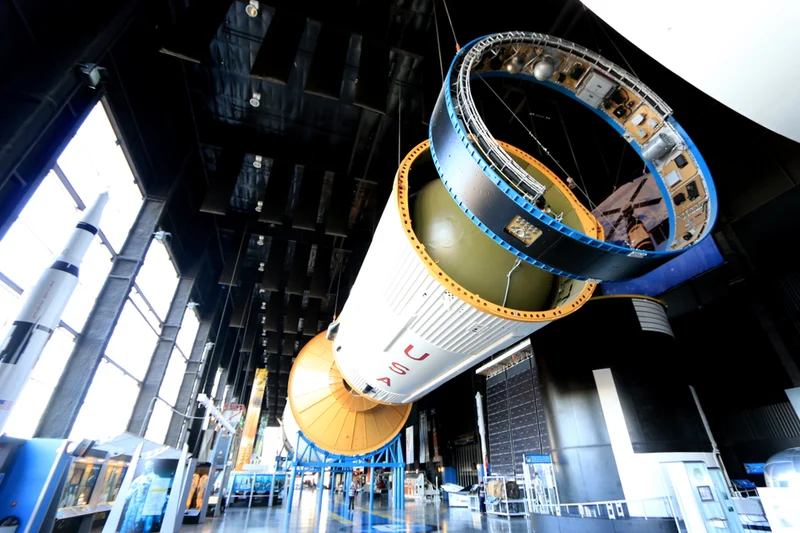
But then because Huntsville is an affordable place to live, it has a fantastic art scene as well, a lot of creativity, because artists can afford to live there. So you really see that juxtaposition and how they come together.
There is the Lowe Mill, which is the largest privately owned building in the United States. It used to be a factory that made military boots for the Vietnam War. And the person who bought it opened it up to artists. So it's all artist studios, and you can just walk the halls and enjoy.
I met a lovely man named Danny Davis, who hand-makes guitars. He only makes 12 a year. And he was a rocket scientist, of course, and he builds each guitar based on what he did to test a rocket. So it's fascinating to see these two environments kind of meld together and how they complement each other.
Frommer: Before I let you go, nitty-gritty information: Because it can be hard to know what is on PBS when, how can people watch your show?
Brown: First of all, they can go to my website, samantha-brown.com, and we have a "How to Watch" tab. Basically, you plug in your zip code and then the entire schedule appears in your zip code.
All PBS stations are local in a sense, and so it's a different time period, no matter depending on where you live.
Frommer: Thank you so much, and congratulations on 25 years. What an accomplishment!
Brown: Oh, my gosh, it feels good. It feels good to be here.