

The United States of America declared its independence from Britain in 1776. In honor of the 250th anniversary of that seismic moment, Americans celebrated in 2026 with a diverse array of events, from a tall-ship parade in New York Harbor to a cage match on the White House lawn, just as the Founding Fathers intended.
Next year, a more obscure 250th anniversary will unfold with a bit less hoopla: The little state of Vermont celebrates a time when it was its own country for more than a decade.
After being folded into the Province of New York by the British Crown—it had previously been considered part of New Hampshire—Vermont decided to strike out on its own. In January 1777, Vermont declared itself an independent state, subject to rule by neither Britain nor N.Y.. Delegates signed its constitution a few months later at a tavern in the town of Windsor, effectively creating a very petite new country that was unrecognized by any other government. Over the next 14 years, Vermont minted its own coins, ran its own postal service, and conducted secret negotiations with Britain.
Come 2027, Vermont will celebrate that brief stint of independence with a host of events. The schedule of those celebrations is still being decided, but we’d say: plan a trip anyway. Vermont is an unusually good place to get a sense of what life was like during the crucial early days of the new American republic, making it catnip for history lovers. (Speaking of which, in colonial America, catnip was a medicinal remedy for humans, often brewed as a tea.)
Here are just a few places where you can get a potent sip of what life was like back then.
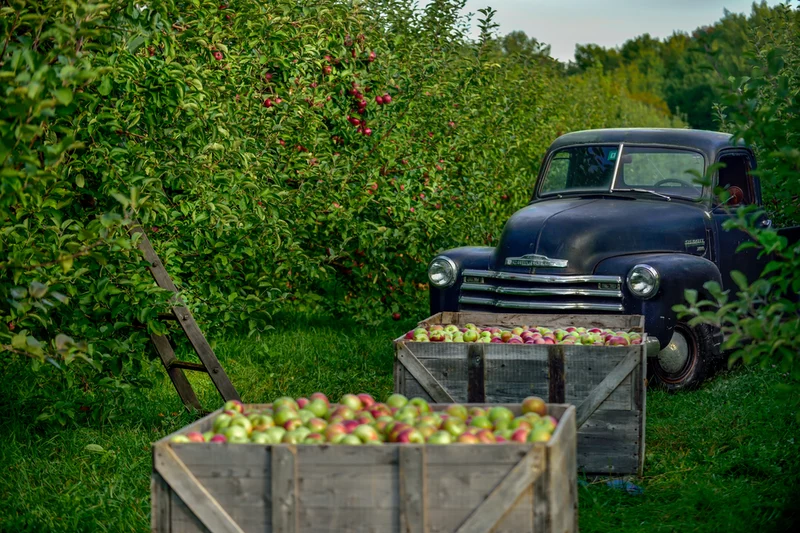
The same year that Vermont joined the United States, folks settled on a piece of land in Dummerston, not far from the Massachusetts border. In 1845, Rufus Scott bought the property, and by 1870 had begun planting apple trees. Today, Scott Farm boasts more than 130 varieties of heirloom apples, with names like Cornish Gilliflower, Nodhead, and Belle de Boskoop. In season, you can stop by to pick your own fruit, listen to live music, and fill jugs with sweet cider pressed on-site. There’s apple education on tap, too: the farm has pie-baking classes, and sometimes offers hard-cider making. The Stone Trust, which is located on the Scott Farm property, teaches attendees to create traditional stone walls in all sorts of styles, and the path to one of the orchards meanders by dozens of beautiful structures they’ve created.
Apples are crucial to Vermont’s agricultural economy, and there are dozens of other places to visit for pomological adventures. These include Allenholm Farm in South Hero, the state’s oldest commercial orchard still in operation; 220-acre Champlain Orchards in Shoreham, which offers cherries, plums, apricots, and quince in addition to apples, and produces a lush apple butter; Shelburne Orchards, which distills its own apple brandy; and Burtt’s Apple Orchard in Cabot, known for family-friendly picking and cider slushies.
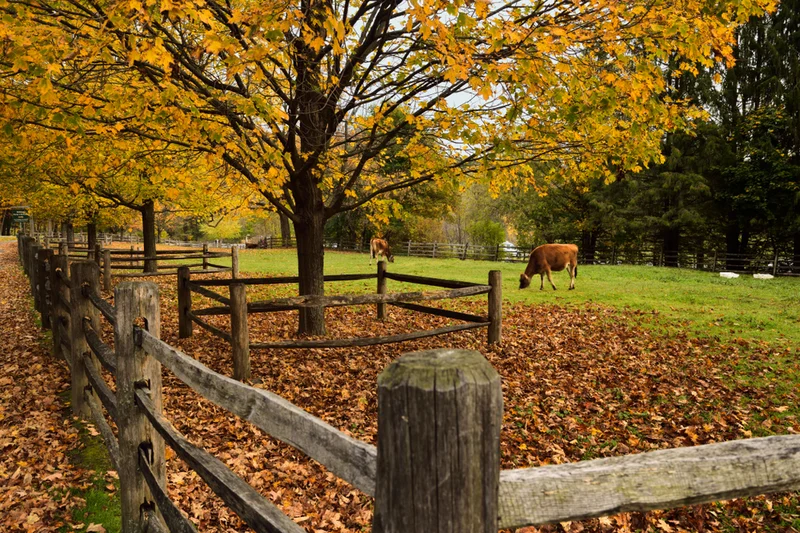
In 1871, conservationist Frederick Billings, who was concerned by the deforestation he saw on Vermont hillsides, established a model farm in Woodstock to demonstrate how agriculture and environmental protection could go hand in hand. Still a working dairy, Billings Farm produces cheddar with milk from its Jersey cows, and the barn is home to an agricultural museum. It makes a fun visit during warm weather, but some of the finest festivities included in Woodstock’s December Wassail celebration take place at the farm: there’s candle dipping, butter making, horse-drawn wagon rides, and a ritual blessing of the orchard.
For a more intimate experience, farm stays, such as the one at Fat Sheep Farm & Cabins, are free of crowds and might come with the option of feeding sheep or learning how to bake sourdough bread. You can book Fat Sheep directly or through Farmstayus.com, one of the many Vermont farms on that helpful site.
Vermonters refer to March and April as “mud season,” and you’ll pay rock-bottom prices for accommodations during those months. But it’s also maple syrup season, and at the Green Mountain Audubon Center in Huntington, staff collect sap in classic buckets (many modern operations use plastic tubing) to boil over wood fires. You can watch the action during their sugaring education programs and "Sugar on Snow" parties, which center on the statewide Maple Open House Weekend, March 20-21, 2027. Throughout the season, but especially on those days, there are plenty of sugarhouses that host gatherings (click on our link for a map of them). At most of them, you’ll get to watch sap boil and try freshly poured maple taffy served with a sour pickle and a doughnut.
Historic Craft-Centered Vacations
There was a time when Vermont had a higher population of sheep than of humans. In 1840, approximately 1.7 million fluffy ovines roamed the state’s pasturelands, once its forests, while fewer than 300,000 people called the Green Mountains home.
It’s no surprise, then, that fiber arts are among the activities prized by traditionalists. At the Newbury School of Weaving, serious devotees can learn to dye skeins of wool, dress looms, and make blankets, carpets, or even shirts. For the more casually interested, the annual Vermont Sheep & Wool Festival in Tunbridge (October 2-3, 2027) is an action-packed introduction to fleece, with shearing, spinning, and knitting on display, and plenty of opportunities for shopping.
Before box stores and online ordering, folks like orchardists and farmers needed to be able to acquire the tools of their trades and repair broken equipment. Enter the village blacksmith. The trade of forging metal may have ebbed after the Industrial Revolution, but there are a handful of places in Vermont where practicing blacksmiths teach people to make their own hooks, nails, and chain links. At Blackthorne Forge in Marshfield, Steve Bronstein, whose iron menorah once graced a U.S. postage stamp, periodically offers private and small-group classes.
A pair of Vermont museums, the Lake Champlain Maritime Museum in Vergennes and the Old Stone House Museum & Historic Village in Brownington, offer classes in smithing, too. The latter also has classes in basket weaving and rug braiding.
Historic Sites and Human-Powered Sports
Built in 1858, the Summit House hotel sat on the ridge of Mt. Mansfield, Vermont’s highest peak. Guests arrived via horse-drawn carriage—or by hiking. The hotel is long defunct, but it was a leader in encouraging visitors to take in the scenery on foot. (The State of Vermont’s Trail Maps and Guides page offers trails for trekkers of all abilities.) Visitors to the state’s mountain resorts, like Smugglers’ Notch and Jay Peak, can try out increasingly popular human-powered “uphill” skiing.
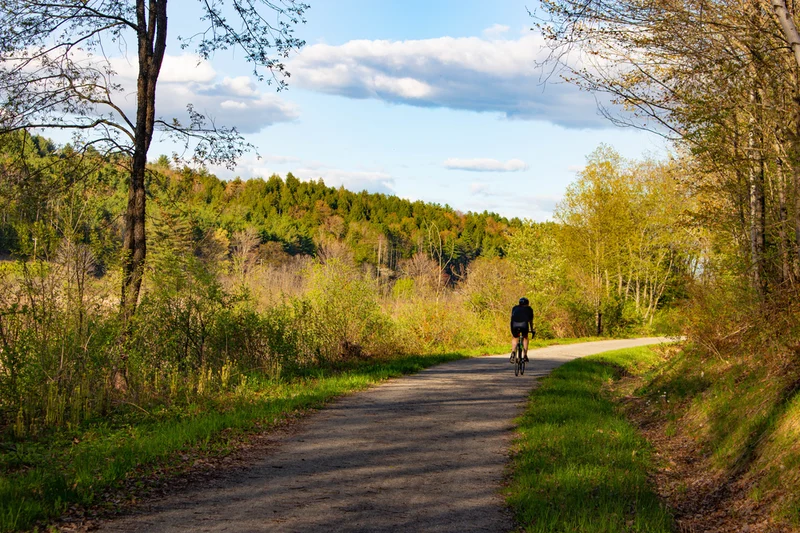
Prefer wheels? Completed in 2023, the Lamoille Valley Rail Trail connects the old manufacturing town of St. Johnsbury to Swanton (just shy of the Canadian border) via a remarkably non-hilly, 93-mile gravel path that used to be a railbed. Before you ride, make sure to visit the Fairbanks Museum, a gem of a natural history museum that opened in 1891, and the St. Johnsbury Athenaeum, a Victorian library that has Albert Bierstadt’s lush 10-by-15-foot The Domes of the Yosemite in its art gallery—one of the oldest in the United States.
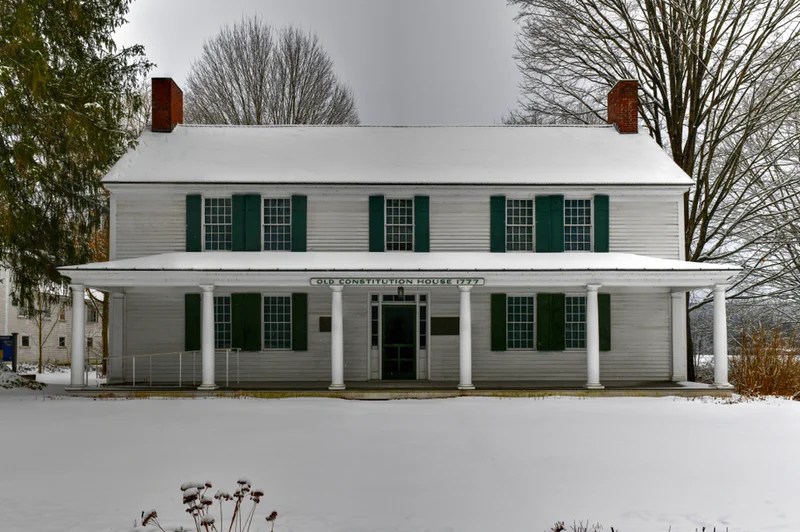
To go back to the state’s very beginning, swing through Windsor for a visit to the Old Constitution House, located in the tavern where its namesake document was adopted. On July 8, 2027, there will be a celebration to commemorate that historic event.
Then, stop at the American Precision Museum, a surprisingly engaging place to learn about Vermont’s role in early manufacturing. It was in Windsor that a group of inventors refined methods for using milling machines and lathes to create interchangeable parts for rifles. Through its exhibits, the museum shows how this use of technology gave the United States a crucial edge during the Industrial Revolution and beyond.
Before leaving the state, slip over to Artisans Park, a modern industrial park that’s home to a Simon Pearce glassblowing and pottery studio, as well as SILO Distillery and the Harpoon Brewery Taproom and Beer Garden, where you can drink a toast to 250 years of Vermont.