

Last year's Atlantic hurricane season was relatively normal from a historical perspective, according to the National Oceanic and Atmospheric Administration (NOAA). There were, however, some jolts.
For the first time in a decade, not a single hurricane struck the United States during the season, which lasts from June 1 through November 30 and typically reaches its peak from the middle of August to the middle of October.
Although 2025's tally of 13 named storms (with wind speeds of 39 mph or greater) and five hurricanes (winds of 74 mph or greater) fell within the bounds of normalcy, three of those storms were Category 5 hurricanes (winds of 157 mph or greater).
And one of those, Hurricane Melissa, became, per NOAA, "one of the strongest Atlantic basin hurricane landfalls" ever when it hit southwestern Jamaica, bringing extensive damage to that island and others.
Fewer storms doesn't mean less intense ones.
That's worth keeping in mind as we get closer to the 2026 hurricane season and early forecasts begin appearing.
NOAA's National Hurricane Center is expected to begin issuing its regular outlooks for the season starting in May.
But the hurricane experts at AccuWeather got an early start by releasing their initial forecast last week.
AccuWeather's forecast for the Atlantic hurricane season in 2026
For 2026, AccuWeather expects a "near- to below-historical-average" Atlantic hurricane season.
The company's meteorologists expect 11 to 16 named storms, with four to seven of those developing into hurricanes and two to four becoming major hurricanes (with wind speeds of at least 111 mph).
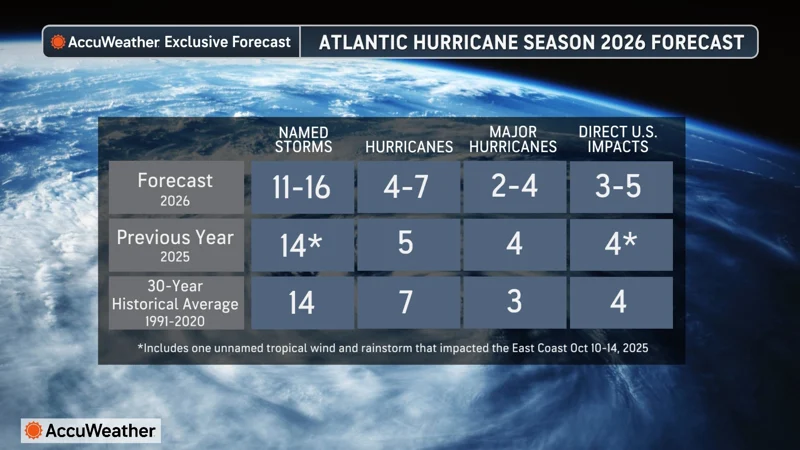
"The 2026 season is forecast to fall below the 10-year average for both total storms and hurricanes, even at the higher end of AccuWeather’s forecast," the weather watchers' report points out.
Though that is encouraging news, AccuWeather is predicting somewhere between three and five storms will impact the U.S. directly this year, up significantly from last year's comparatively calmer record on the East and Gulf coasts.
"It's very important that everybody from South Texas all the way to Maine prepares equally for each and every hurricane season, regardless of the forecast," said Alex DaSilva, AccuWeather's lead hurricane expert, in a statement. "Even if it's expected to be a slightly below average hurricane season, we can still see major hits across the United States."
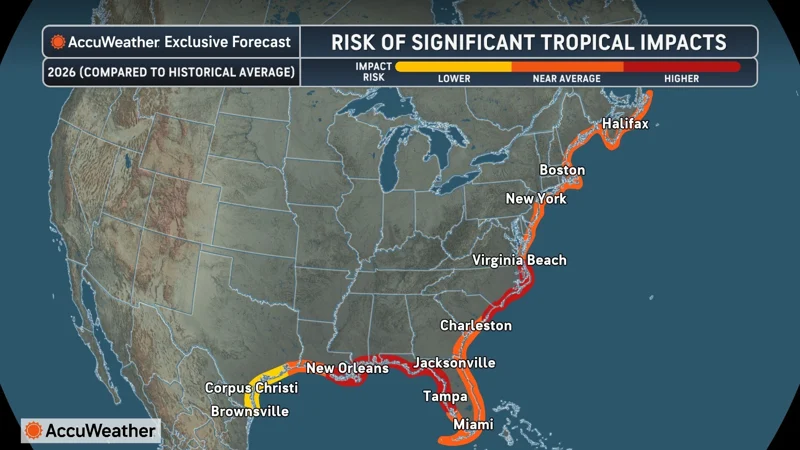
Parts of the country at elevated risk of tropical impacts, the forecast warns, are the central and eastern Gulf Coast (from around New Orleans to Tampa, Florida) as well as the Carolinas and parts of the Virginia coastline.
One of the biggest factors likely to influence hurricane season this year: El Niño, the weather pattern that, NOAA explains, "causes the Pacific jet stream to move south and spread further east," often leading to less hurricane activity over the Atlantic basin.
That doesn't mean travelers should let down their guard, though, when visiting the Caribbean, Florida, and other potentially vulnerable destinations during hurricane season.
Be prepared when traveling during hurricane season
"It only takes one storm to cause major damage, disruption, and heartache,” AccuWeather's DaSilva says. “Review your insurance coverage, safety plans, and local evacuation routes now. Make sure your emergency supplies are stocked up.”
For tips on staying prepared and secure amid severe weather, consult the hurricane safety page on the website of the American Red Cross.
You can lower your risks even further by vacationing in one of the Caribbean locales that almost never get hit by hurricanes.