

What follows is a transcript of a recent Frommer's Travel Show podcast featuring an interview with Barbara Balfour, author of Frommer's Prince Edward Island, Nova Scotia, and New Brunswick. The conversation has been edited for length and clarity.
Barbara Balfour: [When people] think of the Maritimes the first images that come to mind are of course lighthouses, lobster dinners, and those iconic pastel-colored fishing villages. But beneath all that charm, there's a history that stretches back thousands of years.
It was shaped by Indigenous peoples, by European settlers, Acadian communities, and unfortunate maritime tragedies, because the sea has its way of reminding us all that she's the boss.
One thing that we don't necessarily talk about as much as we should is that long before European ships appeared on the shores of the Maritimes, it was home to many vibrant Indigenous nations. For example, in Nova Scotia the Mi'kmaq people lived in harmony with the forests and the rivers and the oceans for thousands of years. They developed sophisticated fishing techniques, they traveled by canoe, and they created art and spiritual practices and storytelling traditions that are still alive today.
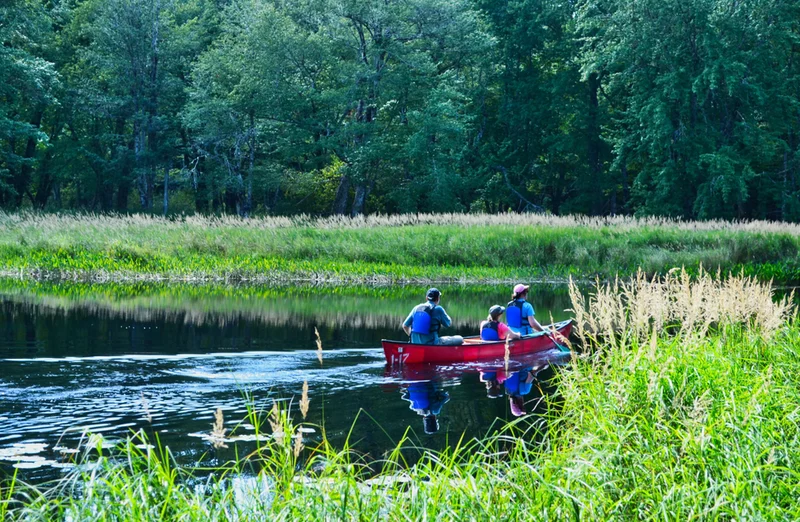
There are some places like Kejimkujik National Park and Historic Site where you can actually see ancient petroglyphs that are carved into the rocks. You can also canoe through waterways once used for trade, and you can even camp under the dark skies like Indigenous people have done for generations.
Pauline Frommer: And that's just one of the many Indigenous sites.
I'm not sure how many of our listeners know about the Acadian history of the region, so tell us a little bit about that, because it's quite tragic.
Balfour: I'm glad you asked about that, because it's really a formative part of the Maritimes. The Acadians were French settlers who arrived in the early 1600s. They developed communities across mostly Nova Scotia and New Brunswick. They farmed the land and created a culture that blended European and local influences. But their history is marred by tragedy and forced expulsion.
So here's the backstory. Britain had taken control of the region from France in 1713, but the Acadians didn't want to pick a side. They refused to fight against the French, who they saw as their cultural cousins, or the Mi'kmaq, their Indigenous allies. They just wanted to farm and live in peace.
But when the French and Indian War broke out in the 1750s, the British got nervous and saw the Acadians as a potential threat. What if they helped the French in an invasion? So when many Acadians refused to swear unconditional loyalty to the Crown, the British decided to remove them altogether.
That started in 1755, and it was pretty awful. Entire villages were burned, families were torn apart, and more than 10,000 Acadians were deported to places as far away as American colonies, France, England, the Caribbean. Tragically, many didn't survive the journey.
And the heartbreak of it all is that the Acadians weren't looking to join anyone's war. They were neutral. The expulsion was really about the British wanting to secure land and bring in settlers that they trusted more.
Fortunately, the story doesn't end there. Acadian survivors eventually came back, and they made sure their voice and their food and their music didn't just survive, [but became] a defining part of the Maritimes.
You see it everywhere. You see it in an event held every year on August 15—a lively parade called Tintamarre. Acadians flood the streets with pots and pans and noisemakers to show everyone, Hey, we're still here. We didn't go anywhere.
Frommer: Where is this?
Balfour: New Brunswick.
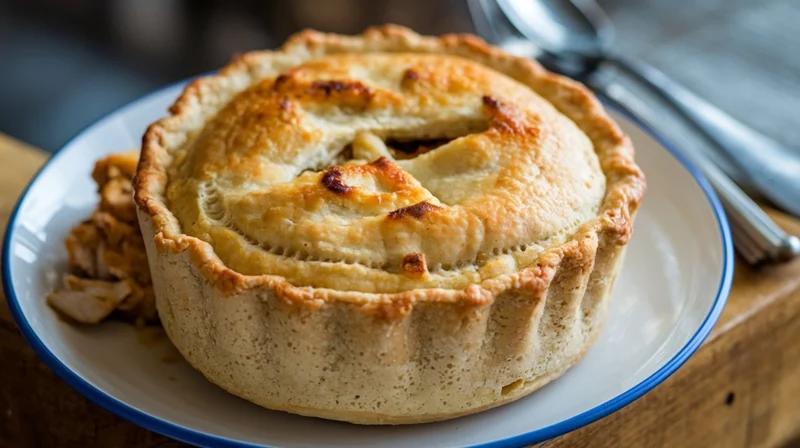
You can also taste a comfort food classic that's still very much a feature in Acadian homes. It’s called rappie pie, a really hearty, heartwarming casserole of grated potatoes, some sort of meat like chicken or pork, and onions with molasses on top.
It sounds odd, but you gotta trust me on this. [The molasses] ties everything together. It’s really good—a comfort food classic.
Today you can also visit many different Acadian sites to see re-created homes and see traditional farming methods. You can hear some of the music and stories that survived exile.
Modern Acadian culture is still very vibrant. You see that pride in people who can trace their beginnings to the original settlers today.
Frommer: Yes, there are [sites] where reenactors get dressed up in colonial costume and take people through [the history]. If somebody wants to go to the Maritimes and have that experience just once, what would be your top pick?
Balfour: Fort Beauséjour, which is a restored French fort near Sackville [in New Brunswick]. It tells the story of Acadian life before and during the conflicts that led to their deportation.
And then of course in Nova Scotia there's the historic Acadian village that actually lets you walk through re-created homes and see, for example, a blacksmith plying his trade or hear some of the music and the stories that survived exile and taste things like rappie pie.
Frommer: You were talking a moment ago about New Brunswick, and I feel like New Brunswick is the forgotten stepchild of the Canadian Maritimes. People know that they want to go to Prince Edward Island because they're really into Anne of Green Gables. They know they want to go to Nova Scotia because the Cabot Trail is rightly famous as one of the best driving vacations in North America.
But I think a lot of people look at New Brunswick and—besides the fact that a lot of people travel through it because it's a good route from Maine into the Maritimes—they don't really know why you would go to New Brunswick. So what would you say to somebody who has no idea what they would see in New Brunswick?
Balfour: It is the mystery province of the Maritimes, and it honestly shouldn't be. There's so much here that's absolutely worth a trip.
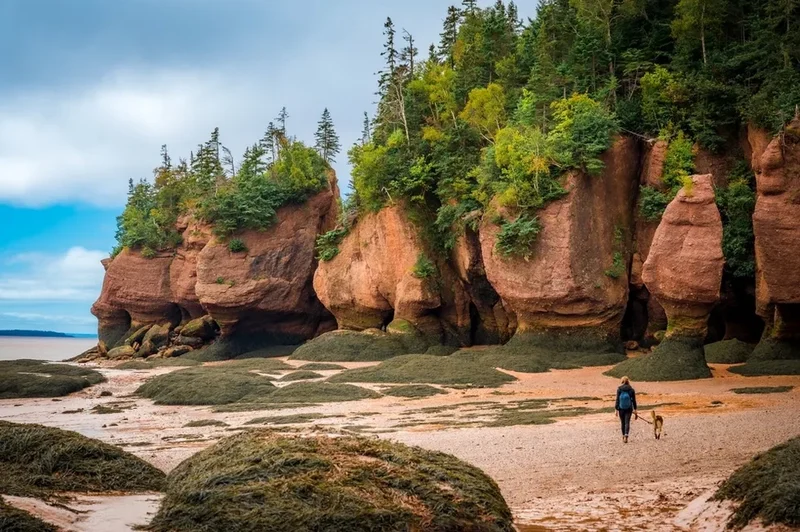
First and foremost, the Bay of Fundy is famous for having the highest tides in the world. They can rise and fall more than 50 feet in a single day. That tidal phenomenon creates one of the most unusual natural attractions, which is the Hopewell Rocks, also called the Flower Pot Rocks.
At low tide, you can walk along the ocean floor and you weave between these massive rock formations that look like elephants, tulips, ice cream cones—it's fun to see what shapes you can identify.
And then at high tide the water rises very dramatically around them and makes it look like the rocks are floating.
It's such a rare opportunity to witness nature on an almost theatrical scale. If you're a photographer, it's absolute heaven. To see it up close and personal is a bucket list experience and one I highly, highly recommend.
Frommer: That's the highlight of New Brunswick, but you don't want to go just for that. What are several other things that you really enjoy in New Brunswick?
Balfour: New Brunswick also has a very rich urban history. Saint John, which is the province's largest city, has a beautiful waterfront that's lined with historic warehouses, restaurants, and craft breweries. You get a feel for a working port that's been alive for centuries.
In Moncton, there's an oddity called Magnetic Hill. It's basically an optical illusion where cars appear to roll uphill when you put them in neutral. It's a bit of kitschy roadside magic. It's also near an amusement park and a golf course, a winery, a spa. So it's a perfect stop for families and people who appreciate a little bit of oddball fun.
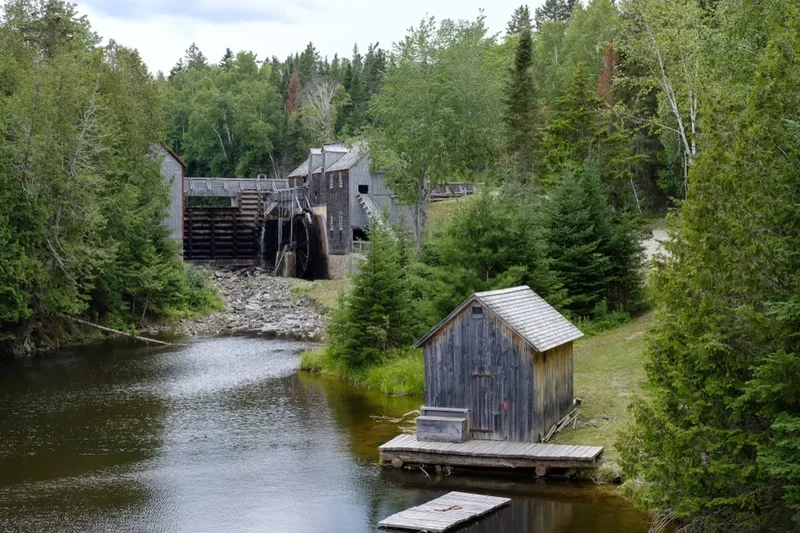
Also, you asked earlier about historical settlements, and one that I forgot to mention is King's Landing Historical Settlement. It’s about 20 minutes away from Fredericton, and that gives you a really vibrant taste of 19th-century life [with] costumed interpreters and farms and shops [where] you can see candlemaking and farming and more. They do a really good job of bringing it all together.
Frommer: [This King’s Landing] has nothing to do with Game of Thrones, right?
Balfour: No, no, no, no. Absolutely nothing.
And if you're a nature buff, I would say out of the three Maritime provinces, New Brunswick is really your best bet for awe-inspiring, beautiful landscapes and natural parks and gorgeous drives.
I'm sort of more partial to New Brunswick because it still feels a little bit off the beaten path. And the Kouchibouguac National Park is a real natural wonder, with salt marshes and sand dunes and rare birds like the piping plover. There's walking and cycling, and it's just a perfect place to connect with nature in a way that feels really untouched and not swarmed with tourists, even in high season.
Frommer: Well, that's always a blessing, especially today. It's so hard to get away from the crowds.
Which I guess leads us to Prince Edward Island, where you will find crowds of people who are in love with Anne of Green Gables, because that was a book that was used to teach English for many years in Japan and in other countries. So you often get people from really far-flung parts of the world coming to this little island just to see where Lucy Maud Montgomery, who was the author, lived and wrote. And there's a lot of fake places where supposedly Anne lived. She was a fictional character, so she didn't live at any of them.
Can you enjoy Prince Edward Island if you don't give a damn about Anne of Green Gables?
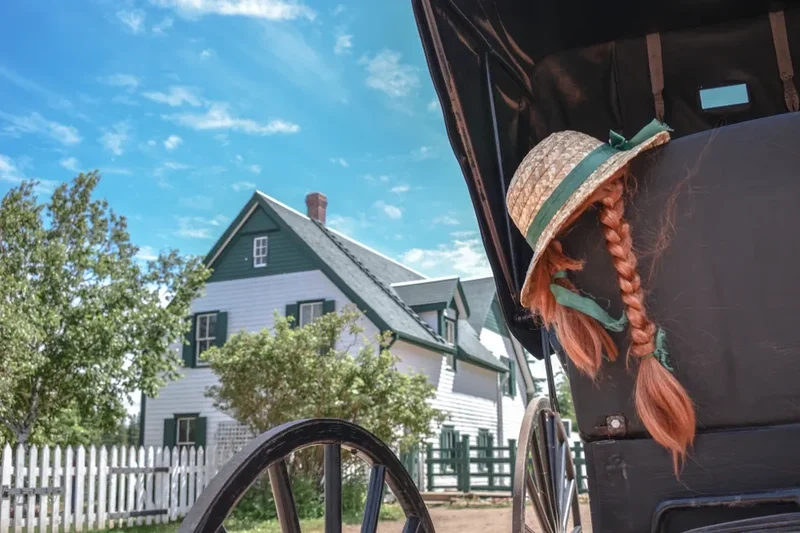
Balfour: You absolutely can. But I do think if you at least brush up on her story it's a fun bonus. And like you said, this fiery red-haired orphan heroine of Lucy Maud Montgomery's novels is famous worldwide.
What I find really interesting is the darker history that no one really talks about, about Lucy Maud Montgomery herself. Despite writing these stories of whimsical friendships and Pollyanna-esque scenarios and narratives, she herself was a very complex, fascinating, and tragically tormented figure. She battled depression throughout her life. She had sometimes scandalous relationships and affairs and personal mental health struggles [that] deeply influenced the melancholy in her writing. Her life ended in suicide, which isn't talked about openly or very much.
But if you dig deeper with the interpretive guides and the museum staff, you will be able to hear more.
But you do not need to be an Anne of Green Gables fan to fall in love with P.E.I. The seafood alone is enough to visit. My favorite place to have a really wonderful lobster roll is this family-run shack called Richard's. It has several locations, but my favorite is the original one in York. You sink your teeth into a lightly buttered, generously filled lobster roll—like a pound and a half of lobster shoved right in there. And [as you dine] you can feel the ocean breeze in your hair.
If you want something fancier, there's one of Canada's most celebrated chefs, who's actually originally from New York, chef Michael Smith. He runs a spectacular inn, the Inn at Bay Fortune, that also has a restaurant with a menu that's focused on completely locally sourced seafood and produce.
He has a nightly event in the summer called the Fireworks Feast. It's a little bit pricier, but it's worth every penny. It’s basically an all-night-long extravaganza of feasting on farm-to-table food.
There’s also the landscape [of Prince Edward Island,] there's the outdoor adventures—the island is stunning. You've got the red cliffs and the white sandy beaches and coastal drives and slow drives through idyllic villages, dotted with lighthouses and fishing boats and the colonial architecture that give the island a timeless feel.
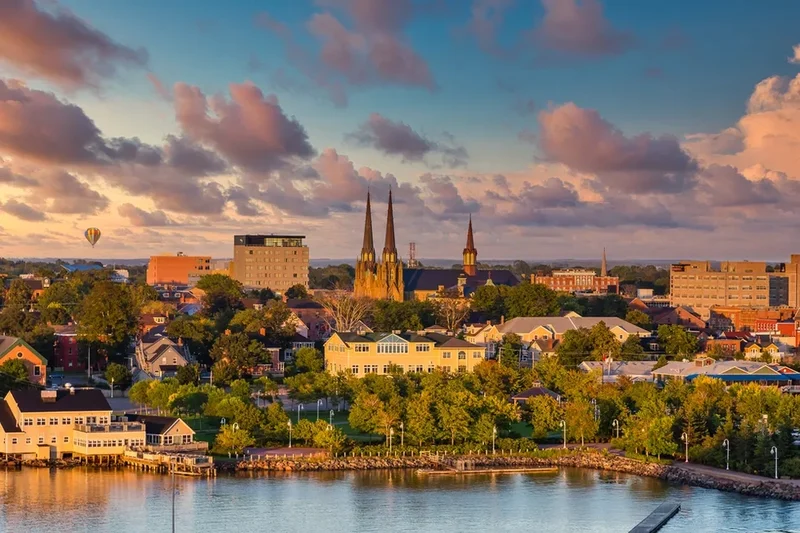
Charlottetown, the capital of P.E.I., is very historically important because that's where the Confederation of Canada began. So you can explore a lot of that history without thinking about Anne of Green Gables at all.
Frommer: Let’s talk Nova Scotia. To me, that's the crown jewel. But maybe I'm wrong. A lot of people want to do the Cabot Trail. What makes that such a vaunted travel experience?
Balfour: It's the classic Canadian East Coast experience. It's a loop of about 300km that winds through many different landscapes: the Cape Breton Highlands, the coastline, the cliffs, lush valleys, and forests. The scenery changes constantly, so it's almost like multiple road trips in one.
And whether you hit it in late spring or the early fall, whether you see the wildflowers starting to bloom or the foliage explode in red and orange and gold, it's just absolutely spectacular. Especially if you want to stop for hikes and photography [at] lookout points along the way. It's just wonderful.
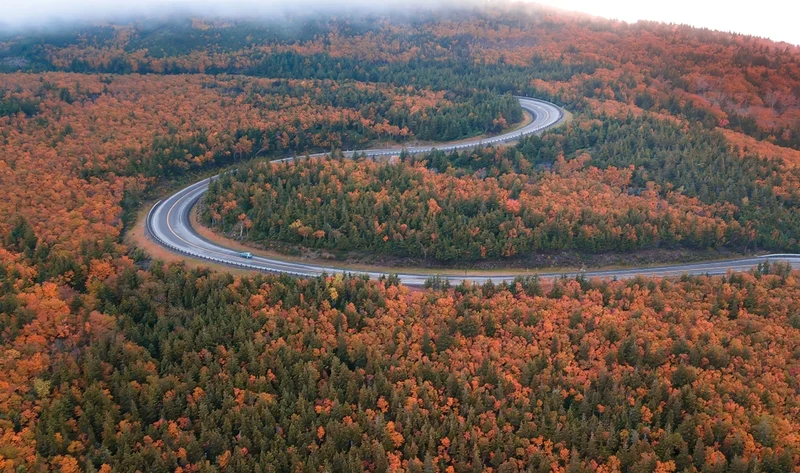
There are many must-stop points where you can do whale-watching, you can do kayaking, you can check out the local boutiques, or take smaller detours for quiet hiking or paddling away from the main loop.
[The drive] is best savored slowly. If you have at least 3 or 4 days, that’s perfect. It's more of a journey than a drive. That's how I think of it.
Frommer: Most who take the road trip fly into Halifax, which is a surprisingly appealing city, I thought, when I visited it. Incredible lobster. In fact, I went out with a bunch of folks from Halifax and they asked me with straight faces if I had ever tried lobster before. It was like they had invented it. And I gotta say, it was more delicious there than I've ever had it before.
But also some really fascinating museums and historic sights.
Balfour: Halifax is a city that punches well above its weight. It’s got some of the finest restaurants in all the Maritimes. It’s got the best shopping. It's got craft breweries. It's got a five-star hotel, the Muir, that has its own secret speakeasy.
And on top of it all, it's also a really convenient gateway to sites like Peggy's Cove and Lunenburg.
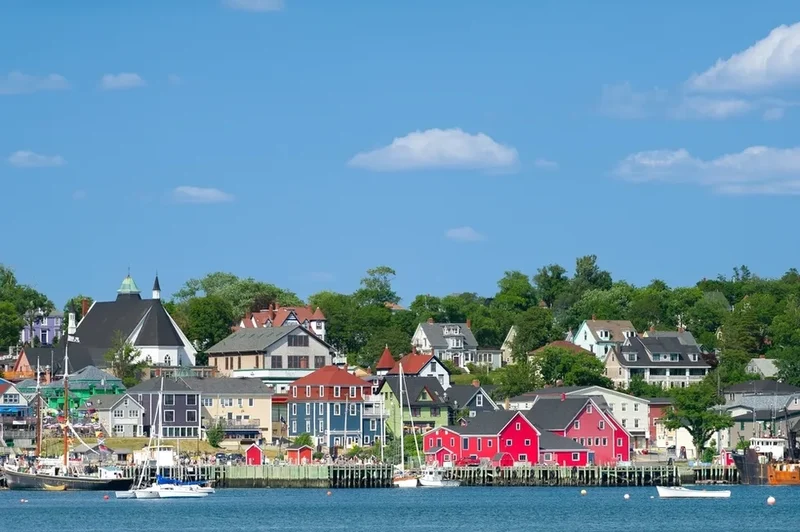
Frommer: When you see photos of [Lunenburg]—and I have not been—it looks like the ideal Canadian Maritime city, with the houses along the waterfront and each one is a different pastel color. Some are bright red. It just looks like you've gone back in time. It looks like an idyllic place to visit.
Balfour: It's no surprise that UNESCO declared it a World Heritage Site back in 1995.
[Lunenburg is] also where the Bluenose still sails. If you've ever seen the Canadian dime, the 10-cent piece, that's the original Bluenose ship. The Bluenose that you see parked [in Lunenburg] is a replica that was built in the 1960s, but it still sails. [It] alternates between Lunenburg and Halifax, and you can actually book a 2-hour sail on it. So you get to step aboard history itself. It's a lot of fun.
[Lunenberg] was first settled in the 1750s by German, Swiss, and French colonists. [The town is] a great slice of history.
Frommer: We started at the beginning talking about some of the oddities. You talked about Magnetic Hill. What are some of the other odd spots in the Canadian Maritimes?
Balfour: One of the ones that just immediately come to mind are the Bottle Houses and Gardens in Cap Egmont in Prince Edward Island. Here you’ll find a tavern, a chapel, and a six-gabled house that's made entirely of thousands of recycled glass bottles. [The structures] were built in the 1980s.
Imagine thousands of recycled glass wine bottles that are embedded in the wall, and then when you walk inside, the sunlight turns the rooms into sort of a rainbow kaleidoscope. It's a little psychedelic and completely unique. Definitely one of the oddest things I've ever seen.
And I hear the business is also for sale right now, if anyone's interested.

Frommer's Prince Edward Island, Nova Scotia and New Brunswick
Comprehensive, fun-to-read, and fully up-to-date, Frommer’s Prince Edward Island, New Brunswick, and Nova Scotia introduces readers to the best and most authentic restaurants, hotels, shops, attractions and nightlife in the Maritimes; and provides unique insights into their history, natural wonders ...
Get the bookFrommer's Prince Edward Island, Nova Scotia and New Brunswick
Comprehensive, fun-to-read, and fully up-to-date, Frommer’s Prince Edward Island, New Brunswick, and Nova Scotia introduces readers to the best and most authentic restaurants, hotels, shops, attractions and nightlife in the Maritimes; and provides unique insights into their history, natural wonders ...