|
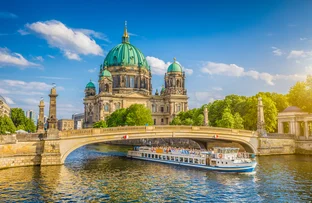
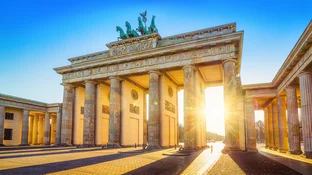
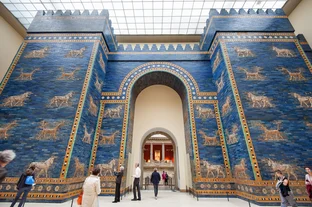
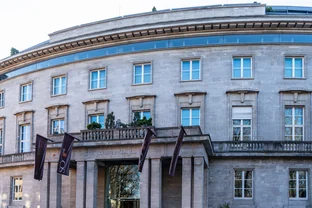
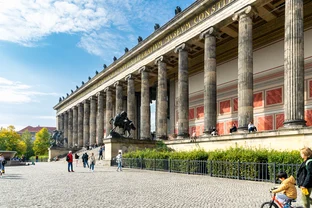
Planning a TripFor visitor information, head for Berlin Hauptbahnhof (the central rail station), open daily 8am to 10pm. There's another tourist office at Neues Krarnzler Eck, along the Kurfürstendamm, the popular shopping boulevard, open Monday to Saturday 10am to 8pm, Sunday 10am to 6pm. Other offices are at the south wing of the Brandenburg Gate, open daily 10am to 6pm. The central phone number for all tourist information is tel. 030/250025 (www.visitberlin.de). The staff will make hotel reservations for you and book tickets for major events and sightseeing tours. Dialing Germany -- Remember that the phone numbers in this guide contain an initial 0 in the German city code. That 0 is used only within Germany. Omit it when calling from abroad. Berlin Today & Tomorrow Berlin is living up to its reputation as a dynamic, exciting hub of activity as never before. The city's nightlife is among Europe's best and wildest. And since the German government relocated here from Bonn, Berlin is bidding to become the reborn capital not only of Germany, but of all Europe. As befits a capital, the city has undergone a major face-lift. More than $150 billion was invested in new streets, buildings, and railways. The former East Berlin is rapidly being restored and gentrified, particularly in the Mitte (central) district. Here, luxury hotels and shopping arcades compete with the glitter -- and litter -- of the Ku'Damm (short for Kurfürstendamm, a wide boulevard at the center of activity in the western part of Berlin). The reopening of the Hotel Adlon, overlooking the Brandenburg Gate, is particularly notable, evoking the restoration of Unter den Linden and the return to some of its prewar glory; Adlon, at one time, was the most important hotel not only in Berlin, but in all of Germany. Prenzlauer Berg, a blue-collar eastern neighborhood that escaped the worst of the wartime bombing, is now a chic district of cafes and boutiques. The downside of all this for Berliners has been the sharp increase in real estate prices, as well as the inconvenience of living in the world's largest construction site. Many of Berlin's famous buildings have also been restored. The rebuilt Reichstag has a glittering glass dome; upon the building stands not the old glowering imperial hunter, but the national symbol, the eagle (locals refer affectionately to the statue as "the fat hen"). The Oranienburger Strasse Synagogue (commonly known as Neue Synagoge Berlin-Centrum Judaicum/The New Synagogue), wrecked on Kristallnacht and finished off by Allied bombers, has been rebuilt to its previous splendor. Likewise, Berliner Dom (Berlin Cathedral) and the five state museums on Museumsinsel (Museum Island) have been returned to their original glory. Visitors unfortunately often overlook Berlin's natural attractions. Few metropolitan areas are blessed with as many gardens, lakes, woodlands, and parks -- all of which cover an amazing one-third of the city. First-time visitors are often surprised to learn that small farms with fields and meadows still exist within the city limits. City Layout Berlin is one of the largest and most complex cities in Europe. Because it's so spread out, you'll need to depend on public transportation. No visitor should try to explore more than two neighborhoods a day, even superficially. The center of activity in the western part of Berlin is the 4km-long (2 1/2-mile) Kurfürstendamm, called the Ku'Damm by Berliners, who seem to have a habit of irreverently renaming every street and building in the city. Along this wide boulevard you'll find the best hotels, restaurants, theaters, cafes, nightclubs, shops, and department stores. It's the most elegant and fashionable spot in Berlin, but, like much of the city, it combines chic with sleaze in places. Walkers can stop off at one of the popular cafes lining the boulevard. From the Ku'Damm, you can take Hardenbergstrasse, which crosses Bismarckstrasse and becomes Otto-Suhr-Allee, which will lead to the Schloss Charlottenburg area and its museums, a major sightseeing area. The Dahlem Museums are in the southwest of the city, often reached by going along Hohenzollerndamm. The huge Tiergarten is the city's largest park. Running through it is Strasse des 17 Juni, which leads to the famed Brandenburg Gate (just south of the Reichstag). On the southwestern fringe of the Tiergarten is the Berlin Zoo. The Brandenburg Gate is the start of eastern Berlin's most celebrated street, Unter den Linden, the cultural heart of Berlin before World War II. It runs from west to east, leading to Museumsinsel (Museum Island), where the most outstanding museums of eastern Berlin, including the Pergamonmuseum, are situated. Unter den Linden crosses another major artery, Friedrichstrasse. If you continue south along Friedrichstrasse, you'll reach the former location of Checkpoint Charlie, a famous border site of the Cold War days. No longer a checkpoint, it now has a little museum devoted to memories of the Berlin Wall. Unter den Linden continues east until it reaches Alexanderplatz, the center of eastern Berlin, with its towering television tower, or Fernsehturm. A short walk away is the restored Nikolaiviertel (Nikolai Quarter), a neighborhood of bars, restaurants, and shops that evoke life in the prewar days. Finding an Address -- As for the numbering of streets in Berlin, keep in mind that the city sometimes assists you by posting the range of numbers that appears within any particular block, at least within major arteries such as the Kurfürstendamm. These numbers appear on the street signs themselves, which is a great help in finding a particular number on long boulevards. You won't find these numbers on street signs of smaller streets, however. Although some streets are numbered with the odds on one side and the evens on the other, many (including the Ku'Damm) are numbered consecutively up one side of the street and back down the other. Maps -- Good maps of Berlin can be purchased at bookstores or news kiosks, such as the Europa Press Center (a magazine and newspaper store in the Europa Center). One of the best maps is the Falk map, which offers full-color detail and comprehensive indexes (consequently, it's sometimes awkward to unfold and refold). Be sure to obtain an up-to-date map showing the most recent changes.
Note: This information was accurate when it was published, but can change without notice. Please be sure to confirm all rates and details directly with the companies in question before planning your trip. Related Features
|
|
|||||||||||||||||||||||||||||||||||||||||||||||||||||||||||||||||||||||||||||||||||||||||||||||||||||||||||||