Home > Destinations > North America > Canada > Atlantic Provinces > Nova Scotia > Cape Breton Island > Regions in Brief
Bookstore Travel Talk - Our Message Boards Tips and Tools Book a Trip Deals and News Trip Ideas, Activities, Lifestyles Hotels Destinations Frommers.com Home
Frommer's - The best trips start here. Frommer's - The best trips start here.
Sign up for our FREE Newsletters! Win a FREE Trip
  Email This Article Email Print This Article Print Get Frommer's RSS Feed RSS

Regions in Brief

Mabou & Vicinity

Mabou (pop. 400) is situated on a deep and protected inlet along the island's picturesque west shore. Scenic drives and bike rides are a dime a dozen hereabouts; few roads fail to yield opportunities to break out the camera or just lean against your vehicle and enjoy the panorama. The residents are strongly oriented toward music in their activities, unusually so even for musical Cape Breton Island.

Evening entertainment tends to revolve around fiddle playing, square dancing, or a traditional gathering of musicians and storytellers called a ceilidh (pronounced kay-lee). To find out where things are going on, stop by the village grocery store or The Mull across the road and scope out the bulletin boards.

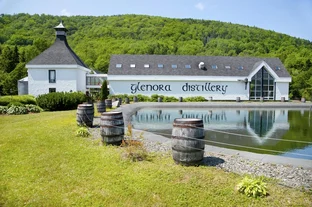
In a handsome valley between Mabou and Inverness is the distinctive post-and-beam Glenora Distillery (tel. 800/839-0491 or 902/258-2662). This modern distillery began producing single-malt whisky from a pure local stream in 1990 and began selling it in 2000. (The owner can't call it Scotch, because it isn't made in Scotland.) He has modified the process slightly to use Kentucky bourbon casks, which the distillers here believe imparts a mellower taste to the spirit than traditional sherry casks. Production runs take place later in the fall, but tours of the facility are offered throughout the summer. Tours cost about C$5 (US$4) and last about a half-hour (offered daily 9am-5pm from May-Oct); they conveniently end near the gift shop, where you can buy local music CDs, gift glasses, and even bottles of the whisky itself for about C$80 (US$64) a pop. Swing by and savor this new contribution to local highland lore.

The distillery has an adjoining restaurant and nine-room hotel, plus some spiffy chalets with knockout views; traditional music is often scheduled for weekends or evenings in the contemporary pub.

Margaree Valley

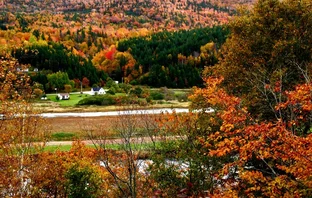
West of Baddeck and south of Chéticamp, the Margaree Valley region loosely consists of the area from the village of Margaree Valley near the headwaters of the Margaree River, down the river to Margaree Harbor on Cape Breton's west coast. Some seven small communities are clustered in along the valley floor, and it's a world apart from the rugged drama of the surf-battered coast; it's vaguely reminiscent of the farm country of upstate New York. The Cabot Trail gently rises and falls on the shoulders of the gently rounded hills flanking the valley, offering views of the farmed floodplains and glimpses of the river. In autumn, the foliage here is often among Eastern Canada's best.

The Margaree River has been accorded celebrity status in fishing circles -- it's widely regarded as one of the most productive Atlantic salmon rivers in North America, and salmon have continued to return to spawn here in recent years, which is unfortunately not the case in many other waterways of Atlantic Canada. The river has been closed to all types of fishing except fly-fishing since the 1880s, and in 1991 it was designated a Canadian Heritage River.

Learn about the river's heritage at the Margaree Salmon Museum (tel. 902/248-2848) in North East Margaree. The handsome building features a brief video about the life cycle of the salmon, and exhibits include fisherman photos by the score as well as antique rods (including one impressive 5m/18-footer), examples of poaching equipment, and hundreds of hand-tied salmon flies. Museum docents can help you find a guide to try your hand on the water. (Mid-June to mid-July and Sept and early Oct are the best times.) The museum is open mid-June to mid-October daily from 9am to 5pm. Admission is C$1 (US80¢) adult, C25¢ (US20¢) child.

The whole area is best explored by slow and aimless driving, or better yet, by bike or canoe. Margaree River Canoe Rentals (tel. 800/565-9993 or 902/235-2658), based at the Duck Cove Inn in Margaree Harbour, can arrange for a lazy paddle down the river.

When prowling around, watch for Cape Breton Clay (tel. 902/248-2860; www.capebretonclay.com), in the Margaree Valley, northeast of the salmon museum. One of the occupational hazards of being a guidebook writer is the requirement that I look at a lot of pottery, much of it bad and almost all of it claiming to be "unique." This work, by Margaree Valley native Bell Fraser, actually is unique. And quite wonderful. Crab, lobster, fish, shellfish, and ears of corn are worked into her platters and bowls in ways that are both whimsical and elegant. It's definitely worth a stop.

Cheticamp

The Acadian town of Chéticamp (pop. 1,000) is the western gateway to Cape Breton Highlands National Park and the center for French-speaking culture on Cape Breton. The change is striking as you drive northward from Margaree Harbour -- the family names suddenly go from MacDonald to Doucet, and the whole culture and cuisine change.

The town itself consists of an assortment of restaurants, boutiques, and tourist establishments spread along Main Street, which closely hugs the harbor. A winding boardwalk follows the harbor's edge through much of town, and offers a good spot to stretch your legs and get your bearings. (That's Chéticamp Island just across the water; the tall coastal hills of the national park are visible up the coast.) Chéticamp is a good stop for provisioning, topping off the gas tank, and finding shelter.

Chéticamp is noted worldwide for its hooked rugs, a craft perfected by early Acadian settlers. Those curious about the craft should allow time for a stop at Les Trois Pignons, which houses the Elizabeth LeFort Gallery and Museum. It is located on Main Street in the north end of town (tel. 902/224-2642; www.lestroispignons.com) and displays some of the 300 fine tapestries, many created by Elizabeth LeFort, who was Canada's premier rug-hooking artist for many decades until she passed away in 2005. It's open daily from 8am to 7pm in July and August; 9am to 5pm spring and fall; and 8:30am to 4:30pm in winter. Admission is C$4.50 (US$3.50) adult, C$4 (US$3) seniors, C$3.50 (US$3) students, C$15 (US$12) family, free for ages 12 and under.

In the 1930s artisans formed the Co-operative Artisanale de Chéticamp, located at 5067 Main St. (tel. 902/224-2170). A selection of hooked rugs -- from the size of a drink coaster on up -- are sold here, along with other trinkets and souvenirs. There's often a weaver or other craftsperson at work in the shop. A small museum downstairs (admission is free) chronicles the life and times of the early Acadian settlers and their descendants. It's closed from mid-October to May.

Several boat tour operators are based in Chéticamp Harbour. Seaside Whale and Nature Cruises (tel. 800/959-4253 or 902/224-2400) sets out in search of whales, seals, and scenery, and has hydrophones on board for listening to any whales you may encounter.

The most pleasing drive or bike ride in the area is out to Chéticamp Island, connected to the mainland by road. Look for the turn south of town; the side road is just north of Flora's gift shop on the Cabot Trail.

Pleasant Bay

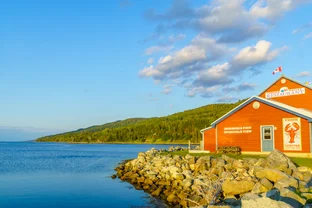
At the north end of the Cabot Trail's exhilarating run along the western cliffs, the road turns inland at the village of Pleasant Bay. The attractive, active fishing harbor, protected by a man-made jetty, is a short walk off the Cabot Trail, and sits at the base of rounded, forested mountains that plunge down to the sea.

The newly opened whale interpretive center (tel. 902/224-1411), built on a rise overlooking the harbor, features exhibits to help explain why the waters offshore are so rich with marine life. It's open June through mid-October from 9am to 5pm; admission is C$4.50 (US$3.60) adults, C$3.50 (US$2.80) children and seniors, C$14 (US$11) family.

Whale-watching tours are offered daily June through mid-October from the harbor by Capt. Mark Timmons of Capt. Mark's Whale and Sea Cruise (tel. 888/754-5112 or 902/224-1316). The 2 1/2-hour cruise on the 42-ft. Bay Hookup provides unrivaled glimpses at the rugged coast both north and south, and often a close-up look at whales (almost always pilot whales, frequently finbacks and minkes, occasionally humpbacks). The boat has a hydrophone on board, so you can hear the plaintive whale calls underwater. Trips are C$25 (US$20) per adult, C$12 (US$9.50) children, and reservations are encouraged. The outfit runs three to five tours daily during the season.

As you entered town you may have noticed the Timmons Folk Art Studio (tel. 902/224-3575) near the "Y" in the road. Inside and out you'll find the colorful, whimsical folk art by Reed Timmons (Capt. Mark Timmons's cousin). Reed carves fish, cows, seagulls, and sailors that are rustic and visually arresting.

If you bear right at the "Y" and continue northward, the road wraps around the coastal hills and turns to gravel after 5km (3 miles). Keep going another 4km (2 1/2 miles). Here you'll come to a spectacular coastal hiking trail, which runs to Pollett's Cove, about 10km (6 miles) up the coast. A dozen families once lived here, and two cemeteries remain. The cove and the trail are on private land, but hiking and other quiet recreation are allowed.

Cape North

Cape North is a much-recommended detour for adventurous travelers hoping to get off the trafficked Cabot Trail. Folks say that Cape North is much like the Cabot Trail used to be 20 or 30 years ago, before the travel magazines started trumpeting its glories and large numbers of tourists started showing up. It's worth the extra driving and backtracking.

Cape North is reached via a turnoff at the northern tip of the Cabot Trail, after you descend into the Aspy Valley. You'll soon come to Cabot Landing Provincial Park, where local lore claims that John Cabot first made landfall in North America in 1497. You can debate the issue near the Cabot statue or take a long walk on the lovely 3km (2-mile) ocher sand beach fronting Aspy Bay. The views of the remote coast are noteworthy.

The road winds onward to the north; at a prominent fork, you can veer right to Bay St. Lawrence, where you can sign up for a whale-watching trip. Try Captain Cox's Whale Watch (tel. 888/346-5556 or 902/383-2981) or Oshan Whale Cruise (tel. 877/383-2883 or 902/383-2882). Both offer 2 1/2-hour whale-watching cruises for C$25 (US$20) adults and C$12 (US$9.50) children; Oshan will also take you deep-sea fishing and even clean your fish for cooking.

Turn left at the fork and continue along a remarkable cliff-side road to Meat Cove. The last 5km (3 miles) track along a dirt road that runs high on the shoulders of coastal mountains and then drops into shady ravines to cross brooks and rivers. The road ends at Meat Cove, a rough-hewn settlement that's been home to fishermen, mostly named McClellan, for generations.

There's a rustic private campground here, Meat Cove Campground (tel. 902/383-2379), which is open June through October, with 25 campsites that might have the most dramatic ocean views of any campground in Nova Scotia; they start at about C$18 (US$15) apiece. Ask owner Kenneth McClellan about the hiking trails in the hills above the campground (there's a day-use fee for noncampers).

Baywatch -- The 8km (5-mile) trip from Bay St. Lawrence to Meat Cove is ideal by mountain bike if you've brought one along. This is one of the few places you can pedal your bike and whale-watch simultaneously.

White Point & Neil's Harbour

From South Harbor (near Dingwall) you can drive on the speedy Cabot Trail inland to Ingonish, or stick to the coast on an alternate route that arcs past White Point, continues onward to Neil's Harbor, then links back up with the Cabot Trail. If the weather's agreeable, the coast road is a recommended detour. Initially, the road climbs upward along abrupt and jagged cliffs with sweeping views of Aspy Bay; at White Point, you can veer out to the tip for even more expansive views of this remote section of coast. The road then tracks inland before emerging at Neil's Harbour, a postcard-perfect fishing village. On a rocky knob located on the far side of the fishing fleet is a squarish red-and-white lighthouse (now an ice-cream parlor). Just beyond that is the Chowder House (tel. 902/336-2463), a low-key, pine-paneled take-out restaurant that specializes in, well, chowder, along with platters of deep-fried seafood and crab cakes (C$4.50-C$16/US$3-US$11). There's a grassy area outside the restaurant for picnicking as you admire the panorama of the rocky shoreline shaded with pink-orange rock. Consider yourself warned, though: It's a popular spot with bus tours. From Neil's Harbour it's just a 2-minute drive back to the Cabot Trail.

Ingonish

This area includes a number of similarly named towns (Ingonish Centre, Ingonish Ferry, South Ingonish Harbor), which together have a population of about 1,300. Like Chéticamp on the peninsula's east side, Ingonish serves as a gateway to the national park and is home to a park visitor information center and a handful of motels and restaurants. Oddly, there's really no critical mass here -- the services are spread along a lengthy stretch of the Cabot Trail, and there's never any sense of arrival. You pass a liquor store, some shops, a bank, a post office, and a handful of cottages. Then you're suddenly in the park.

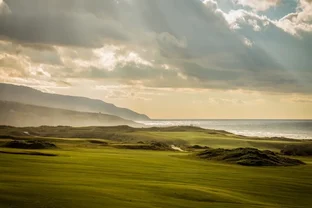
Highlights in the area include a sandy beach (near Keltic Lodge), good for chilly splashing around, and a number of shorter hiking trails. For golfers, windswept Highland Links course (tel. 800/441-1118 or 902/285-2600), located adjacent to the Keltic Lodge but under separate management, is considered one of the best in Nova Scotia, if not all of Atlantic Canada. Ask about packages whenever booking a room in the area, and be sure to reserve tee times well in advance.

South of Ingonish the Cabot Trail climbs and descends the hairy 300m-high (1,000-ft.) promontory of Cape Smokey, which explodes into panoramic views from the top. At the highest point, there's a provincial park where you can cool your engine and admire the views. An 11km (7-mile) hiking trail leads to the tip of the cape along the high bluffs, studded with unforgettable viewpoints along the way.

Sea kayak tours are offered in protected Ingonish Harbor by burly and gregarious raconteur Mike Crimp of Cape Breton SeaCoast Adventures (tel. 877/929-2800 or 902/929-2800). Both full-day (about C$89/US$71 per person) and half-day (about C$49/US$39) tours are offered from June through October, and both are designed for novices who've never set bottom in a kayak. You'll look for whales, but are more likely to spot bald eagles or blue herons. The landscape hereabouts is dramatic, with Cape Smokey rising powerfully to the south, Middle Head to the north, and marsh grasses serving as home to a mix of shorebirds.

St. Ann's

Traveling clockwise around the Cabot Trail, you'll face a choice when you come to the juncture of Route 312. One option is to take the side road to the Englishtown ferry and cross over St. Ann's Harbor in slow but picturesque fashion. The crossing of the fjordlike bay is very scenic, and takes just about 2 minutes (when there's no line). The ferry runs around the clock, and the fare is nominal.

In Englishtown, one of Nova Scotia's more unique museums is the Giant MacAskill Museum, Route 312 (tel. 902/929-2925). This honors the memory of Angus MacAskill, who lived from 1825 to 1863. He was a big man, standing 7 feet 9 inches, and weighing 425 pounds. At the museum you can see many of his personal effects, including oversize boots, walking stick, and clothing, along with his bed and chair. (If you'd care to pay your respects to the man, he's buried at the Englishtown cemetery.) The museum is open daily mid-June to mid-September from 9am to 6pm. Admission is C$1 (US75¢) adults, C75¢ (US60¢) seniors and youth, C50¢ (US40¢) under 12.

Your second option is not to cross via ferry, but to stay on the Cabot Trail, heading down the western shore of St. Ann's Harbor. A good launching point for exploring the waters is North River, where kayak guide Angelo Spinazzola offers tours through his North River Kayak Tours (tel. 888/865-2925 or 902/929-2628) from mid-May through mid-October. The full-day tour (C$99/US$79 per person) includes a steamed mussel lunch on a beach; there's also a gold-panning tour. Most every trip includes sightings of a bald eagle or two. Kayaks may also be rented.

In the village of St. Ann's you'll pass The Gaelic College of Celtic Arts and Crafts (tel. 902/295-3411, www.gaeliccollege.edu), located 1km (1/2 mile) off the Trans-Canada Highway at Exit 11. The school was founded informally in 1938, when a group of area citizens began offering instruction in Gaelic language in a one-room log cabin. Today, both the campus and the curriculum have expanded significantly, with classes now offered in bagpiping, fiddle, Highland dance, weaving, spinning, and Scottish history.

The 140-hectare (350-acre) campus is home to the Great Hall of Clans, where visitors can get a quick lesson in Scottish culture. A number of exhibits provide answers to many questions, such as, what is the deal with tartan plaid, how did Scotsmen get reputations as fierce warriors, and what do Scotsmen really wear under a kilt? (Alas, the question "Is bagpiping really music?" is not addressed.) Robbie Burns's walking stick is on display, and you can buy intriguing clan histories as well. The Hall of Clans is open open mid-May to mid-October 9am to 5pm. Admission $7, group and family rates available. A campus crafts shop has shelves full of Gaelic items, including bolts of tartan plaid and tapes of traditional music. Live performances are also offered throughout the summer; call ahead or ask at the crafts shop for a schedule.

Baddeck

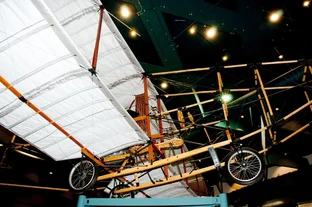
Although Baddeck (pronounced Bah-deck) is at a distance from the national park, it's often considered the de facto "capital" of the Cabot Trail. The town offers the widest selection of hotels and accommodations along the whole loop, an assortment of restaurants, and a handful of useful services like grocery stores and laundromats. Baddeck is also famed as the summer home of revered inventor Alexander Graham Bell, who is memorialized at a national historic site. It's also compact and easy to reconnoiter by foot, scenically located on the shores of Bras d'Or Lake, and within striking distance of the Fortress at Louisbourg. That makes it the most practical base for those with limited vacation time who are planning to drive the Cabot Trail in 1 day (figure on 6-8 hr.).

If, however, your intention is to spend a few days exploring the hiking trails, bold headlands, and remote coves of the national park (which I'd recommend!), you're better off finding a base farther north; the town's single street, frankly, can get claustrophobically packed with tourists and tour buses, and beyond Bell's home there's little of lingering interest here.

The useful Baddeck Welcome Center (tel. 902/295-1911) is located just south of the village at the intersection of Route 105 and Route 205. It's open daily in season (June to mid-Oct) from 9am to 7pm.

Bras d'Or Lake

"Yeah, this is gorgeous, but how much gorgeous can you take?" That was the comment I overheard at a high overlook with a stunning panoramic view of Bras d'Or Lake, the vast inland sea that nearly cleaves Cape Breton Island in two. The man uttered the comment to his family, which then trudged back to their car and set off for the Cape Breton coast.

It was actually a telling comment. With so much beauty around the island's perimeter, the lake hardly gets noticed. This in itself is remarkable. Almost anywhere else in the world, Bras d'Or Lake (pronounced bra door) would be a major attraction, ringed by motels, lodges, boat tour operators, and chain restaurants. But today, along the twisting shoreline of this 114km-long (71-mile) saltwater lake, you'll find . . . nothing. Granted, roads circumnavigate the whole lake, but you'll generally find few services for tourists. Is that good or bad? Depends on your outlook.

Bras d'Or is a difficult lake to characterize, since it changes dramatically from one area to the next -- near wilderness here, rolling farmland there, a summer home colony at another location. Wherever you go around the lake, watch for the regal silhouettes of bald eagles soaring high above, or that telltale spot of vivid white among the verdant trees indicating a perched eagle. Dozens of pairs of bald eagles nest along the shores or nearby, making this one of the best areas in the Maritimes for eagle sightings.

Sydney

Nova Scotia's third-largest city (pop. 30,000) was northern Nova Scotia's industrial hub for decades, and to this day three out of four Cape Breton Islanders live in and around Sydney. Recent economic trends have not been kind to the area, though, and once-thriving steel mills and coal mines have not exactly prospered. This gritty port city has been striving to reinvent itself as a tourist destination, but success has been elusive -- in part because Cape Breton's other charms offer such tough competition.

Although the commercial downtown is a bit gnarly, the historic residential areas will appeal to architecture and history aficionados. Three early buildings are open to the public in summer and are within easy walking distance of one another. They don't get a lot of traffic; as a result, the costumed attendants don't display that wearied fatigue so often present in other guides, and their fresh enthusiasm is appealing and infectious.

The Cossit House Museum, 75 Charlotte St. (tel. 902/539-7973), is Sydney's oldest house, built in 1785. It's been lovingly restored and furnished with a fine collection of 18th-century antiques. There's a small charge to visit. The Jost Heritage House, 54 Charlotte St. (tel. 902/539-0366), was built in 1787 and had a number of incarnations in the intervening years, including service as a store. It's open June through August Monday through Saturday from 9:30am to 5:30pm, Sunday from 1pm; hours are shorter during the fall. Highlights of the home include an early apothecary, and again there's a small entry fee to view it. St. Patrick's Church Museum, 87 Esplanade (tel. 902/539-1572), is in Cape Breton's oldest Roman Catholic church (it dates to 1828) and opens to the public daily in summer from 9:30am to 5:30pm (opens at 1pm Sun). There's an old burying ground and a collection of local artifacts. It's free. Plan to spend a few hours visiting this trifecta.

Louisbourg

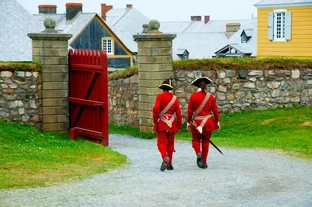
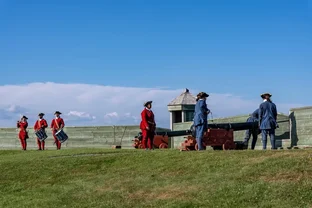
In the early 18th century, Louisbourg on Cape, Breton's remote and windswept easternmost coast was home to an ambitious French fortress and settlement. Despite its brief prosperity and durable construction of rock, it virtually disappeared after the British finally forced the French out (for the 2nd time) in 1760. Through the miracle of archaeology and historic reconstruction, much of the imposing settlement has been re-created, and today Louisbourg is among Canada's most ambitious national historic parks. It's an attraction everyone coming to Cape Breton Island should make an effort to visit.

And a visit does require some effort. The site, 36km (22 miles) east of Sydney, isn't on the way to anyplace else, and it's an inconvenient detour from Cape Breton Highlands National Park. As such, it's far too easy to justify not going -- it's too out of the way, it's not conveniently on a loop, and so on. By employing such excuses you're only cheating yourself. Commit yourself to going, then go. A few hours spent wandering this wondrous rebuilt town, then walking amid ruins and out along the coastal trail, will be one of the highlights of your trip to Atlantic Canada.


Back to Top


Note: This information was accurate when it was published, but can change without notice. Please be sure to confirm all rates and details directly with the companies in question before planning your trip.


  Email This Article Email Print This Article Print Get Frommer's RSS Feed RSS
Frommer's Nova Scotia, New Brunswick, and Prince Edward Island, 7th Edition Frommer's Nova Scotia, New Brunswick, and Prince Edward Island, 7th Edition

Author: Paul Karr
Pub Date: April 28, 2008
Price: $16.99

Buy Now!
Related Titles:
Banff National Park and the Canadian Rockies For Dummies, 2nd Edition
Frommer's Algonquin Provincial Park, 2nd Edition
Frommer's Banff & Jasper National Parks, 4th Edition
Add Frommers.com RSS Feed  Add Frommers.com RSS Feed (What's This?)
Add Frommers.com Deals & News to Your Web Site
Add to My Yahoo!     Add to My MSN     More RSS Readers
Add Frommers.com Podcast Add Frommers.com Podcast (What's This?)
Home > Destinations > North America > Canada > Atlantic Provinces > Nova Scotia > Cape Breton Island > Regions in Brief