saranya33 / Shutterstock
Rocamadour Travel Guide
541km (335 miles) SW of Paris; 66km (41 miles) SE of Sarlat-la-Canéda; 55km (34 miles) S of Brive; 63km (39 miles) NE of Cahors
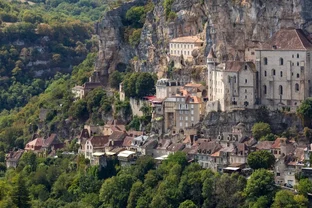
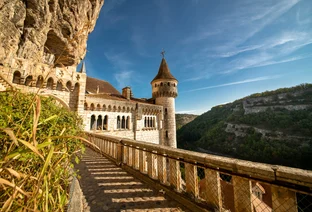
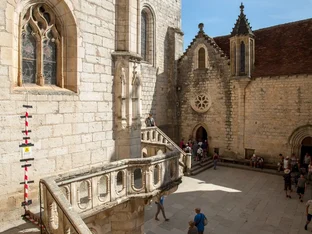
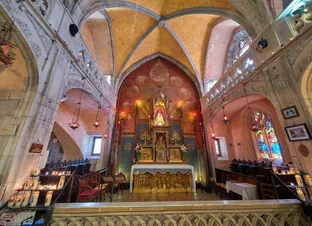
Rocamadour reached the zenith of its fame and prosperity in the 13th century, when it was one of the most famous pilgrimage sites in Christendom. Countless miracles were said to have taken place here, thanks to the sacred aura of the Chapel of Notre Dame and, specifically, the statue of the Black Madonna. Pilgrims still come here (in significantly smaller numbers), but most visitors are secular tourists who come to admire this spectacular village that seems to be carved into sheer rock. It’s definitely worth a detour, even if it’s out of your way. The setting is one of the most unusual in Europe: Towers, churches, and oratories rise in stages up the side of a cliff above the usually dry gorge of Alzou.
Only around 600 people live in the village year-round, but in the summer, that number skyrockets during the day when crowds of tourists arrive. For obvious logistical reasons, vehicles are prohibited in the town; you’ll have a lot of stair-climbing to do. The faint of heart or the mobility-impaired can take an elevator from the village at the base of the cliff up to the religious sanctuary, and from the religious sanctuary to the château. There's also a tourist train. It’s a short walk from the parking lot to the village.