Pedro Magrod / Shutterstock
Santiago de Compostela Travel Guide
614km (381 miles) NW of Madrid, 74km (46 miles) S of A Coruña
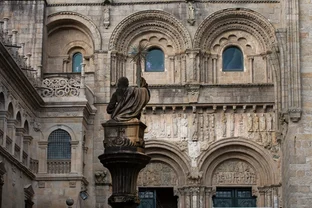
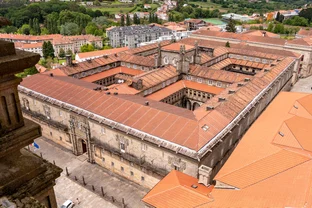
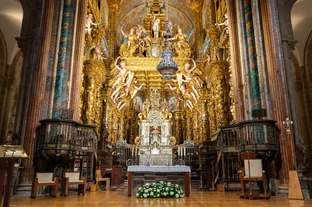
All roads in Spain once led to the northwestern pilgrimage city of Santiago de Compostela. A journey to the tomb of the beheaded apostle, St. James, was a high point for the medieval faithful—peasant and prince alike—who converged here from across Europe. They still do, at the rate of about a half million per year.
Santiago de Compostela’s link with legend began in the 820s c.e. with the discovery of a vessel containing what some believed were the remains of St. James, an apostle of Jesus beheaded in Jerusalem between 42 and 44 c.e. A temple was erected over the spot, but in the 16th century, church fathers hid the remains, fearing they might be destroyed in raids along the coast by Sir Francis Drake. Amazingly, the purported remains—subject of millions of pilgrimages from across Europe—lay relatively forgotten.
For decades no one was certain where they were. In 1879, a workman making repairs to the cathedral discovered them. To prove it was the actual corpse of St. James, church officials brought back a sliver of the skull of St. James from Italy. They claimed that it fit perfectly, like a puzzle piece, into the recently re-discovered skeleton.
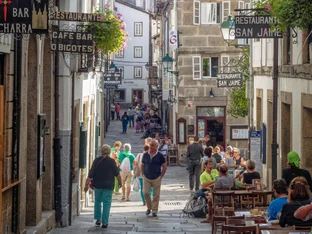
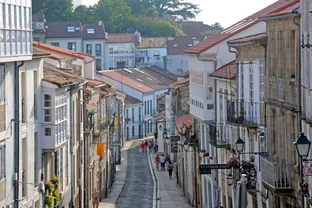
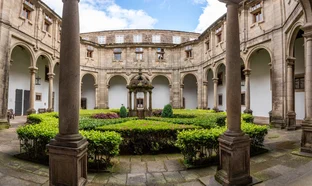
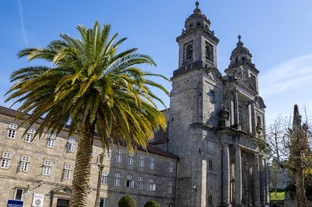
In addition to being the third holiest city of the Christian world (after Rome and Jerusalem), Santiago de Compostela is a university town and a market town. Its flagstone streets, churches, and shrines make it both romantic and historic. Santiago also has the dubious distinction of being Spain’s rainiest city, but the showers tend to come and go quickly. Locals claim that the rain only makes their city more beautiful, and the rain-slick cobblestones might prompt you to agree.
Santiago de Compostela Table of Contents
Bookstore

Available as paperback
and as e-book.