Museu d’Art Contemporani de Barcelona

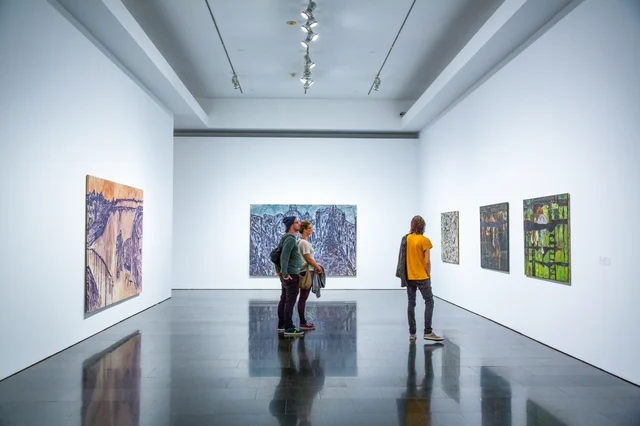
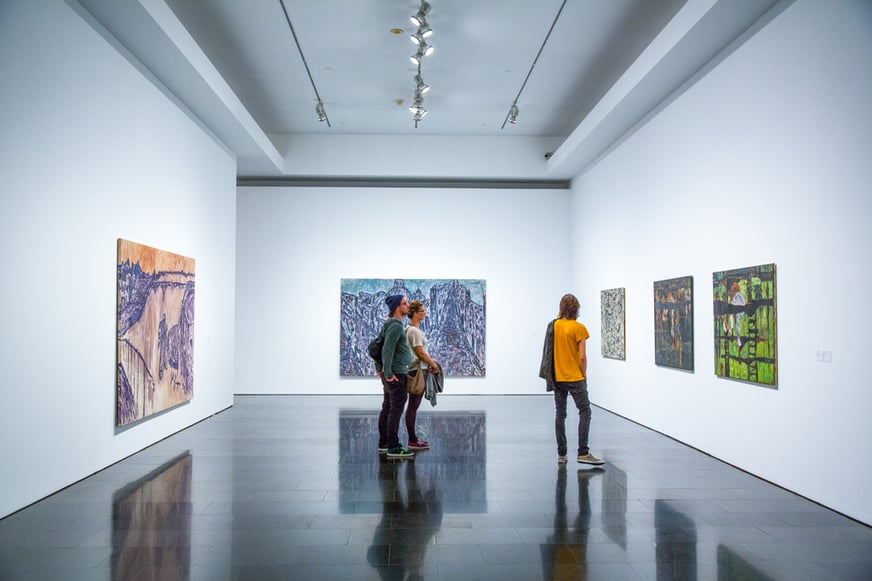
Richard Meier’s gleaming white construction completely transformed this Raval block when it was built in 1995, displacing a number of historic buildings, and MACBA’s approach to art and audience is equally uncompromising. The permanent collection covers the years from the 1929 Expo through the present day, via Civil War, 60s counterculture, the 80s AIDS crisis, and contemporary feminism. But, despite works by leading Catalan and Spanish artists and international stars like Jean-Michel Basquiat, it feels a little thin. Visiting exhibitions lean toward installation and soundscape, and the atmosphere of minimalist seriousness hardly endears the museum to visitors.
Beyond art, MACBA has brought youth and vibrancy to the neighborhood, attracting hip hotels and restaurants, as well as skateboarders who ride its ramps.
Two of MACBA’s most successful pieces can be viewed in the square near the entrance without paying admission: A black-and-white ceramic frieze by the Basque sculptor Eduardo Chillida, and a reconstruction of Keith Haring’s cautionary 1989 AIDS mural, originally painted in a square nearby.
Richard Meier’s gleaming white construction completely transformed this Raval block when it was built in 1995, displacing a number of historic buildings, and MACBA’s approach to art and audience is equally uncompromising. The permanent collection covers the years from the 1929 Expo through the present day, via Civil War, 60s counterculture, the 80s AIDS crisis, and contemporary feminism. But, despite works by leading Catalan and Spanish artists and international stars like Jean-Michel Basquiat, it feels a little thin. Visiting exhibitions lean toward installation and soundscape, and the atmosphere of minimalist seriousness hardly endears the museum to visitors.
Beyond art, MACBA has brought youth and vibrancy to the neighborhood, attracting hip hotels and restaurants, as well as skateboarders who ride its ramps.
Two of MACBA’s most successful pieces can be viewed in the square near the entrance without paying admission: A black-and-white ceramic frieze by the Basque sculptor Eduardo Chillida, and a reconstruction of Keith Haring’s cautionary 1989 AIDS mural, originally painted in a square nearby.
Details
Bookstore

Available as paperback
and as e-book.