Laoitz / Shutterstock
Bilbao Travel Guide
396km (246 miles) N of Madrid, 100km (62 miles) W of San Sebastián
The 21st-century edition of Bilbao (Bilbo in Basque) is a case study in the transformative power of art, or at least of architecture. As recently as the 1980s, Bilbao was a smoky steelmaking and shipbuilding city on the banks of a severely polluted river. Today, it is a graceful small metropolis with a global appeal. Instead of seeing smoke and grime, visitors behold broad avenues, lovely river vistas, a cornucopia of cutting-edge architecture, top-drawer cuisine, and an edgy, lively vibe. Bilbao’s citizens are proud, with plenty to be proud of.
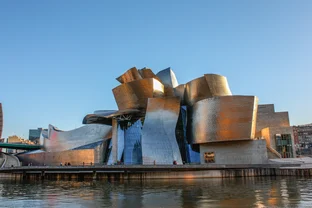
The city government’s audacity in courting the Guggenheim Museum in New York and engaging controversial architect Frank O. Gehry to design the Guggenheim Bilbao has paid off richly. The opening of the Guggenheim in 1997 began the transformation of the riverfront, which included relocating the port from the city center to the coast and cleaning the river after years of industrial abuse. (That investment eventually dwarfed the original cost of building the museum.) It all turned a provincial city of 355,000 into what Gehry has called a laboratory for contemporary building design. Among architects, you’re nobody these days until you have a building in Bilbao—and plenty of world-class names have followed in Gehry’s footsteps.
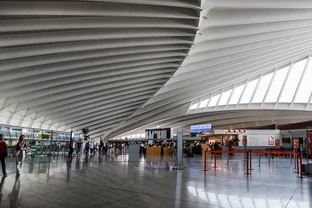
Bilbao continues to flourish as a banking and services center, most of its manufacturing having fled. The city government has significantly upgraded its transportation infrastructure, installing a modern airport (designed by Santiago Calatrava) and an efficient, attractive Metro system with futuristic glass-hooded entrances designed by Sir Norman Foster (locals call them fosteritos).
Bilbao was established by charter on June 15, 1300, which converted it from a village (pueblo), ruled by local feudal duke Don Diego López de Haro, into a city. Aided by water power and the transportation potential of the Nervión River, it grew and grew, most of its fame and glory coming during the industrial expansion of the 19th century. Many of the city's grand homes and villas for industrialists were constructed then, particularly in the wealthy suburb of Neguri. The most famous son of Bilbao was Miguel de Unamuno, the writer/educator more closely associated with Salamanca.
Dynamic and always looking to the future, Bilbao continues to reinvent itself. Its already superb fine arts museum has recently tripled in size, and its train station will be redeveloped to welcome a high-speed service from Madrid.