Things To Do in Cordoba
Bookstore
Available as paperback
and as e-book.
Cordoba Attractions
It’s all too easy for the visitor to Córdoba to stumble into the Judería and scarcely leave. The warren of medieval streets is full of photogenic character—you’re right to spend time wandering its alleyways—but it is also full of tacky gift shops, mediocre restaurants, and touristy flamenco shows.
There is so much more to enjoy if you venture a little further afield. A good place to start is on the sloping apron of Plaza del Triunfo in front of the Puente Romano. From here, there are rewarding walks in all directions. Bars and restaurants line Calle Cardenal González between the Mezquita and historic Plaza del Potro. In spring, the patios of Barrio de San Basilio are resplendent with pots of geraniums.
And be sure to seek out the parts of the city where the locals gather, such as the huge, 17th century Plaza de la Corredera, and the modern city center around Plaza de las Tendillas.
The best time to explore the Judería is first thing in the morning before the crowds have arrived, when the tourist shops are still shuttered and you can see the sunrise turn the cathedral’s bell tower golden. There’s another incentive to get up early: Between 8:30 and 9:30am each morning (except Sunday), entry to the Mezquita is free, and tour groups are not allowed. You can appreciate its meditative power in silence, with just a few other souls.
Booking warning: Córdoba’s Mezquita is so popular that it’s essential to reserve your timed slot online well ahead of your visit. But take care when booking. An industry of unscrupulous websites has grown up which look—and in some cases even claim to be—official but will charge you far more than you need to pay and may not guarantee access. The problem applies to other attractions too, including the Alcázar and the Royal Stables. Double check the official web addresses listed here before buying.
One money-saving and hassle-free solution is to buy the Bono Conjunto Monumentos Córdoba combined ticket (adults 13.91€, seniors and students 7.16€; free for children under 17) which gives you access to five museums including the Alcázar, two museums on Plaza del Potro, the historic Arab baths, and the bullfight museum (but not the Mezquita).
Guided Tours of Cordoba
A dizzying array of private companies offer guided walking tours of the city. You can find them at turismodecordoba.org or pick up flyers at the visitor center on Plaza del Triunfo. The Association of Professional Tour Guides (tel. 95-748-69-97) tops the list. Expect to pay around 30€ for a 75-minute tour.
“Free” tours are also available with a typical tip of 15€–20€; freetour.com and freetourcordoba.org are highly rated. A hop-on, hop-off bus tour (from 25€, valid 24hrs) starts from Plaza del Triunfo offering a quick way to get your bearings. Due to the old town’s narrow streets, both large and small red buses are used. Especially when the weather is hot, exploring at your own pace may be more enjoyable—and certainly cheaper.
Traditional Hammams in Cordoba
You can’t bathe at the 10th-century Baños del Alcázar Califal (tel. 60-815-88-93; 3€ adults; Tues–Fri 8:15am–8pm, Sat 9:30am–6pm, Sun 8:15am–2:45pm; summer Tues–Sat 8:15am–2:45pm ) where the caliphs once soaked, but if its horseshoe arches and star-shaped skylights inspire you to take a dip, there are plenty of traditional Arab-style hammams in town.
At Hammam Andalus, Calle Corregidor Luis de la Cerda, 51 (tel. 95-748-47-46; from 45€), the design of the main pool echoes the arches of the Mezquita. It features a steam room, hot and cold plunge pools, and a range of massages and treatments.
Hospedería Baños Arabes, Calle Almanzor, 18 (tel. 95-729-58-55; hammam from 32€, 100€–180€ double room), is a small hotel in a Judería townhouse where excavations revealed baths dating from the 15th century. Guests can enjoy a complimentary spa session during their stay.
Visiting Cordoba's Blossoming Patios
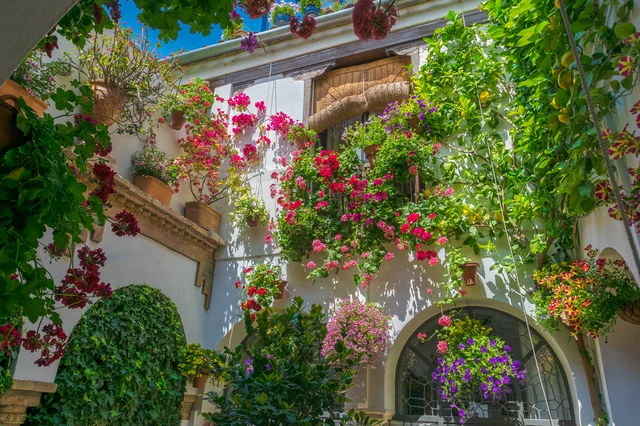
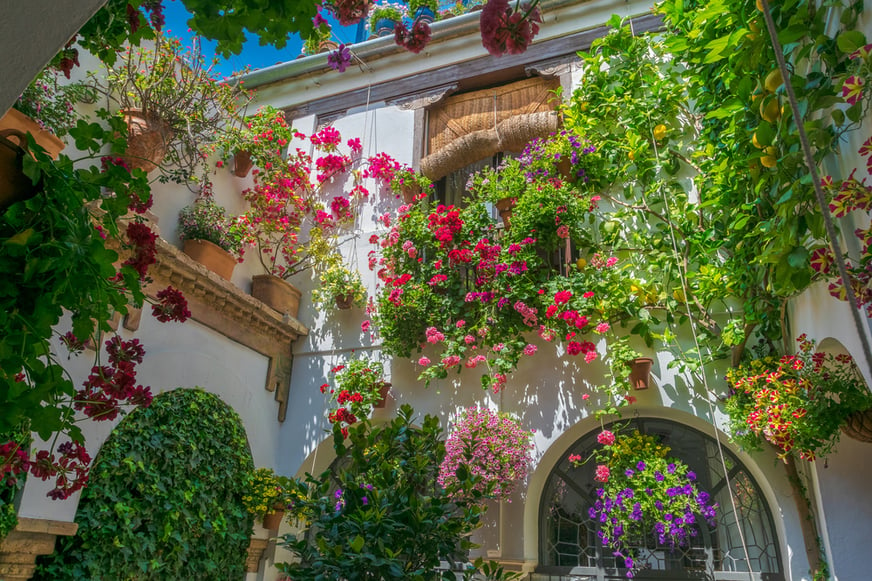
If you’re lucky enough to visit in the first half of May, this is the season for meeting Cordobans in their homes. They take such pride in the flowers they grow in their traditional patios that many open to visitors for the Fiesta de los Patios de Córdoba, the Córdoba Patio Festival. Pick up a map of participants at the tourist office or online. When you enter someone’s home, you’ll see the central patio—usually arranged around a well or fountain—with whitewashed walls decked with potted geraniums. Admission is free, but it’s customary to leave a few coins in a tip tray to help with upkeep.
If you miss the festival, there are other ways to see the patios so central to Cordoban life. Patios de San Basilio (tel].65-453-03-77; adults 16€, free for children under 13; daily except Tuesday) offers walking tours of the San Basilio district which has some of the most perfectly tended courtyards.
Or visit Palacio Museo de Viana, Plaza de don Gome, 2 (tel. 95-749-67-41; patio visit 8.50€ adults, free for children under 13; including house visit 14€ adults, free for children under 13; Tues–Sat 10am–7pm, Sun 10am–3pm, in summer Tues–Sun 9am–3pm), which has 12 beautiful patios representing various eras and architectural styles.

11 Results
- Historic Site
Alcázar de los Reyes Cristianos
A short walk along the river from Plaza del Triunfo stands the Fortress of the Christian Monarchs. Rebuilt in 1328 by Alfonso XI on the site of an earlier Moorish fortress it became the base from which Isabel and Fernando plotted the reconquest of Granada, the last Muslim stronghold… - Historic Site
Caballerizas Reales
“In Córdoba, even the horses have their cathedral”, wrote the poet Federico García Lorca. Felipe II established the royal stables next to the Alcázar in 1570 with the aim of breeding the finest Andalusian horses, or Pura Raza Española (PRE). These monumental buildings, with brick… - Museum
Casa Sefarad
This small museum is dedicated to reviving the memory of medieval Córdoba when it was the capital of Sephardic Jewry. The rooms with the most resonance explicate the traditional craft of making golden thread, highlight Sephardic musical and literary traditions, and celebrate… - Historic Site
Conjunto Arqueológico Madinat al-Zahra
In the 10th century, the first Umayyad caliph of al-Andalus, Abd al-Rahman III, decided the splendor of Córdoba was not enough. To demonstrate his power to rivals across the Middle East, he ordered a vast new palace-city: Madinat al-Zahra. Construction of the Shining City began… - Neighborhood/Historic District
Juderia (Jewish Quarter)
North and west of the Mezquita is one of the most intriguing medieval ghettos remaining in Europe. Two of the world's greatest thinkers, the Jewish philosopher Maimónides and the Arab philosopher and mathematician Averroès, once called the Judería home.No longer Jewish or even Arab,… - Religious Site
Mezquita Catedral de Córdoba
No visitor to Córdoba should miss its mosque, one of the world’s great architectural achievements. It was begun in 785 by the founder of the Emirate of Córdoba, Abd al-Rahman I, and extended by succeeding rulers. Its mesmerizing forest of identical columns and red and white arches… - Museum
Museo Arqueológico de Córdoba
Córdoba’s archaeological museum, occupying a magnificent Renaissance palace and a modern annex, is among Spain’s finest. The site was originally a Roman theater—a highlight is to tour intact portions of it in the basement of the new structure. The collection chronicles life in and… - Neighborhood/Historic District
Plaza del Potro
This small, historic square east of the Mezquita was originally a horse market—its central fountain is topped with a rampant colt (potro). It’s a lovely place to stroll and contains some excellent museums. The Posada del Potro gets a mention as a den of vice in Cervantes’ Don… - Architecture/Historic Site
Puente Romano
Córdoba’s Roman bridge, stretching across the Guadalquivir River south of the Mezquita, is a popular place for an afternoon stroll to the sound of flamenco guitar buskers. Built in the 1st century b.c., it has been restored so many times that none of its 16 arches is original. It was… - Religious Site
Sinagoga
One of only three remaining pre-Inquisition synagogues in Spain, the Sinagoga was built in 1315 at the western edge of the Judería. It is small because of the restrictions placed on Jewish building at the time. The synagogue features elaborate stuccowork, including Mudéjar patterns… - Museum
Torre de la Calahorra
As you cross the Puente Romano (constructed in the reign of Julius Caesar and rebuilt many times since), you’ll see herons and egrets wading in the shallows and worshippers crossing themselves and leaving sprigs of rosemary at a small shrine to the archangel San Rafael at the…
Cordoba Shopping
In some streets of the Judería, almost every building contains a shop selling mass-produced souvenirs: Moorish-inspired prints, inlaid boxes, glass teacups. They are pretty awful, but there are also shops selling high-quality foods to take home: vacuum-packed jamón, olive oil, and the under-marketed wines of Montilla-Moriles. Delicias del Califato, Calle Tomás Conde, 1 (tel. 64-720-06-69) is one, offers an appealing selection of loose teas and spices.
For good quality arts and crafts, visit Zoco Municipal Artesano, Calle de Judios, s/n (tel. 95-729-05-75; daily 10am–8pm), where a local artisans show original jewelry and ceramics, although sometimes the turnout is disappointing. Meryan, Calleja de las Flores, 2 (tel. 95-747-59-02) sells traditional tooled leather goods known as cordobanes, and Ana Martina, Calle Tomás Conde, 9 (tel. 67-856-10-60) makes and sells silver jewelry in the Arabic tradition. For a unique handcrafted souvenir, visit Patios Artesanos, Calle Hermanos López Diéguez, 6, (tel. 68-097-05-01), where they create miniature scenes of typical Cordoban patios, complete with cobbled paving and potted geraniums.
The rather thin bullfighting museum, Museo Taurino, Plaza Maimónides, 3 (tel. 95-720-10-56) has a little shop that sells facsimile posters of bullfights involving local heroes El Cordobés and Manolete (including the bullfight in which Manolete was gored to death in 1947).
If you’re in Córdoba over a weekend, the Sunday morning flea market Mercadillo del Arenal on Calle de El Infierno (tel. 65-310-10-45) offers plenty of colorful junk, plus pottery and leatherware.
Cordoba Nightlife
You can certainly check out the flamenco clubs, but most Cordobeses roam around at night sampling the tapas and drinking regional wine in the various taverns. There are worst ways to spend an evening, and while free tapas are less common in Córdoba than in Granada, drinks measures are exceptionally generous. In bars and taverns, you’ll see locals drinking pale, dry fino from glasses filled to the brim. The wine is from the Montilla-Moriles region in the south of Córdoba province, made using the Pedro Ximénez grape that’s more commonly associated with sweet wine. While it is produced and categorized in a similar way to the better-known sherries of Jerez, it is not fortified with additional alcohol and its makers claim it has an even more delicate flavor. A dark, sweet version—also made with Pedro Ximénez—is usually served in a glass two-thirds full. Just don’t ask for a glass of sherry.
There are plenty of places to go for a drink in the Judería, but it’s worth seeking out spots where the locals go. Many gather at the tiny Bar Correo, Calle Jesús y María, 2 (tel. 62-995-61-70) just off Plaza de las Tendillas. Inside, it’s little more than a counter, but the crowds who stand at its tables outside reckon it serves the best caña of beer in town. Casa El Pisto, Plaza de San Miguel, 1 (tel. 95-747-01-66), is a grand old bar filled with bullfighting memorabilia (including a charming painting of Manolete in a business suit). Its official name is Taberna San Miguel—pisto refers to the house specialty, a traditional ragout of eggplant, peppers, and tomatoes with a fried egg on top. Nearby Taberna Góngora, Calle Conde de Torres Cabrera, 4 (tel. 95-749-03-62) has a rustic vibe, great tapas, and low prices. Try their famous boquerones al limon, crunchy deep-fried anchovies, with a glass of fino.
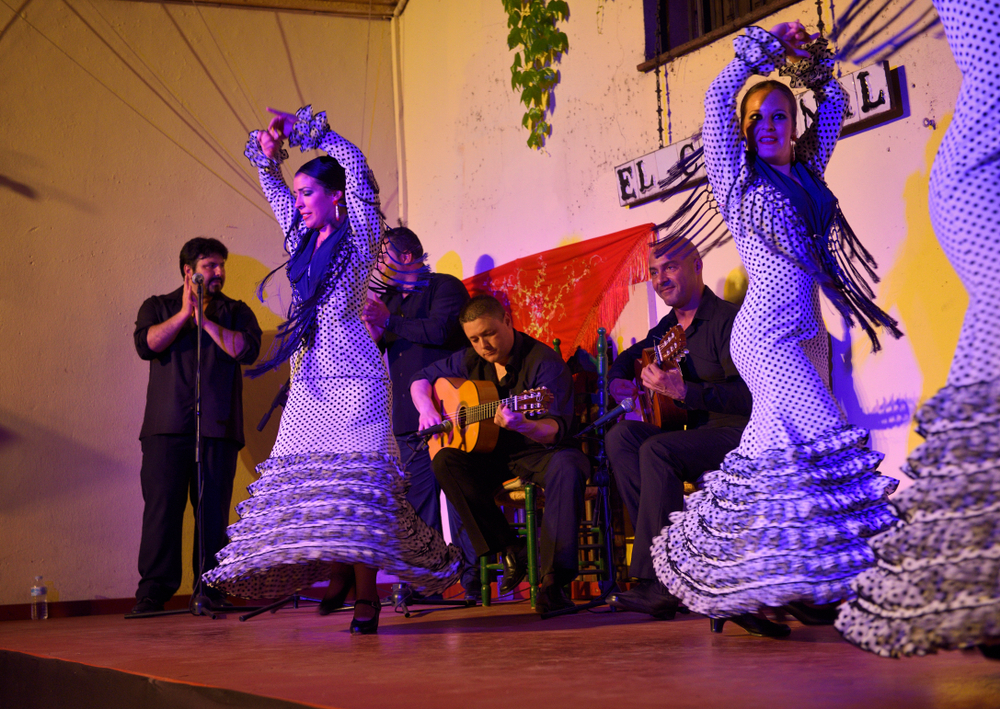
Flamenco in Cordoba (Reimar / Shutterstock)
Cordoba's Flamenco Clubs
There are lots of options for flamenco shows, with or without dinner. Tablao El Cardenal, Calle Buen Pastor, 2 (tablaocardenal.es; 📞 69-121-79-22; nightly at 8:30pm; 25€ adults, 12€ children under 11), is Córdoba's most popular and dynamic flamenco club. Just across from the Mezquita, you can enjoy a show featuring international and award-winning flamenco artists. Some of the purest styles of Andalusian flamenco -- soleá, bulerías, and alegrías -- are showcased here. It's set in a beautiful patio 5 minutes north of the Mezquita. We also highly recommend Patio de la Judería, Calle Conde y Luque, 6 which offers a free show with a minimum spend of 20€ on dinner.
Other Entertainment in Cordoba
For music other than flamenco, try Long Rock, Calle Teniente Braulio Laportilla, 6 (tel. 63-690-99-78), Automático, Calle Alfaros, 4 (tel. 95-748-56-69), or Jazz Café, Calle Rodríguez Marín, 1 (tel. 95-748-14-73). You’ll know from the names which one is for you.
For more formal entertainment, check out the listings at the city's theatrical grande dame, the early-20th-century Gran Teatro de Córdoba, Av. Gran Capitán 3 (tel. 95-748-02-37), site of most of the ballet, opera, chamber music, and symphony performances in town.