Puente Romano

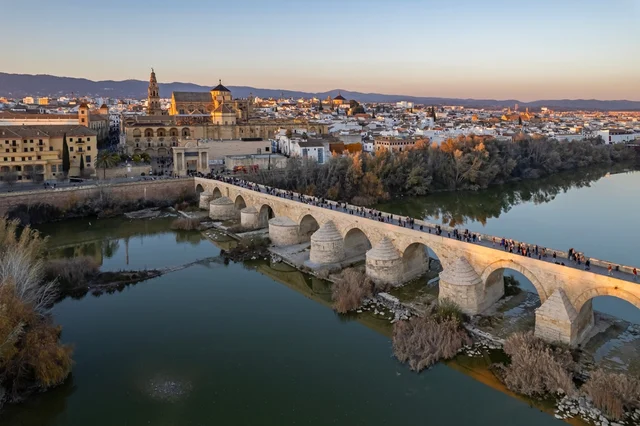
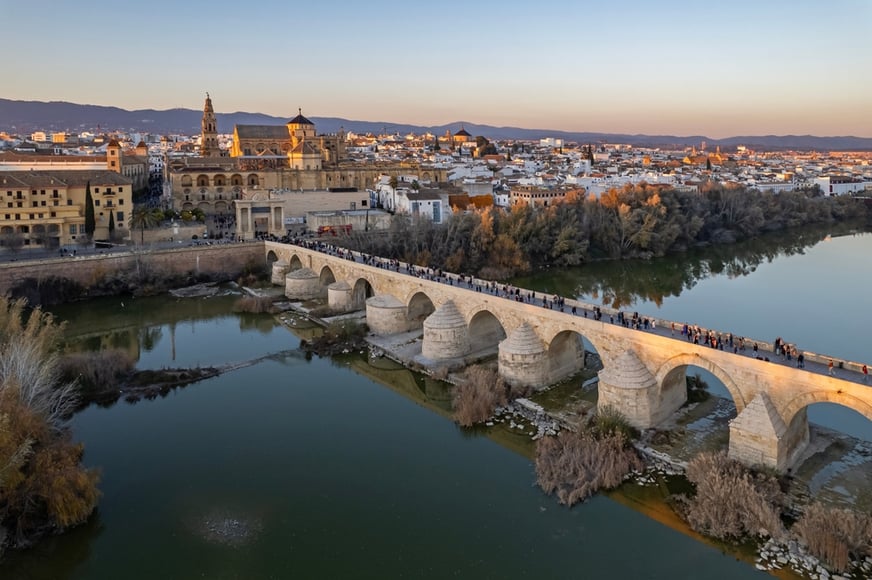
Córdoba’s Roman bridge, stretching across the Guadalquivir River south of the Mezquita, is a popular place for an afternoon stroll to the sound of flamenco guitar buskers. Built in the 1st century b.c., it has been restored so many times that none of its 16 arches is original. It was used for road traffic until this century, when the new Puente de Miraflores (known locally as El Puente Oxidado, or rusty bridge) relieved it of that duty.
Halfway across you’ll see the Triunfo de San Rafael, a shrine to the city’s guardian angel often surrounded by devotees lighting candles and leaving flowers. San Rafael was credited with ending the plague that decimated the city in the 17th century, and the people of Córdoba haven’t forgotten.
At the far end of the bridge stands the Torre de la Calahorra, a sturdy gate built in the 12th century by the Almohad caliphate to defend the bridge against Christian attack. It too has been heavily restored. It houses the Museo Vivo de al-Andalus (tel. 95-729-39-29; 4.50€ adults, 3€ seniors and children; daily 10am–7pm, summer 10am–2pm and 4:30–8pm), a series of exhibits accompanied by audio guide that give a good sense of the Muslim, Jewish, and Christian characters behind medieval Córdoba’s great achievements.
Córdoba’s Roman bridge, stretching across the Guadalquivir River south of the Mezquita, is a popular place for an afternoon stroll to the sound of flamenco guitar buskers. Built in the 1st century b.c., it has been restored so many times that none of its 16 arches is original. It was used for road traffic until this century, when the new Puente de Miraflores (known locally as El Puente Oxidado, or rusty bridge) relieved it of that duty.
Halfway across you’ll see the Triunfo de San Rafael, a shrine to the city’s guardian angel often surrounded by devotees lighting candles and leaving flowers. San Rafael was credited with ending the plague that decimated the city in the 17th century, and the people of Córdoba haven’t forgotten.
At the far end of the bridge stands the Torre de la Calahorra, a sturdy gate built in the 12th century by the Almohad caliphate to defend the bridge against Christian attack. It too has been heavily restored. It houses the Museo Vivo de al-Andalus (tel. 95-729-39-29; 4.50€ adults, 3€ seniors and children; daily 10am–7pm, summer 10am–2pm and 4:30–8pm), a series of exhibits accompanied by audio guide that give a good sense of the Muslim, Jewish, and Christian characters behind medieval Córdoba’s great achievements.
Details
Bookstore
Available as paperback
and as e-book.