Juderia (Jewish Quarter)

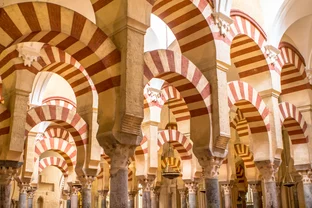
North and west of the Mezquita is one of the most intriguing medieval ghettos remaining in Europe. Two of the world's greatest thinkers, the Jewish philosopher Maimónides and the Arab philosopher and mathematician Averroès, once called the Judería home.
No longer Jewish or even Arab, the neighborhood has been restored and makes for one of the most fascinating strolls in Andalusia. (Don't forget to bring along a good pair of walking shoes.) The only physical evidence left of its former Jewish population is the synagogue. You can spend at least 2 hours here wandering about -- and be prepared to get lost. Many upper-middle-class Cordobeses now occupy these old whitewashed houses and have restored them. You can enter the area through the Puerta de Almódovar, at the western frontier.
The Judería reached the zenith of its prosperity under the Moorish occupation (believe it or not), especially during the Caliphate (929-1031). A great Talmudic school was founded here in an era of tolerance.
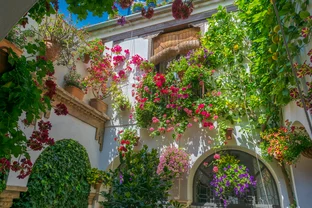
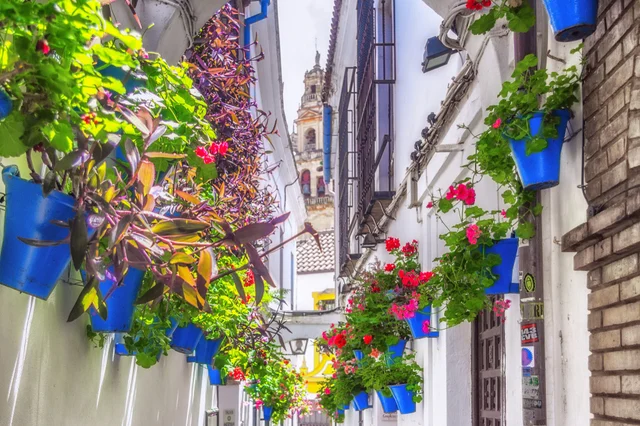
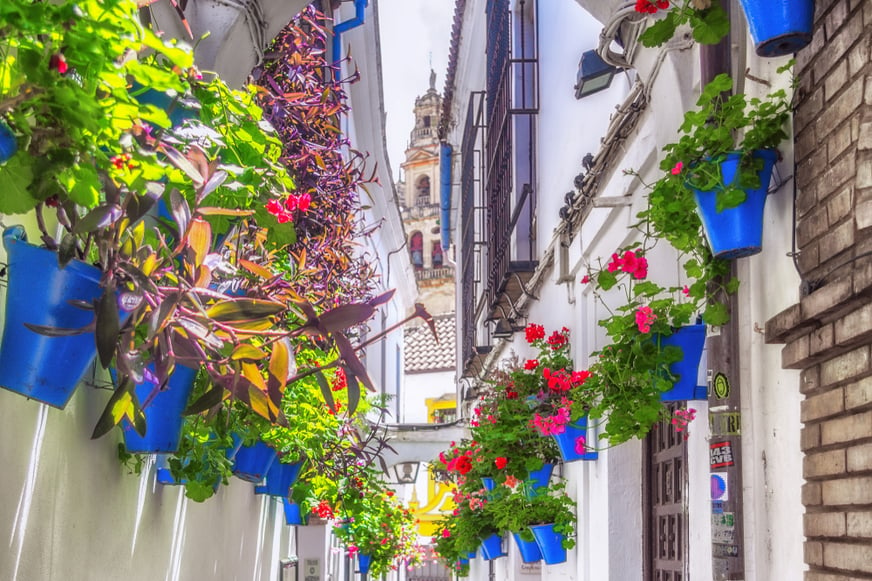
If there is one street you should seek out, it's Calleja de las Flores, "little street of flowers" (see above). Actually, it's little more than an alleyway off Calle Victor Bosco and Calle Blanco Belmonte. Somehow the wrought-iron grilles, potted flowers, and window boxes filled with geraniums appear more adorable here than elsewhere. Certainly the patios of the various houses deserve some prize, and it's perfectly acceptable to walk along gazing into the courtyards. The citizens of Córdoba take pride in showing off their patios as part of the city's tradition.
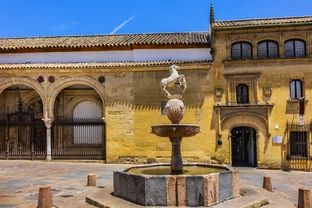
The Judería is also filled with delightful little squares that you'll stumble into after wandering down a dark alleyway into the bright sunshine of Andalusia.
The only things you shouldn't do in this neighborhood are eat and shop. Alas, the charms of the Judería mean that it's filled with tourist traps selling tacky souvenirs and mediocre meals.
North and west of the Mezquita is one of the most intriguing medieval ghettos remaining in Europe. Two of the world's greatest thinkers, the Jewish philosopher Maimónides and the Arab philosopher and mathematician Averroès, once called the Judería home.
No longer Jewish or even Arab, the neighborhood has been restored and makes for one of the most fascinating strolls in Andalusia. (Don't forget to bring along a good pair of walking shoes.) The only physical evidence left of its former Jewish population is the synagogue. You can spend at least 2 hours here wandering about -- and be prepared to get lost. Many upper-middle-class Cordobeses now occupy these old whitewashed houses and have restored them. You can enter the area through the Puerta de Almódovar, at the western frontier.
The Judería reached the zenith of its prosperity under the Moorish occupation (believe it or not), especially during the Caliphate (929-1031). A great Talmudic school was founded here in an era of tolerance.
If there is one street you should seek out, it's Calleja de las Flores, "little street of flowers" (see above). Actually, it's little more than an alleyway off Calle Victor Bosco and Calle Blanco Belmonte. Somehow the wrought-iron grilles, potted flowers, and window boxes filled with geraniums appear more adorable here than elsewhere. Certainly the patios of the various houses deserve some prize, and it's perfectly acceptable to walk along gazing into the courtyards. The citizens of Córdoba take pride in showing off their patios as part of the city's tradition.
The Judería is also filled with delightful little squares that you'll stumble into after wandering down a dark alleyway into the bright sunshine of Andalusia.
The only things you shouldn't do in this neighborhood are eat and shop. Alas, the charms of the Judería mean that it's filled with tourist traps selling tacky souvenirs and mediocre meals.
Details
Bookstore
Available as paperback
and as e-book.