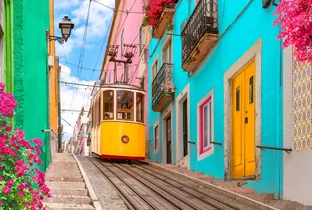

Experiencing the sights and sounds of a morning market: If you’re an early riser, take tram 28 to the Alfama at 6am on a Tuesday or Saturday to get the best of Lisbon’s famous flea market, the Feira da Ladra or Thieves Market. To some it’s a jumble, but they say that one person’s…
mzabarovsky / Shutterstock
Things To Do in Lisbon
Jump to:
Bookstore

Available as paperback
and as e-book.
Lisbon Attractions
Many visitors use Lisbon as a base for exploring nearby sites, but they often neglect the cultural gems tucked away in the Portuguese capital. One reason Lisbon gets overlooked is that visitors don't budget enough time for it. You need at least 5 days to do justice to the city and its environs. In addition, even Lisbon's principal attractions remain relatively unknown, a blessing for travelers tired of fighting their way to overrun sights elsewhere in Europe.
This section guides you to the unknown treasures of the capital. If your time is limited, explore the National Coach Museum, the Jerónimos Monastery, and the Alfama and the Castle of St. George. At least two art museums, although not of the caliber of Madrid's Prado, merit attention: the Museu Nacional de Arte Antiga and the Museu Calouste Gulbenkian.
If you have time, visit the Fundação Ricardo do Espírito Santo Silva and watch reproductions of antiques being made or books being gold-leafed. You could also spend time seeing the gilded royal galleys at the Naval Museum, wandering through the fish market, visiting Lisbon's new aquarium, or exploring the arts and crafts of Belém's Folk Art Museum.
For a splendid rooftop view of Lisbon, take the Santa Justa elevator, on Rua de Santa Justa. The ornate concoction was built by a Portuguese engineer, Raul Mesnier de Ponsard, born to French immigrants in Porto in 1849. The elevator goes from Rua Áurea, in the center of the shopping district near Rossio Square, to the panoramic viewing platform. It operates daily from 9am to 9pm. A ticket costs 5.30€, and children under 4 ride free (tel. 21/361-30-00). Metro: Rossio.
Lisbon's Bairro Alto
Like the Alfama, the Bairro Alto (Upper City) preserves the characteristics of the Lisbon of yore. In location and population, it once was the heart of the city. Many of its buildings survived the 1755 earthquake. Today it's home to some of the finest fado cafes in Lisbon, making it a center of nightlife. It's also a fascinating place to visit during the day, when its charming, narrow cobblestone streets and alleys lined with ancient buildings can be appreciated in the warm light coming off the sea.
Originally called Vila Nova de Andrade, the area was started in 1513 when the Andrade family bought part of the huge Santa Catarina and then sold the land as construction plots. Early buyers were carpenters, merchants, and ship caulkers. Some of them immediately resold their land to aristocrats, and little by little noble families moved to the quarter. The Jesuits followed, moving from their modest College of Mouraria to new headquarters at the Monastery of São Roque, where the Misericórdia (social assistance to the poor) of Lisbon proceeds today. The Bairro Alto gradually became a working-class section. Today the quarter is also the domain of journalists -- most of the big newspapers' plants are here. Other writers and artists have been drawn here to live and work, attracted by the ambience and the good local cuisine.
This area is resoundingly colorful. From the windows and balconies, streamers of laundry hang out to dry, and canaries, parrots, parakeets, and other birds sing in their cages. In the morning, housewives hit the food markets, following the cries of the varinas (fishmongers) and other vendors. Women lounge in doorways or lean on windowsills to watch the world go by. But everything comes most alive at night, when the area lures visitors and natives with its fado spots, restaurants, dance clubs, and small bars (called tascas).

34 Results
- Zoo/Aquarium
Aquário Vasco da Gama
The Vasco da Gama Aquarium, on N6, near Algés on the Cascais railway line, has been in operation since 1898. Live exhibits include the eared seals pavilion and a vast number of tanks that hold fish and other sea creatures from all over the world. A large portion of the exhibits… - Museum
Calouste Gulbenkian Museum - Modern Collection
The Calouste Gulbenkian Museum’s modern collection contains one of the most complete compilations of Portuguese works from the 20th and 21st centuries. It includes major pieces by Paula Rego, Amadeo de Souza-Cardoso, Maria Helena Vieira da Silva, and José de Almada Negreiros, as well…São Sebastião
- Museum
Calouste Gulbenkian Museum—Founder's Collection
This is quite simply one of the world's greatest private art collections. Calouste Gulbenkian was an Armenian businessman who was among the first to comprehend the economic potential of Middle Eastern oil. He amassed a vast fortune and spent much of it on art. After his death in…Praça de Espanha - Landmark
Castelo de São Jorge
Locals speak of Saint George's Castle as the cradle of their city, and it might have been where the Portuguese capital began. Its occupation is believed to have predated the Romans -- the hilltop was used as a fortress to guard the Tagus and its settlement below. Beginning in the 5th… - The Performing Arts
Centro Cultural de Belém
This center, is a major venue for the presentation of concerts by various international orchestras and classical recitals, even performances by top jazz artists and other visiting musicians. Some of the best dance programs in Portugal are also presented here, along with… - Museum
Fundaçao Ricardo do Espírito Santo Silva
Few other sites in Lisbon offer as comprehensive an overview of the 18th-century Portuguese aesthetic as this one. The setting is the 17th-century Azurara Palace, which was acquired in 1947 by the museum's namesake and benefactor. In 1953, his collection was bequeathed to a private… - Historic Site
Fundação Amália Rodriguez Casa Museu
Fado diva Amália Rodriguez (1920-99) is credited more than any other singer in history with touching the nerve endings of the Portuguese soul. Born in Lisbon into a large and very poor family, her musical expressions of saudade (nostalgia provoked by a sense of loss) have been… - Religious Site
Igreja da São Vicente de Fora
In this Renaissance church, the greatest names and some forgotten wives of the House of Bragança were laid to rest. It's more like a pantheon than a church. Originally a 12th-century convent, the church was erected between 1582 and 1627. At that time, it lay outside the walls of… - Historic Site
Igreja de Santo António
St. Anthony of Padua, an itinerant Franciscan monk who became the patron saint of Portugal, was born in 1195 in a house that once stood here. The 1755 earthquake destroyed the original church, and Mateus Vicente de Oliveira designed the present building in 1812.In the crypt, a… - Zoo/Aquarium
Jardim Zoológico de Lisboa
The Zoological Garden, with a collection of some 2,000 animals, occupies a flower-filled setting in the 26-hectare (64-acre) Park of Laranjeiras. It's about a 10-minute subway ride from the Rossio. It also has a small tram and rowboats. - Museum
Lisbon Story Centre
Opened in 2012, this is a state-of-the-art interactive display telling the history of the city from its conquests by Romans, Arabs, and Crusaders to the golden age of discovery through to the "Carnation Revolution" of 1974. It aims to engage all the senses—you smell the spices…Baixa - Museum
MAAT, Museum of Art, Architecture and Technology
Opened in October 2016, this ultra-contemporary museum, (by Amanda Levete’s London-based AL_A design firm) is an architectural game-changer, knitting together the river and city with a swooping panache. Locals delight in strolling atop its roof; and it set records for Lisbon museum… - Museum
MUDE (Museu do Design e da Moda)
Icons of the 20th century form the nucleus of Lisbon's hip new Museum of Design and Fashion. The ground-floor permanent exhibition holds a 1959 BMW "bubble car," the scarlet lips of a 1970's Bocca sofa, Dior dresses, post-modern '80s teapots, and hundreds of other landmark objects…Baixa - Religious Site
Mosteiro dos Jerónimos
In an expansive mood, Manuel I, the Fortunate, ordered this monastery built to commemorate Vasco da Gama's voyage to India and to give thanks to the Virgin Mary for its success. Manueline, the style of architecture that bears the king's name, combines flamboyant Gothic and Moorish… - Museum
Museu Arqueológico do Carmo
No other Lisbon museum so well conveys the sensation that you’ve wandered into a living relic. Here, the ruined nave of a gothic church, originally built in 1389, stands in a state of partial collapse—a victim of damages wrought during the earthquake of 1755 when many parishioners… - Museum
Museu Coleção Berardo
In the 1990s, Portugal got lucky. Madeira-born businessman Joe Berardo, after making a fortune in South African gold, decided the art works he'd purchased over the years should be thrown out to public view. Thus one of the world's greatest private collections of modern art found its…Belém - Museum
Museu Militar
The Military Museum sits in front of the Santa Apolónia Station, not far from Terreiro do Paço and Castelo de São Jorge. It's on the site of a shipyard built during the reign of Manuel I (1495-1521). During the reign of João III, a new foundry for artillery was erected; it was also… - Museum
Museu Nacional de Arte Antiga
Portugal's premier collection of old masters is housed in a 17th-century palace high on a cliff overlooking the River Tagus. It includes sections on Portuguese painting from the 15th to the 19th centuries, a huge decorative arts collection, and a selection of European art dating back…Lapa - Museum
Museu Nacional do Azulejo
Azulejos are painted, glazed ceramic tiles that are an integral part of Portuguese culture, though this art form was originally brought here by the Arabs who ruled Lisbon from the 8th to the 12th centuries. Today the decorative tiles—mostly in blue-and-white—can be found covering the…Xabregas - Museum
Museu São Roque
Two archetypical Portuguese art forms are azulejos, the glazed tiles so visible on buildings around Lisbon, and talha dourada, elaborately carved woodwork coated with gold leaf that reached its peak during the Baroque era (when Portugal was awash with gold from its Brazilian colony).…Chiado - Museum
Museu da Electricidade
A museum dedicated to electricity production may not sound like the most exciting of attractions. Yet this is a gem, housed in a towering red-brick power station that's one of Portugal's finest examples of industrial architecture. Built in the early years of the 20th-century to light…Belém - Museum
Museu da Farmácia
Founded in 1996 and set in a former palace, this surprisingly compelling pharmacy museum covers more than 5,000 years of pharmaceutical history, from practices in ancient Egypt and Mesopatamia (circa 3600 b.c.) to modern techniques developed for the portable pharmacy kits used in the…Chiado - Museum
Museu de Artes Decorativas Portuguesas
Here's a chance to find out how the other half lived in the 18th-Century. The Museum of Decorative Arts is housed in an exquisite aristocratic abode on Portas do Sol square, overlooking the narrow lanes of Lisbon's medieval Alfama neighborhood. The cool interior is packed with four…Alfama - Museum
Museu de Marinha (Maritime Museum)
The Maritime Museum, one of the best in Europe, evokes the glory that characterized Portugal's domination of the high seas. Appropriately, it's installed in the west wing of the Mosteiro dos Jerónimos. These royal galleys re-create an age of opulence that never shied away from… - Museum
Museu do Chiado: Museu Nacional de Arte Contemporânea
Despite its name, the permanent collection of the National Museum of Contemporary Art actually covers Portuguese painting and sculpture from 1850 to 1975. It shows an overview of the country's art from Romanticism to '70s Op Art. Many of the works are familiar treasures for…Chiado - Museum
Museu do Fado
A museum that tells the story of Lisbon's version of the blues. Fado started out as the music of the underclass—prostitutes, knife-wielding ruffians, and rum-swilling sailors who lurked in the dingy alleys and backstreet taverns of the city's oldest neighborhoods. The period is…Alfama - Museum
Museu do Oriente
This vast, windowless building in Lisbon's former docklands long served as a warehouse for stocking that staple of Portuguese diet: bacalhau, or salt cod. Architects complained that the delicacy's pungent piscatorial odor still lingered as they worked to convert the iconic…Alcântara - Museum
Museu dos Coches
Every child who visits here must dream about hiding until midnight to find out if the gleaming gold carriages turn into pumpkins. This is one of Europe's finest collections of horse-drawn coaches and one of the most-visited museums in the country. It was founded in 1905 to showcase…Belém - Zoo/Aquarium
Oceanario de Lisboa
This world-class aquarium is the most enduring and impressive achievement of EXPO '98. Marketed as the second-biggest aquarium in the world (the largest is in Osaka, Japan), it's in a stone-and-glass building whose centerpiece is a 5-million-liter (1.3-million-gal.) holding tank. Its… - Landmark
Padrão dos Descobrimentos
Like the prow of a caravel from the Age of Discovery, the Memorial to the Discoveries stands on the Tagus, looking ready to strike out across the Sea of Darkness. Notable explorers, chiefly Vasco da Gama, are immortalized in stone along the ramps.At the point where the two ramps… - Religious Site
Panteão Nacional
When a builder starts to work on a Portuguese house, the owner will often say, "Don't take as long as St. Engrácia." Construction on this Portuguese baroque church, Igreja de Santa Engrácia, began in 1682; it resisted the 1755 earthquake but wasn't completed until 1966. The building,… - Religious Site
Sé de Lisboa
Even official tourist brochures admit that this cathedral is not very rich. Characterized by twin towers flanking its entrance, it represents an architectural wedding of Romanesque and Gothic style. The facade is severe enough to resemble a medieval fortress. At one point, the… - The Performing Arts
Teatro Nacional D. Maria II
At the most famous theater in Portugal, the season usually begins in the autumn and lasts through spring. It presents a repertoire of both Portuguese and foreign plays, with performances strictly in Portuguese. - Landmark
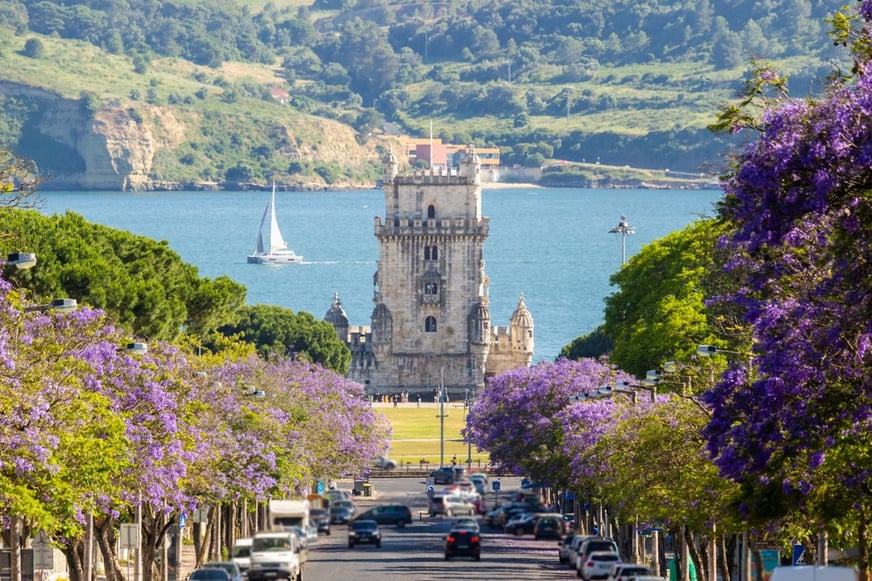
Torre de Belém
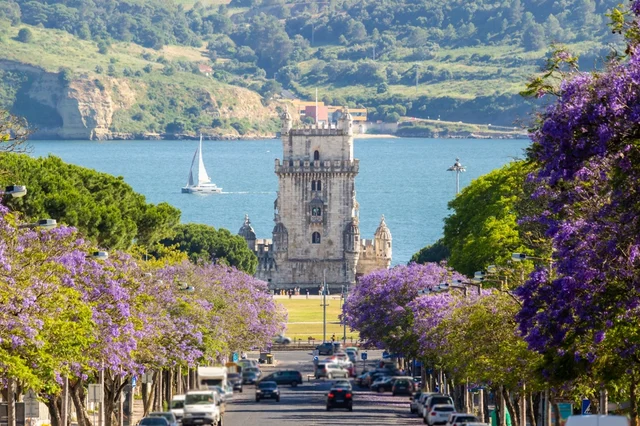
The quadrangular Tower of Belém is a monument to Portugal's Age of Discovery. Erected between 1515 and 1520, the Manueline-style tower is Portugal's classic landmark and often serves as a symbol of the country. A monument to Portugal's great military and naval past, the tower stands…
More About Lisbon Attractions
Lisbon Shopping
The Graça district wakes early for the Thieves Market, and A Arte da Terra in the Alfama is famous for its quality Portuguese handicrafts. Rato and Bairro Alto are best for antiques and rugs, including Casa dos Tapetes de Arraiolos, while the Baixa's Garrafeira Manuel Tavares sells mouthwatering regional cheese and wine. For fashion lovers, there's everything from vintage finds at A Outra Face da Lua to designer Ana Salazar's store in the Chiado.
Lisbon Nightlife
Lisbon is famous for its Portuguese fado folk music, best experienced at Café Luso in the Bairro Alto or Clube de Fado in the Alfama. Portugal's capital offers everything from classical music at the Calouste Gulbenkian Foundation in São Sebastião to contemporary performing arts at Belém Cultural Centre. Partygoers can choose from ever-popular Lux in Santa Apolónia, cool jazz nights at Speakeasy in Alcãntara or simply a relaxed cocktail or pot of tea at Cinco Lounge in Bairro Alto.
9 Results
- Dance Clubs
B.Leza
Portugal's colonial past has left the country with strong ties to Africa, not least through the many thousands of "Lisboetas" with roots in Africa. The B.Leza club is the place to dance to Angolan kizomba, Cape Verdean funaná, or any of the other many sensual musical styles of…Cais do Sodré Cinema City Alvalade
For travelers, Lisbon has a big advantage over most other European capitals. While Paris, Rome, and Berlin dub movies into French, Italian, or German, almost all films in Lisbon are shown in the original language, with Portuguese subtitles. Unfortunately most of the grand old art…Alvalade- Jazz Clubs
Hot Club Portugal
The stage is draped in a deep, blue light. In a darkened room, the audience squeezes around low tables laden with whiskey and wine. A husky, female voice croons that she doesn't know about her dreams any more, while a quartet lays down a cool rhythm. The Hot Club is the archetypal…Avenida - Dance Clubs
Lux
Lisbon's hippest club lists John Malkovich among its founders and his Hollywood A-list buddies have been seen shaking their stuff here. Occupying a former warehouse overlooking the Tagus, it has a laid-back upstairs bar and a lower level dance floor where some of Europe's top DJ's…Santa Apolónia - Bars & Pubs
O Botequim
Poet, politician, and breaker of sexual taboos, Natália Correia was a legendary figure in Portuguese intellectual society and this place was her headquarters. Opened by Correia in 1968, it was a legendary hangout for artists and writers until her death in 1993. It reopened in 2010…Graça - Bars & Pubs
Pavilhão Chinês
Step off the street into this bar hidden away among the chic boutiques of the Princípe Real neighborhood and you enter the labyrinthine world of a vast Victorian curiosity cabinet. The walls are crammed with an eclectic jumble of bric-a-brac, mostly from the early years of the 20th…Princípe Real - More Entertainment
Pensão Amor
The Cais do Sodré only recently became Lisbon's hippest nighthawk neighborhood. Before, it was a notorious red-light district where sailors from the nearby docks would come in search of ladies of the night. The opening of Pensão Amor in 2011 pioneered a renaissance, but the bar…Cais do Sodré Povo
There are plenty of upscale joints where fado music is treated as something sacred to accompany a fancy (and often over-priced) dinner. Povo takes fado back to its roots as a bluesy, boozy music of the people. Four nights a week, two musicians—one grasping a classical guitar, the…Cais do Sodré- Opera
Teatro Nacional de São Carlos
Lisbon's opera house has been hard hit by the economic crisis that has led to cuts in the number of performances and delays in fixing the program for 2014. Yet if you get the chance to catch a concert or an opera at this wonderful 18th-Century theater don't miss it. Built after the…Chiado