Things To Do in Logrono
Bookstore
Available as paperback
and as e-book.
Logrono Attractions
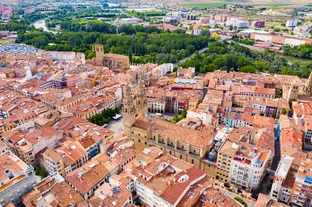
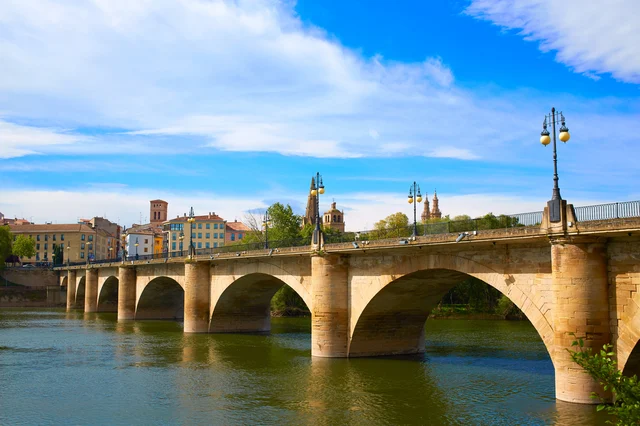
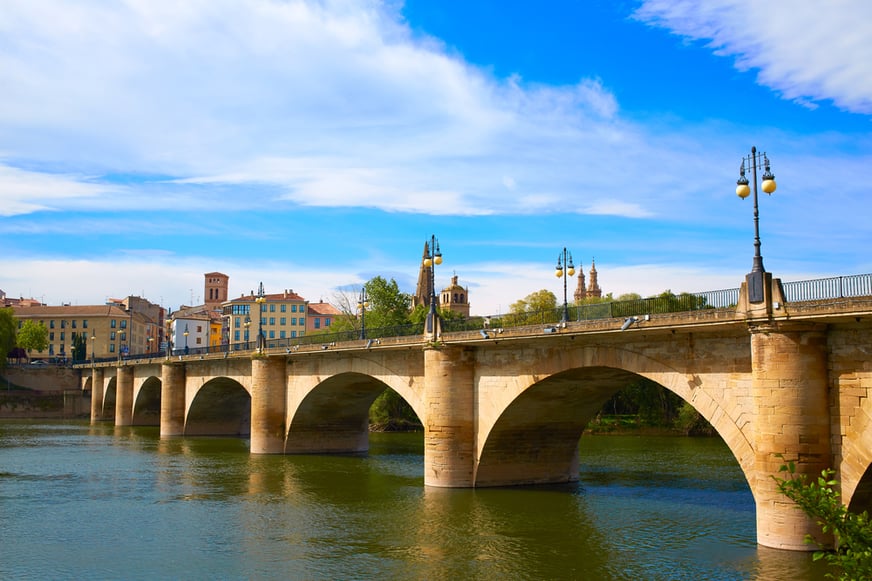
A 12th-century manuscript called the “Codex Calixtinus,” the earliest known guide to the Camino de Santiago pilgrimage route, singles out Logroño as a safe haven for travelers. Pilgrims entered the east end of town on the 11th-century Puente de Piedra (stone bridge, see above), which still crosses the Rio Ebro, though it was rebuilt in the 19th century and lost its three fortified guard towers. At the bridge’s southern end, turn right into the part-cobbled Rúavieja, the pilgrim’s path, a road steeped in history. Turn left onto Travesia Palacio to reach the 12th-century Iglesia Imperiál Santa María de Palacio (entrance on Calle Marqués de San Nicolás), once part of a royal palace. The palace part dates from 1130, when Alfonso VII offered his residence to the Order of the Holy Sepulchre. Most of what he left is long gone, of course, but there remains a pyramid-shaped spire from the 13th century.
Return to the Rúavieja, which soon becomes the Calle Barriocepo and leads to the ancient Pilgrim’s Fountain. Here, pilgrims rested and washed (pilgrimage is a smelly business) before going to pray in the 16th-century Iglesia Santiago El Real across the street. The church itself is of less interest to non-pilgrims, however, than the giant Concatedral de Santa María de la Redonda, a couple streets south on Plaza del Mercado. Constructed on top of an earlier Romanesque church, today’s cathedral is known for its broad naves and twin towers. Its vaults date from the 1400s, the baroque facade from 1742. Inside, you can visit the octagonal 1762 Chapel of Our Lady of the Angels with its rococo adornments. Admission is free. It’s open Monday to Saturday 8:30am‒1pm and 6‒9pm and Sunday 5:30-7:30pm.
Two streets south of the cathedral, explore the gardens of the broad Paseo del Espolón, where in the late afternoon, Logroño residents turn out for their paseo, or stroll before settling into the bar scene. Or head west on beautiful Calle Portales to Plaza de San Agustín, where at the south end, the Museum of La Rioja (tel. 94-129-12-59) charts the province’s history from Paleolithic times to the modern day. Besides icons, altarpieces, and monastery contents, you’ll also see artifacts from the Romanization of the region, which brought the cultivation of grapes and olives that still define La Rioja. The museum occupies a former palace, with a magnificent wooden staircase. An interesting introductory video tells the story of the building itself; all information is translated into English, including touchscreen panels. Admission is free. The museum is open Monday to Saturday 10am‒8:30pm, Sunday 10am‒2pm.
Visiting Logroño’s Wineries
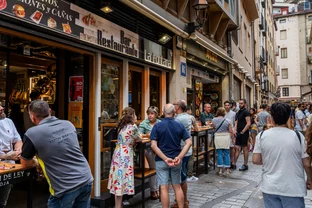
Wine shops are ubiquitous in Logroño’s old quarter, especially along Calle Portales and nearby side streets such as Calle Laurel or the slightly less frenzied Calle San Juan. A short walk from the city center, the pick of the in-town wineries is Bodegas Franco Española, Calle Cabo Noval, 2 (tel. 94-125-12-90), which offers excellent tours of the 125-year-old winery. Advance booking is required for the 75-minute visit, which costs 25€.
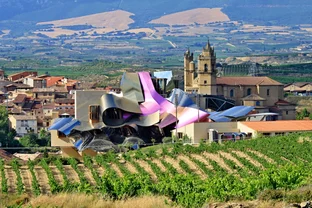
A half-hour’s drive west from Logroño, in the town of Cenicero, a lively winery tour awaits you at Bodegas Tritium, Avenida de la Libertad, 9, Cenicero (tel. 688-751-061). With a heap less formality than elsewhere, your tour here might last 3 hours and feel like a catch-up with old friends. As well as being entertained, you will certainly learn something at this family-run bodega, tucked away in a narrow backstreet. The building itself is over 500 years old, and a visit to the subterranean caves—where the wines are aged—is loaded with atmosphere. The emphasis is firmly on fun, and Itziar is a lively, lovely, English-speaking guide who’s clearly enamored with wine. The two owners produce a new wine every year, using acacia barrels as well as clay amphorae and traditional French and American oak, and they spend a decent portion of their waking hours with their noses firmly poked into a glass—in the interests of research, naturally. The cost is either 25€ with a two-wine tasting, or 60€ with access to savoring some very special wines and tapas. Reservations are essential and can be done via the website. They’re open year-round, with tours usually at 11am, 1pm, and 5:30pm.
Wine Country Tours
The Rioja wine region has some 600 wineries and visitors might scratch their heads when trying to decide which to visit. Rioja Wine Trips (tel. 34-652-726-119) is a small-scale local company that knows the region intimately and has all the right winery contacts. Hosts Inma and Mel offer a variety of full-day tours, picking you up from your accommodation, providing your lunch in an atmospheric setting, and giving you a deep insight into Riojan wine, the history, and the region.
Logroño’s Annual Wine Festival
During the week around the feast day of San Matéo, Logroño celebrates both its patron saint and the wine harvest with Las Fiestas de San Matéo y de la Vendimia. Activities include a carnival procession, gastronomic tastings organized by social clubs, a round of corridas, a jai alai tournament, concerts, theater, live music in the streets, and fireworks over the Río Ebro. Do drink some zurracapote, La Rioja’s version of sangria. On September 21, two men in historic costumes tread barefoot to crush grapes from the first harvest, with the must then offered to Our Lady of Valvanera, the patron saint of La Rioja. For festival details and timetables, contact the tourist office.
A Side Trip to San Millán de la Cogolla
Around 42km (26 miles) southwest of Logroño, San Millán de la Cogolla is often considered the cradle of both the Castilian and Basque languages. The small nearby village of Berceo was the home of 13th-century poet Gonzalo de Berceo, the first major literary figure to write in the Castilian dialect. In San Millán itself, the Monasterio de Yuso (tel. 94-137-30-49) holds many treasures in its sacristy, including early written examples in the Basque language and the earliest example of Castilian, written by an anonymous monk in the 11th century. The magnificent monastery compound was built between the 16th and 18th centuries on the site of an earlier, 11th-century one; nine Augustinian monks still reside here. Guided tours are in Spanish, with English-language brochures provided. From Easter to the end of September, it’s open Tuesday to Sunday 10am‒1:30pm and 4‒6:30pm (also open Mon in Aug); the rest of the year, hours are Tuesday to Saturday 10am‒1pm and 3:30‒5:30pm, Sunday 10am‒1pm. The visit costs 8€ adults, 6€ seniors, 4.50€ ages 7 to 17.
A minibus also departs from Yuso to the more ancient Monasterio de Suso on the hill above town. Founded in A.D. 550, Suso has many historic layers—a Visigothic core, Mozarabic enlargements from the 11th century, and a Romanesque section from the 13th. Tickets cost 4€. Advance reservations are required to visit Suso; call 94-137-30-82, or e-mail sanmillan@lariojaturismo.com.