Alcazaba

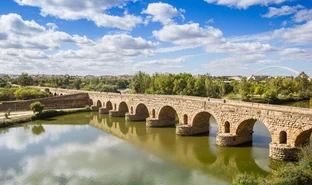
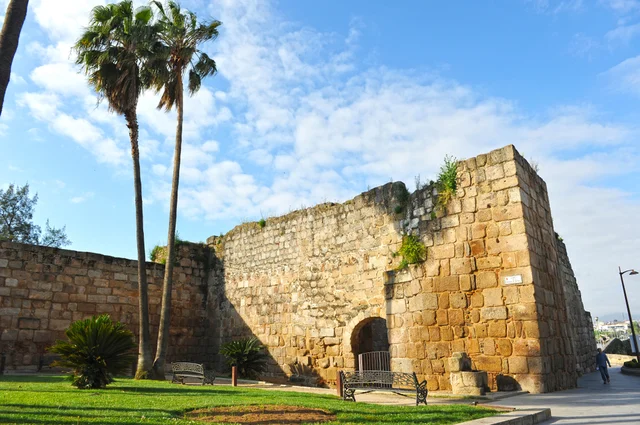
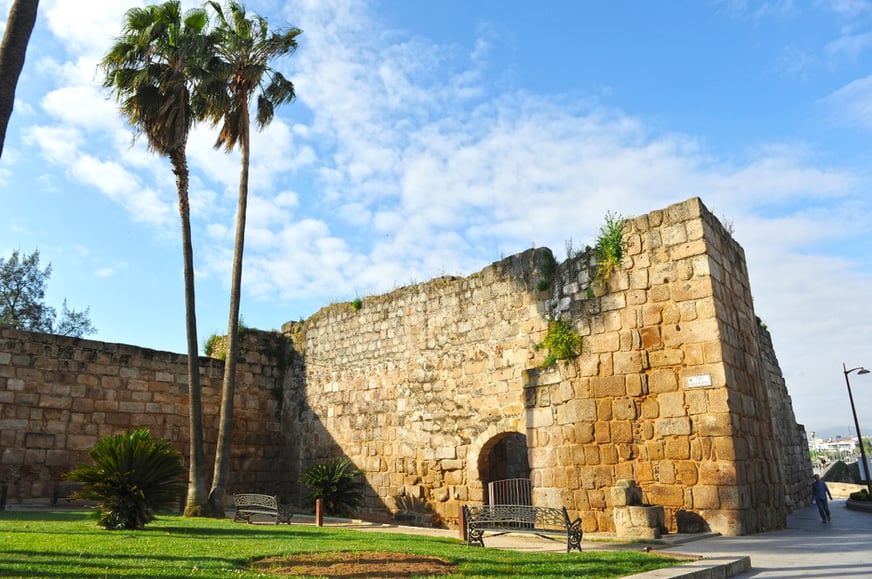
Standing guard on the north bank of the Guadiana, the mighty Alcazaba fortress was built in the 9th century by the Umayyad ruler Abd ar-Rahman II to restore order after a rebellion, using recycled masonry from the Roman and Visigoth eras. It was perhaps the first alcazaba on the Iberian peninsula. There’s not a great deal to see inside its expansive ashlar walls, but its horseshoe arch bent entrance—a classic feature of Islamic military architecture—gives you a sense of how the fortress was used to control access, and the Moorish cistern (aljibe), incorporating floral Visigoth pillars, is a peaceful spot. Look out for live goldfish in its still waters. The fortress ramparts are an ideal vantage point for photographs of the Roman bridge just downriver.
Standing guard on the north bank of the Guadiana, the mighty Alcazaba fortress was built in the 9th century by the Umayyad ruler Abd ar-Rahman II to restore order after a rebellion, using recycled masonry from the Roman and Visigoth eras. It was perhaps the first alcazaba on the Iberian peninsula. There’s not a great deal to see inside its expansive ashlar walls, but its horseshoe arch bent entrance—a classic feature of Islamic military architecture—gives you a sense of how the fortress was used to control access, and the Moorish cistern (aljibe), incorporating floral Visigoth pillars, is a peaceful spot. Look out for live goldfish in its still waters. The fortress ramparts are an ideal vantage point for photographs of the Roman bridge just downriver.
Details
Bookstore

Available as paperback
and as e-book.