Bookstore
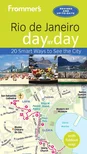
Available as paperback
and as e-book.
Rio de Janeiro Attractions
Most visitors to Brazil start or end their visit in Rio de Janeiro. A wise choice. There may be wider beaches in the north, higher mountains in the south, and larger jungles in the Amazon, but nowhere else on earth is there that wonderful combination of white-hot sand and tall green peaks, with a blaze of urban humanity filling all the spaces in between. Most people stay in the beachfront neighborhoods of Copacabana and Ipanema. They're great places to soak up the sun and to people-watch. But even if your time is limited, it's worth making the effort to explore further. In the historic downtown neighborhoods of Centro, Lapa, and Santa Teresa you'll find narrow cobblestone streets, grand plazas, gold-covered churches, and buildings of the baroque, Beaux Arts, and Art Deco styles. Shoppers will be in heaven; browse the crafts markets for souvenirs or check out the small shops in downtown's pedestrian streets. Upscale shoppers will love the Rio Sul mall and the fancy boutiques in Rio's tony Ipanema. If you have the energy, Rio's stunning setting offers numerous recreational activities: Hiking, hang gliding, surfing, rock climbing, and kayaking are just a few options. Taking in a game of soccer is an adventure in itself. Nowhere are the crowds larger or livelier than at Rio's Maracanã stadium. The city's vibrant cultural scene comes to life in the evening and never disappoints: See some of the local samba bands in Lapa, or emerging talents at the city's many live music venues, or splurge to see a big national star such as Caetano Veloso.
Spectacular & Free Views
Rio's best two views -- from the Sugarloaf and the Corcovado -- are both ticket-charging attractions. But in a city with so much geography it's impossible to fence off everything. What follows are views you get for free.
Smack in the middle of Botafogo is the Mirante do Pasmado. It is walkable (enter off Rua General Severino, close to the Shopping Rio Plaza), although it would probably take you at least 30 minutes. A lot easier is to take a taxi up and then walk back down. The views of Sugarloaf, the bay, and the Christ are quite spectacular.
Just a short 3km (2-mile) drive uphill along Estrada da Canoa from the beach at Sao Conrado, the Canoas Lookout (Mirante de Canoas) provides a view of São Conrado, Rocinha, and the Pedra Dois Irmaos near Leblon, and looking back uphill, the 2,100-foot Pedra Bonita from whence the hang gliders launch. Carry on up the road for 2km (1 1/4 miles), then turn left on Caminho da Pedra Bonita, and you too can stand by the hang gliders as they launch.
The military fort in Leme offers the most spectacular views of Copacabana, the Bay of Guanabara, and Sugarloaf. At R$3, it's effectively free.

26 Results
- Museum
Casa Daros
Inaugurated in 2013, Casa Daros is the Rio de Janeiro flagship of the Daros Latin America Institute, founded in 2000 in Zurich, by Swiss art collector Ruth Schmidheiny, specializing in contemporary Latin American art. The museum occupies a beautifully…Botafogo
- Museum
Centro Cultural Banco do Brasil
Next to the newly renovated Port of Rio area, the former headquarters of the Banco do Brasil were transformed in the 80s into a cultural center. It is not only a space for art expositions, but it also has a theater to stage plays and concerts, a cinema, an excellent art library and…$Centro - Museum
Chácara do Céu
This little art sanctuary in a modernist house in the hills of Santa Teresa sits in lush gardens designed by landscape architect Burle Marx. The museum showcases a small collection of paintings, sculptures, and engravings from Brazilian artists, such …Santa Teresa - Landmark
Corcovado
The Corcovado was recently chosen as one of the new Seven Wonders of the World. The view from the toes of Rio's mountaintop Christ is spectacular: the mountains, the bay, and the city all lay revealed beneath your (His?) feet. It's enough to give you a feeling of omniscience. The…Cosme Velho - Landmark
Forte de Copacabana
This place is simply massive. Built on the eve of World War I, Copacabana Fort boasts walls of reinforced concrete 12m (39 ft.) thick, and a monstrous 305mm (1 ft.) cannon that could fire a deadly shell 23km (14 miles) out to sea. Inside, rooms contain then-state-of-the-art…Copacabana - Landmark
Forte do Leme
This is one of Rio's best-kept secrets. On the top of the 183m (600-ft.) granite rock you get a 360-degree view of Copacabana and Guanabara Bay. The main gate is toward the back of the square at the end of Leme beach. Once inside, you make your way up a cobblestone road that winds…Copacabana - Landmark
Ilha Fiscal
This little ceramic castle afloat on its own island in the bay off Praça XV looks like the dwelling of a fair elfin princess, but in fact was built as the headquarters for the Brazilian Custom Service. Initial plans for a rather prosaic edifice were shelved after Emperor Pedro II…Centro - Neighborhood
Island of Paquetá
For an old-fashioned day trip visit the island of Paquetá in Guanabara Bay, a favorite destination since the early 1800s, when the Emperor Dom João VI began spending his summers on the island. In some ways not much has changed. No cars are allowed on Paquetá. Visitors toodle about… - Park/Garden
Jardim Botânico
In the 2 centuries since its founding by Emperor Dom João VI, the botanical garden has grown to 141 hectares (348 acres) and added 6,000 species of tropical plants and trees to its collection. Most visitors come to enjoy the peace and beauty, meandering along the many little paths…Lagoa - Zoo/Aquarium
Jardim Zoológico -- Rio City Zoo
If you haven't got time to get to the Amazon, this may be the place to come. Though not huge, the zoo is green, leafy, and pleasant, and has about 2,000 different species on display, most of them Brazilian. It's particularly good for birds. There are toucans (of Fruit Loops cereal…São Cristóvão - Museum
MAC (Museu de Arte Contemporanea)
The MAC is a thriving art and cultural center across the Bay of Guanabara in Niterói. World renowned Brazilian architect Oscar Niemeyer designed the modernist UFO-like architectural beauty of a building. Perhaps the most stunning work at the MAC is the…Niterói - Museum
MAM Rio (Museu de Arte Moderna)
This showcase of Brazilian contemporary art stands along the waterfront in Flamengo Park, right next to Santos Dumont Airport. Designed by Affonso Eduardo Reidy in 1952, the concrete behemoth is surprisingly pleasant thanks to the slender tilted pillars that …Centro - Sports Venue
Maracanã Stadium
Once the largest soccer stadium in the world and the temple of Brazilian soccer, the Maracanã got off to an inauspicious start at the 1950 World Cup when close to 200,000 spectators in the brand-new stadium saw Brazil lose the cup final to arch-rival Uruguay. (The loss still hurts --… - Museum
Museu Histórico Nacional
This well-organized museum guides its visitors in chronological order through the history of Brazil, from its original inhabitants, through the colonial era, slavery, and dictatorships to the modern world, displaying almost anything and everything from Imperial paintings and… - Museum
Museu Nacional de Belas Artes
Set in the former Arts Academy, the Fine Arts Museum is in a beautiful neoclassical building right on Rio Branco in downtown Rio, across from the stunning Teatro Municipal. Entrance is free but you still need to get a ticket (as the museum tracks the number of visitors). The… - Museum
Museu Naïf
A very rare museum treat, displaying a unique collection of naïve paintings from the 15th century to the present day. It’s the most complete collection of naïve art in the world, housed in a colonial mansion in Laranjeiras, just one block from the Corcovado train. The main floor of… - Museum
Museu de Arte do Rio (MAR)
If the MAR is a harbinger of things to come, the future is looking very bright for Rio’s downtown port district where a major revitalization project is under way. The next few years will see the inauguration of a Calatrava designed science museum, a streetcar, bike lanes, and the… - Museum
Museu do Forte de Copacabana
Built in 1914 on a headland at the end of Copacabana beach, the Fort of Copacabana was once Rio’s main defense against attacks from the sea. Brazil deactivated the fort as a coastal artillery post in the '80s and it now houses a museum on the history of the Brazilian army. Outside,…$ - Museum
Museu do Indio
At perhaps the most child-friendly museum in Rio, kids can use stamps and body paint to decorate themselves as native warriors. The small museum set in a mansion in the Botafogo neighborhood is very well-designed and features multimedia exhibitions on Brazil’s indigenous people and… - Landmark
Paço Imperial
For 2 centuries this was the nerve center of Brazil, serving as vice-regal palace and then as the seat of imperial power from 1808 until the fall of the monarchy in 1888. It's a pleasingly simple structure, long, low, and rectangular, its many high-ceilinged rooms arranged around a…Centro - Library/University
Real Gabinete Português
This is a temple to books. The interior is four stories tall, capped with a stained-glass cupola and stuffed with over 350,000 volumes, many of them from the 17th and 18th centuries. By showing ID (and maybe filling out a form -- it depends on who's working) visitors can request and…Centro - The Performing Arts
Sala Cecelia Meireles
This lovely heritage building on the Largo da Lapa is a very popular venue for classical music, offering concerts and recitals. There's also often more modern Brazilian rhythms such as bossa nova, jazz, and choro. - Natural Attraction
Sugarloaf Mountain
Along with samba, beaches, and beautiful women, the Sugarloaf remains one of the original and enduring Rio attractions. Deservedly so. Standing on its peak, the entire cidade maravilhosa lays at your feet: the beaches of Ipanema and Copacabana, the favelas of Babylonia, the Tijuca…Urca - The Performing Arts
Teatro Municipal
Brazil's prime venue for the performing arts, the elegant Parisian-style Teatro Municipal stages everything from opera to ballet to symphony concerts. The theater's ballet corps and symphony orchestra perform regularly throughout the year, and the theater also hosts many visiting… - The Performing Arts
Teatro Rival
This small theater has just received a major overhaul and is a great venue for seeing local and popular national acts, mostly of MPB. Ticket prices are quite reasonable. You may be looking at the next Marisa Monte or other of Brazil's many talented performers who haven't made it big… - The Performing Arts
Theatro Municipal
After a long renovation, this magnificent theater at Cinelândia in downtown Rio reopened in 2010. Inspired by the Paris Opéra, the Theatro has golden statues on the roof, stained glass, mosaics, neoclassical columns, and elegant balconies. It is…Centro
More About Rio de Janeiro Attractions

Rio de Janeiro Shopping
If Cariocas had to list their primary joys in life, shopping certainly wouldn't come out at the top -- there are, after all, beaches, music, and sex to consider -- but it'd certainly be in the top five. Even on the beach, vendors peddle an enormous range of products. Elsewhere clothing, shoes, arts and crafts, musical instruments, and other souvenirs can all be had at good prices.
The old downtown neighborhood of Centro offers great deals for clothes and shoes. Fun to explore are the pedestrian streets around Rua da Alfândega, Rua Uruguaiana, and Rua Buenos Aires, jampacked with hundreds of merchants in small shops side by side. Back in the '70s the area was slated to be demolished to make room for a viaduct, but over 1,200 shopkeepers formed a merchant's association and banded together to put a halt to the development. The best days for shopping are Monday through Friday when downtown is full of office workers. More upscale clothing can be found around the Rua Gonçalves Dias, with many stores selling Brazilian brand names and local designers.
Botafogo has two interesting shopping centers, the Botafogo Praia Shopping and the older Rio Sul. Rio Sul was one of the first malls of Rio and is still a very popular shopping destination. Many Brazilian stores can be found in this mall, and it makes a convenient place to browse and get a sense for brands and prices.
Copacabana, Ipanema, and Leblon don't have any large malls, just boutique malls known as galerias in Brazil. The prominent shopping areas are the main streets of the neighborhood. In Copacabana, Nossa Senhora de Copacabana is the main shopping street, with the best stores concentrated around the Rua Santa Clara and Rua Figueiredo de Magalhães. The beachfront area also houses a street market on Saturdays and Sundays, selling souvenirs and arts and crafts from various regions of Brazil. For upscale and exclusive shopping in Ipanema, try Rua Visconde de Piraja, especially between the Rua Anibal de Medonça and Rua Vinicius de Moraes. Another popular destination for Rio's well-heeled shoppers is the classy São Conrado Fashion Mall, located in São Conrado, a neighborhood wedged in between Leblon and Barra. Those who prefer megamalls may want to head straight for Barra da Tijuca. This newly developed neighborhood is home to many malls, including the Barra Shopping -- the largest mall in Latin America.
Hours for small stores and neighborhood shops are typically Monday through Friday from 10am to 7pm, and 9am to 1pm on Saturday. Malls are usually open from 10am to 10pm Monday through Saturday and limited hours on Sundays (2-8pm). In tourist areas shops will often be open on weekends.
While street vendors and markets take only cash, most shops accept one or more type of credit card. Often you can negotiate a discount for paying cash instead of with a credit card. Sometimes you will see two prices listed on items: á vista (always the lower price) refers to cash payments; cheque ou cartão is the price for payments made with a check or credit card. Please note that there is a difference between Credicard (a brand of credit card) and cartão or cartão de credito (the generic word for any kind of credit card).
Galleries -- For many more galleries, see www.mapadasartes.com.br.
Musical Instruments -- The berimbau, that wooden string instrument from Bahia, is one of Brazil's most popular souvenirs, but for music lovers there are many more interesting instruments to choose from (most of which are far more portable). The Rua da Carioca has turned into Music Store Central with at least five shops grouped together on its short length. Look for rattles that fit in the palm of your hand, or else pick up a tambourine or small set of drums. The agôgô is an interesting-looking double bell used to keep a beat. Guitar players will love the cavaquinho, a Brazilian mandolin. It's what gives samba its distinctive twang. For these and more visit Musical Carioca, Rua da Carioca 89 (tel. 021/3814-3400; www.musicalcarioca.com.br); Casa Oliveira Musicais, Rua da Carioca 70 (tel. 021/2252-5636); or Guitarra Prata, Rua da Carioca 37 (tel. 021/2262-9659; www.aguitarradeprata.com.br). Metrô: Largo da Carioca.
Rio de Janeiro Nightlife
It's an open question whether Cariocas possess some hidden nightlife gene or whether they've trained themselves for decadence through years and years of practice. Whatever the case, Rio has a lot to keep you busy at night. It starts early and continues very late. Cariocas themselves don't make a big deal about a night on the town: They're happy either heading out for beers or dancing to forró music or eating shrimp in some hole-in-the-wall botequim. However, if you as a visitor want to go for the quintessential Rio experience, you have to learn to pace yourself. Whether you spend the day seeking out sights or on the beach, head back to your hotel in the afternoon for a wee nap. Trust me, this will be the key to making it through the night. Once you're up again, head out in the cool early evening for a coconut juice on the beach. Sip it while watching the sunset (in summer around 8pm), then around 9pm stroll over to a patio for a predinner drink, or maybe walk along the pathway by the waterfront in Copa or Ipanema and find a table at one of the new beachfront kiosks. Plan to have dinner around 10pm, to be ready for your evening of dancing around midnight or 1am. (Most places don't even open until 11pm.) Your options at this point depend on the day and the time of year. If you're in Rio between September and Carnaval, attending one of the samba school rehearsals on Saturday night is a must. Otherwise, on a Thursday night see who's playing at some of the hip samba spots in Lapa like the Rio Scenarium, Carioca da Gema, or the Centro Cultural Carioca. Or just enjoy the scene by the Arcos de Lapa on a Friday night. Of course, there are a number of discos and bars to choose from, and then there are always the botequins, Rio's neighborhood bars. Wherever you wind up, after 3 or 4 hours dancing you may find yourself getting peckish. For a late-night or early-morning snack in Lapa, stop in for some pizza at the lovely upstairs Pizzaria Carioca da Gema, Av. Mem de Sá 77 (tel. 021/3970-1281; www.barcariocadagema.com.br), open until at least 4am on weekends. In Leblon, Pizzeria Guanabara or Jobi are both open until at least 5am on weekends. By the time they throw you out, it'll just be time to wander down to the beach and watch the sunrise, ready for a new morning -- and another night -- in Rio.
To find out more about listings for arts and entertainment, check the Friday editions of the O Globo (www.oglobo.com.br), O Dia (www.odia.com.br), or Jornal do Brasil (http://jbonline.terra.com.br) newspapers. Available at all newsstands, all three publish a detailed weekly calendar of events, including nightlife, performing arts, concerts, and other events in the city. The Rio tourism agency Riotur also publishes a detailed booklet of events in English and Portuguese called Guia do Rio or Rio Guide, available at its main information center at Av. Princesa Isabel 183 in Copacabana, or call Alô Rio at tel. 021/2542-8080 or 0800/707-1888 for information on events around town; they keep an updated list and their staff speak English.
Words to Help You Through the Night -- Here's some vocabulary to help you decipher the listings in the newspapers.
Under Música or Show you will find the listings for live music. Lovers of Brazilian music should look for anything under Forró, MPB (música popular brasileira), Bossa Nova, Choro, Pagode, or Samba. Listings under Pista refer to events at nightclubs or discos. Most listings will include the price of admission: Couvert is the cover charge and consumação states the drink minimum. It is quite common to have two rates, one for women (mulher) and one for men (homem), the latter usually paying more.
Children's programs are listed under Infantil or Para Crianças. Many dance clubs offer a matinee program on Saturdays or Sundays for teenagers. The days of the week are given in abbreviations: seg or 2a (Mon), ter or 3a (Tues), qua or 4a (Wed), qui or 5a (Thurs), sex or 6a (Fri), sab (Sat), and dom (Sun).
Nightlife Zones
Lapa -- Bars and clubs have their moments, and so do neighborhoods. Lapa is definitely on the up again. In the roaring '20s Lapa's vibrant nightlife earned it the nickname "Montmartre of the Tropics." It fell on hard times in the '50s and '60s, but in the last few years Lapa has undergone a major revival as even Cariocas from trendy Ipanema and Leblon come here to party. Things hop almost every night of the week, but the best days are Thursday, Friday, and Saturday. Lapa's nightlife consists of two different kinds of experiences. There are the carefully preserved heritage buildings turned music venues such as Carioca da Gema, Estrela da Lapa, Rio Scenarium, and Café Sacrilégio that offer some of the best samba in town. Then there is the much grittier street scene, centered around the Rua da Lapa and the parallel running Rua Joaquim Silva. These two streets are a major point where mostly young people come to drink, chat, flirt, and dance. The small music venues on the Rua Joaquim Silva are anything but nicely renovated (some are big-time sleazy), but half the fun is walking around and poking your head in (cover rarely exceeds R$5). In a 2-block range you will hear anything from reggae to samba to brega, hip-hop, funk, and salsa. The square in front of the arches is packed with food and drink stalls. As long as you stick to the main streets that have lots of people on them the area is quite safe at night.
The New Lapa -- Gamboa -- Just beyond the Praça Mauá, close to the port, lies one of Rio's older neighborhoods, Gamboa. It features lovely 19th-century buildings, pretty squares, and a fascinating history (it served as Rio's slave market and was also the likely birthplace of samba). It's also on the cusp of an urban revival similar to Lapa's 10 to 15 years ago. The pioneer was Trapiche Gamboa, Rua Sacadura Cabral 155 (tel. 021/2516-0868; www.trapichegamboa.com.br; closed Sun-Mon). Taking up a gorgeous three-story building from 1856, it has been transformed into a fabulous live-music venue playing, what else, samba. More recent newcomers are the Week, Rua Sacadura Cabral 154 (tel. 021/2253-1020; www.theweek.com.br), Rio's hottest new gay dance club, and Sacadura, Rua Sacudura Cabral 147 (tel. 021/2233-0378; www.sacadura.com.br), an upscale live-music venue. Keep an eye on this area as new places seem to open up every couple of months.
Making Your Point -- Rio is full of points. Pronounced poin-chee in Portuguese, a point is a location on the street that attracts people who attract other people who attract people who provide food, drinks, sometimes music, and all the other ingredients of a party. Complicated? Here's an example: One night we were headed over to Galeria Café with some friends. Just as we got there we met up with some other friends, and when we saw there was a bit of a line we got to chatting outside and bought some beers from a street vendor. Some other friends came, and other people whom we didn't know but who were there to meet some of their friends. We ordered more beers, and later some munchies from another vendor; before we noticed it was time to go home. We never did set foot in the bar we intended to patronize. That evening was a classic point -- a fun, impromptu street party. No one can say for sure when one will emerge, or why they show up where they do. Points just . . . are.
The Performing Arts
The performing-arts season in Brazil runs from early April until early December. April is a particularly good time -- the equivalent of the Northern Hemisphere's September -- as theaters and companies unveil their programs and kick off their season premières.
Music & Dance Clubs
If you're a fan of samba, check out the website www.samba-choro.com.br for weekly listings of all the clubs in Rio (and São Paulo) offering live samba. Check out the Rio Hiking website (www.riohiking.com.br) for tips on where to catch live music or just grab a drink and meet people. (Click on "Rio Hints.") If you don't like going out by yourself, you can also book a Rio Hiking Nightlife Tour to some of the hippest places around for R$120 (tel. 021/2552-9204), a great way to meet other travelers as well.
In most clubs and discos you can expect to pay a cover charge. Women usually pay less than men; you'll see the two prices listed at the door. Often there is also a drink minimum which can go up as high as R$120 at upscale Ipanema clubs. In most venues you are handed a paper card or electronic swipe card upon entry that is to be used to record all your purchases. The bill is then settled when you leave. A 10% service charge will be included, and a tip on top of that is not required. Hang on to your card for dear life. If you lose it you'll be charged an astronomical fee.
Many clubs have a restricted VIP area overlooking the dance floor, usually with comfortable couches or tables. The definition of VIP varies from club to club: Sometimes it's for members only, sometimes you can get in if you call and reserve ahead of time, and sometimes all that's required is paying a higher drink minimum. The advantage of being in the VIP area is you get a guaranteed seat in an area off-limits to most of the rest of the crowd, allowing you to leave your drinks, jackets, or purses at your table while you're dancing.
The Gafieira of Days Gone By -- The traditional ballroom dance halls known as gafieiras once defined the Carioca nightlife scene. Still worth a visit even if you can't dance, gafieiras are a legacy of the elegant days of old, when couples would dress for the occasion and everyone knew the steps. Most folks don't show up in suits or ball gowns anymore, but couples still dance with elegance and the tunes are unmistakably Brazilian: samba, pagode, a bit of rumba or foxtrot, and nowadays lots of forró.
Live Music -- Many small chopperias and botequins will often have a singer or small combo playing. Usually there's a small cover charge (couvert in Portuguese) for this entertainment. By sitting down and listening you're agreeing to foot the bill. The fee is automatically added to your tab. If you want to know what the couvert is before deciding to stay, simply ask the waiter. The key phrase is "Quanto é o couvert?" or "How much is the cover?"
Ladies of the Night . . . & Day -- They've been an integral part of the neighborhood since the '40s, the working girls and their customers who occupy selected slices of the Copacabana waterfront. The good news is that these places are not dangerous or even overly sleazy. Indeed, it can be interesting observing the hustle and bustle and to and fro, though the atmosphere is not exactly family entertainment (unless you come from a very odd family). Regular hangouts for sex tourists and working women include the Balcony Bar and the Lido square, which is also home to a number of strip clubs. This area is between the Copacabana Palace and the Avenida Prado Junior, Copa's main drive-by thoroughfare for street prostitutes. Farther down the waterfront by the Help disco, the Terraço Atlantico is where johns and hookers hook up in the afternoon and early evening. For those who like people-watching it can make for a fascinating scene. The area around the Rio Othon Hotel is another popular meeting place. Daytime contacts are made at the Meia Petaca patio or else out on the beach while working on that tan line.
Bars & Pubs
There are various ways that bar and restaurant owners can extract money from guests: One of them is the couvert. The couvert in restaurants used to refer to the small appetizer plate that is served when you first arrive -- olives, bread and butter, pâté, and the like. Nowadays it's also the name given to a live-music fee. If the bar has a musician playing, chances are something between R$2 and R$10 per person or per table will be added to your bill. Always ask when going into a restaurant or bar with live music if there is a cover or "couvert para a música," to avoid any surprises when your bill comes.
The Culture of Botequins -- Botequins are to Rio what pubs are to London and cafes are to Paris: the spot where locals gather, be it for end-of-day drinks or impassioned late-night philosophizing. Brazilians refer to botequins as pé sujos -- literally "dirty feet" -- meaning they're nothing fancy, often just plastic tables and fluorescent lights (though rich in character and local flavor). Some botequins have developed into popular nightlife attractions, offering live music and excellent food, and drawing crowds from all over the city. But most botequins remain small, not very fancy watering holes where one can kick back with a cold beer, have some snacks, and catch up with the latest gossip.
The Kiosks of Lagoa -- They began as lowly concession stands, but the kiosks around the Lagoa Rodrigo de Freitas have evolved into a fun, casual nightlife scene. Known in Portuguese as quiosques da Lagoa, they're the perfect place to stroll, munch, drink, and people-watch. Set at regular intervals along the pleasant green path that girdles the Lagoa, the kiosks range in size and quality from simple snack stands to full-fledged restaurants and entertainment centers. The cuisine ranges from Brazilian basic to Lebanese, Japanese, or Italian, while the entertainment ranges from a boombox on volume "11" to excellent live bands (some of which charge a small cover). The thickest concentration of kiosks begins opposite the Jockey Club. Another grouping clusters close to the Parque da Catacumba at the Ipanema and back end of Copacabana of the Lagoa. They're open year-round, but they're especially popular in summer; weekday hours are from 6pm onward -- they get busy around 10pm -- and on weekends from noon onward. A full loop around the Lagoa is 7.5km (4 1/2 miles), making for a pleasant 2-hour walk. For an interactive map of all the kiosks, showing opening hours, types of cuisine and music, and opening hours, see www.lagoarodrigodefreitas.com.br.
Waterfront Upgrade -- In 2006, Rio began a major overhaul of the sidewalk kiosks along the waterfront, replacing the old ones with modern glass kiosks with spacious decks, a full bar and kitchen, and underground washrooms and showers. Leme and Copacabana have all new kiosks. Ipanema and Leblon are slated for upgrades in the coming years. The new beachfront spots are often run by popular bars or restaurants. Standouts include the Siri Mole kiosk (tel. 021/3684-6671; www.sirimolepraia.com.br), opposite Rua Bolivar, which serves Bahian seafood dishes; Bar Luiz kiosk (tel. 021/7819-1258; www.barluiz.com.br), opposite the Copacabana Hotel; the Nescafé kiosk (tel. 021/3684-0624), near Posto 4, for 20 different type of crepes; or the Rainbow Pizzaria kiosk (tel. 021/3185-0162), opposite Rudolfo Dantas Street.
Gay & Lesbian Nightlife
Rio's gay community is smaller than one would expect from a city of 10 million people. For all Rio's reputation for sexual hedonism, the macho culture still predominates. As lasciviously as heterosexual couples may behave in public, open displays of affection between same-sex couples are still not accepted in Brazil. This is changing, though only slowly. Rio's mayor and governor have only just begun attending Rio's gay pride parade. The big exception, of course, is Carnaval, when many straight and gay men dress as women (Carmen Miranda is always a popular costume), and parades with drag queens are cheered by everyone. But this spirit of openness lasts only until the samba drums fade away at the dawn of Ash Wednesday.
Currently, the most popular nightspot is in Ipanema around the Galeria Café on the Rua Teixeira de Melo. During the day the stretch of sand close to Posto 8 (opposite the Rua Farme de Amoedo) is also popular. Copacabana has a number of gay clubs and bars as well as a popular meeting place on the beach at Rainbow's, in front of the Copacabana Palace Hotel. A good resource to pick up is the latest edition of the Gay Guide Brazil, a small booklet available at some of the clubs and bookstores in Ipanema, or check http://riogayguide.com. The Brazilian term for gay friendly is GLS, which stands for gay, lesbian, and sympathizers. Often you will see this abbreviation used in listings or restaurant and bar reviews.
After a day at the beach, go to Bar Bofetada, Rua Farme de Amoeda 87 (tel. 021/2227-6992). Located just a few blocks from Ipanema's prime gay beach, this botequim is perfect for a beer, snack, and flirt with local guys.
Set in a small gallery stunningly decorated with a changing display of work by local artists, the Galeria Café, Rua Teixeira de Melo 31E, Ipanema (tel. 021/2523-8250; www.galeriacafe.com.br), packs a gorgeous collection of men, shoulder to shoulder, bicep to bicep, into its combo art space, dance club, and bar. Those that can't fit -- and there are many -- just hang out in front. The Galeria really gets hopping, inside and out, after 1am. The cover charge is R$10 to R$25; open from Wednesday through Sunday.
Also popular is Dama de Ferro (the Iron Lady), Rua Vinicius de Moraes 288, Ipanema (tel. 021/2247-2330; www.damadeferro.com.br). Decorated by artist Adriana Lima, who also did the amazing decor at Galeria Café, Dama de Ferro is the it-spot at the moment, popular with gays and straights; high tolerance for electronic music is a must. Cover is R$10 to R$25; open Wednesday through Sunday.
Le Boy, Rua Raul Pompeia 102, Copacabana (tel. 021/2513-4993; www.leboy.com.br), is the largest and best-known gay club in Rio. It's glamorous, funky, and extremely spacious with a soaring four-story ceiling hovering somewhere above the dance floor. A range of special events attracts national and international celebrities and assorted (beautiful) hangers-on. Go after midnight, when things really start to hop. The club is open Tuesday through Sunday; cover ranges from R$5 to R$15 for men. This may be the only club in town where women pay more than men; any night of the week the cover for women is set at a hefty R$60. All for equal opportunity, Le Boy's owner recently inaugurated La Girl next door, Rua Raul Pompeia 102 (tel. 021/2247-8342; www.lagirl.com.br), Rio's first truly upscale nightclub for gay women with excellent DJs and go-go girl shows. La Girl is open on Monday and Wednesday to Sunday (men allowed only on Mon and Sun). Cover ranges from R$5 to R$15.
The Week, Rua Sacadura Cabral 154, Saude (tel. 021/2253-1020; www.theweek.com.br), is the new hottest gay dance club in town. This huge mega dance club can hold 2,000 people and is packed every Saturday night. Famous national and international guest DJs and go-go boys keep the crowd going. Open Saturdays at midnight. Often open for events on Fridays and Wednesdays; check listings.
In Centro, Cine Ideal (tel. 021/2221-1984; www.cineideal.com.br) is a gay-friendly outpost of house music, open every Friday and Saturday 11am to 6am. Cover R$40.
9 Results
- Bars & Pubs
Bar dos Descasados
This is a bar with history, built under the old arches of the slave quarters of the colonial mansion which now houses the boutique Hotel Santa Teresa. In more recent history—before it became a stylish hotel—the mansion was a place of refuge for men when their marriages were going…$$$Santa Teresa - Bars & Pubs
Carioca da Gema
For a night of great live samba music, delicious caipirinhas, dancing, and mingling with locals and other visitors, head to Carioca da Gema. This lovely small venue in a beautifully restored historic building in Lapa offers live Brazilian music seven days a week. The music usually…Centro Circo Voador
The Circo Voador (translation: Flying Circus) is one of the most popular downtown concert venues. Set against the Lapa Aqueduct, the permanent tent-like structure accommodates approximately 2000 people. Every week there are concerts by popular Brazilian artists and bands, as well as…$$Lapa- The Performing Arts
HSBC Arena
To catch some of Brazil’s biggest superstars and international headliners, such as Elton John or Guns and Roses, head to the HSBC Arena. This large concert venue can hold up 15,000 people and is located in Barra da Tijuca, Rio’s upscale suburban neighborhood just beyond Leblon and…$$$ - Dance Clubs
Miroir
Miroir Miroir on the wall, who is the prettiest of them all… well, just about everybody at the exclusive Miroir nightclub that draws Rio’s beautiful party crowd. Located on the Lagoa with views of Corcovado, this swanky two-story club plays exclusively electronic music and features… - Bars & Pubs
Pub Escondido CA
The ubiquitous Brazilian draft beer, known as chope (cerveja is only used for bottled beer) is served delightfully cold and quenches your thirst. However, real beer aficionados looking for more variety, complexity, and flavor, may want to make a beeline to Pub Escondido CA. This…Copacabana - Bar
Rio Scenarium
Rio’s prettiest bar and listed by the Guardian newspaper as one of the 10 best bars in the world, Rio Scenarium is a far cry from the dusty antique and prop rental shop it was when the owners started a simple bar amidst the merchandise back in 2001. The bar played an important role…$$ Trapiche Gamboa
Fans of samba music may wish to explore beyond Lapa and head towards the Praça Mauá, in Rio’s historic port district. Housed in a classic 19th-century "sobrado" (a two-story walk-up), Trapiche Gamboa draws a very loyal crowd of samba lovers who come for the great performances in a…Centro- Performing Arts Venue
Vivo Rio
To see some of Brazil’s big artists, like Marisa Monte, Caetano Veloso, or Gilberto Gil, head to Vivo Rio. Set in the waterfront park adjacent to the Museum of Modern Art, Vivo Rio is one of the city’s most modern concert venues. Unfortunately it seems to have a monopoly on…$$$Centro