Things To Do in Santillana del Mar
Bookstore

Available as paperback
and as e-book.
Santillana del Mar Attractions
Wander on foot throughout the village, taking in its principal sites, including Plaza de Ramón Pelayo (sometimes called Plaza Mayor). It is dominated by two towers—the 15th–century Torre de Don Borja at the north end, known for its pointed arched doorway, and the 14th–century Torre del Merino on the east side. Follow Calle de las Lindas (Street of Beautiful Women) off the northeast corner of the plaza to walk past many of the oldest buildings in Santillana.
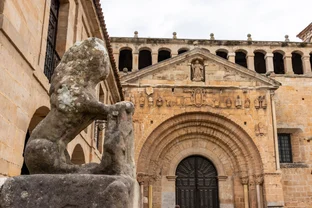
Turn up Calle Cantòn to Calle del Río, named for a stream running through town to a central fountain. At its north end lies the 800–year–old church, Colegiata de Santa Juliana, Calle Santo Domingo (tel. 94-284-03-17), which shelters the tomb of the village’s patron saint, Juliana. It has a lovely ivy–covered cloister and displays such treasures as 1,000–year–old documents and a 17th–century Mexican silver altarpiece. It’s open Tuesday to Sunday (daily July–Aug) 10am‒1:30pm and 4‒6:30pm. The 3€ admission also applies to the 400–year–old Convento de Regina Coelí, also called the Convento de las Clarisas (tel. 94-284-03-17), which lies at the other end of the main street. The first diocesan museum in Spain, the convent houses a rich art collection that chronicles the history of religious art on the Cantabrian coast from the time of the initial introduction of Christianity in the 6th century. The convent is open daily 10am‒1:30pm and 4‒7:30pm (in winter until 6:30pm, closed Mon).
The Altamira Caves & El Castillo
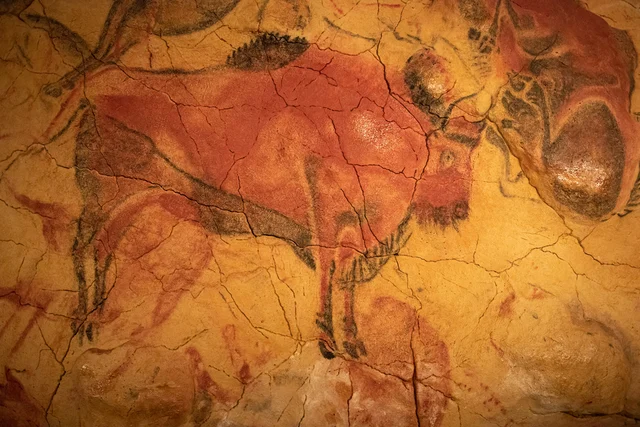
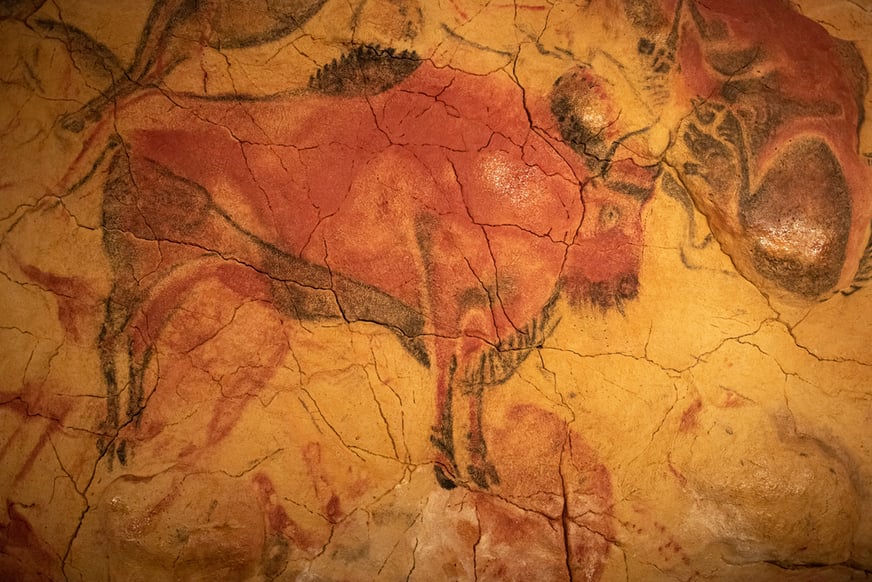
About 2.5km (1.5 miles) from Santillana del Mar are the Cuevas de Altamira, famous for prehistoric paintings dating from the end of the Ice Age. The cave paintings at Altamira are ranked among the finest prehistoric paintings ever discovered, and, as a result, they are often called the “Sistine Chapel of prehistoric art.” Picasso is said to have quipped, “After Altamira, all is decadence.” These ancient depictions of bison and horses, painted vividly in reds and blacks on the caves’ ceilings, were not discovered until the late 19th century. Once their authenticity was established, scholars and laypersons alike flocked to see these works of art, which provide a fragile link to our remote ancestors. Bacteria from visitors caused severe damage, so the caves were completely closed for years. Archaeological researchers may be permitted access, and then only with protective gear.
Everyone else must settle for the Museo de Altamira (tel. 94-281-80-05), not far from the original caves, where Altamira’s main cave chambers have been painstakingly recreated with computerized digital–transfer technology. The “Neocueva,” as it’s charmingly dubbed, replicates every crack, bump, and hollow of the original. The paintings of 21 bison in iron oxide pigment are perhaps the highlight. Modern museum exhibits go into considerable detail about the lives of the people who made this art. The museum is superb, but it does fall short of the magic of seeing one of these ancient caves.
If you don’t have a car, you have to walk 2 km (1.2 mi) from Santillana del Mar, as there is no bus service. From spring to fall, however, it’s a pretty stroll past long green pastures filled with grazing milk cows. The museum is open Tuesday to Saturday 9:30am‒8pm (6pm Nov–Apr), and Sunday 9:30am‒3pm. Admission is 3€ for adults, free for students, seniors, and ages 17 and under; free Sat 2pm—8pm and Sun all day.
Altamira isn’t the only ancient cave in the region. Seven other caves are open, including El Castillo, found at Carretera N–623, Km 28, 27km (17 miles) from Santander (tel. 94-259-84-25). Lying in the medieval hamlet of Puente Viesgo in the Pas Valley, this cave was excavated under the 350m (1,150–ft.) peak of the mountain, Monte del Castillo. Decorated by artists roughly 15,000 years ago, the cave has several different sections. Admittedly, the 275 pieces of art are not as advanced or concentrated as the works found at Altamira, but seeing the handprints, the clan marks, and the graceful images of deer, bison, and horses that must have seemed to dance in the flicker of firelight could make the hair stand up on the back of your neck. Small groups enter with a guide and must stay close, even in some of the palace–size chambers.
The caves are open mid–June to mid–September Tuesday to Sunday 10:30am‒2pm and 3‒7pm, Sun 10am—3pm; March to mid–June and mid–September to mid–October Tuesday to Saturday 9:30am‒1:30pm and 2:30‒6:30pm, Sunday 9:30am—2:30pm; mid–October to February Tuesday to Friday and Sun 9:30am‒3:30pm, Saturday 9:30am—4:30pm. Admission is 10€ adults, 5€ seniors and students. Warning: Numbers of visitors are strictly limited. Save yourself some heartache by reserving admission at a particular date and time at cuevas.culturadecantabria.com.