Barrio de Santa Cruz

The narrow, whitewashed streets of the old Jewish quarter are Sevilla’s main tourist zone. There are tacky souvenir shops and some tourist trap restaurants here, but despite the crowds, the district retains plenty of medieval character.
After the reconquest of Sevilla in 1248, the city’s Jewish population were confined to this area until their eventual expulsion in 1492. Several of its churches, like the Baroque Santa María La Blanca (Calle de los Reyes Católicos, 5; tel. 95-526-31-25), were previously synagogues. Almost every visitor to Sevilla will spend hours wandering these ancient alleyways with names like Calle Vida (Street of Life) and Calle Muerte (Street of Death). The latter was renamed Calle Susona in honor of a Jewish woman who tragically betrayed her family to the Inquisition in the 15th century and died of shame, insisting her corpse be hung from her house. A tile bearing a picture of a skull marks the spot.
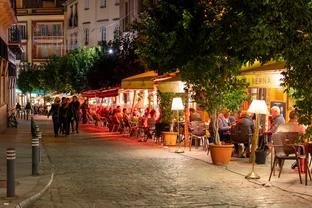
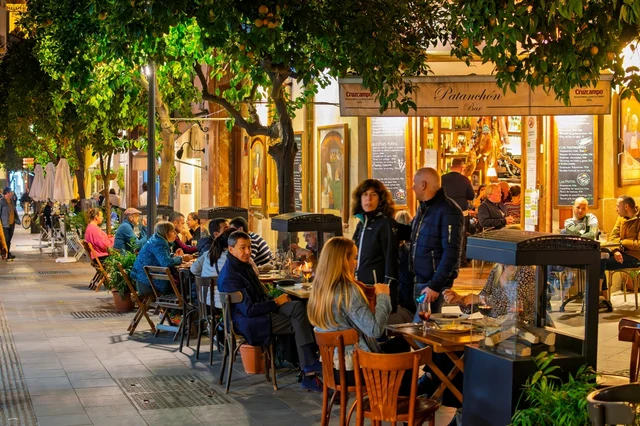
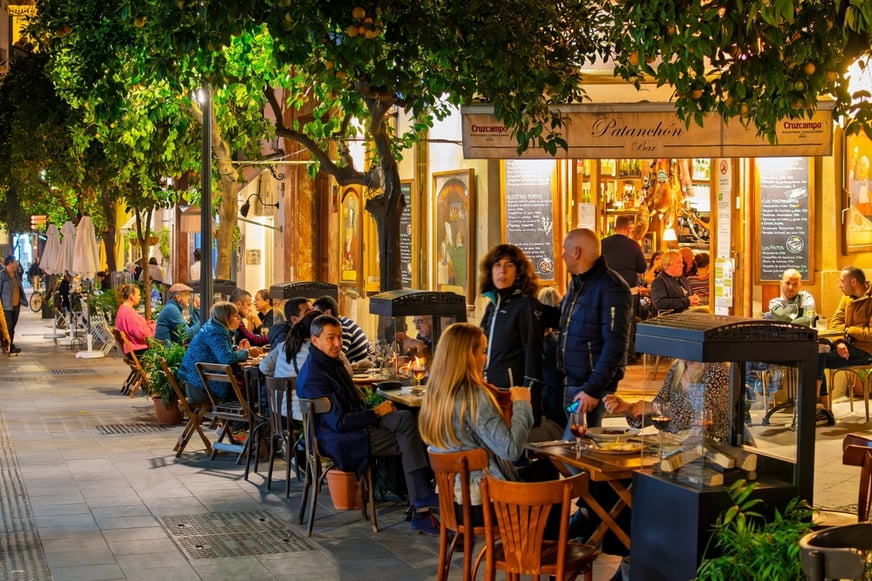
Flower-filled balconies with draping bougainvillea and potted geraniums jut over this labyrinth, shading you from the ferocious Andalucían sun. In the evening it’s common to see Sevillanos sitting in the patios sipping wine under the glow of lanterns. Join them for a drink at characterful bars like Casa Plácido, Calle Mesón del Moro, 5, (tel/ 95-456-39-71) or Las Teresas, Calle Santa Teresa, 2 (tel. 95-421-30-69).
To enter the Barrio de Santa Cruz, turn right after leaving the Patio de Banderas exit of the Alcázar. Turn right again at Plaza de la Alianza, going down Calle Rodrigo Caro to Plaza de Doña Elvira. “Santa Crus” is also loosely applied to the dense streets of the Judería that lie just west of the main portion of Santa Cruz.
The narrow, whitewashed streets of the old Jewish quarter are Sevilla’s main tourist zone. There are tacky souvenir shops and some tourist trap restaurants here, but despite the crowds, the district retains plenty of medieval character.
After the reconquest of Sevilla in 1248, the city’s Jewish population were confined to this area until their eventual expulsion in 1492. Several of its churches, like the Baroque Santa María La Blanca (Calle de los Reyes Católicos, 5; tel. 95-526-31-25), were previously synagogues. Almost every visitor to Sevilla will spend hours wandering these ancient alleyways with names like Calle Vida (Street of Life) and Calle Muerte (Street of Death). The latter was renamed Calle Susona in honor of a Jewish woman who tragically betrayed her family to the Inquisition in the 15th century and died of shame, insisting her corpse be hung from her house. A tile bearing a picture of a skull marks the spot.
Flower-filled balconies with draping bougainvillea and potted geraniums jut over this labyrinth, shading you from the ferocious Andalucían sun. In the evening it’s common to see Sevillanos sitting in the patios sipping wine under the glow of lanterns. Join them for a drink at characterful bars like Casa Plácido, Calle Mesón del Moro, 5, (tel/ 95-456-39-71) or Las Teresas, Calle Santa Teresa, 2 (tel. 95-421-30-69).
To enter the Barrio de Santa Cruz, turn right after leaving the Patio de Banderas exit of the Alcázar. Turn right again at Plaza de la Alianza, going down Calle Rodrigo Caro to Plaza de Doña Elvira. “Santa Crus” is also loosely applied to the dense streets of the Judería that lie just west of the main portion of Santa Cruz.
Details
Bookstore
Available as paperback
and as e-book.