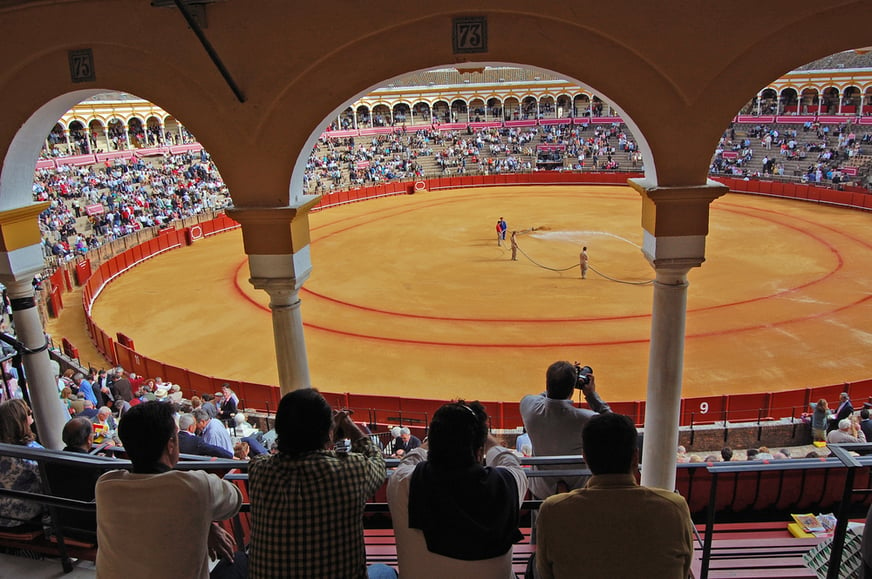
Real Plaza de Toros

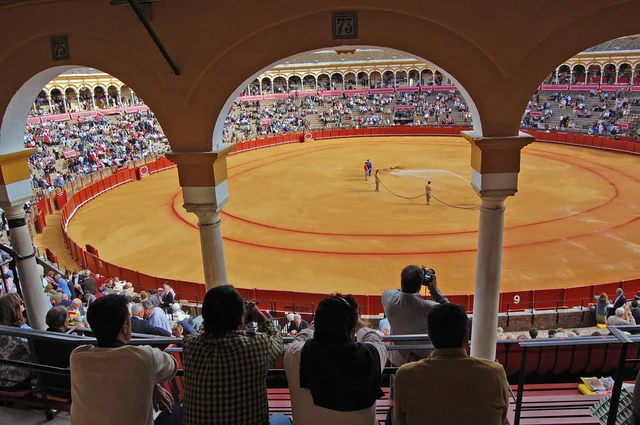
The Plaza de Toros de la Real Maestranza de Caballería de Sevilla is neither Spain’s oldest bullring (that’s in Ronda) nor the largest (that’s in Madrid), but it is considered the most important. Construction began in 1761 to replace earlier wooden rings, and was completed in stages over the following 120 years. The stands seat some 12,000 people. During the bullfight season, which runs from the April feria through September, women often wear flamenco dress and men sport sombreros to revel in the spectacle of the corrida.
To see a bullfight, book online well in advance—and dress smart. Ticket prices range from around 15€ (in the sun) to 500€ or more for the best seats at the biggest fights. For bullfight tickets, visit plazadetorosdelamaestranza.com.
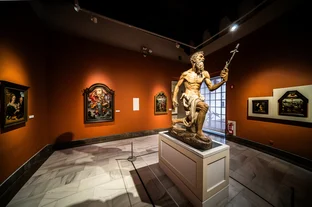
You can also visit the vast, empty ring for an audio guided tour. Although visitors cannot step onto the orange earth of the ring, they can survey the five gates that help orchestrate the corrida, including the gates where matadors and bulls enter the ring, the gate where dead bulls are carried out by three mules, and the gate where matadors exit in triumph if they receive the highest honors from the officials. The paintings and sculptures in the onsite museum here help trace the history of the spectacle from an aristocratic demonstration of bravery to a more populist sport in which talented bullfighters can achieve the fame of nobility. There's a particular focus on Curro Romero, the legendary Sevillian matador whose statue stands outside. A number of bullfighters’ costumes are on display, along with the red capes (muletas) that the bullfighter uses to attract the bull. Bulls, by the way, are colorblind; they respond to the motion, not the traditional color.
Whether or not you’re appalled by bullfighting, there’s no denying the tradition and passion that waft through its arcades. The museum displays paintings, prints, and artifacts tracing the history of the spectacle, The shop sells posters advertising previous seasons—each year’s is designed by a well-known Spanish artist.
The Plaza de Toros de la Real Maestranza de Caballería de Sevilla is neither Spain’s oldest bullring (that’s in Ronda) nor the largest (that’s in Madrid), but it is considered the most important. Construction began in 1761 to replace earlier wooden rings, and was completed in stages over the following 120 years. The stands seat some 12,000 people. During the bullfight season, which runs from the April feria through September, women often wear flamenco dress and men sport sombreros to revel in the spectacle of the corrida.
To see a bullfight, book online well in advance—and dress smart. Ticket prices range from around 15€ (in the sun) to 500€ or more for the best seats at the biggest fights. For bullfight tickets, visit plazadetorosdelamaestranza.com.
You can also visit the vast, empty ring for an audio guided tour. Although visitors cannot step onto the orange earth of the ring, they can survey the five gates that help orchestrate the corrida, including the gates where matadors and bulls enter the ring, the gate where dead bulls are carried out by three mules, and the gate where matadors exit in triumph if they receive the highest honors from the officials. The paintings and sculptures in the onsite museum here help trace the history of the spectacle from an aristocratic demonstration of bravery to a more populist sport in which talented bullfighters can achieve the fame of nobility. There's a particular focus on Curro Romero, the legendary Sevillian matador whose statue stands outside. A number of bullfighters’ costumes are on display, along with the red capes (muletas) that the bullfighter uses to attract the bull. Bulls, by the way, are colorblind; they respond to the motion, not the traditional color.
Whether or not you’re appalled by bullfighting, there’s no denying the tradition and passion that waft through its arcades. The museum displays paintings, prints, and artifacts tracing the history of the spectacle, The shop sells posters advertising previous seasons—each year’s is designed by a well-known Spanish artist.
Details
Bookstore
Available as paperback
and as e-book.