El Rinconcillo

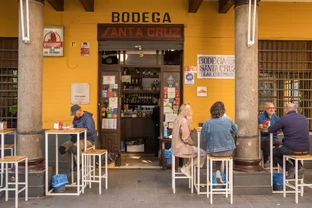
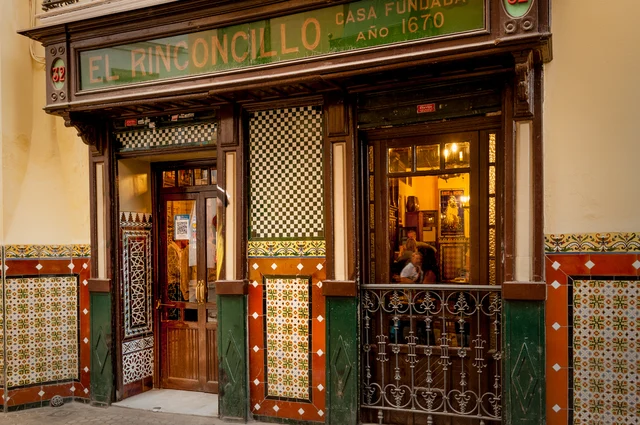
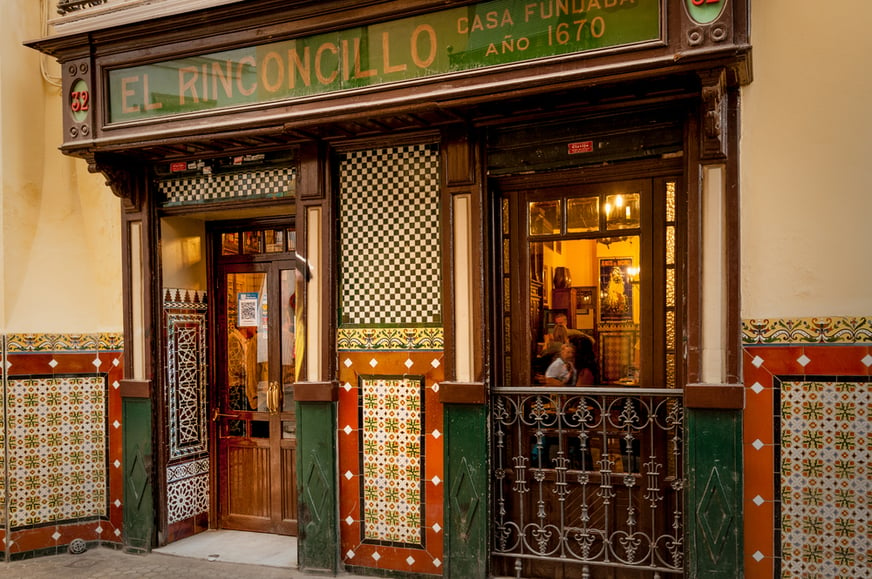
El Rinconcillo was established in 1670 on a small street east of Plaza de Encarnación. It was no doubt updated sometime in the last 3-plus centuries, but not recently—which is, of course, its charm. The latest additions to the decor were the Art Nouveau tile murals installed sometime in the late 19th or early 20th century. Dusty bottles furnish the walls, hams dangle from the ceiling, and the stone floor looks like it’s been here since the beginning. It’s popular with tourists—and some complain it’s not what it was—but you’ll still see plenty of locals. You can reserve one of the marble-topped tables in the beautifully tiled dining room or stand at the counter where the bartender chalks up your tab—with the bonus of watching the jamón being carved. Try house croquetas and the traditional chickpea and spinach stew (garbanzos con espinacas).
El Rinconcillo was established in 1670 on a small street east of Plaza de Encarnación. It was no doubt updated sometime in the last 3-plus centuries, but not recently—which is, of course, its charm. The latest additions to the decor were the Art Nouveau tile murals installed sometime in the late 19th or early 20th century. Dusty bottles furnish the walls, hams dangle from the ceiling, and the stone floor looks like it’s been here since the beginning. It’s popular with tourists—and some complain it’s not what it was—but you’ll still see plenty of locals. You can reserve one of the marble-topped tables in the beautifully tiled dining room or stand at the counter where the bartender chalks up your tab—with the bonus of watching the jamón being carved. Try house croquetas and the traditional chickpea and spinach stew (garbanzos con espinacas).
Details
Bookstore
Available as paperback
and as e-book.