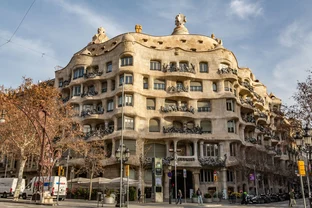
Planning a trip to Spain
Getting to Spain is relatively easy, especially for those who live in Western Europe or on the East Coast of the United States. If all your documents are in order, you should clear Customs and Immigration smoothly. The staffs of entry ports into Spain often speak English, and they'll usually speed you on your way.
Jump to:
- Tips for Senior Travelers
- Getting Around
- Calendar of Events
- Tips on Accommodations
- Entry Requirements & Customs
- Health & Insurance
- When to Go
- Tips for Gay and Lesbian Travelers
- Escorted & Package Tours
- Staying Connected
- Money
- Visitor Information
- Special-Interest Vacations
- Getting There
- Tips for Women Travelers
- Sustainable Travel & Ecotourism
- Fast Facts
- Regions in Brief
- Tips for Travelers with Disabilities
Tips for Senior Travelers
Members of AARP get discounts on hotels, airfares, and car rentals. Anyone 50 or older can join.
Many reliable agencies and organizations target the 50-plus market. Elderhostel (tel. 800/454-5768; www.elderhostel.org) arranges worldwide study programs for those aged 55 and over.
A recommended publication offering travel resources and discounts for seniors is the quarterly magazine Travel 50 & Beyond.
Getting Around
By Plane
By European standards, domestic flights within Spain are relatively inexpensive, and considering the distances within the country, flying between distant points sometimes makes sense. For reservations on Iberia, visit Iberia's website, or call tel. 800/772-4642. Air Europa (tel. 90-240-15-01), Vueling, and Ryan Air fly even more connections in Spain than Iberia.
Jetting Around Europe
If you plan to travel to a number of cities and regions, the OneWorld Visit Europe Pass can be a good deal. Sold only in conjunction with a transatlantic ticket from American, Iberia, or British Air airlines, it’s valid for most airports in Europe, but you are required to choose up to four different cities in advance in the order you’ll visit them. Restrictions forbid flying immediately back to the city of departure, and you’re only allowed one change within the preset itinerary once the ticket is issued. The dates and departure times of the actual flights, however, can be changed without penalty once you arrive in Europe. Costs depend on what kind of ticket you are issued—consult the folks at your OneWorld transatlantic carrier if you’re interested in a multi-stopover ticket and see what the best deal is at the time of your visit. The ticket is valid for up to 60 days after your initial transatlantic arrival in Europe.
By Train
Spain is crisscrossed with a comprehensive network of rail lines on RENFE, the national rail line. High-speed AVE, AVANT, ALVIA, and ALTRIA trains have reduced travel time between Madrid and Sevilla, Madrid and Valencia, and Madrid and Barcelona to two and a half hours or less. Trains are now so fast that few hotel trains (sleeper trains) are offered, apart from those going to Portugal or France. The RENFE website has possibly the world’s easiest-to-use online schedule. Pay close attention to prices on the schedule; AVE trains often cost twice as much as other high-speed trains but are not much faster. Reservations are required on all high-speed trains, even with a discount card or pass, and reservation fees vary depending on the class of train.
Junior & Senior Discount Cards: If you are between 14 and 25, you can purchase the Tarjeta Joven Renfe, which gives you a year of purchasing tickets within Spain for a 30% discount regardless of class, type of train, or day of the week. The pass costs €22 and must be purchased at a RENFE customer service window. Travelers age 60 and older may purchase a Tarjeta Dorada for €6 at any RENFE customer service window. Also good for a year, it provides 40% discounts on AVE and AVANT tickets Monday to Thursday, 25% Friday to Sunday, and 40% every day on MD (media distancia) and cercanías (commuter rail) trains.
Spanish Rail Passes: RENFE also offers discounted rail passes that must be purchased before arriving in Spain. The Eurail Spain Pass, which entitles you to unlimited rail travel in Spain, is available for 3 to 8 days of travel (within a month’s span) in either first or second class. The pass works most economically for long-distance travel—the kind of routes you might otherwise fly if trains weren’t more convenient and faster (Madrid to Barcelona, for example, or Barcelona to Málaga). For 3 days, the cost for an adult is $267 first class or $201 second class; for 8 days, the charge is $439 first class, $331 in second class. Children 4 to 11 pay half-fare on any of these discount passes. Note: This pass must be purchased before arriving in Spain. In the U.S. and Canada, contact Rail Europe (tel. 877/272-RAIL [272-7245]).
Eurailpass: The Eurailpass Global permits unlimited first-class rail travel in any country in western Europe except the British Isles (it is valid in Ireland). Purchase passes before you leave home—not all passes are available in Europe, and passes purchased in Europe will cost more. This pass permits unlimited travel in 21 Eurail-affiliated countries. You can travel on any of the days within the validity period. The time period and season determine the price. Generally speaking, the Global Pass offers more convenience than savings. See the Rail Europe website and run the numbers.
Other Rail Passes: Many different rail passes are available in the United Kingdom for travel in Britain and continental Europe. Stop in at the International Rail Centre, Victoria Station, London (tel. 0870-5848-848 in the U.K.). Some of the most popular passes, including Inter-Rail and Euro Youth, are offered only to travelers ages 25 and under; these allow unlimited second-class travel through most European countries. The main North American supplier, Rail Europe (tel. 877/272-RAIL [272-7245]), can also give you informational brochures and counsel you on which passes work best for your circumstances.
By Bus
Bus service in Spain is low-priced and comfortable enough for short journeys. The efficiency of train travel has cut drastically into available bus routes. Almost every bus schedule in Spain is available on the Movelia website, which also allows you to buy tickets on-line, provided you have access to a printer.
By Car
A car offers the greatest flexibility while you’re touring, even if you’re just doing day trips from Madrid. But don’t plan to drive in the congested cities. Rush hour is every hour.
Rentals: All the major international rental car firms maintain offices throughout Spain. These include Avis (tel. 800/331-1084), Hertz (tel. 800/654-3001), Budget (tel. 800/472-3325), Enterprise (tel. 90-210-0101 in Spain, 855/266-9289 in the U.S.), and Europcar (tel. 91-110-0000). Prices vary little among the companies, but you can find the best deals at Holiday Autos. Tax on car rentals is 15%, so factor it into your travel budget. Prepaid rates don’t include taxes, which will be collected at the rental kiosk.
Most rental companies require that drivers be at least 25 years of age and, in some cases, not older than 72. To be able to rent a car, you must have a passport and a valid driver’s license; you must also have a valid credit card or a prepaid voucher. Citizens of non-E.U. countries should obtain an International Drivers Permit before arriving in Spain. Without one, some agencies may refuse to rent you a car.
Driving Rules: Spaniards drive on the right-hand side of the road. Spain has two kinds of express highways: autopistas, which charge a toll, and autovías, which don’t. To exit a highway, follow the salida (exit) sign (except in Catalunya, where exit signs read sortida). On most express highways, the speed limit is 120kmph (75 mph). On other roads, speed limits range from 90kmph to 100kmph (56–62 mph). You will see many drivers far exceeding these limits.
If you are fined by the highway patrol (Guardia Civil de Tráfico), you must pay on the spot, either to the officer or online using a cellphone and credit card. There are stiff penalties for driving while intoxicated.
Breakdowns: On a major motorway you’ll find strategically placed emergency phone boxes. On secondary roads, call for help by asking the operator for the nearest Guardia Civil. The Spanish affiliate of AAA, Real Automóvil Club de España (RACE; tel. 90-240-45-45), provides limited assistance in the event of a breakdown.
Gasoline (Petrol): Service stations abound on the major arteries of Spain and in such big cities as Madrid and Barcelona. They are open 24 hours a day. On secondary roads, most stations open at 7am daily, closing at 11pm or midnight. All gas is unleaded—gasolina sin plomo. Many vehicles run on clean diesel fuel called Gasoleo A or on more expensive Biodiesel. Fuel prices change often—to check prices and available stations, visit the Geoportal. Tip: We generally rent diesel vehicles for much better gas mileage for a given vehicle size.
Maps: For drivers who don’t like or trust GPS, there are still old-fashioned paper maps available. Michelin map 990 (folded version) or map 460 (spiral-bound atlas) cover Spain and Portugal. Google Maps are pinpoint accurate in cities, but the database can be sketchier on rural roads.
Calendar of Events
The dates given below are approximate and will help you start planning. Sometimes the exact days are not announced until 6 weeks before the actual festival. Check with each event's website for more information and exact dates.
Granada Reconquest Festival, Granada. The whole city celebrates the Christians’ victory over the Moors in 1492. The highest tower at the Alhambra is open to the public on January 2. For information, visit www.turgranada.es. January 2.
Día de los Reyes (Three Kings Day), throughout Spain. Parades are held around the country on the eve of the Festival of the Epiphany. Various “kings” dispense candy to all the kids. January 5–6.
Gastrofestival, Madrid. Top international chefs gather for Madrid Fusion, restaurants and tapas bars offer special menus and treats. Cooking tours and demos are held; museums and galleries host food-themed films and programs. Visit www.esmadrid.com. Last week of January, first week of February.
ARCO (International Contemporary Art Fair), Madrid. One of the biggest draws on Spain’s cultural calendar, this exhibit showcases the best in contemporary art from Europe, the Americas, Australia, and Asia. For more information, call 📞 91-722-30-00 or visit www.ifema.es. Dates vary, usually mid-February.
Festival de Jerez. Annual flamenco festival highlights Jerez’s role in the development of the art. Performances range from intimate bars to enthusiasts’ clubs to large stage shows, usually featuring major figures. Also guitar, singing, and dance workshops. Visit www.turismojerez.com for tickets. Late February through early March.
Madrid Carnaval. The carnival kicks off with a parade along Paseo de la Castellana, culminating in a masked ball at the Círculo de Bellas Artes on the following night. Fancy-dress competitions last until Ash Wednesday, when the festivities end with a tear-jerking “burial of a sardine” at the Fuente de los Pajaritos in the Casa de Campo, followed by a concert in the Plaza Mayor. Visit www.esmadrid.com. Just before Lent.
Barcelona Carnaval. Compared to other parts of Spain, Carnaval in Barcelona is a low-key affair. In addition to the city’s main parade, stall-owners in local markets organize a competition among themselves for best costume. Just south of the city, in the seaside town of Sitges, the local gay community goes all out for Carnaval. Many Barceloneses hop the commuter rail to celebrate with them. Visit www.barcelonaturisme.com. Just before Lent.
Carnaval de Cádiz. The oldest and best-attended carnival in Spain is a freewheeling event full of costumes, parades, strolling troubadours, and drum beating. For more information, visit www.carnavaldecadiz.com. Just before Lent.
MARCH/APRIL
Fallas de Valencia, Valencia. Dating from the 1400s, this fiesta centers on burning gigantic papier-mâché effigies of winter demons. Burnings are preceded by bullfights, fireworks, parades, and the mascletà, a series of controlled explosions. This festival must be seen (and heard) to be believed. For information, visit www.fallasfromvalencia.com. Early to mid-March.
Semana Santa (Holy Week), throughout Spain. From Palm Sunday until Easter Sunday, a series of processions with hooded penitents moves to the piercing wail of the saeta. Heavy floats, or pasos, bearing the image of the Virgin or Christ are carried on the penitents’ shoulders. Notable processions are held in Zamora, Cuenca, Jerez de la Frontera, Sevilla, and Madrid. Not surprisingly, Catalunya has some traditions not found in the rest of Spain. The “Mona de Pascua,” a whimsical chocolate and pastry cake, is traditionally given by godparents to their godchildren. On Palm Sunday, palm leaves are blessed in Gaudí’s Sagrada Familia. Spaniards often take holidays on this week, and hotel prices soar to the highest of the year. Be sure to reserve in advance. Some restaurants and attractions curtail their hours. Unless you are interested in the religious spectacle, it’s a good week to avoid. One week before Easter.
La Diada de Sant Jordi, Catalunya. St. George (Sant Jordi in Catalan) is the patron saint of Catalunya, and his feast day coincides with the deaths of Miguel de Cervantes and William Shakespeare. On this day, men traditionally give a single red rose to the significant women in their lives, and women give a book in return. This is one of the most colorful days in Catalunya, as thousands of rose-sellers take to the streets and bookshops set up open-air stalls along the major thoroughfares. April 23.
Feria de Sevilla (Sevilla Fair). This is the most celebrated week of revelry in all of Spain, with all-night flamenco dancing, entertainment booths, bullfights, horseback riding, flower-decked coaches, and dancing in the streets. You’ll need to reserve a hotel early for this one. Visit www.turismosevilla.org. Second week after Easter.
MAY/JUNE
Feria del Caballo, Jerez de la Frontera. This annual livestock fair, held here since the 13th century, focuses on the famous Andalucían standard breed developed by Carthusian monks. It features 5 days of equestrian events, parades, flamenco, livestock displays, and, of course, sherry drinking. For information, call 📞 95-614-98-63 or visit www.turismojerez.com.Mid-May.
Festival de los Patios, Córdoba. This is a rare chance to get inside the gates to visit Córdoba’s famous patios with their cascading gitanillas (little Gypsies), as gardeners call their geraniums. Residents decorate with flowers and welcome visitors. Visit www.amigosdelospatioscordobeses.es for more information. First 2 weeks of May.
Fiestas de San Isidro, Madrid. Madrileños run wild with a 10-day celebration honoring the city’s patron saint. Food fairs, Castilian folkloric events, street parades, parties, music, dances, and other festivities mark the occasion. Make hotel reservations early. Expect crowds and traffic. Visit www.esmadrid.com. Mid-May.
Corpus Christi, all over Spain. A major holiday on the Spanish calendar, this event is marked by big processions in Madrid as well as in nearby cathedral cities, such as Toledo. In Catalunya, the streets of Sitges are carpeted in flowers. May or June, depending on liturgical calendar.
Suma Flamenca, Madrid. This month-long flamenco summit offers performances almost every night in intimate clubs and large concert halls. For information on performers and venues, see www.madrid.org/sumaflamenca. June.
Sónar, Barcelona. This international 3-day festival of advanced music and new media art has gained a reputation as one of the world’s most innovative. For more information, visit http://sonar.es. Early to mid-June.
Verbena de Sant Joan, Barcelona. This traditional festival occupies all Catalans. Barcelona literally lights up, with fireworks, bonfires, and dances until dawn. The highlight of the festival is the fireworks show at Montjuïc. Visit www.barcelonaturisme.com. June 23 (eve of feast of St. John).
Festival Internacional de Musica y Danza de Granada, Granada. Since 1952, Granada’s prestigious program of dance and music has attracted international artists who perform at the Alhambra and other venues. It’s a major event on Europe’s cultural calendar. Reserve well in advance. For a complete schedule and tickets, visit www.granadafestival.org. Last week of June to first week of July.
JULY
A Rapa das Bestas (The Capture of the Beasts), San Lorenzo de Sabucedo, Galicia. Spain’s greatest horse roundup attracts equestrian lovers from throughout Europe. Horses in the verdant hills of northwestern Spain are rounded up, branded, and medically checked before being released back into the wild. Visit www.turgalicia.es. First weekend in July.
Fiesta de Santiago, Santiago de Compostela. Pomp and ceremony mark this annual pilgrimage to the tomb of St. James the Apostle. Galician folklore shows, concerts, parades, and the swinging of the botafumeiro (a mammoth incense burner) mark the event. Visit www.turgalicia.es. July 15 to 30.
Fiesta de San Fermín, Pamplona. Vividly described in Ernest Hemingway’s novel The Sun Also Rises, the running of the bulls through the streets of Pamplona is the most famous celebration in Spain. It includes wine tasting, fireworks, and, of course, bullfights. Reserve many months in advance. Visit www.sanfermin.com. July 6 to 14.
San Sebastián Jazz Festival, San Sebastián. Celebrating its 50th year in 2015, this festival brings the jazz greats of the world together in the Kursaal. Other programs take place alfresco at the Plaza de Trinidad in the Old Quarter. For schedule and tickets, call 📞 94-348-19-00 or visit www.heinekenjazzaldia.com. Late July.
AUGUST
Festival Internacional de Santander. The repertoire includes classical music, ballet, contemporary dance, chamber music, and recitals. Most performances are staged in the Palacio de Festivales, a centrally located auditorium custom-built for this event. Visit www.festivalsantander.com. Throughout August.
Fiestas of Lavapiés and La Paloma, Madrid. Festivities begin with the Lavapiés on August 1 and continue through the hectic La Paloma celebration on August 15, the Day of the Virgen de la Paloma. During the fiestas, thousands of people race through the narrow streets. Apartment dwellers hurl buckets of cold water onto the crowds below to cool them off. There are children’s games, floats, music, flamenco, and zarzuelas, along with street fairs. Visit www.esmadrid.com. Two weeks in early August.
Misteri d’Elx (Mystery of Elche). This sacred drama is reenacted in the 17th-century Basilica of Santa María in Elche (near Alicante). It represents the Assumption and the Crowning of the Virgin. For tickets, call 📞 96-665-81-96 or visit www.visitelche.com. August 11 to 15.
Feria de Málaga (Málaga Fair). One of the longest summer fairs in southern Europe (generally lasting 10 days), this celebration kicks off with fireworks displays and is highlighted by a parade of Arabian horses pulling brightly decorated carriages. Participants dress in colorful Andalucían garb, plazas rattle with castanets, and wine is dispensed by the gallon. Visit www.malagaturismo.com. Weekend before August 19.
La Tomatina (Battle of the Tomatoes), Buñol (Valencia). This is one of the most photographed festivals in Spain, growing in popularity every year. Truckloads of tomatoes are shipped into Buñol, where they become vegetable missiles between warring towns and villages. Portable showers are brought in for the cleanup, followed by music for dancing and singing. Visit www.latomatina.org. Last Wednesday in August.
Fiesta de la Rosa del Azafrán (Saffron Rose Festival), Consuegra. The heart of Spain’s saffron-growing region celebrates the harvest with a weekend fair featuring beauty queens, competitions to separate saffron threads from flowers, and a folk festival. A ceremonial grinding of saffron in windmills cements the friendship of Spain’s chief saffron-growing villages. Visit www.turismocastillalamancha.es. Last weekend of August.
SEPTEMBER
Diada de Catalunya, Barcelona. The most significant festival in Catalunya celebrates the region’s autonomy from the rest of Spain, following years of repression under the dictator Franco. Demonstrations and other flag-waving events take place. The senyera, the flag of Catalunya, is everywhere. Not your typical tourist fare, but interesting. For more information, visit www.gencat.net. September 11.
San Sebastián International Film Festival, San Sebastián. The premier film festival of Spain takes place in the Basque capital, often at several different theaters. Retrospectives are frequently featured, and weeklong screenings are held. Visit www.sansebastianfestival.com. Second week in September.
Festa de la Mercè, Barcelona. This celebration honors Mare de Deu de la Mercè, the city’s patron saint, known for her compassion for animals. Beginning after dark, and after a Mass in the Igreja de la Mercè, a procession of as many as 50 “animals” (humans dressed like tigers, lions, and horses) proceeds with lots of firecrackers and sparklers to the cathedral and then on to Plaça de Sant Jaume and eventually into Les Rambles, Plaça de Catalunya, and the harborfront. Visit www.barcelonaturisme.com. Mid-September.
OCTOBER/NOVEMBER
Semana de Santa Teresa, Avila. Verbenas (carnivals), parades, singing, and dancing honor the patron saint of this walled city. Call 📞 92-035-40-00 or visit www.avilaturismo.com. October 8 to 15.
Feria de Otoño, Madrid. Spanish and international artists participate in this cultural program with a series of operatic, ballet, dance, music, and theatrical performances featuring companies from Strasbourg to Tokyo. This event is a premier attraction, yet tickets are reasonably priced. Make hotel reservations early. Visit www.esmadrid.com. Late October to late November.
All Saints’ Day,throughout Spain. This public holiday is reverently celebrated, as relatives and friends lay flowers on the graves or nichos of the deceased. Many bars in Madrid and Barcelona hold Halloween parties the night before—an imported custom that seems to be catching on. November 1.
DECEMBER
Christmas Markets, Madrid and Barcelona. More than 100 stalls set up in Plaza Mayor in Madrid to sell handicrafts, Christmas decorations, and Nativity scenes. A similar market sets up in the plaza outside Barcelona’s cathedral.
Tips on Accommodations
From castles converted into hotels to modern high-rise resorts overlooking the Mediterranean, Spain has some of the most varied hotel accommodations in the world—with equally varied price ranges. Accommodations are broadly classified as follows:
One- to Five-Star Hotels: The Spanish government rates hotels by stars, plus the designation “GL” (Grand Luxe) for the most luxurious properties. Note that many criteria in the star system are based on suitability for business meetings, but since each property is reviewed on the same criteria, the stars can be useful for comparing lodgings in the same area.
Hostales: Not to be confused with a youth hostel, a hostal is a modest hotel without services. They’re often a good buy. You’ll know it’s a hostal if a small s follows the capital letter h on the blue plaque by the door.
Youth Hostels: Spain has about 140 hostels (albergues de juventud) and they are not limited to young people. Some are equipped for persons with disabilities. Many hostels impose an 11pm curfew. For information, contact Red Española de Alberques Juveniles (tel. 91-522-70-07).
Paradores: The Spanish government runs a series of unique state-owned inns called paradores that blanket the country. Castles, monasteries, palaces, and other grand buildings have been taken over and converted into hotels. Several newer properties were simply built from scratch to look monumental. To book or learn more, contact Paradores de España (tel. 90-254-79-79). Make reservations directly with the network’s website, as third-party bookers tend to slap on additional charges. Paradores offer good discounts when one of the travelers is under 30 or over 65, or if you purchase 5 nights (which can all be in different paradores).
Short-Term Rentals: If you’ll be based in one place long enough to justify paying a cleaning fee, most major cities have agencies that specialize in short-term apartment and even house rentals. They are particularly nice if you want your own kitchen and even laundry facilities. Internet-based “sharing rentals” like Homeaway and Airbnb have encountered stiff municipal opposition, especially in Barcelona, Madrid, Bilbao, and San Sebastián. Palma de Mallorca has banned Airbnb outright, and several cities have cited the company for violating health and safety codes. As of early 2019, several Spanish cities—including Barcelona, Madrid, and Valencia—were considering following Palma’s lead.
Entry Requirements & Customs
Passports
For up-to-date passport requirements for countries around the world, visit the U.S. State Department website.
Visas
Visas are not needed by U.S., Canadian, Irish, Australian, New Zealand, or British citizens for visits of less than 3 months.
Customs
What You Can Take Home from Spain -- U.S. Citizens -- For specifics on what you can bring back and the corresponding fees, download the invaluable free pamphlet Know Before You Go online at www.cbp.gov. (Click on "Travel," and then click on "Know Before You Go!") Or contact the U.S. Customs & Border Protection (CBP), 1300 Pennsylvania Ave., NW, Washington, DC 20229 (tel. 877/287-8667), and request the pamphlet.
Canadian Citizens -- For a clear summary of Canadian rules, write for the booklet I Declare, issued by the Canada Border Services Agency (tel. 800/461-9999 in Canada, or 204/983-3500; www.cbsa-asfc.gc.ca).
Medical Requirements
Unless you're arriving from an area known to be suffering from an epidemic (particularly cholera or yellow fever), inoculations or vaccinations are not required for entry into Spain.
Health & Insurance
Insurance
Medical Insurance: You may want to buy travel medical insurance, particularly if you're traveling to a remote or high-risk area where emergency evacuation might be necessary. If you require additional medical insurance, try Travel Assistance International.
Travel Insurance -- The cost of travel insurance varies widely, depending on the destination, the cost and length of your trip, your age and health, and the type of trip you're taking. You can get estimates from various providers through InsureMyTrip. Enter your trip cost and dates, your age, and other information, for prices from more than a dozen companies.
Staying Healthy
Spain should not pose any major health hazards. The rich cuisine -- garlic, olive oil, and wine -- may give some travelers mild diarrhea, so take along antidiarrhea medicine, moderate your eating habits, and even though the water is generally safe, drink bottled or mineral water. (Do not drink the water in mountain streams, regardless of how clear and pure it looks.) Fish and shellfish from the horrendously polluted Mediterranean should only be eaten if cooked.
If you are traveling around Spain (particularly southern Spain) over the summer, limit your exposure to the sun, especially during the first few days of your trip and, thereafter, from 11am to 2pm. Use a sunscreen with a high sun protection factor (SPF) and apply it liberally. Remember that children need more protection than adults do.
General Availability of Health Care -- Spanish medical facilities are among the best in the world. If a medical emergency arises, your hotel staff can usually put you in touch with a reliable doctor. If not, contact the American embassy or a consulate; each one maintains a list of English-speaking doctors. Medical and hospital services aren't free, so be sure that you have appropriate insurance coverage before you travel.
Contact the International Association for Medical Assistance to Travelers (IAMAT) for tips on travel and health concerns in the countries you're visiting, and for lists of local, English-speaking doctors. The United States Centers for Disease Control and Prevention provides up-to-date information on health hazards by region or country and offers tips on food safety. You can find listings of reliable medical clinics overseas at the International Society of Travel Medicine.
What to Do If You Get Sick Away from Home -- For travel abroad, you may have to pay all medical costs upfront and be reimbursed later. Medicare and Medicaid do not provide coverage for medical costs outside the U.S. Before leaving home, find out what medical services your health insurance covers. To protect yourself, consider buying medical travel insurance.
Very few health insurance plans pay for medical evacuation back to the U.S. A number of companies offer medical evacuation services anywhere in the world. If you're ever hospitalized more than 150 miles from home, MedjetAssist will pick you up and fly you to the hospital of your choice virtually anywhere in the world in a medically equipped and staffed aircraft 24 hours a day, 7 days a week. You can purchase an annual or short-term membership.
If you suffer from a chronic illness, consult your doctor before your departure. Pack prescription medications in your carry-on luggage, and carry them in their original containers, with pharmacy labels -- otherwise they won't make it through airport security. Carry the generic name of prescription medicines, in case a local pharmacist is unfamiliar with the brand name.
When to Go
Spring and fall are ideal times to visit nearly all of Spain, with the possible exception of the Atlantic coast, which experiences heavy rains in October and November. May and October are the best months with regard to weather as well as crowds.
In summer it's hot, hot, and hotter still, with the cities in Castile (Madrid) and Andalusia (Seville and Córdoba) heating up the most. Madrid has dry heat; the average temperature can hover around 84°F (29°C) in July and 75°F (24°C) in September. Seville has the dubious reputation of being about the hottest part of Spain in July and August, often baking under average temperatures of 93°F (34°C).
Barcelona, cooler in temperature, is often quite humid. Midsummer temperatures in Majorca often reach 91°F (33°C). The overcrowded Costa Brava has temperatures around 81°F (27°C) in July and August. The Costa del Sol has an average of 77°F (25°C) in summer. The coolest spot in Spain is the Atlantic coast from San Sebastián to A Coruña, with temperatures in the 70s (21°C-26°C) in July and August.
August remains the major vacation month in Europe. The traffic from France, the Netherlands, and Germany to Spain becomes a veritable migration, and low-cost hotels along the coastal areas are virtually impossible to find.
In winter, the coast from Algeciras to Málaga is the most popular, with temperatures reaching a warm 60°F to 63°F (16°-17°C). Madrid gets cold, as low as 34°F (1°C). Majorca is warmer, usually in the 50s (low teens Celsius), but it often dips into the 40s (single digits Celsius). Some mountain resorts can experience extreme cold.
Some Spanish public holidays—notably Good Friday, Easter Monday, and Corpus Christi, held 60 days after Easter—depend on the liturgical calendar. Each region of Spain also has some local holidays, usually expressing regional pride.
National holidays include January 1 (New Year’s Day), January 6 (Feast of the Epiphany), March 19 (Feast of St. Joseph), Good Friday, Easter Monday, May 1 (May Day), Corpus Christi, August 15 (Feast of the Assumption), October 12 (Spain’s National Day), November 1 (All Saints’ Day), December 8 (Immaculate Conception), and December 25 (Christmas). If a holiday falls on a Thursday or Tuesday, many Spaniards take off the weekday in between to create an extra-long weekend known as a puente, or bridge. Be sure to book hotels well ahead of time.
Tips for Gay and Lesbian Travelers
Madrid and Barcelona are the major centers of gay life in Spain. The most popular resorts for gay travelers are Sitges (south of Barcelona), Torremolinos, and Ibiza.
The International Gay and Lesbian Travel Association (IGLTA) is the trade association for the gay and lesbian travel industry, and offers an online directory of gay- and lesbian-friendly travel businesses and tour operators.
Many agencies have tours and travel itineraries specifically for gay and lesbian travelers. San Francisco-based Now, Voyager offers worldwide trips and cruises; Olivia specializes in lesbian cruises and resort vacations.
Escorted & Package Tours
It would be impossible for us to list all the tours that are offered for visitors to Spain. We list here some of the most well-respected and long-established tours, but do your own research as well; even the most long-running company can experience financial difficulties and go out of business. When purchasing a tour, it’s often a good idea to buy travel insurance from a third party, as tours can be expensive.
Active Travel
Backroads (tel. 800/462-2848 or 510/527-1555) offers bicycling and hiking/walking trips in Basque country, on the Balearic Islands, and from the Costa Brava to the Spanish Pyrenees. One walking tour of Mallorca also includes yoga. You'll pedal between 48km and 81km per day (30–50 miles) on bike tours led by Easy Rider Tours (tel. 800/388-8332 or 978/463-6955). Routes are often along back roads; the most appealing tour follows routes trod by medieval pilgrims on their way to Santiago.
Madrid-based Bravo Bike (tel. 91-758-29 45) offers several city cycling tours as well as day trips to nearby cities such as Toledo, Segovia, and Ávila (with van transportation to the destination). The company also offers multiday Spain options such as trips along the Costa Blanca or through La Rioja wine country.
Walking the Way
If you are interested in walking the Camino de Santiago across the north of Spain, Spanish Steps (tel. 877/787-9255) offers a comprehensive program of walks of differing numbers of days and difficulty levels. Options include the Camino Finisterre from Santiago to the so-called “end of the earth.” Classical Pursuits (tel. 844/378-2869) usually includes a Camino route in its culturally oriented excursions. The Natural Adventure Company (tel. 020-3151-4250 in the U.K., 011-44-20-3151-4250 international) offers a wide range of self-guided Camino walks, including several along the Camino Portugués from Portugal.
Cultural Tours
Featuring groups ranging in size from 15 to 25 participants, ACE Cultural Tours (tel. 44 01223 841055) engages art historians to lead tours such as a Madrid/Toledo focus on Spain's master painters. ACE also has options for travelers with an interest in wildlife. Context Travel (tel. 800/691-6036) offers excellent scholar-led tours of Barcelona and Madrid. To facilitate conversation, maximum group size is six and custom tours are also available.
Custom Tours
If you prefer to travel at your own pace and on your own schedule, Heritage Tours (tel. 800/378-4555 or 212/206-8400) creates customized itineraries that might focus on Spanish Jewish history or on architecture and gastronomy in Barcelona. Saranjan Tours (tel. 800/858-9594) specializes in custom tours on the Iberian peninsula. Options include journeys on the Camino de Santiago, a gourmet tour of Extremadura and Sevilla, or a painting sojourn in La Rioja.
Escorted General-Interest Tours
Escorted tours are structured group tours, with a group leader. The price usually includes hotels, meals, tours, admission costs, and local transportation. Inquire about airfare. Escorted tours—whether by bus, motorcoach, train, or boat—take you to the maximum number of sights in the minimum amount of time with the least amount of hassle. The downside of escorted tours is that you’ll have little opportunity for serendipitous interactions with local people; tours often focus on heavily visited sites and cannot deviate from the schedule and itinerary. They can be convenient for people with limited mobility, but be sure to discuss your needs before booking. Trafalgar Tours (tel. 866/513-1995) offers a number of tours of Spain, including a popular 15-day trip called “The Best of Spain.” Other companies offering Spain itineraries include Go Ahead Tours, Globus (tel. 866/755-8581), and Insight Vacations (tel. 888/680-1241).
Food & Wine Trips
Spain Taste’s food and wine tours in Catalunya, designed for serious gastronomes, may include dinners at Michelin-starred restaurants, wine tastings, and cooking lessons (tel. 619-52-72-77). Similarly named A Taste of Spain (tel. 85-607-96-26) offers an 8-day “ultimate foodie tour” for groups, visiting Madrid, La Rioja, Basque Country, and Barcelona. Many more options are available for individual travelers, including a 5-day tour of Santiago de Compostela and the Rías Baixas and a 2-day tour in La Mancha. The company has a number of intriguing 1-day activities such as a visit to cava country from Barcelona or an excursion to Jerez de la Frontera from Sevilla or Cádiz. Go Ahead Tours (tel. 800-590-11-61) offers a comprehensive 12-day food and wine tour of Spain that covers Barcelona, San Sebastián, Bilbao, La Rioja, the Ribera del Duero, and Madrid, with an option to add 3 days in Andalucía.
Touring by Train
For a taste of old-fashioned glamour, Palace Tours (tel. 800/724-5120 or 786/408-0610) books trips on three luxury trains, El Transcantabrico Clasico (which began service in 1983 as Spain's first luxury train), El Transcantabrico Gran Lujo, and Al Andalus. Excursions range from a 6-night journey through Andalucía to a 7-night trip across northern Spain from Santiago de Compostela to León.
Staying Connected
Telephones
To call Spain:
1. Dial the international access code: 011 from the U.S.; 00 from the U.K., Ireland, or New Zealand; or 0011 from Australia.
2. Dial the country code 34.
3. Dial the city code, and then the number.
To make international calls: To make international calls from Spain, first dial 00 and then the country code (U.S. or Canada 1, U.K. 44, Ireland 353, Australia 61, New Zealand 64). Next you dial the area code and number. For example, if you wanted to call the British Embassy in Washington, D.C., you would dial 00-1-202-588-7800.
For directory assistance: Dial tel. 1003 in Spain.
For operator assistance: If you need operator assistance in making an international call, dial tel. 025.
Toll-free numbers: Numbers beginning with 900 in Spain are toll-free, but calling an 800 number in the States from Spain is not toll-free. In fact, it costs the same as an overseas call.
In Spain, many smaller establishments, especially bars, discos, and a few informal restaurants, don't have phones. Furthermore, many summer-only bars and discos secure a phone for the season only, and then get a new number the next season. Many attractions, such as small churches or even minor museums, have no staff to receive inquiries from the public.
In 1998, all telephone numbers in Spain changed to a nine-digit system instead of the six- or seven-digit system used previously. Each number is now preceded by its provincial code for local, national, and international calls. For example, when calling Madrid from Madrid or from another province within Spain, telephone customers must dial tel. 91-482-85-80.
More information is available on the Telefónica website.
Cellphones
The three letters that define much of the world's wireless capabilities are GSM (Global System for Mobiles), a big, seamless network that makes for easy cross-border cellphone use throughout dozens of countries worldwide. In general reception is good.
For many, renting a phone is a good idea. (Even worldphone owners will have to rent new phones if they're traveling to non-GSM regions.) While you can rent a phone from any number of overseas sites, including kiosks at airports and at car-rental agencies, we suggest renting the phone before you leave home. North Americans can rent one before leaving home from InTouch USA (tel. 800/872-7626 or 703/222-7161) or RoadPost (tel. 888/290-1616 or 905/272-5665). InTouch will also, for free, advise you on whether your existing phone will work overseas.
Buying a phone can be economically attractive, as many nations have cheap prepaid phone systems. Once you arrive at your destination, stop by a local cellphone shop and get the cheapest package; you'll probably pay less than $100 for a phone and a starter calling card. Local calls may be as low as 10¢ per minute, and in many countries incoming calls are free.
Wilderness adventurers might consider renting a satellite phone ("satphone"). It's different from a cellphone in that it connects to satellites and works where there's no cellular signal or ground-based tower. You can rent satellite phones from RoadPost. InTouch USA offers a wider range of satphones but at higher rates. Per-minute call charges can be even cheaper than roaming charges with a regular cellphone, but the phone itself is more expensive. Satphones are outrageously expensive to buy, so don't even think about it.
Internet & Email
With Your Own Computer -- More and more hotels, cafes, and retailers are signing on as Wi-Fi (wireless fidelity) "hotspots." Mac owners have their own networking technology: Apple AirPort. T-Mobile Hotspot offers wireless connections at coffee shops nationwide. Boingo and Wayport have set up networks in airports and high-class hotel lobbies. iPass providers also give you access to a few hundred wireless hotel lobby setups. To locate other hotspots that provide free wireless networks, go to www.jiwire.com.
Most business-class hotels offer Wi-Fi. In addition, major Internet service providers (ISPs) have local access numbers around the world, allowing you to go online by placing a local call. The iPass network also has dial-up numbers around the world. You'll have to sign up with an iPass provider, who will then tell you how to set up your computer for your destination(s). For a list of iPass providers, go to www.ipass.com and click on "Individuals Buy Now." One solid provider is i2roam (tel. 866/811-6209 or 920/233-5863).
Wherever you go, bring a connection kit of the right power and phone adapters, a spare phone cord, and a spare Ethernet network cable -- or find out whether your hotel supplies them to guests.
Without Your Own Computer -- To find cybercafes check www.cybercaptive.com and www.cybercafe.com. Cybercafes are found in all large cities in Spain, especially Madrid and Barcelona. But they do not tend to cluster in any particular neighborhoods because of competition.
In addition to formal cybercafes, most youth hostels and public libraries have Internet access. Avoid hotel business centers unless you're willing to pay exorbitant rates.
Most major airports now have Internet kiosks scattered throughout their gates. These give you basic Web access for a per-minute fee that's usually higher than cybercafe prices.
Money
If there is one thing old Spaniards wax nostalgic over, it's not the police state they experienced under the dictatorship of Franco, but the prices paid back then. The euro became the official currency of Spain and 11 other participating countries on January 1, 1999, but how they miss the days when you could go into a restaurant and order a meal with wine for the equivalent of 50¢.
Regrettably, Spain is no longer a budget destination. In such major cities as Barcelona or Madrid, you can often find hotels charging the same prices as ones in London or Paris. Once you move beyond Spain's tourist meccas into regional towns, provincial capitals, and especially the countryside, the prices drop considerably. For example, it's possible to enjoy a 6-week vacation in rural Spain for about the same price that 10 days to 2 weeks could cost in Madrid.
Taken as a whole, though, Spain remains slightly below the cost-of-living index of such countries as England, Germany, Italy, and France.
Prices in Spain are generally high, but you get good value for your money. Hotels are usually clean and comfortable, and restaurants generally offer good cuisine and ample portions made with quality ingredients. Trains are fast and on time, and most service personnel treat you with respect.
In Spain, many prices for children -- generally defined as ages 6 to 17 -- are lower than for adults. Fees for children 5 and under are generally waived.
It's always advisable to bring a mix of cash and credit cards on vacation. You should also exchange enough petty cash to cover airport incidentals, tipping, and transportation to your hotel before you leave home, or withdraw money upon arrival at an airport ATM.
In many international destinations, ATMs offer the best exchange rates. Avoid exchanging money at commercial exchange bureaus and hotels, which often have the highest transaction fees.
Rates fluctuate, so before departing consult a currency exchange website to check up-to-the-minute rates.
Visitor Information
Spain's official tourism website is www.spain.info. If you're interested in the country's cultural treasures visit www.culturaydeporte.gob.es.
Special-Interest Vacations
Spain is one of the best destinations in Europe for enjoying the outdoors. Lounging on the beach leads the list of activities for most travelers, but there's a lot more to do. Spain's mountains lure thousands of mountaineers and hikers, and fishing and hunting are longstanding Iberian obsessions. The Pyrenees of Catalonia and Aragón, plus the Guadarramas outside Madrid, attract devoted skiers in the winter. Watersports ranging from sailing to windsurfing are prime summer attractions.
In addition to sports and adventures, we detail some of the best educational and cultural programs below.
Academic Trips & Language Classes
The intensive language courses at Spanish Abroad are designed to enable you to speak Spanish as soon as possible. Native Spanish teachers with university degrees are the teachers. For more information about these programs, contact Spanish Abroad, 5112 N. 40th St., Ste. 103, Phoenix, AZ 85018 (tel. 888/722-7623 or 602/778-6791; www.spanishabroad.com).
Operating in such cities as Granada, Madrid, Barcelona, and Seville, Enforex offers Spanish language programs lasting anywhere from a week to a full year. With branches in such easterly cities as Barcelona and Valencia, Eurocentres is one of the best language schools in Spain, suitable for beginning or advanced students.
Adventure & Wellness Trips
A big name in adventure travel in Spain is GoAbroad, which is the source for international education and alternative travel databases. The site also provides websites so you can make contacts on your own. Programs include home stays (you're lodged with a typical family in, say, Madrid or Granada). Or else you might study Spanish within the context of a hiking pilgrimage to Santiago de Compostela, the most beautiful and historic city in northwestern Spain.
Art Tours
ACE Cultural Tours offers tours led by an art historian to such cities as Barcelona and Bilbao, and to such highlights of Andalusia as Córdoba, Seville, and Granada.
Biking Tours
A leading U.S.-based outfitter is Easy Rider Tours. Trips average between 48km and 81km (30-50 miles) a day; the most appealing follows the route trod by medieval pilgrims on their way to Santiago. The bike tours offered by Backroads take you through the verdant countryside of Galicia and into Portugal's Minho region. One company that specializes in bike tours of Camino de Santiago is Saranjan Tours.
Bravo Bike, c/o Montera 25-27, E-28013, Madrid (tel. 91-758-29-45; www.bravobike.com), is a travel agency featuring organized cycling tours around Madrid. They have branched out to include other parts of Spain as well, notably the route between Salamanca to Santiago de Compostela, and the route of the conquerors in Extremadura. One of the most intriguing bike tours is the ruta de vino (the wine route) in La Rioja country.
In England, the Cyclists' Touring Club, Parklands, Railton Road, Guildford, Surrey GU2 9JX (tel. 0844/736-8450; www.ctc.org.uk), charges 36€ a year for membership; part of the fee covers information and suggested cycling routes through Spain and dozens of other countries.
Food & Wine Trips
Spain Taste offers the best food and wine tours of Spain for groups with as few as two participants or as many as six. These tours are designed for serious gastronomes. Included are dinners at Michelin-starred restaurants, wine tastings, and cooking lessons with famous chefs.
Established in 2002, Catacurian offers 3- to 6-day cooking vacations that include classes in Catalan cuisine. Programs also feature olive-picking sessions and 1-day market visits and cooking classes within Barcelona itself. Catacurian is located in a stone house in a small village, El Masroig, in the Priorat region of Catalonia. For more information, contact Catacurian at 1717 5th St. North, St. Petersburg, FL 33704 (tel. 866/538-3519; www.catacurian.com).
Golf Tours
In recent decades, thousands of British retirees have settled in Spain, and their presence has sparked the development of dozens of new golf courses. Although the Costa Blanca has become an increasingly popular setting for golf, many of the country's courses lie within its southern tier, a short drive from the Costa del Sol.
Packages that include guaranteed playing time on some of the country's finest courses, as well as airfare and accommodations, can be arranged through such firms as Golf International and Comtours.
What are the two most talked-about golf courses in Spain? The well-established Valderrama on the Costa del Sol, a Robert Trent Jones, Sr.-designed course carved out of an oak plantation in the 1980s; and La Manga Club.
Hiking & Walking Tours
To venture into the more rugged countryside of Catalonia, Andalusia's valley of the Guadalquivir, or the arid and beautiful Extremaduran plains, contact Ramblers Holidays, Lemsford Mill, Welwyn Garden AL8 7TR, U.K. (tel. 01707/331-133; www.ramblersholidays.co.uk).
Horseback-Riding Tours
You can take a tour that winds across France and Galicia on your way to the medieval religious shrine at Santiago de Compostela in northwest Spain. Lodging, the use of a horse, and all necessary equipment are included in the price. For information and reservations, contact Camino a Caballo.
Sailing Tours
Alventus, an agency based in Seville, offers cruises along the coast of Andalusia and the Algarve.
In northern Spain, consider a journey with Voyages Jules Verne, 21 Dorset Sq., London NW1 6QG, U.K. (tel. 020/7616-1000; www.vjv.co.uk). Its guided vacations take in Galicia and its Portuguese neighbors Trás-os-Montes and the Minho district, as well as Porto, the second-largest city in Portugal. The trips end with a boat ride up the Douro River back into Spain.
Volunteer & Working Trips
If you've been inspired to save the planet for another generation, volunteer work, combined with a vacation experience, might be the way to go. If you want to volunteer for a program, the best contact is Plataforma del Voluntariado de España. This group compiles a listing of volunteer programs in Spain, giving you a link to the group that most closely reflects your interests.
Getting There
By Plane
From North America: Flights from the U.S. east coast to Spain take 6 to 7 hours. Iberia Airlines (tel. 800/772-4642) has more routes into and within Spain than any other airline. It offers daily nonstop service to Madrid from New York all year, and from Chicago, Boston, and Miami seasonally. Iberia flights are often codeshares with American Airlines (tel. 800/433-7300), which runs daily nonstop service to Madrid from New York (JFK), Philadelphia, and Miami. Iberia’s main Spain-based competitor, Air Europa (tel. 011-34-90-240-15-01), offers nonstop flights from New York (JFK) to Madrid and seasonal nonstop flights from Miami to Madrid. Air Europa makes connections from other U.S. cities through its codeshare partner Delta (tel. 800/221-1212), which also runs daily nonstop service from Atlanta and New York to both Madrid and Barcelona. European discount carrier Norwegian (tel. 800/357-4159) offers nonstop service to Spain from Los Angeles, Newark NJ, Fort Lauderdale, and Oakland CA.
From the U.K. & Ireland: The airfare market from the U.K. and Ireland is highly volatile. British Airways (tel. 0844-493-0787, or 800/247-9297 in the U.S.) and Iberia (tel. 0870-609-0500 in London) are the two major carriers flying between England and Spain. More than a dozen daily flights, on either British Airways or Iberia, depart from London’s Heathrow and Gatwick airports, about seven flights a day to Madrid and back, and at least six to Barcelona. Flights from Manchester and Birmingham serve travelers from the Midlands or Scotland. Vueling (www.vueling.com) offers bargain flights between London Gatwick and several points in Spain, and EasyJet flies from several U.K. airports to Madrid, Barcelona, Málaga, and the Balearic Islands. RyanAir flies to Madrid, Barcelona, Girona, Valencia, Sevilla, and Málaga from London Stansted, Dublin, and Shannon.
By Train
If you’re already in Europe, you might want to go to Spain by train, especially if you’re traveling on a Eurailpass. Even without a pass, you’ll find that the cost of a train ticket is relatively moderate. Rail passengers from Britain or France should reserve couchettes and sleepers far in advance. To go from London to Spain by rail, you’ll need to transfer stations in Paris to board an express train to Spain.
For long journeys on Spanish rails, seat reservations are mandatory. For more information visit Renfe or call tel. 91-631-38-00.
By Car
Highway approaches to Spain are across France on expressways. The most popular border crossing is near Biarritz, but there are 17 other border stations between Spain and France. If you plan to visit the north or west of Spain (Galicia), the Hendaye-Irún border is the most convenient frontier crossing. If you’re going to Barcelona or Catalunya and along the Levante coast (Valencia), take the expressway in France to Toulouse, then the A-61 to Narbonne, and then the A-9 toward the border crossing at La Junquera. You can also take the RN-20, with a border station at Puigcerdà.
By Bus
Bus travel to Spain is possible but not popular—it’s quite slow. (Service from London will take 24 hr. or more.) But coach services do operate regularly from major capitals of Western Europe and, once they’re in Spain, usually head for Madrid or Barcelona. The major bus line from London to Spain is FlixBus (tel. 0855-626-8585).
Tips for Women Travelers
Safety can be a concern for women exploring the world on their own. In the Franco era, solo women travelers were harassed by macho males. Spanish men are much more hip today and much more politically correct.
As always, it's good to avoid deserted streets at night. Hitchhiking is never safe, of course. Dress conservatively, especially in remote towns. If women in micro-bikinis, say, parade down the streets of Torremolinos, as many of them do, it's inevitable that they will be whistled at. Even lewd suggestions might be called out to them. One single woman we know wears a wedding band, even though she's not married. Some solo women travelers today even carry a whistle on a key chain. Others take self-defense courses to ward off a potential attack. If you're a victim of catcalls and vulgar suggestions, look straight ahead and just keep walking. If followed, seek out the nearest police officer.
Check out the award-winning website Journeywoman, a "real-life" women's travel-information network where you can sign up for a free e-mail newsletter and get advice on everything from etiquette and dress to safety. The travel guide Safety and Security for Women Who Travel by Sheila Swan and Peter Laufer (Travelers' Tales Guides), offering common-sense tips on safe travel, was updated in 2004.
Sustainable Travel & Ecotourism
Eco-tourism took off in Spain in the '90s and has been gaining in popularity ever since. Growing numbers of visitors are opting for organized eco-tours or else incorporating environmental awareness during their vacations in Spain.
Spain established its first national park in 1918. Today, a significant portion of the Spanish land mass is devoted to national parks, including one of Europe's largest, Los Picos de Europa, which is in Asturias in northern Spain. Spain's national parks -- called Parques Nacionales -- incorporate everything from wetlands to mountains.
Eco-tourism often takes the form of camping. Tourist offices throughout Spain will provide data directing you to Spain's many official campgrounds, called parques de campismo. Vayacamping publishes guides and maintains a website, detailing camping possibilities throughout Spain.
If you'd like to travel green in Spain, staying at environmentally sensitive hotels, seek out recommendations from It's a Green Green World (www.itsagreengreenworld.com). Its site previews green hotels across Spain, from a finca (farmhouse hotel) on the island of Majorca to a small country posada surrounded by its own 8-hectare (20-acre) organic farm in Asturias, in northwestern Spain.
Among international chains that have taken the lead in eco-tourism in Spain is InterContinental Hotels and Resorts. The brand encourages member hotels to choose methods of operation that will be the least damaging to the environment.
Travelers can make a difference in the conservation of Spain's natural habitats by learning about environmentally responsible tourism before they go. For information on the subject contact one of the following organizations: Conservation International, the International Ecotourism Society, or the United Nations Environment Programme. If you have time to contact only one of these organizations, make it the International Ecotourism Society, the world's oldest and largest eco-tourism organization.
General Resources for Green Travel
In addition to the resources for Spain listed above, the following websites provide valuable wide-ranging information on sustainable travel.
- Responsible Travel is a great source of earth-friendly travel ideas. Sustainable Travel International promotes ethical tourism practices and manages an extensive directory of sustainable properties and tour operators around the world.
- In the U.K., Tourism Concern works to reduce social and environmental problems connected to tourism. The Association of Independent Tour Operators (AITO) is a group of specialist operators leading the field in making holidays sustainable.
- In Australia, the national body which sets guidelines and standards for eco-tourism is Ecotourism Australia.
- Carbonfund, TerraPass (www.terrapass.org), and Carbon Neutral (www.carbonneutral.org) provide info on "carbon offsetting," or offsetting the greenhouse gas emitted during flights.
- Greenhotels recommends green-rated member hotels around the world that fulfill the company's stringent environmental requirements. The Hotel Association of Canada has a Green Key Eco-Rating Program, which audits the environmental performance of Canadian hotels, motels, and resorts.
- Visit www.eatwellguide.org for tips on eating sustainably.
- For information on animal-friendly issues throughout the world, visit Tread Lightly. For information about the ethics of swimming with dolphins, visit the Whale and Dolphin Conservation Society.
- Volunteer International has a list of questions to help you determine the intentions and the nature of a volunteer program.
Fast Facts
Business Hours -- Banks are open Monday to Friday 9:30am to 2pm and Saturday 9:30am to 1pm. Most other offices are open Monday to Friday 9am to 5 or 5:30pm; the longtime practice of early closings in summer seems to be dying out. In restaurants, lunch is usually 1 to 4pm and dinner 9 to 11:30pm or midnight. There are no set rules for the opening of bars and taverns; many open at 8am, others at noon. Most stay open until 1:30am or later. Major stores are open Monday to Saturday from 9:30am to 8pm; smaller establishments, however, often take a siesta, doing business 9:30am to 1:30pm and 4:30 to 8pm. Hours can vary from store to store.
Credit Cards -- SmartChips are embedded in most European credit cards and in very few cards issued in North America. But merchants in Spain use credit card terminals that read the chips but can also accept a magnetic strip like those used on U.S. cards. You will need a 4-digit PIN to complete the purchase, so get a 4-digit PIN from your credit card’s issuing bank before leaving home, or call the number on the back of each card and ask for one. Your American Express card will work where an Amex logo is displayed, but it is not as widely accepted as Visa and MasterCard. Of course, you could make sure you have enough cash to cover your purchase.
Customs -- You can bring into Spain most personal effects along with reasonable amounts of alcohol and tobacco products. For sports equipment you are allowed fishing gear, one bicycle, skis, tennis or squash racquets, and golf clubs.
Doctors -- All hotel front desks keep a list of doctors available in their area; most of them are fluent in English.
Drinking Laws -- The legal drinking age is 18. Bars, taverns, and cafeterias usually open at 8am, and many serve alcohol to 1:30am or later.
Drugstores -- To find an open pharmacy (farmacia) outside normal business hours, check the list of stores posted on the door of any drugstore. The law requires drugstores to operate on a rotating system of hours so that there’s always a drugstore open somewhere.
Electricity -- The U.S. uses 110-volt electricity, Spain 220-volt. Most low-voltage electronics with transformers, such as laptops, tablets, and cellphone chargers, do fine with 220-volt. Spain uses the European standard rounded two-prong plug; North Americans and residents of the British Isles will need adapters.
Embassies & Consulates -- If you lose your passport, fall seriously ill, get into legal trouble, or have some other serious problem, your embassy or consulate can help. These are the Madrid addresses and contact information: Australia: Torre Espacio, Paseo de la Castellana 259D; tel.91-353-66-00; Canada: Torre Espacio, Paseo de la Castellana 259D; tel.91-382-84-00; Ireland: Paseo de la Castellana 46-4, Ireland House; tel.91-436-40-93; New Zealand: Calle Pinar 7, 3rd Floor; tel.91-523-02-26; United Kingdom: Torre Espacio, Paseo de la Castellana 259D; tel.91-714-63-00; United States: Calle Serrano 75; tel.91-587-22-00.
Emergencies: Call tel.112 for fire, police, and ambulance services.
Health -- Spain should not pose any major health hazards. Tap water is safe to drink. During the summer, limit your exposure to the sun. Use a sunscreen with a high sun protection factor (SPF) and apply it liberally.
Insurance -- For information on traveler’s insurance, trip cancellation insurance, and medical insurance while traveling, please visit www.frommers.com/tips.
Internet & Wi-Fi -- Wi-Fi—pronounced “wee-fee” in Spanish—is becoming ubiquitous in Spain. Most lodgings offer free Wi-Fi, at least in public areas. For Wi-Fi on a phone or tablet, download the GOWEX free Wi-Fi app from Google Play or the Apple Store. Internet cafes are vanishing, but if you find one, expect to pay 2€ to 4€ per hour.
Language -- The official language in Spain is Castilian Spanish (or Castellano). Although Spanish is spoken in every province of Spain, local tongues reasserted themselves with the restoration of democracy in 1975. Catalan has returned to Barcelona and Catalunya, even appearing on street signs; this language and its derivatives are also spoken in the Valencia area and in the Balearic Islands, including Mallorca (though natives there will insist they speak Mallorquín). Basque is widely spoken in the Basque region (the northeast, near France). Likewise, Gallego, which sounds and looks very much like Portuguese, has enjoyed a renaissance in Galicia (the northwest). English is spoken in most hotels, restaurants, and shops.
Legal Aid -- In case of trouble with the authorities, contact your local embassy or consulate, which will recommend an English-speaking lawyer in your area. You will, of course, be charged a typical attorney’s fee for representation.
LGBT Travelers -- Spain is one of the most culturally liberal and LGBT-friendly countries in the world. Discrimination based on sexual orientation has been illegal for more than a generation. Madrid and Barcelona are major centers of gay life in Spain. Popular resorts for gay travelers are Sitges (south of Barcelona), Torremolinos, and Ibiza.
Lost & Found -- To report a lost credit card, contact the following numbers: American Express at tel. 90-237-56-37; MasterCard at tel. 90-097-12-31; or Visa at tel. 90-097-44-55.
Mail -- Sending a postcard or letter to the U.S. starts at 1€ To calculate the price, visit http://correos.es. You can also buy stamps at any tobacconist shop.
Mobile Phones -- If you have a GSM phone with a SIM card, you can pick up a local prepaid SIM once you land in Spain to have local service with a local number. T-Mobile and Google Fi customers can use their phones in Spain with only a small charge for calls and data. AT&T customers should inquire in advance about roaming charges, which can be substantial. Phones that work on Verizon and Sprint systems don’t work in Spain. Most mobile phones from the U.K. are compatible.
Many travelers opt to buy a pre-paid mobile phone on location. Vodafone; Movistar (aka Telefónica); Orange; and Yoigo are the four largest and most reliable mobile phone service providers in Spain.
Money & Costs -- before you leave home, exchange enough petty cash to cover airport incidentals, tipping, and transportation to your hotel. After that, best exchange rates are usually from ATMs. Avoid exchanging money at commercial exchange bureaus and hotels, which generally have the highest transaction fees.
Newspapers & Magazines -- All cities and towns, of course, have Spanish-language newspapers and magazines. However, in the tourist areas of big cities, many kiosks sell editions of the International New York Times along with Time.
Safety -- Spain’s crime rate more closely resembles Canada’s than the U.S. That said, muggings and robberies do occur, so be careful. Stay out of dark alleys and don't go off with strangers. Exercise caution by carrying limited cash and credit cards; leave extra cash, credit cards, passports, and personal documents in a safe location, and don’t leave anything visible in a parked car. Loss or theft abroad of a passport should be reported immediately to the local police and your nearest embassy or consulate.
Safety can be a concern for women exploring on their own. Avoid deserted streets and do not hitchhike. Dress conservatively, especially in remote towns. If you’re a victim of catcalls and vulgar suggestions, look straight ahead and just keep walking. If followed, seek out the nearest police officer.
Separatist protests in Catalunya or the Basque country rarely pose more than an inconvenience for visitors.
Senior Travel -- Major discounts are available to seniors in Spain, including reduced rates on most admissions and reduced fares on public conveyances. Special room rates are also available at the national parador network.
Smoking -- Like most of Europe, Spain bans smoking in the workplace, restaurants, bars, and nightclubs, as well as on public transportation and in cultural venues. When in doubt, light up outside and away from children.
Taxes -- The internal sales tax (known in Spain as IVA) ranges from 8% to 33%, depending on the commodity being sold. Food, wine, and basic necessities are taxed at 8%; most goods and services (including car rentals), at 18%; luxury items (jewelry, all tobacco, imported liquors), at 33%; and hotels, at 8%.
Telephones -- To call Spain: Dial the international access code (011 from the U.S.; 00 from the U.K., Ireland, or New Zealand; or 0011 from Australia), dial the country code 34, dial the city code, and then the number.
To make international calls from Spain, first dial 00 and then the country code (U.S. or Canada 1, U.K. 44, Ireland 353, Australia 61, New Zealand 64). Next dial the area code and number. For example, if you wanted to call the British Embassy in Washington, D.C., you would dial 00-1-202-588-7800.
For directory assistance: Dial tel. 1003 in Spain. For operator assistance in making an international call, dial tel. 025. Numbers beginning with 900 in Spain are toll-free.
Time -- Spain is 6 hours ahead of Eastern Time in the United States. Daylight saving time is in effect from the last Sunday in March to the last Sunday in October.
Tipping -- Don’t overtip. The government requires that restaurant and hotel bills include their service charges—usually 15% of the bill. However, that doesn’t mean you should skip out of a place without dispensing an extra euro or two. Some guidelines:
Your hotel porter should get 1€ per bag. Chambermaids should be given 1€ per day, more if you’re generous. Tip doormen 1€ for assisting with baggage and 1€ for calling a cab. For cabdrivers, add about 10% to the fare as shown on the meter. At airports and major train terminals, the porter who handles your luggage will present you with a fixed-charge bill. Service is included in restaurant bills, but it is the custom to tip extra—in fact, the waiter will expect a tip.
Tour guides expect 2€, although a tip is not mandatory. Theater and bullfight ushers get from 1€.
Toilets -- Spain they’re called aseos, servicios, or lavabos and are labeled caballeros for men and damas or señoras for women. If you can’t find any, go into a bar, but you should order something before using their facilities.
Visas -- For visits of less than 3 months, visas are not needed for citizens of the U.S., Canada, Ireland, Australia, New Zealand, and the U.K.
Visitor Information -- The Tourist Office of Spain’s official website can be found at www.spain.info.
Regions in Brief
Three times the size of Illinois, Spain faces the Atlantic Ocean and the Bay of Biscay to the north and the Mediterranean Sea to the south and east. Portugal is to the west, and the Pyrenees separate Spain from France and the rest of Europe. The southern coastline is only a few nautical miles from the north coast of Africa. It's difficult to generalize about Spain because it is composed of so many regions -- 50 provinces in all -- each with its own geography, history, and culture. The country's topography divides it into many regions: the Cantabrian Mountains in the north, Cuenca's mountains in the east, and the Sierra Morena in the south, which mark a high central tableland that is itself cut by hills.
Madrid & Environs -- Set on a high, arid plateau near the geographic center of Iberia, Madrid was created by royal decree in the 1600s, long after the much older kingdoms of León, Navarre, Aragón, and Catalonia, and long after the final Moor was ousted by Catholic armies. Since its birth, all roads within Spain have radiated outward from its precincts, and as the country's most important airline and railway hub, it's likely to be your point of arrival (although many international flights and European trains now arrive in Barcelona as well).
Despite the city's increasingly unpleasant urban sprawl, paralyzing traffic jams, and skyrocketing prices, Madrid remains one of Europe's great cities. Take in the Prado, the Thyssen-Bornemisza Museum, and perhaps the Royal Palace. Walk through historic neighborhoods around the Plaza Mayor. Devote time to one of the city's great pastimes, a round of tapas tasting. Plan on at least 2 days to explore the city and another 3 for trips to the attractions beyond the capital. Perhaps as important as a visit to Madrid is a day trip to the imperial city of Toledo, which brims with monuments and paintings by El Greco and is home to one of Spain's greatest cathedrals. Other worthy excursions include the Roman aqueduct at Segovia, such monuments as El Escorial, and the "hanging village" of Cuenca (site of a world-class museum of modern art).
Old Castile & León -- The proud kingdoms of Castile and León in north-central Iberia are part of the core from which modern Spain developed. Some of their greatest cathedrals and monuments were erected when each was staunchly independent. But León's annexation by Queen Isabella of Castile in 1474 (5 years after her politically advantageous but unhappy marriage to Ferdinand of Aragón) irrevocably linked the two regions.
Even Spaniards are sometimes confused about the terms Old Castile and New Castile, a modern linguistic and governmental concept that includes a territory much larger than the medieval entity known by Isabella and her subjects. Although it's easy to take a train to and from Madrid, we don't recommend that you try to see the regions' highlights as day trips from Madrid; it's better to treat them as overnight destinations in their own right.
Highlights include Burgos (the ancient cradle of Castile), Salamanca (a medieval Castilian university town), and León (capital on the northern plains of the district bearing its name, and site of one of the most unusual cathedrals in Iberia). If time remains, consider an overnight stay at the extraordinary parador (a government-owned inn) in Ciudad Rodrigo, as well as trips to Zamora, known for its stunning Romanesque churches, and Valladolid.
Extremadura -- Far from the mainstream of urbanized Spain, fascinating Extremadura lives in a time warp where hints of the Middle Ages and ancient Rome crop up unexpectedly beside sun-baked highways. Many of the conquistadors who pillaged native civilizations in the New World came from this hard, granite land.
Be prepared for hot, arid landscapes and smoking diesel trucks carrying heavy loads through this corridor between Madrid and Lisbon. You can see a lot in about 2 days, stopping off at such sites as Guadalupe, whose Mudéjar monastery revolves around the medieval cult of the Dark (or Black) Virgin; and Trujillo, where many of the monuments were built with gold sent home by native sons like Pizarro, Peru's conqueror. Cáceres is a beautiful, fortified city with one foot planted firmly in the Middle Ages, while Zafra displays greater evidence of the Moorish occupation than anywhere in Spain outside Andalusia.
Andalusia -- In A.D. 711 Muslim armies swept into Iberia from strongholds in what is now Morocco. Since then, Spain's southernmost district has been enmeshed in the mores, art, and architecture of the Muslim world.
During the 900s, Andalucía (as it is called in Spanish) blossomed into a sophisticated society -- advanced in philosophy, mathematics, and trading -- that far surpassed a feudal Europe still trapped in the Dark Ages. Moorish domination ended completely in 1492, when Granada was captured by the armies of Isabella and Ferdinand, but even today the region offers echoes of this Muslim occupation.
The major cities of Andalusia deserve at least a week of exploration, with overnights in Seville (hometown of Carmen, Don Giovanni, and the barber); Córdoba, site of the Mezquita, one of history's most versatile religious edifices; and Cádiz, the seaport where thousands of ships embarked on their colonization of the Americas. Perhaps greatest of all is Granada, a town of such impressive artistry that it inspired many of the works by the 20th-century Romantic poet Federico García Lorca.
The Costa del Sol -- The Costa del Sol sprawls across the southernmost edge of Spain between Algeciras to the west—a few miles from the rocky heights of Gibraltar—and Almería to the east. Think traffic jams, suntan oil, sun-bleached high-rises, and near-naked flesh. The beaches here are some of the best in Europe, but this can also be an overly crowded region.
Unless you travel by car or rail from Madrid, chances are you'll arrive by plane via Málaga, the district's most historic city. The coast's largest resort town is distinctive, Renaissance-era Marbella, the centerpiece of 28km (17 miles) of beaches. Today it's a chic hangout for the tanned and wealthy. Nerja is just one of the booming resorts that has kept its out-of-the-way, fishing-village feel. The most overcrowded and action-packed resort is Torremolinos. One modern development that has managed to remain distinctive is Puerto Banús, a neo-Moorish village curving around a sheltered marina where the wintering rich dock their yachts.
Valencia & the Costa Blanca -- Valencia, the third-largest city in Spain, is rarely visited by foreign tourists because of the heavy industry that surrounds its inner core. More alluring are such resorts as Alicante and Benidorm or the medieval town of Elche (where some of the world's most famous ancient Roman statues were discovered). Unless you opt to skip Valencia completely, plan to see the city's cathedral, the exterior of its Palacio de la Generalidad, and as many of its three important museums as you can fit into a 1-day trip. For the Costa Blanca, allow as much or as little time as you want to spend on the beach.
Barcelona & Catalonia -- Barcelona's history is older than that of its rival, Madrid, and its streets are filled with Gothic and medieval buildings that Spain's relatively newer capital lacks. During the 1200s Barcelona rivaled the trading prowess of such cities as Genoa and Pisa, and it became the Spanish city that most resembled other great cities of Europe. Allow yourself at least 3 days to explore the city, with stops at the Picasso Museum, the Joan Miró Foundation, the Gothic Quarter, and a crowning triumph of early modernista (or modernisme) architecture, the Eixample District, where you'll find many of Antoni Gaudí's signature works. Make time for a stroll along Les Rambles, one of the most delightful outdoor promenades in Spain.
Don't overlook Catalonia's other attractions, all within easy reach of Barcelona. A short drive to the south is Sitges, a stylish beach resort that caters to a diverse clientele ranging from freewheeling nudists and gay party crowds to fun-seeking families. Other destinations are Tarragona, one of ancient Rome's district capitals; and Montserrat, the "Serrated Mountain," site of one of Europe's best-preserved medieval monasteries.
The Costa Brava -- This is Spain's other Riviera, a region with a deep sense of medieval history and a topography that's rockier and more interesting than that of the Costa del Sol. The "Wild Coast" stretches from the resort of Blanes, just north of Barcelona, along 153km (95 miles) of dangerously winding cliff-top roads that bypass peninsulas and sheltered coves on their way to the French border. Despite hordes of Spanish and northern European midsummer visitors, the Costa Brava resorts still manage to feel less congested and less spoiled than those along the Costa del Sol.
Sun worshipers usually head for the twin beachfront resorts of Lloret de Mar and Tossa de Mar. Travelers interested in the history of 20th-century painting go to Figueres; Salvador Dalí was born here in 1904, and a controversial and bizarre museum of his design is devoted exclusively to his surrealist works.
Aragón -- Except for Aragón's association with Ferdinand, the unsavory, often unethical husband of Queen Isabella, few foreign visitors ever thought much about this northeastern quadrant of Iberia. A land of noteworthy Mudéjar architecture and high altitudes that guarantee cool midsummer temperatures, it's also one of the foremost bull-breeding regions of Spain.
Aragón is best visited as a stopover between Barcelona and Madrid. Stay overnight in Zaragoza, the district capital, and take a series of day trips to Tarazona ("the Toledo of Aragón"), Calatayud, and Daroca, all important Moorish and Roman military outposts. Visit Nuévalos/Piedra, the site of an extraordinary riverside hotel built in 1194 as a Cistercian monastery. Also worth a trip is Sos del Rey Católico, the rocky, relatively unspoiled village where Ferdinand was born.
Navarre & La Rioja -- This strategic province, one of the four original Christian kingdoms in Iberia, shares a border, and numerous historical references, with France. One of France's Renaissance kings, Henri IV "de Navarre," was linked to the province's royal family. Many Navarre customs, and some of its local dialect, reflect the influence of its passionately politicized neighbors, the Basques. Celtic pagans, Romans, Christians, and Arabs have all left architectural reminders of their presence. The province contains nine points where traffic is funneled into and out of Spain, so if you're driving or riding the train, say, from Paris to Madrid, chances are you'll get a fast overview of Navarre. The province's best-known destination is Pamplona, the district capital and annual host of the bull-running Fiesta de San Fermín.
One small corner of Navarre is composed of La Rioja, the smallest autonomía (semi-autonomous province) of Spain. Irrigated by the Ebro River, it produces some of the country's finest wines. If wine tasting appeals to you, head for the town of Haro and drop by several bodegas to sample local vintages.
The Basque Country -- This is the native land of Europe's oldest traceable ethnic group. The Basque people have been more heavily persecuted than any other group within Spain, by Madrid regimes determined to shoehorn their unusual language and culture into that of mainstream Spain. The region of rolling peaks and fertile, sunny valleys hugs the Atlantic coast adjacent to the French border. It boasts the best regional cuisine in Spain.
Unless you want to spend more time relaxing on the beach, allow 3 leisurely days for this unusual district. Visit San Sebastián (Donostia) for its international glamour, Fuenterrabía (Hondarribía) for its medieval history, Guernica for a sobering reminder of the Spanish Civil War, and Lekeitio for its simple fishing-village charm.
Cantabria & Asturias -- Positioned on Iberia's north-central coastline, these are the most verdant regions of Spain. In the Middle Ages, pilgrims passed through here on their way to Santiago de Compostela -- a legacy evident from the wealth of Romanesque churches and abbeys in the vicinity. Come for beaches that are rainier, but much less crowded, than those along Spain's southern coasts.
Enjoy such beach resorts as El Sardinero and Laredo, as well as the rugged beauty of Los Picos de Europa, a dramatic mountain range that is home to rich colonies of wildlife. Sites of interest include the Caves of Altamira (called "the Sistine Chapel of prehistoric art," although admission is strictly regulated), the pre-Romanesque town of Oviedo, and the architecturally important Old Quarter of Gijón. The region's largest city, Santander, lies amid a maze of peninsulas and estuaries favored by boaters. In summer it becomes a major beach resort, although San Sebastián is more fashionable.
Galicia -- A true Celtic outpost in northwestern Iberia, Galicia's landscape is often compared to that of rainy, windswept Ireland. Known for a spectacularly dramatic coastline, the region is wild and relatively under-populated. Spend at least 2 days here enjoying some of the most scenic drives in Iberia. Stop at historic and religious sites like Santiago de Compostela or the ancient Roman outpost of Lugo. Perhaps the region's greatest city is A Coruña, the point of embarkation for Spain's tragic Armada, sunk by the English army on its way to invade Britain in the late 16th century.
The Balearic Islands -- "Discovered" by English Romantics in the early 19th century, and long known as a strategic naval outpost in the western Mediterranean, these islands are sunny, subtropical, mountainous, and more verdant than the Costa del Sol. They have their pockets of style and posh, although Majorca and Ibiza are overrun in summer, especially by British and German travelers on package tours. Ibiza attracts a large gay crowd. Minorca is more fashionable, although more inconvenient to get to.
Tips for Travelers with Disabilities
Disabled Travelers: Because of Spain’s many hills and endless flights of stairs, visitors with mobility issues may have difficulty getting around the country, but conditions are slowly improving. Newer hotels are more sensitive to the needs of those with disabilities, and the more expensive restaurants, in general, are wheelchair accessible.
Organizations that offer a vast range of resources and assistance to travelers with disabilities include the American Foundation for the Blind (AFB; tel. 800/232-5463) and SATH (Society for Accessible Travel & Hospitality; tel. 212/447-7284). For information on travel agencies that offer customized tours and itineraries for travelers with disabilities, visit DisabledTravelers.com, which also has a wealth of information on accessible house swaps and other independent travel. Minneapolis-based Dignity Travel (tel. 612/381-1622 or 877/337-4272) specializes in group travel for people who have trouble walking or use a wheelchair. British travelers should contact Tourism for All (tel. 0845-124-9971 in the U.K. only) to access a wide range of travel information for seniors and those with disabilities.