Things To Do in Bordeaux Wine Country
Bookstore
Available as paperback
and as e-book.
Bordeaux Wine Country Attractions
The website Rue De Vignerons is an excellent resource for finding visitor-accepting wineries in Bordeaux and across France. The site will show you the different types of wineries in each region, how much tastings cost, and how to reserve a visit.
Libourne
This is a sizable market town with a railway connection. At the junction of the Dordogne and Isle rivers, Libourne is roughly the center of the St-Emilion, Pomerol, and Fronsac wine districts. In the town, a large colonnaded square still contains some houses from the 16th century, including the Hôtel-de-Ville (town hall). The town hall is open Monday to Wednesday 8:30am to 12:30pm and 1:15 to 5pm, Thursday 8:30am to 12:30pm, and Friday 8:30am to 5pm. During that time you can enter without an appointment to see the building's two showcase rooms (if they're not in use). The Salle des Mariages and the Salle des Conseils contain some antiques from the 1400s; most of the decor and design are from the 16th to the 18th centuries. You can also explore the remains of 13th-century ramparts.
Médoc
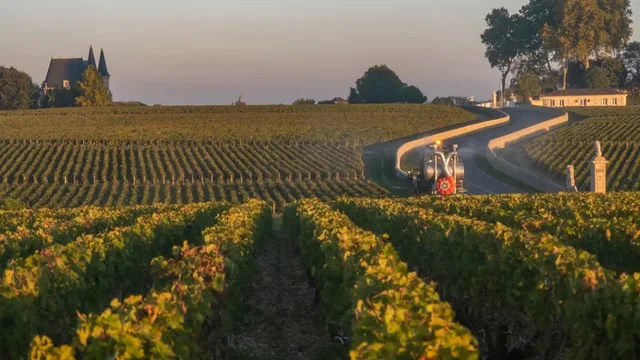
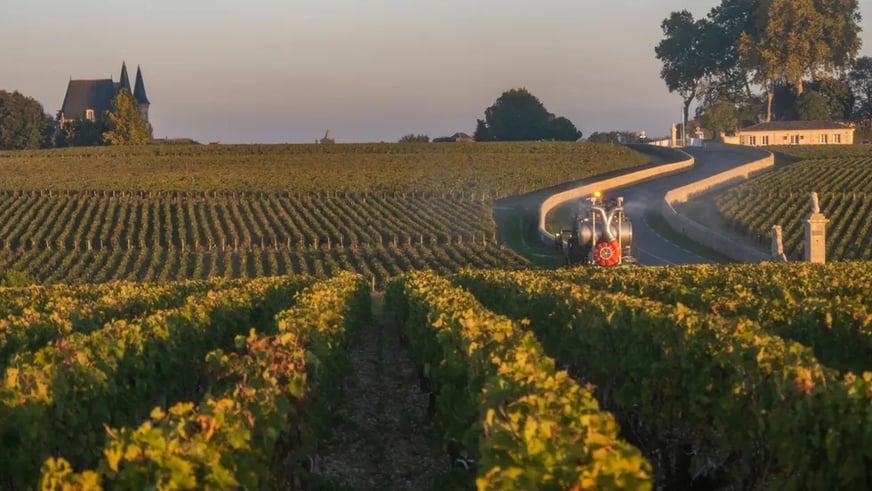
The Médoc (pictured above), an undulating plain covered with vineyards, is one of the most visited regions in southwestern France. Bordeaux and the Pointe de Grave mark its borders. Throughout the region are many châteaux producing grapes; only a handful of these, however, are worthy of your attention. The most visited château is that of Mouton-Rothschild (www.chateau-mouton-rothschild.com), said to be second only to Lourdes among attractions in southwestern France.
St-Emilion
Surrounded by vineyards, the village of St-Emilion sits on a ridge overlooking the Dordogne Valley. Aside from its famous wine, the town is a gem: ancient alleyways lined with centuries-old limestone buildings, half-timbered Renaissance homes, and cobblestone plazas draw visitors from all over the world. Sometimes too many—the town can getoverrun by tourists in summer. Since most come for the day, the best time to visit is in the late afternoon when they are all leaving, and you can enjoy an early evening glass of red in relative peace.
Visiting the Grand Crus
If you are a serious wine fan, you will no doubt be aching to visit the famous châteaux. You can visit these estates, but in general, you must reserve a visit well in advance. In this section are a few of the grand crus; for a more complete listing, visit the tourist websites of the individual areas or www.bordeaux.com.
Visiting Smaller Estates
As noted above, the Bordelais has thousands of wine estates, and the smaller, less-hyped wineries are becoming increasingly visitor-friendly. Some have joined up with labels or listings publications. One of the most comprehensive is a booklet entitled “Itineraires Dans Les Vignobles,” which also has a terrific website (where you can download the booklet): www.itineraires-vignobles.fr. They have a huge list of wine estates, including many smaller operations where you can actually drop in (though even they prefer that you call ahead to let them know you are coming). The listings include hours, websites, if they speak English, whether or not you need to reserve—in short, everything you need to know to plan your own wine trip. Another good strategy is to contact the area’s wine association. Each area has its own wine associations that function as information clearinghouses. To find out more about a particular wine area and listings for wine estates, visit the following:
- Conseil des Vins du Médoc (www.medoc-bordeaux.com)
- Conseil des Vins de Saint-Emilion (www.vins-saint-emilion.com)
- Maison du Vin de Blaye (www.vin-blaye.com)
- Maison des Vins de L'Entre-Deux-Mers (www.vins-entre-deux-mers.com)
- Syndicat Viticole des Graves (www.vins-graves.com)
- Maison du Sauternes (www.maisondusauternes.com)
Going on a Wine Tour
If you’d like to know more about wine, but are not sure where to begin, or are strapped for time and not up for adventure, an organized tour is a good option. Nonetheless, you could also download the app Bordeaux Wine Trip (www.bordeauxwinetrip.fr). For do-it-yourselfers who could use a little help, this useful free application (Android and iOS) helps you navigate the wine country, with maps and listings for wineries, restaurants, accommodations, and information on upcoming events.

6 Results
- Tour
A La Francaise
Specializing in wine tours, this well-established Bordeaux company works to open up the sometimes intimidating Bordeaux wine world to non-expert wine fans.A wide variety of tour configurations include a day-long “wine and bike” tour of St-Emilion and two châteaux (169€ per person),…Around Town
- Tour
Bordeaux Tourist Office Tours
Led by guides with ample wine expertise, these tours start from Bordeaux with half-day outings including a tasting or two at a top-grade château and perhaps a short walking tour of St-Emilion (70€–85€ per person, reductions for children) and move on to more elaborate full-day tours…Around Town - Winery
Château Margaux
Known as the Versailles of the Médoc, this stately Empire-style château was built in the 19th century. This estate had an extension by Sir Norman Foster, and there is an interesting architecture exhibition about the old and new building. You can visit the cellars, but tastings are…Around Town - Winery
Château Pichon Baron
A little further north in Pauillac, this 19th-century wonder includes turrets, a reflecting pool, and an excellent onsite wine shop.Around Town - Winery
Château Prieuré Lichine
Although better to make an appointment in advance for the full tour, there is a well-stocked boutique that you can drop into as you drive past.Around Town - Tours
Uncorked Wine Tours
One of the friendliest options for regional wine tours comes care of Caroline Matthews, who does fully tailored tours for a minimum of one day. Prices are flexible depending on what you are looking for.