Bookstore
Available as paperback
and as e-book.
Ubeda Attractions
Andrés de Vandelvira’s patrons were local nobility who had become fabulously wealthy through royal connections and monopolies on the olive oil and textile trades. You’ll see the names of the two most powerful families, Cobos and Molina, all over town.
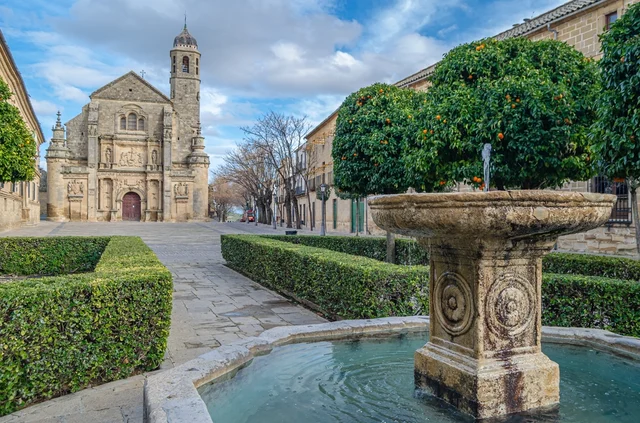
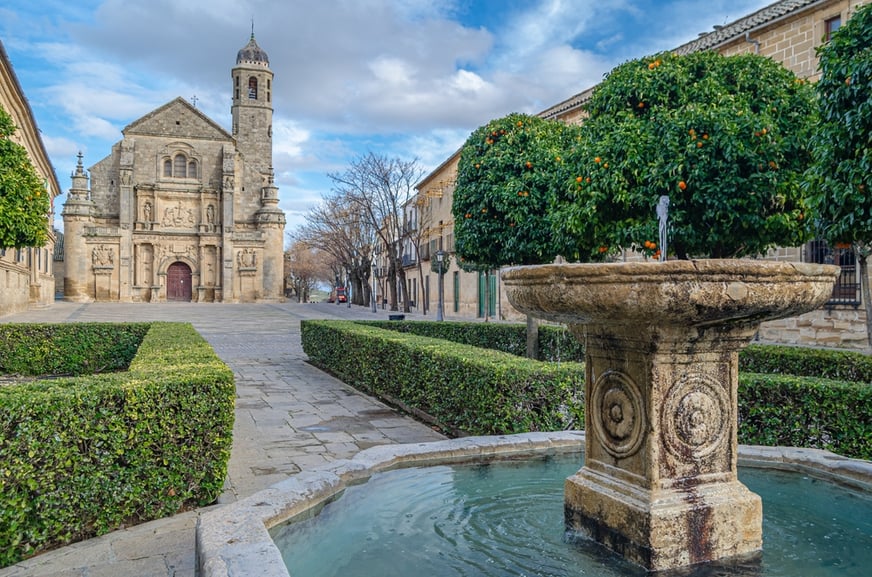
Except for the Hospital de Santiago on its own to the west, Úbeda’s monumental zone comprises a series of spacious squares at the bottom of Calle Real, where almost every building is a 16th-century gem in golden stone. The city fell into sharp decline in the 17th century, which explains the absence of later architectural styles. Having suffered damage during the Civil War and neglect afterwards, Úbeda has been expertly restored, making it feel like a Renaissance architectural park.
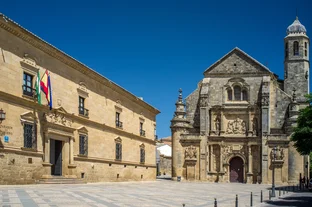
Begin your tour at the centrally located Plaza de Vázquez de Molina, the most harmonious square in Andalusia, which is flanked by several mansions, including the Palacio de las Cadenas, now the town hall. The palace takes its name from the decorative iron chains once affixed to the columns of its main portal. Spanish architect Andrés de Vandelvira designed the interior patio of the slender arches of the town hall and many of the most impressive mansions of old Ubeda. Today it can be entered from either Plaza Vázquez de Molina or Playa Ayuntamiento.
After a look-see, you can go around the corner to Callejón de Jesús, which will take you into vaulted stone-built cellars. The architect's crowning achievement is the privately owned Palacio de Vela de los Cobos, which you can admire on Plaza del Ayuntamiento. It was designed in the mid-1500s for Francisco de Vela de los Cobos, the town's magistrate. Its impressive facade is surmounted by an arcaded gallery. The L-shaped architecture of the building is most unusual.
Also opening onto Plaza Vázquez de Molina is Iglesia Santa María, mainly from the 17th century, although its cloisters predate the building by at least a century. Inside you can visit a series of beautiful chapels, which are protected by stunning wrought-iron grilles, most of them created by Master Bartolomé. The church is usually open during the day.
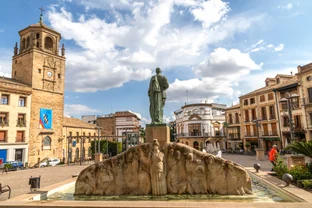
Before the completion of Plaza Vázquez de Molina, a nearby square, Plaza Primero de Mayo, was the heart of the Old Town. Today it is the scene of an outdoor market. So-called heretics were burned here during the Inquisition.
You can pick up a map from the tourist office and set out. Most of the buildings aren't open to the public, including many by Vandelvira himself, but at least you can admire the facades.

6 Results
- Historic home/museum
Casa Arte Andalusí
Set in a 15th-century Jewish converso mansion, the extraordinary museum is the life’s work of Francisco Castro, a history enthusiast who amassed a huge collection of traditional Andalucian arts and crafts from across the region. Ring the bell and his daughter Eva will proudly show… - The Performing Arts
Hospital de Santiago
This huge, austere building was Vandelvira’s last masterpiece, completed in 1575, the year of his death. It was commissioned by Diego de Los Cobos y Molina, the Bishop of Jaén, and continued to be used as a hospital until 1975. The sandstone exterior is remarkably free of… - Religious Site
Iglesia El Salvador
One of the grandest examples of Spanish Renaissance architecture, this church was designed in 1536 by Diego de Siloé as a family chapel and mausoleum for Francisco de los Cobos, secretary of the Holy Roman Emperor Charles V. The richly embellished portal is mere window dressing for… - Religious Site
Iglesia de San Pablo
One of Úbeda’s oldest buildings, this beautiful church offers a primer on Spanish architectural styles. The front entrance, called the Carpenters’ Door, is Romanesque. The south portal, added in 1511, is in Isabelline Gothic style. The tower is Plateresque, resembling the work of a… - Religious Site
Sacra Capilla de Funeraria de El Salvador
One of the finest examples of Spanish Renaissance architecture, this church was designed by Diego de Siloé but the work was carried out by Vandelvira—his first major architectural project. It was built as a family chapel and mausoleum for Francisco de los Cobos, who was secretary to… - Religious Site
San Pablo
This Gothic church in the center of old town is almost as fascinating as the El Salvador. The San Pablo church is famous for its 1511 south portal in the Isabelline style, and for its chapels decorated with exquisite wrought-iron grilles. Vandelvira himself designed the “Heads of the…
Ubeda Shopping
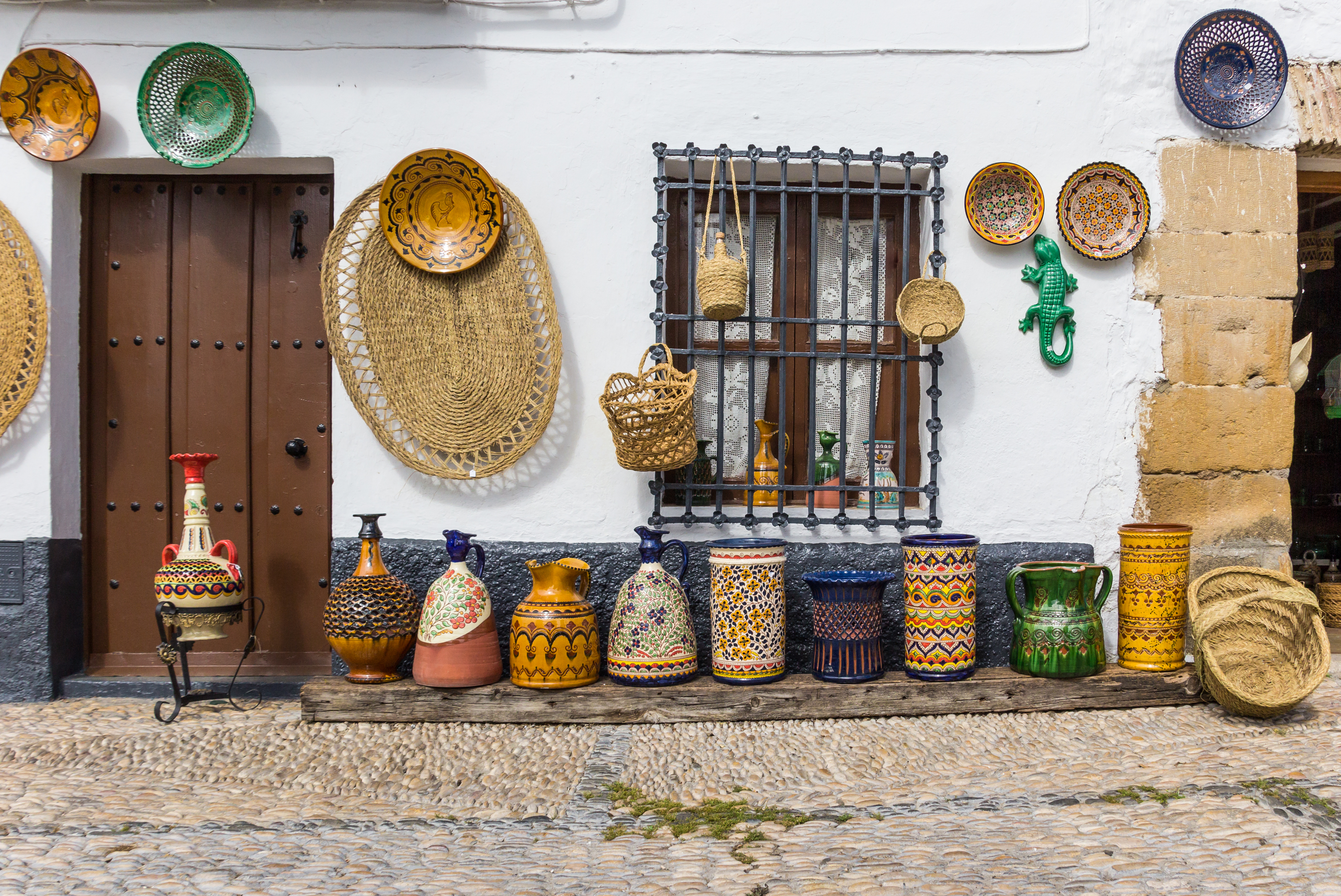
Ubeda is hailed as "the crafts capital of Andalucia" and many visitors come here just to shop. Walk its ancient streets and you'll come upon shop after shop where artisans sell stained glass, stone carvings, woven baskets, wrought iron, and more.
Pottery is king, however, and Calle de Valencia is the heart of the barrio alfarero (potters’ district), where a handful of pottery workshops and a ceramics museum occupy one short strip. You’ll see the name Tito everywhere. Several generations of the same family are engaged in producing intricately decorated ceramic bowls—usually green—fired in traditional kilns. You can pick up a bowl for around 25€. You’ll see Paco Tito’s ceramics shop in Plaza Ayuntamiento in the monumental quarter, but the prices there are much higher than they are here.