
Listening to Mozart: It is said that at any time of the day or night in Vienna, someone somewhere is playing the music of Wolfgang Amadeus Mozart. You might hear it at an opera house, a church, a festival, an open-air concert, or, more romantically, performed by a Hungarian…
Old Town Tourist / Shutterstock
Things To Do in Vienna
Jump to:
Bookstore
Available as paperback
and as e-book.
Vienna Attractions
"Asia begins at Landstrasse," Austria's renowned statesman Prince von Metternich said, suggesting the power and influence of the far-flung Austrian Empire, whose destiny the Habsburg dynasty controlled from 1273 to 1918.
Viennese prosperity under the Habsburgs reached its peak during the long reign of Maria Theresa in the late 18th century. Many of the sights described below originated under the great empress who escorted Vienna through the Age of Enlightenment. She welcomed Mozart, the child prodigy, to her court at Schönbrunn when he was just 6 years old.
With the collapse of the Napoleonic Empire, Vienna took over Paris's long-held position as "the center of Europe." At the Congress of Vienna (1814-15), the crowned heads of Europe met to restructure the continent's political boundaries. But they devoted so much time to galas that Prince de Ligne remarked, "The Congress doesn't make progress, it dances."
In this guide we'll explore the many sights of Vienna. It's possible to spend a week here and only scratch the surface of this multifaceted city. We'll take you through the highlights, but even this venture will take more than a week of fast-paced walking.
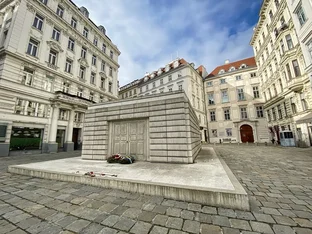
An Indestructible Legacy of the Third Reich -- As you stroll about Vienna, you'll come across six anti-aircraft towers with walls up to 5m (16 feet) thick, a legacy of the Third Reich. These watchtowers, built during World War II, were designed to shoot down Allied aircraft. After the war, there was some attempt to rid the city of these horrors, but the citadels remained, their proportions as thick as the Arc de Triomphe in Paris. "We live with them," a local resident, Josef Hoffmann, told us. "We try our best to ignore them. No one wants to remember what they were. But even dynamite doesn't work against them. They truly have walls of steel."
Ringstrasse
In 1857 Emperor Franz Josef ordered that all the foundations of the medieval fortifications around the Alstadt (Old Town) be removed and that a grand circular boulevard or belt of boulevards replace them.
This transformation, which turned Vienna into a building site that rivaled Paris under Baron Haussmann, created the Vienna we know today. Work on this ambitious project began in 1859 and stretched to 1888, when the grand boulevard reached a distance of 4km (2 1/2 miles).
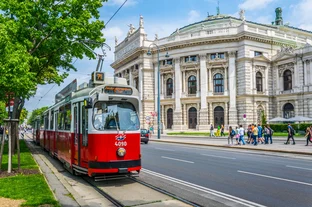
You can take trams #1 or #2 to circle the Ring. This streetcar ride makes for the grandest trip in Vienna. One dozen monumental public buildings were constructed along the Ring, which changes its name as it goes along. Each stretch of the boulevard ends in the word "Ring."
Extending south from the Danube Canal, the first lap of the Ring is Schottenring, taking in the Italianate Börse or Stock Exchange and the Votikkirche or Votive Church. Running from the university, with its bookstores, bars, and cafes to Rathausplatz, the next lap of the Ring is Karl-Lueger Ring. The chief attraction along this stretch is the Universität Wien, dating from 1365. In the 1800s the massive new building you see today was constructed in an Italian Renaissance style.
The Darl Karl-Renner Ring begins at the Rathausplatz. Here stands the Rathaus or town hall, evoking a Gothic fantasy castle, the dream work of Friedrich Schmidt. Constructed between 1872 and 1883, the town hall is the scene of summer concerts.
Across from this imposing building is the Burgtheater or the Imperial Court Theater, constructed between 1874 and 1888 in the Italian Renaissance style. Some of the world's most famous operas, including Mozart's The Marriage of Figaro, were premiered here. Frescoes by Gustav Klimt, and his brother, Ernest, draw visitors inside.
Next to the town hall stands Parliament, its elegant Grecian façade decked out with winged chariots.
Moving on, we next enter the Burgring, opposite the Hofburg Palace on either side of Maria-Theresien-Platz. Two of the city's largest and finest museums lie along this boulevard: the Kunsthistorisches Museum (Museum of Art History) and Naturhistorisches Museum (Natural History Museum).
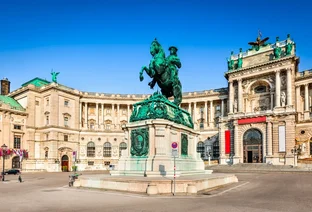
Opernring begins at the Burggarten or Palace Gardens; in this tranquil retreat in the heart of the city, you'll find monuments to everybody from Mozart to Emperor Franz Josef. This ring runs to Schwarzenbergstrasse with its equestrian statue, Schwarzenberg Denkmal. The architectural highlight of this Ring is the Staatsoper (State Opera).
Finally, the Schubertring/Stubenring stretch of the Ring goes from Schwarzenbergstrasse to the Danube Canal. This Ring borders the Stadtpark; established in 1862, it was the first city municipal park to be laid out outside the former fortifications. The chief architectural highlight along this boulevard is the Postsparkasse or Post Office Savings Bank, near the end of the Stubenring at George-Coch-Platz 2. This Art Nouveau building was designed at the beginning of the 20th century by Otto Wagner, and it remains a bulwark of Modernist architecture.

62 Results
- Museum
21er Haus
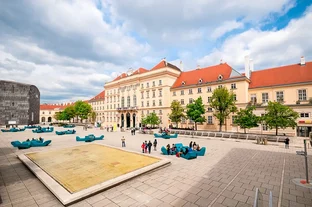
A glass-and-steel, modernist structure designed by Karl Schwanzer was reborn in 2011 as the 21er Haus. It houses exhibitions devoted to 20th- and 21st-century art with a predominantly Austrian focus. The bright, open-plan gallery sits on the edge of the Schweizergarten…$Across from the entrance to the Hauptbahnhof
- The Performing Arts
Akademietheater
This theater specializes in both classic and contemporary works. The Burgtheater Company often performs here; it's the world-famous troupe's second, smaller house. - Museum
Albertina
Once the Habsburg apartments for visiting dignitaries, this Hofburg Museum holds the world's greatest collection of graphic art, spanning six centuries. It emerged from renovations in the early 2000s with a restored fountain and facade as well as a modern overhang,…$$Behind the Opera - Religious Site
Augustinerkirche (Church of the Augustinians)
This 14th-century church was built within the Hofburg complex to serve as the parish church for the imperial court. In the latter part of the 18th century, it was stripped of its baroque embellishments and returned to the original Gothic features. Enter the Chapel of St. George,… - Historic Site
Beethoven Pasqualati House (Beethoven Pasqualatihaus)
Beethoven (1770-1827) lived in this building on and off from 1804 to 1814. Beethoven is known to have composed his Fourth, Fifth, and Seventh symphonies here, as well as Fidelio and other works. There isn't much to see except some family portraits and the composer's scores, but you… - Park/Garden
Botanischer Garten (Botanical Garden of the University of Vienna)
These lush gardens contain exotic and sometimes rare plants from all over the world. Located in Landstrasse (3rd District) right next to the Belvedere Park, the Botanical Garden developed on a spot where Maria Theresa once ordered medicinal herbs to be planted. Always call in advance…Outside the Inner City - Park/Garden
Burggarten
These are the former gardens of the Habsburg emperors. They were laid out soon after the Volksgarten was completed. Look for the monument to Mozart, as well as an equestrian statue of Francis Stephen, Maria Theresa's beloved husband. The only open-air statue of Franz Joseph in Vienna… - Religious Site
Burgkapelle (Home of the Vienna Boys' Choir)
Construction of this Gothic chapel began in 1447 during the reign of Emperor Frederick III, but it was later massively renovated. Today, the Burgkapelle hosts the Hofmusikkapelle, an ensemble of the Vienna Boys' Choir and members of the Vienna State Opera chorus and orchestra, which… - The Performing Arts
Burgtheater (National Theater)
The Burgtheater produces classical and modern plays in German. Work started on the original structure in 1776; the theater was destroyed in World War II and reopened in 1955. It's the dream of every German-speaking actor to appear here. - Religious Site
Deutschordenskirche (Church of the Teutonic Order)
The Order of the Teutonic Knights was a German society founded in 1190 in the Holy Land. The order came to Vienna in 1205, and the church dates from 1395. The building never fell prey to the baroque madness that swept the city after the Counter-Reformation, so you see it pretty much… - Religious Site
Domkirche St. Stephan (St. Stephan's Cathedral)
A basilica built on the site of a Romanesque sanctuary, this cathedral was founded in the 12th century in what was, even in the Middle Ages, the town's center. A 1258 fire that swept through Vienna virtually destroyed Stephansdom; and toward the dawn of the 14th century, a Gothic… - Park/Garden
Donaupark
This 99-hectare (245-acre) park, in the 22nd District between the Danube Canal and the Alte Donau (Old Danube), was converted in 1964 from a garbage dump to a park with flowers, shrubs, and walks, as well as a bird sanctuary. You'll find a bee house, an aviary with native and exotic…Outside the Inner City - Museum
Haus der Musik
This full-scale museum devoted to music is both hands-on and high-tech. Experimenting with sounds and seeing how different instruments and synthesizers create the music we experience today, visitors can even create their own composition to take home on a CD. Take the time to inspect…$$On a side street of Kärntner Straße (pedestrian zone) - Historic Site
Haydns Wohnhaus (Haydn's House)
This is where (Franz) Joseph Haydn (1732-1809) conceived and wrote his magnificent later oratorios The Seasons and The Creation. He lived in this house from 1797 until his death. Haydn also gave lessons to Beethoven here. A branch of the Wien Museum, the house also contains a room… - Museum
Heeresgeschichtliches Museum (Museum of Military History)
Their slogan is "Wars belong in a museum," and this place has seen many of them. Constructed in the 1850s it is the oldest state museum in Vienna and is a precursor to the Ringstrasse style, in red brick with towers; a fortress at the heart of the Vienna Arsenal. Aside from the…$Next to the Schweizergarten - Landmark
Hundertwasserhaus
In a city filled with baroque palaces and numerous architectural adornments, this sprawling public-housing project in the rather bleak 3rd District is visited -- or at least seen from the window of a tour bus -- by about a million visitors annually. Completed in 1985, it was the work… - Historic Site
Johann Strauss Memorial Rooms (Johann Strauss Wohnung)
"The King of the Waltz," Johann Strauss, Jr. (1825-99), lived at this address for a number of years, composing "The Blue Danube Waltz" here in 1867. The house is now part of the Wien Museum. - Museum
Jüdisches Museum
On one of the pedestrian side streets of the Graben, the Jewish Museum's permanent exhibitions trace the major role that Jews played in the history of Vienna from the middle ages to the present day. Extraordinary contributions of members of the Jewish community in areas…$On a side street of the Graben - Historic Site
Kaiserappartements (Imperial Apartments)
The Kaiserappartements, on the first floor, are where the emperors and their wives and children lived. To reach the apartments, enter through the rotunda of Michaelerplatz. The apartments are richly decorated with tapestries, many from Aubusson in France. Unfortunately, you can't… - Museum
Kaiserliche Schatzkammer
The Austro-Hungarian Empire was no less decadent than other royal houses in Europe and the Kaiserliche Schatzkammer (Imperial Treasury) holds what is considered the greatest treasury collection in the world. In the Secular Treasury, the baubles and finery span a millennium of…$$1st District, in the Hofburg - Religious Site
Kapuzinerkirche
The Kapuziner Church (just inside the ring behind the Opera) has housed the Imperial Crypt, the burial vault of the Habsburgs, for some 3 centuries. Capuchin friars guard the final resting place of 12 emperors, 17 empresses, and dozens of archdukes. Only their bodies are here: Their… - Religious Site
Karlskirche (Church of St. Charles)
The Black Plague swept Vienna in 1713, and Emperor Charles VI vowed to build this church if the disease abated. Construction on Karlskirche, dedicated to St. Charles Borromeo, began in 1716. The master of the baroque, Johann Bernard Fischer von Erlach, did the original work from 1716…Outside the Inner City - Museum
Klimt Villa
This is where Vienna's most famous Secessionist and painter of the famous "Kiss" lived out his last days. In a green corner of Hietzing, a neo-Baroque villa was built at the site of Klimt's last studio (1911–18), which opened in September 2012 following a complete …$$ - Museum
KunstHausWien
Near the green banks of the Danube Canal is Vienna's most whimsical museum, showing the imaginative, fantastical works of painter and designer Friedensreich Hundertwasser (1928–2000). Hundertwasser was one of the world's most famous architects, and this is a fitting memorial. A lover…$$ - Museum
Kunsthalle
The ever-changing exhibits of the Kunsthalle concentrate on Austrian and international contemporary art with a focus on photography, installation, video, and new media. The Kunsthalle has no permanent collection and uses two exhibition spaces, one in a glass cube on Karlsplatz and…$MuseumsQuartier - Museum
Kunsthistorisches Museum (KHM)
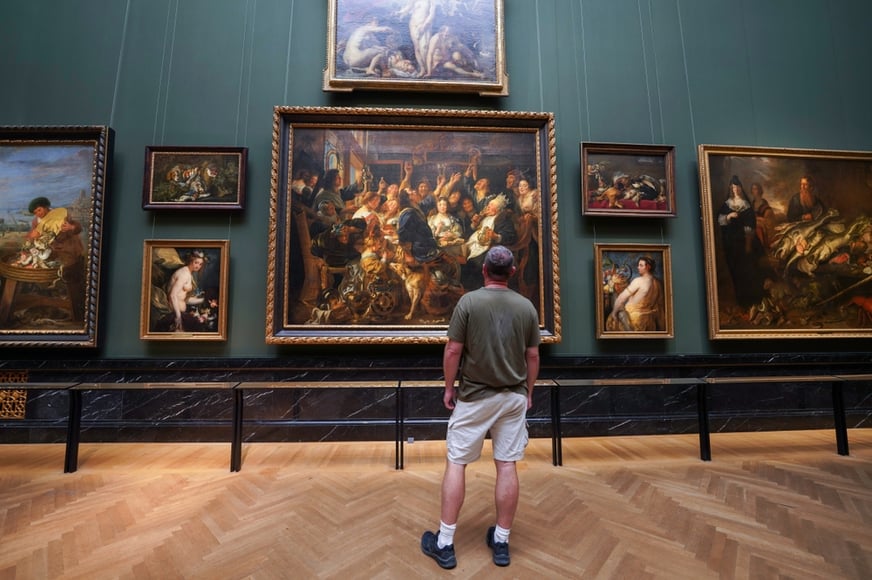
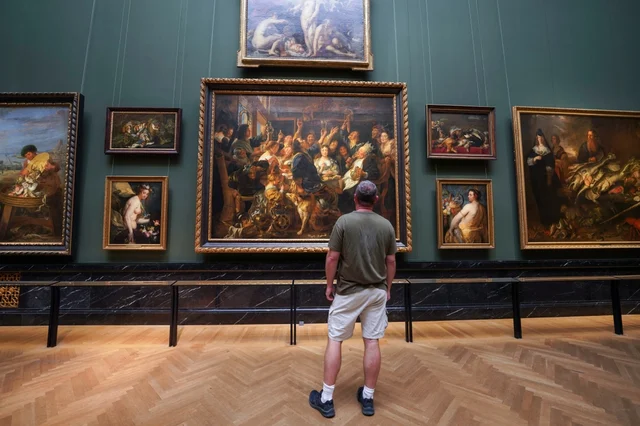
A visit to these marble halls, painstakingly decorated with frescoes and gold leaf, is an extraordinary experience. Between the KHM and its mirror the Natural History museum, a statue of Maria Theresia watches over the treasures within, mostly compiled by the Habsburgs as they added…Between the Hofburg Palace and MuseumsQuartier - Museum
Leopold Museum
The highlight of the Museum Quarter, the Leopold Museum is home to the world's largest trove of the works of Egon Schiele (1890–1918), who has been rediscovered by the art world and now stands alongside Klimt and Kokoschka as one of the preeminent artists of the Wiener Moderne. The…$$MuseumsQuartier - Museum
MUMOK
The MUMOK has one of the exceptional collections of contemporary art in Central Europe. It exhibits mainly Nouveau Réalisme, American pop art, and concurrent Continental movements such as the hyperrealism of the 1960s and 1970s. In recent years the Museum has acquired a collection of…$$Inside MuseumsQuartier - Religious Site
Maria Am Gestade (St. Mary's on the Bank)
This church, also known as the Church of Our Lady of the Riverbank, was once just that. With an arm of the Danube flowing by, it was a favorite place of worship for fishermen. The river was redirected, and now the church relies on its beauty to draw people. A Romanesque church on… - Religious Site
Michaelerkirche 21 (Church of St. Michael)
Over its long history this church has felt the hand of many architects and designers, resulting in a medley of styles, not all harmonious. Some of the remaining Romanesque sections date to the early 1200s. The exact date of the chancel is not known, but it's probably from the… - Religious Site
Minoritenkirche (Church of the Minorites)
If you're tired of baroque ornamentation, visit this church of the Friar Minor Conventual, a Franciscan order also called the Minorite friars (inferior brothers). Construction began in 1250 but was not completed until the early 14th century. The Turks damaged the tower in their two… - Historic Site
Mozartwohnung (Mozart Memorial)
This 17th-century house is called the House of Figaro because Mozart (1756-91) composed his opera The Marriage of Figaro here. The composer resided here from 1784 to 1787, a relatively happy period in what was otherwise a rather tragic life. It was here that he often played… - Museum
Museum für Angewandte Kunst (MAK)
What better place to house applied art than in this beautiful red brick building with ornate detailing and stunning interior designs with painted vaulted ceilings and pillars. Collections of rococo and Biedermeier furniture are beautifully curated and other antiques,…$ - The Performing Arts
Musikverein
Count yourself fortunate if you get to hear a concert here. The Golden Hall is regarded as one of the four acoustically best concert halls in the world. Some 600 concerts per season (Sept-June) are presented here. Only 10 to 12 of these are played by the Vienna Philharmonic; these… - Museum
Naturhistorisches Museum Wien
Housed opposite the Art History museum and mirroring its handsome neo-Renaissance style, this is the third-largest natural history museum in the world (after its counterparts in New York and London), and holds the oldest collections. It was established by Franz Stephan von Lothringen…$$Between the Ringstrasse and Museumsquartier - Museum
Neue Burg
Besides multiple ballrooms and the Austrian National Library, the Neue Burg houses three museums in the southeast wing of the Vienna Hofburg. The Sammlung Alter Musik Instrumente (Collection of Historic Musical Instruments) holds the most important collection of renaissance and…$$1st District, in the Hofburg - Religious Site
Peterskirche (St. Peter's Church)
This is the second-oldest church in Vienna, and the spot on which it stands could well be Vienna's oldest Christian church site. It's believed that a place of worship stood here in the second half of the 4th century. Charlemagne is credited with having founded a church on the site… - Religious Site
Piaristenkirche (Church of the Piarist Order)
A Roman Catholic teaching congregation known as the Piarists (fathers of religious schools) launched work on the Piaristenkirche in 1716. The church, more popularly known as Piaristenplatz, was not consecrated until 1771. Some of the designs submitted during that long period are…Outside the Inner City - Park/Garden
Praterverband (The Prater)
This extensive tract of woods and meadowland in the 2nd District has been Vienna's favorite recreation area since 1766, when Emperor Joseph II opened it to the public. Before it became a public park, it had been a hunting preserve and riding ground for the aristocracy. The Prater is…Outside the Inner City - Religious Site
Ruprechtskirche (St. Rupert's Church)
The oldest church in Vienna, Ruprechtskirche has stood here since 740, although much that you see now, such as the aisle, is from the 11th century. Beautiful new stained-glass windows, the work of Lydia Roppolt, were installed in 1993. Much of the masonry from a Roman shrine on this… - Historic Site
Schubert Museum (Schubert Gerburtshaus)
The son of a poor schoolmaster, Franz Schubert (1797-1828) was born here in a house built earlier in that century. Many Schubert mementos are on view. You can also visit the house at Kettenbrückengasse 6, where he died at age 31. - Historic Site
Schönbrunn Palace
The 1,441-room Schönbrunn Palace was designed for the Habsburgs by those masters of the baroque, the von Erlachs. It was built between 1696 and 1712 at the request of Emperor Leopold I for his son, Joseph I. Leopold envisioned a palace whose grandeur would surpass that of Versailles.… - The Performing Arts
Schönbrunn Palace Theater
A gem in a regal setting, this theater opened in 1749 for the entertainment of the court of Maria Theresa. The architecture is a medley of baroque and rococo, and there's a large, plush box where the imperial family sat to enjoy the shows. Operettas and comic operas are performed in… - Zoo/Aquarium
Schönbrunner Tiergarten
The world's oldest zoo was founded by the husband of Empress Maria Theresa. She liked to have breakfast here with her brood, enjoying animal antics with her eggs. The baroque buildings in the historic park landscape make a unique setting for modern animal keeping; the tranquillity… - Museum
Secession
This artistic statement was constructed in 1898 and is crowned by a magnificent dome once called "outrageous in its useless luxury." The dome crown, which is covered in triumphal laurel leaves, echoes that of the Karlskirche. It stands south of the Opernring, beside the Academy of…$Naschmarkt - Museum
Sigmund Freud Museum
The whole neighborhood around Freud's old home has become dedicated to his legacy, but entering the museum, you can almost imagine the good doctor ushering you in and telling you to make yourself comfortable on the couch. Antiques and mementos, including his velour hat and dark…$U-Bahn: U2 Schottenring; tram 1, D to Schlickgasse - The Performing Arts
Staatsoper (State Opera)
Opera is sacred in Vienna: When World War II was over, the city's top priority was the restoration of the heavily damaged Staatsoper. With the Vienna Philharmonic Orchestra in the pit, the leading opera stars of the world perform at the legendary opera house. In their day, Richard… - Park/Garden
Stadtpark
This lovely park lies on the slope where the Danube used to overflow into the Inner City before the construction of the Danube Canal. Many memorial statues stand in the park; the best known depicts Johann Strauss, Jr., composer of operettas and waltzes like "The Blue Danube Waltz."… - Museum
Technisches Museum Wien
Since it opened in 1918, the Technical Museum has been dedicated to advances in the fields of science and technology. Today, more than ever there are plenty of hands-on gadgets for conducting experiments, but the displays from the past are even more fascinating. A…$$ - The Performing Arts
Theater an der Wien
Since opening on June 13, 1801, this theater has offered excellent opera and operetta presentations. This was the site of the premiere of Beethoven's Fidelio in 1805; in fact, the composer once lived in the building. The world premiere of Johann Strauss, Jr.'s Die Fledermaus was also… - The Performing Arts
Theater in der Josefstadt
One of the most influential theaters in the German-speaking world, this institution reached legendary heights of excellence under the aegis of Max Reinhardt beginning in 1924. Built in 1776, it presents a variety of comedies and dramas. Box office is open daily 10am to 7:30pm. - Religious Site
Universitätskirche (Church of the Jesuits)
Built at the time of the Counter-Reformation, this church is rich in baroque embellishments. This was the university church, dedicated to the Jesuit saints Ignatius of Loyola and Franciscus Xaverius. The high-baroque decorations -- galleries, columns, and the trompe l'oeil painting… - The Performing Arts
Vienna's English Theatre
This popular English-speaking theater was established in 1963. Many international actors and celebrities have appeared on the neobaroque theater's stage. The theater occasionally presents works by American playwrights. Box office is open Monday to Friday 10am to 7:30pm. - Park/Garden
Volksgarten (People's Park)
Laid out in 1820 on the site of the old city wall fortifications, this is Vienna's oldest public garden. It's dotted with monuments, including a 1907 memorial to assassinated Empress Elisabeth and the so-called Temple of Theseus, a copy of the Theseion in Athens. - The Performing Arts
Volksoper
This opera house presents lavish productions of Viennese operettas, light opera, and other musicals daily from September 1 until the end of June. Tickets go on sale at the Volksoper only 1 hour before performances. - The Performing Arts
Volkstheater
Built in 1889, this theater presents classical works of European theater. Modern plays and comedies are also presented. The theater's season runs September through May. Box office is open Monday to Saturday 10am to 7:30pm. - Religious Site
Votivkirche
After a failed assassination attempt on Emperor Franz Joseph, grateful subjects took up a collection to construct the Votive Church, which sits across from the site of the attempt. Heinrich von Ferstel began work on the neo-Gothic church in 1856, but it was not consecrated until…Outside the Inner City - Museum
Wien Museum
This fascinating but little-visited location is a treasure trove for history buffs. The changing exhibits are a great way to gain insight into the city's history beyond what even the Viennese know, like a 2013 exhibit on the Austrian Riviera that depicted 19th-century holiday…$On the edge of Resselpark near Schwarzenbergplatz - The Performing Arts
Wiener Konzerthaus
This major concert hall, built in 1912, is home to the Wiener Symphoniker. It's the venue for a wide spectrum of musical events, including orchestral concerts, chamber music recitals, choir concerts, piano recitals, and opera stage performances. Box office is open Monday to Friday… - Museum
Zoom Children's Museum
This is the ultimate hands-on museum. Here kids can touch, play with, and ask questions about anything in the museum. Exhibitions have general themes like the 2014 exhibit on the Middle Ages, where kids can pretend to be jousting knights or dress up as lords and ladies. There are…$Inside the Museumsquartier - Historic Site
Österreichische Galerie Belvedere
Southeast of Karlsplatz, the Belvedere sits on a slope above Vienna. The approach to the palace is memorable -- through a long garden with a huge circular pond that reflects the sky and the looming palace buildings. Designed by Johann Lukas von Hildebrandt, the last major Austrian… - Library/University
Österreichische Nationalbibliothek (Austrian National Library)
The royal library of the Habsburgs dates from the 14th century; and the library building, developed on the premises of the court from 1723 on, is still expanding to the Neue Hofburg. The Great Hall of the present-day library was ordered by Karl VI and designed by those masters of the…
Vienna Shopping
Crowds of shoppers head to Vienna's main shopping street, Mariahilfer Strasse for the latest fashions while Swarovski and Aigner labels grace the elegant Ringstrassen Galerien. Explore the Innere Stadt's narrow lanes, visiting Augarten for Biedermeier porcelain, Österreichische Werkstatten for Austrian crafts and nostalgic Altmann & Kühne for beautifully wrapped pralines. The busy Naschmarkt entices food-lovers with fresh produce. Shops generally open Monday to Saturday 10am-6.30pm.
Vienna Nightlife
When night falls on Vienna's landmarks, the Innere Stadt's old-world pubs, Heurigen (wine taverns) and minimalist bars beckon. Sip crisp Austrian white wines in the 400-year-old vaults of Esterházykeller, or cocktails in marble-walled Loos American Bar. Superstar DJs dominate the decks at canalfront Flex and starlit Volksgarten, while Mariahilf lures partygoers to its Bedouin-style lounges and cocktail bars. Catch performances at the opulent Vienna State Opera or Musikverein. Most bars open until 2am, clubs until 5am.
18 Results
- Nightlife
Albertina Passage
This highly anticipated addition to the Vienna night scene has lived up to the hype. Right outside the Opera, you walk downstairs, where the atmosphere morphs to a lavender-lit, Frankie-and-Deano-dinner-club vibe. There is no cover charge at the door, despite the nightly…$$$Vienna State Opera - Dance Clubs
Cafe Leopold
It may seem strange that the city's homage to Viennese Expressionism (the Leopold Museum) pulsates with the echoes of dancing feet and a throbbing bass line, but that's exactly what happens here every Thursday through Sunday night. After 9:30pm, the museum's restaurant area fills up…$$MuseumsQuartier - Bars & Pubs
Charlie Ps
For over a decade this pub has served fine Viennese beers, ciders, and loud music, with the sporadic public sports viewing and theme night. With its proximity to various university buildings, it attracts plenty of students, but has managed to maintain its appeal to an over-25…$$9th District - Jazz
Chaya Fuera
From raging house parties and fashion events to jazz, pop, and rock concerts, this venue has many talents. It opened in 2012 in the middle of Neubau on the unpresuming Kandlgasse and immediately gained a dedicated following of hipsters, concertgoers, and art and media professionals…$$7th District - Jazz
Flex
The crowd at Flex has been more mainstream as of late, but the vibe there is still edgy enough to call it underground. The sound system is unrivaled, the cover price usually reasonable, and dress code non-existent. The DJ line-up has local heroes alongside international names, and…$$1st District, on the Danube Canal Jazzland
A bit down-at-the-heel but full of character, Jazzland is one of the oldest and most famous jazz clubs in Austria, featuring notable American and Central European acts alongside newcomers. It's in a deep 200-year-old cellar below the Ruprechtskirche, unheard on the street. From swing…$$Ruprechtskirche- Bars & Pubs
Loos American Bar
This very dark, mysterious place is perhaps the most intimate bar in town. Designed by noted architect Adolf Loos in 1908, it was the drinking room of a private men's club. Today, it's more democratic and welcomes a mostly multilingual crowd from Vienna's arts-and-media scene, all…$$$On a small side street of Kärntner Straße - Performing Arts Venue
Musikverein
This is where classical musicians aspire to perform, so you can count yourself lucky to hear a concert here. Acoustically, the Goldener Saal is regarded as one of the four best concert halls in the world. Some 600 concerts per season (Sept–June) are presented here, of which only…$$$ - Dance Clubs
Passage
Decked out in white with a funky triangular lighting scheme, this club has been a success ever since it opened its catacombs to the public in 2003. At the point where the Ring joins Mariahilferstrasse, literally underneath the Ringstrasse, this hot spot has a…$$$Ringstrasse at Babenbergerstrasse Porgy & Bess
In Vienna, this name has nothing to do with George Gershwin's musical. Here it is actually the best jazz club in town. Its array of performers from Europe and around the world is absolutely first class. Established in 1993, the club became an instant hit and has…$$- Jazz
Pratersauna
In the middle of Vienna's (and Europe's) largest inner city park, this club has become a staple in the dance music scene. As the name suggests, the location used to be a fitness club and sauna, and although the pool remains the patrons are not there for their health.…$$In the Prater - Bars & Pubs
Puff, Die Bar
In German, puff means brothel and that was in fact this establishment's former claim to fame. Right off Gumpendorferstrasse on the way to the Naschmarkt, guests enter a foyer with a coat check leading to a pink-lit bar area. There is seating along the bar or in the cute booths…$$Between Gumpendorferstrasse and the Naschmarkt - Performing Arts Venue
Radiokulturhaus
Anything goes here. From a modern dance performance, actors reading from philosophical texts, a gospel quartet, a singer-songwriter duo, to a contemporary string quartet, this is a bastion for the performing arts. There are several stages, including the Grosser Sendesaal—home to the…$$ - Bars & Pubs
Schikaneder
If you're young and artsy and want to meet locals who share those traits, come here. Technically its a cinema, showing art films, documentaries, crime shows, and the like, but plenty of people come for the drinks. Through the door past the sofa chairs, the atmosphere is faded and…$Near the Naschmarkt - Bars & Pubs
Sky Bar
This shiny top-floor lounge is a posh see-and-be-seen venue for Vienna's socially striving nouveaux riches. There is a wide range of yummy cocktails, a superb selection of exclusive spirits, as well as a decent kitchen and cafe. The location is unrivaled for its bird's-eye view of…$$$1st District, at the top of Steffl department store - Dance Clubs
Volksgarten
A dance club since the 1950s, this Viennese institution has stayed abreast of the times by offering everything from hip-hop to house to break-beat remixes of current hits. The dance floor is always packed and in the warm months partiers can step into the garden area…$$Inside the Ring at Volksgarten - Bars & Pubs
Weinorgel
You squeeze in through a low doorway into a small vaulted room with a few standing tables and a bar. The floor is covered in peanut shells and everybody is a bit too loud. This is the vibe of the Weinorgel. The bar personnel are friendly to a T and somehow the fact that…$1st District - Performing Arts Venue
Wiener Staatsoper (Vienna State Opera)
In Vienna, opera is sacred and a visit to the prime venue in the city is a highlight of any trip. With musicians from Vienna Philharmonic in the pit, and the leading opera stars of the world on stage, combined with generous government subsidies, the results are legendary. The…$$$1st District
More To Do in Vienna
Best Hotel Bets in Vienna
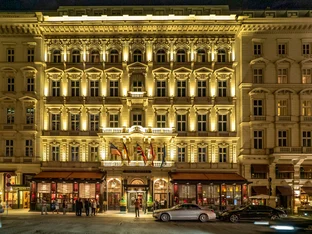
Best Historic Hotel: Built in 1869, the Hotel Imperial (tel. 800/325-3589 in the U.S., or 01/501100; www.luxurycollection.com/imperial) is the "official guesthouse of Austria." It has presided over much of the city's history, from the heyday of the Austro-Hungarian Empire to defeat…
Best Dining Bets in Vienna
Best Spot for a Romantic Dinner: The Sacher Hotel Restaurant, in the Hotel Sacher Wien (tel. 01/514560), is a showcase for imperial Vienna. Franz Joseph's favorite dish was tafelspitz, a delectable boiled beef dinner that's still served here, along with various Viennese and…