

Believe it or not, the year is fast approaching autumn—the season of apple picking, football tailgating, and the terrifying holiday when horrible ghouls make mischief (I'm referring of course to Election Day).
In travel, fall foliage becomes a primary motivator of road trips and weekend getaways this time of year. But will the leaves be worth peeping in 2026?
Year-to-date weather patterns usually provide a pretty reliable idea of what to expect in the way of autumn color. Based on that data, meteorologists have already begun to issue their forecasts for fall 2026.
How a very strong El Niño could impact U.S. weather this fall
The major factor likely to affect anything having to do with weather this year (like when the leaves will turn) is a super-strong El Niño, which has a 90% chance of developing by October, according to the National Weather Service's Climate Prediction Center.
The climate phenomenon begins with unusually warm water along the equator in the Pacific Ocean. That causes changes in the atmosphere and shifts in weather around the world.
In much of the continental U.S., El Niño typically means a warmer, wetter fall and winter, albeit with fewer hurricanes in the Atlantic Ocean (and more in the Pacific).
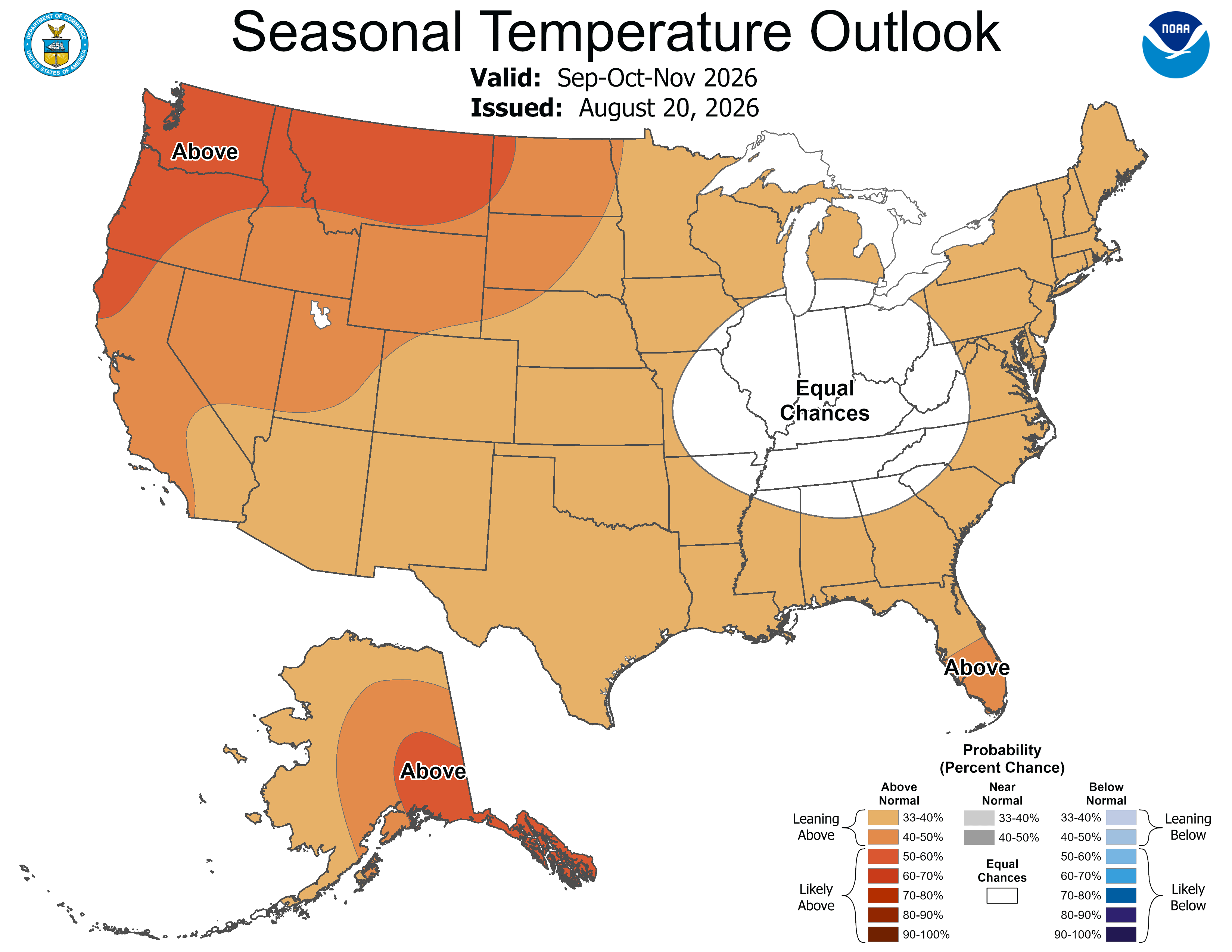
That's basically what the Climate Prediction Center forecasts for North America during the end of 2026, with above-average temperatures likely for almost the entire country and increasing chances of above-average precipitation the closer we get to winter.
What does El Niño mean for fall foliage?
We'll start in New England since, let's face it, that's the region that first popped into your brain when you read the words "fall foliage," no?
Despite that vaunted reputation, the last couple leaf-peeping seasons in Connecticut, Maine, Massachusetts, New Hampshire, Rhode Island, and Vermont have been, as the Boston Globe puts it, "short, muted, and generally not very New England-like."
Last year's disappointing display was a result of 2025's drought conditions.
But the region experienced significantly more snowfall in winter 2026, which has led in turn to healthier forests.
And so the trees are primed to put on a good show.
The way El Niño plays into it, according to forecasters, is that those warmer temps we mentioned earlier could delay the onset of fall color, but the consistent precipitation should make the reds, oranges, and yellows last longer, including during peak leaf periods.
Consequently, the Globe predicts "a much better, more robust show than recent years."
Yankee magazine's foliage expert, Jim Salge, agrees. In his annual forecast, the meteorologist writes that a "wonderfully gradual autumn" could be in store for 2026.
A slower progression of color across the region is especially good news for travelers, as Salge points out. "Rather than picking one weekend and hoping to hit the peak," he explains, "you may find that this is the year to take your time, enjoy the season, and follow the color as it moves across the region."
As ever, Northern New England (Maine, New Hampshire, and Vermont) should begin changing first—normally in late September—followed by the southern part of the region (Connecticut, Massachusetts, and Rhode Island) further into October.
Salge will supply additional, verging-on-obsessive foliage updates throughout the season at NewEngland.com/foliage.
Fall foliage beyond New England
Outside of New England, Salge is optimistic about the Southeast's chances for good autumn displays, especially in high-elevation areas in the mountains of North Carolina and Tennessee. Heat and humidity have been oppressive this summer, but "widespread drought has largely stayed away from the Appalachian foliage belt," Salge writes.
The "warm sunny days and cooler nights" expected in the Upper Midwest this fall could likewise "create bright fall foliage" in the forests of Wisconsin, Michigan, and Minnesota, per AccuWeather—though Salge foresees more of a "patchwork of color" there due to "heat and uneven rainfall."
Ditto for New York State and the Middle Atlantic States for the same reasons.
The shortest, most muted fall colors in the U.S. are likely to be in the West and the Pacific Northwest, where very little winter snow, extreme heat, and wildfires have all put trees under enormous stress this year.