

The United States just got its 64th national park.
Previously a national monument, Arizona's Chiricahua National Park was redesignated this week, making it the state's fourth national park and the first addition of its kind to the federal roster since 2020.
Chiricahua, known as a "Wonderland of Rocks," covers more than 12,000 acres in southeastern Arizona (Tucson is about 120 miles to the west).
The unique landscape encompasses tall rhyolite stone spires and balanced rocks formed by a volcanic eruption roughly 27 million years ago. The otherworldly area in the Chiricahua Mountains is characterized by a convergence of desert, grassland, and forest ecosystems.
Acknowledged as the homeland of the Chiricahua Apache, the site has been protected as a national monument since 1924.
Visitors come for hiking, wildlife viewing, birding, and stargazing. Among the varied animal species you might see: the western box turtle, cactus wren, black bear, whitetail deer, white-nosed coati, Chiricahua fox squirrel, and brightly colored, enticingly named elegant trogon bird.
How Chiricahua went from national monument to national park
Redesignating Chiricahua as a national park was a bipartisan effort. Legislation to make the change was introduced by Arizona's congressional delegation and passed by both houses of Congress before being signed into law by President Donald Trump on Oct. 20.
It's a rare sign of support for public lands from the second Trump administration, which up to now has pursued policies such as cutting budgets for the National Park Service, laying off park workers, opening up national forests to logging, damaging national monuments in Washington, D.C., and otherwise horrifying conservationists and ordinary vacationers alike.
Don't get your hopes up about the new national park signaling a change in course. After all, Chiricahua's reclassification will not mean increased funding for the site or stronger federal protections than it had before.
In a statement trumpeting the new park, Interior Secretary Doug Burgum said, “This new designation will shine a national spotlight on one of Arizona’s hidden gems, creating opportunities to welcome more visitors, strengthen local economies and share this incredible landscape with more Americans.”
Notice he didn't say anything about the park getting a bigger budget.
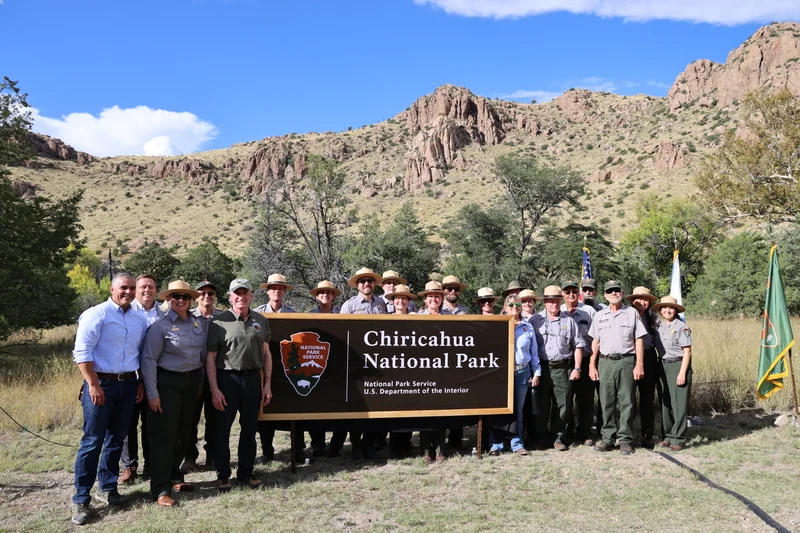
What will change at Chiricahua now that it's a national park?
Basically, Chiricahua will get new signage and other rebranded marketing and informational materials.
The name change does make an impact, though.
Burgum is right that declaring a site an official national park does bring more attention and increased tourism. That happened with West Virginia's New River Gorge and its surrounding areas the last time a national park was created.
And when tourists come and fall in love with a place, it stands to reason those folks will be more likely to help defend the site against destruction.
So even without enhanced protections or budgets, redesignating Chiricahua as a national park could contribute to its preservation down the line.
Just as long as nobody in the Oval Office decides the spot would look better as a golf course.
For more information on planning a trip to Chiricahua National Park, go to NPS.gov/chir.
And to get the most out of a vacation in Arizona, pick up a copy of Frommer's Arizona and the Grand Canyon.

Frommer's Arizona and the Grand Canyon
Buy a copy of our full guide in our Bookstore