Home > Destinations > Europe > Portugal > Lisbon > Planning a Trip > Orientation
Bookstore Travel Talk - Our Message Boards Tips and Tools Book a Trip Deals and News Trip Ideas, Activities, Lifestyles Hotels Destinations Frommers.com Home
Frommer's - The best trips start here. Frommer's - The best trips start here.
Sign up for our FREE Newsletters! Win a FREE Trip
  Email This Article Email Print This Article Print Get Frommer's RSS Feed RSS

Orientation

Main Streets & Squares

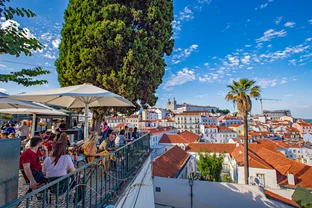
Lisbon is the westernmost capital of continental Europe. According to legend, it spreads across seven hills, like Rome. That statement has long been outdated -- Lisbon now sprawls across more hills than that. Most of the city lies on the north bank of the Tagus.

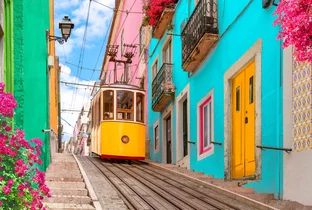
No one ever claimed that getting around Lisbon was a breeze. Streets rise and fall across the hills, at times dwindling into mere alleyways. Exploring the city, however, is well worth the effort.

Lisbon is best approached through its gateway, Praça do Comércio (Commerce Square), bordering the Tagus. It's one of the most perfectly planned squares in Europe, rivaled only by the piazza dell'Unità d'Italia in Trieste, Italy. Before the 1755 earthquake, Praça do Comércio was known as Terreiro do Paço, the Palace Grounds, because the king and his court lived in now-destroyed buildings on that site. To confuse matters further, English-speaking residents often refer to it as Black Horse Square because of its statue (actually a bronze-green color) of José I.

Today the square is the site of the Stock Exchange and various government ministries. Its center is used as a parking lot, which destroys some of its harmony. In 1908, Carlos I and his elder son, Luís Filipe, were fatally shot here by an assassin. The monarchy held on for another 2 years, but the House of Bragança effectively came to an end that day.

Directly west of the square stands the City Hall, fronting Praça do Município. The building, erected in the late 19th century, was designed by the architect Domingos Parente.

Heading north from Black Horse or Commerce Square, you enter the hustle and bustle of Praça de Dom Pedro IV, popularly known as the Rossio. The "drunken" undulation of the sidewalks, with their arabesques of black and white, have led to the appellation "the dizzy praça." Here you can sit sipping strong unblended coffee from the former Portuguese provinces in Africa. The statue on the square is that of the Portuguese-born emperor of Brazil.

Opening onto the Rossio is the Teatro Nacional de Dona Maria II, a free-standing building whose facade has been preserved. From 1967 to 1970, workers gutted the interior to rebuild it completely. If you arrive by train, you'll enter the Estação do Rossio, whose exuberant Manueline architecture is worth seeing.

Separating the Rossio from Avenida da Liberdade is Praça dos Restauradores, named in honor of the Restoration, when the Portuguese chose their own king and freed themselves from 60 years of Spanish rule. An obelisk commemorates the event.

Lisbon's main avenue is Avenida da Liberdade (Avenue of Liberty). The handsomely laid-out street dates from 1880. Avenida da Liberdade is like a 1.5km-long (1-mile-long) park, with shade trees, gardens, and center walks for the promenading crowds. Flanking it are fine shops, the headquarters of many major airlines, travel agents, coffeehouses with sidewalk tables, and hotels. The comparable street in Paris is the Champs-Elysées; in Rome, it's via Vittorio Veneto.

At the top of the avenue is Praça do Marquês de Pombal, with a statue erected in honor of the 18th-century prime minister credited with Lisbon's reconstruction in the aftermath of the earthquake.

Proceeding north, you'll enter Parque Eduardo VII, named in honor of the son of Queen Victoria, who paid a state visit to Lisbon. In the park is the Estufa Fria, a greenhouse well worth a visit.

Finding an Address

Finding an address in the old quarters of Lisbon is difficult because street numbering at times follows no predictable pattern. When trying to locate an address, always ask for the nearest cross street before setting out. Addresses consist of a street name followed by a number. Sometimes the floor of the building is given as well. For example, Avenida Casal Ribeiro 18 3 means that the building is at number 18 and the address is on the third floor.

Street Maps

Arm yourself with a good city map before setting out. Maps with complete indexes of streets are available at most newsstands and kiosks. Those given away by tourist offices and hotels aren't adequate because they don't show the maze of little streets.


Back to Top


Note: This information was accurate when it was published, but can change without notice. Please be sure to confirm all rates and details directly with the companies in question before planning your trip.


  Email This Article Email Print This Article Print Get Frommer's RSS Feed RSS
Frommer's Portugal, 20th Edition Frommer's Portugal, 20th Edition

Author: Darwin Porter
Pub Date: February 26, 2008
Price: $21.99

Buy Now!
Related Titles:
Frommer's Barcelona Day by Day, 1st Edition
Frommer's Barcelona, 2nd Edition
Frommer's Madrid, 2nd Edition
Add Frommers.com RSS Feed  Add Frommers.com RSS Feed (What's This?)
Add Frommers.com Deals & News to Your Web Site
Add to My Yahoo!     Add to My MSN     More RSS Readers
Add Frommers.com Podcast Add Frommers.com Podcast (What's This?)
Home > Destinations > Europe > Portugal > Lisbon > Planning a Trip > Orientation