| Home > Destinations > Europe > England > London > Getting to Know > Neighborhoods in Brief > West End Neighborhoods |
|
|
||||||
![]() |
||||||
FREE Newsletters! |
Win a FREE Trip! |
|||||
|
|
||||||
Neighborhoods in Brief
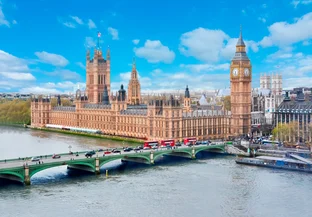
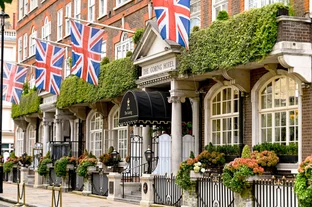
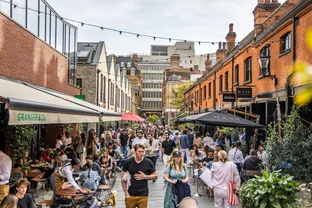
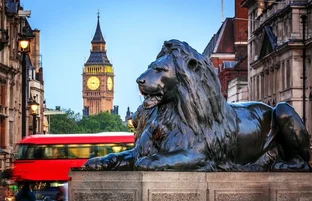
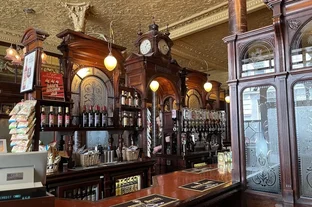
Bloomsbury This district, a world within itself, is bound roughly by Euston Road to the north, Gower Street to the west, and Clerkenwell to the east. It is, among other things, the academic heart of London. There are three colleges in Bloomsbury, including University College London, the grandest and the oldest. A branch of the University of London is also here. Writers like Virginia Woolf, who lived in the area (it figured in her novel Jacob's Room), have fanned the neighborhood's reputation as a place devoted to liberal thinking, arts, and "sexual frankness." The novelist and her husband, Leonard, were unofficial leaders of a group of artists and writers known as the Bloomsbury Group. However, despite its student population, Bloomsbury is a fairly staid neighborhood. The heart of Bloomsbury is Russell Square, whose outlying streets are lined with moderately priced to expensive hotels and B&Bs. It's a noisy but central place to stay. Most visitors come to see the British Museum, one of the world's greatest repositories of treasures from around the globe. The British Telecom Tower (1964) on Cleveland Street is a familiar landmark. Of all the areas described so far, this is the only one that could be called a hotel district. Hotel prices have risen dramatically in the past decade but are nowhere near the levels of those in Mayfair and St. James's. Bloomsbury's hotels are comparable in price to what you'll find in Marylebone to the west. But Bloomsbury is more convenient -- at its southern doorstep lie the restaurants and nightclubs of Soho, the theater district, and the markets of Covent Garden. If you stay here, it's a 5-minute Tube ride to the heart of the action of the West End. At the western edge of Bloomsbury you'll find Fitzrovia, bounded by Great Portland, Oxford, and Gower streets, and reached by the Goodge Street Tube. Goodge Street, with its many shops and pubs, forms the heart of the village. Fitzrovia was once the stamping ground for writers and artists like Ezra Pound, Wyndham Lewis, and George Orwell, among others. The bottom end of Fitzrovia is a virtual extension of Soho, with a cluster of Greek restaurants. Holborn The old borough of Holborn (Ho-burn), which abuts the City southeast of Bloomsbury, encompasses the heart of legal London -- this is where you'll find the city's barristers, solicitors, and law clerks. Still Dickensian in spirit, the area preserves the Victorian author's literary footsteps in the two Inns of Court (where law students perform their apprenticeships and where barristers' chambers are located), featured in David Copperfield, and as the Bleeding Heart Yard of Little Dorrit fame. The Old Bailey courthouse, where judges and lawyers still wear old-fashioned wigs, has stood for English justice through the years -- Fagin went to the gallows from this site in Oliver Twist. Everything in Holborn is steeped in history. For example, as you're downing a half-pint of bitter at the Viaduct Tavern, 126 Newgate St. (Tube: St. Paul's), you can reflect on the fact that the pub was built over the notorious Newgate Prison. You might come here for some sightseeing, perhaps quenching your thirst in a historic pub. Covent Garden & the Strand The flower, fruit, and "veg" market is long gone (since 1970), but memories of Professor Higgins and his "squashed cabbage leaf," Eliza Doolittle, linger on. Covent Garden contains the city's liveliest group of restaurants, pubs, and cafes outside Soho, as well as some of the city's hippest shops. The restored marketplace here, with its glass and iron roofs, has been called a magnificent example of urban recycling. London's theater district begins in Covent Garden and spills over into Leicester Square and Soho. Inigo Jones's St. Paul's Covent Garden is known as the actors' church; over the years, it has attracted everybody from Ellen Terry to Vivien Leigh. The Theatre Royal Drury Lane was where Charles II's mistress, Nell Gwynne, made her debut in 1665 and was also where Irish actress Dorothea Jordan caught the eye of the Duke of Clarence, later William IV. The Strand forms the southern border of Covent Garden. It's packed with theaters, shops, first-class hotels, and restaurants. Old pubs, Dr. Johnson's House, and tearooms fragrant with brewing Twinings English tea evoke memories of the rich heyday of this district as the center of London's activity. The Strand runs parallel to the Thames River, and to walk it is to follow in the footsteps of Charles Lamb, Mark Twain, Henry Fielding, James Boswell, William Thackeray, and Sir Walter Raleigh, among others. The Strand's Savoy Theatre helped make Gilbert and Sullivan household names. You'll probably come here for theater or dining rather than for a hotel room. Covent Garden has few hotels (although those few are very nice). We recommend the best ones. Expect to spend a lot for the privilege of staying in such a central zone. The Strand, of course, has always been known for its swank Savoy Hotel. Piccadilly Circus & Leicester Square Piccadilly Circus, with its statue of Eros, is the heart and soul of London. Its traffic, neon, and jostling crowds make circus an apt word to describe this place. Piccadilly, which was the western road out of London, was named for the "picadil," a ruffled collar created by Robert Baker, a 17th-century tailor. If you want grandeur, retreat to the Regency promenade of exclusive shops, the Burlington Arcade, designed in 1819. The English gentry -- tired of being mud-splashed by horses and carriages along Piccadilly -- came here to do their shopping. Some 35 shops, offering a treasure trove of expensive goodies, await you. A bit more tawdry is Leicester Square, a hub of theaters, restaurants, movie palaces, and nightlife -- it's London's equivalent of New York's Times Square. Leicester Square changed forever in the Victorian era, when four towering entertainment halls were opened. Over time, the old entertainment palaces changed from stage to screen; today three of them still show films. In another sign of the times, the old Café de Paris is no longer a chic cabaret -- now it's a disco. There are a few hotels here, although they're invariably expensive. Stay here if you'd want a hotel in Times Square in New York. It's convenient for those who want to be at the center of the action. The downside is the noise, congestion, and pollution. Soho A nightclubber's paradise, Soho is a confusing grid of streets crammed with restaurants. It's a great place to visit, but you probably won't want to stay here (there aren't many hotels, anyway). These densely packed streets in the heart of the West End are famous for their cosmopolitan mix of people and trades. A decade ago, much was heard about the decline of Soho with the influx of sex shops; even the pub where Dylan Thomas used to drink himself into oblivion became a sex cinema. Since then, non-sex-oriented businesses have returned, and fashionable restaurants and shops prosper. Soho is now the heart of London's expanding gay scene. Soho starts at Piccadilly Circus and spreads out, more or less bordered by Regent Street to the west, Oxford Street to the north, Charing Cross Road to the east, and the theaters along Shaftesbury Avenue to the south. Carnaby Street, a block from Regent Street, was the center of the universe in the Swinging '60s but is now a schlocky tourist trap, though a few quality stores have opened recently. Across Shaftesbury Avenue is London's Chinatown, centered on Gerrard Street. It's small, authentic, and packed with good restaurants. Soho's heart -- featuring great delicatessens, butchers, fish stores, and wine merchants -- is farther north, on Brewer, Old Compton, and Berwick streets (Berwick St. features a wonderful open-air fresh-food market). To the north of Old Compton Street, Dean, Frith, and Greek streets have fine restaurants, pubs, and clubs. The British movie industry is centered on Wardour Street. The average visitor comes to Soho to dine because many of its restaurants are convenient to the theater district. Most travelers don't stay in Soho, but a certain action-oriented visitor prefers the joie de vivre of the neighborhood as compared to staid Bloomsbury or swank Mayfair. Does this sound like you? Marylebone West of Bloomsbury and Fitzrovia, Marylebone extends north from Marble Arch, at the eastern edge of Hyde Park. Most first-time visitors head here to explore Madame Tussaud's waxworks or walk along Baker Street in the footsteps of Sherlock Holmes. The streets form a near-perfect grid, with the major ones running north-south between Regent's Park and Oxford Street. Architect Robert Adam laid out Portland Place, one of the most characteristic squares in London, from 1776 to 1780. At Cavendish Square, Mrs. Horatio Nelson waited for the return of Admiral Nelson. Marylebone Lane and High Street retain a bit of small-town atmosphere, but this is otherwise a rather anonymous area. Dickens wrote nearly a dozen books while he resided here. At Regent's Park, you can visit Queen Mary's Gardens or, in summer, see Shakespeare performed in an open-air theater. Marylebone has emerged as a major "bedroom" district for London, competing with Bloomsbury to its east. It's not as convenient as Bloomsbury, but the hub of the West End's action is virtually at your doorstep if you lodge here, northwest of Piccadilly Circus and facing Mayfair to the south. Once known only for its town houses turned into B&Bs, the district now offers accommodations in all price ranges, catering to everyone from rock stars to frugal family travelers. Mayfair Bounded by Piccadilly, Hyde Park, and Oxford and Regent streets, this is the most elegant, fashionable section of London, filled with luxury hotels, Georgian town houses, and swank shops. The area is sandwiched between Piccadilly Circus and Hyde Park. It's convenient to London's best shopping and close to the West End theaters yet (a bit snobbily) removed from the peddlers and commerce of Covent Garden and Soho. Grosvenor Square (pronounced Grov-nor) is nicknamed "Little America" because it's home to the American Embassy and a statue of Franklin D. Roosevelt. Berkeley Square (Bark-ley) was made famous by the song "A Nightingale Sang in Berkeley Square." You'll want to dip into this exclusive section at least once. One of the curiosities of Mayfair is Shepherd Market, a village of pubs, two-story inns, restaurants, and book and food stalls, nestled within Mayfair's grandness. The hotels of Mayfair, especially those along Park Lane, are the most expensive and grand in London. This is the place if you're seeking sophisticated, albeit expensive, accommodations close to the Bond Street shops, boutiques, and art galleries. If "address" is important to you, and you're willing to pay for a good one, Mayfair has a bed waiting for you. St. James's Often called "Royal London," St. James's basks in its associations with everybody from the "merrie monarch" Charles II to Elizabeth II, who lives at its most famous address, Buckingham Palace. The neighborhood begins at Piccadilly Circus and moves southwest, incorporating Pall Mall, The Mall, St. James's Park, and Green Park. It's "frightfully convenient," as the English say; within its confines are American Express and many of London's leading department stores. This is the neighborhood where English gentlemen seek haven at that male-only bastion of English tradition, the gentlemen's club, where poker is played, drinks are consumed, and pipes are smoked (St. James's Club is one of the most prestigious of these institutions). Be sure to stop in at Fortnum & Mason, 181 Piccadilly, the world's most luxurious grocery store. Launched in 1788, the store sent hams to the Duke of Wellington's army and baskets of tinned goodies to Florence Nightingale in the Crimea. Hotels in this neighborhood tend to be expensive, but if the Queen should summon you to Buckingham Palace, you won't have far to go. Westminster Westminster has been the seat of the British government since the days of Edward the Confessor (1042-66). Dominated by the Houses of Parliament and Westminster Abbey, the area runs along the Thames to the east of St. James's Park. Trafalgar Square, one of the city's major landmarks, is located at the area's northern end and remains a testament to England's victory over Napoleon in 1805. The square is home to the landmark National Gallery, which is filled with glorious paintings. Whitehall is the main thoroughfare, linking Trafalgar Square with Parliament Square. You can visit Churchill's Cabinet War Rooms and walk by Downing Street to see Number 10, home to Britain's prime minister (though the street itself is fenced in and guarded these days). No visit is complete without a call at Westminster Abbey, one of the greatest Gothic churches in the world. It has witnessed a parade of English history, beginning with William the Conqueror's coronation here on Christmas Day 1066. Westminster also encompasses Victoria, an area that takes its name from bustling Victoria Station, "the gateway to the Continent." Many B&Bs and hotels have sprouted up here because of the neighborhood's proximity to the rail station. Victoria is cheap and convenient if you don't mind the noise and crowds. Welfare recipients occupy many hotels along Belgrave Road. If you've arrived without a hotel reservation, you'll find the pickings better on the streets off Belgrave Road. Your best bet is to walk along Ebury Street, east of Victoria Station and Buckingham Palace Road. Here you'll find some of the best moderately priced lodgings in central London. Since you're near Victoria Station, the area is convenient for day trips to Oxford, Windsor, or Canterbury.
Click the names below for more detailed information. Note: This information was accurate when it was published, but can change without notice. Please be sure to confirm all rates and details directly with the companies in question before planning your trip.
|
||||||||||||||||||||||||||||||||||||||||||||||||||||||||||||||||||||||||||||||||||||||||||||||||||||||||||||||||||||||||||||||||||||||||||||||||||||||||||||||||||||||||||||||||||||||||||||||||||||||
| Home | Destinations | Hotels | Trip Ideas | Deals & News | Book a Trip | Tips & Tools | Travel Talk | Bookstore | ||||||||||||||||||||||||
| About Frommer's | FAQ | Contact Us | Help | Site Map | Privacy Policy | Advertise With Us | ||||||||||||||||||||||||
|
||||||||||||||||||||||||
| © 2000-2008 by Wiley Publishing, Inc. All rights reserved. | ||||||||||||||||||||||||
| Home > Destinations > Europe > England > London > Getting to Know > Neighborhoods in Brief > West End Neighborhoods |