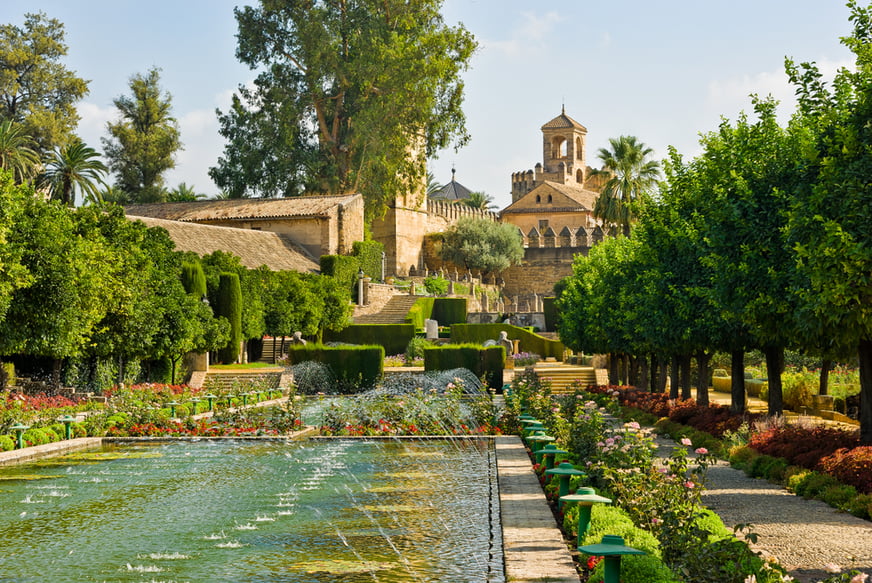
Alcázar de los Reyes Cristianos

A short walk along the river from Plaza del Triunfo stands the Fortress of the Christian Monarchs. Rebuilt in 1328 by Alfonso XI on the site of an earlier Moorish fortress it became the base from which Isabel and Fernando plotted the reconquest of Granada, the last Muslim stronghold in Spain. The structure is notable for powerful walls and a trio of towers: the Tower of the Lions, the Tower of Allegiance, and the Tower of the River.
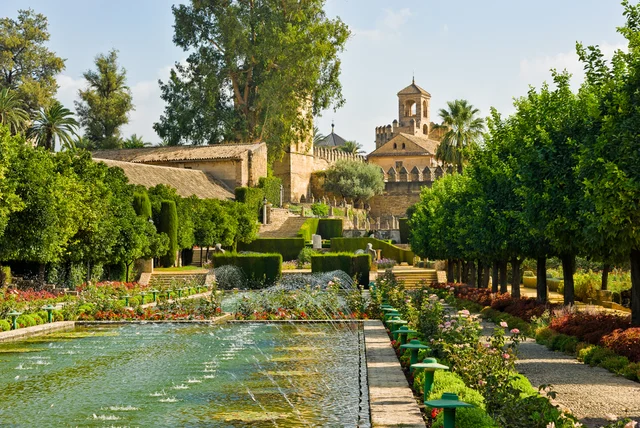
While not nearly as inspiring as the Mezquita, the Alcázar is fascinating for the historic events it has witnessed. Columbus came here in 1486 to lobby for his plan to reach the Indies by going west. In the gardens, a group statue commemorates the meeting and the monarchs’ eventual agreement to underwrite his voyage in 1492. The regional branch of the Spanish Inquisition was based here from 1490 until 1821—the circular Torre de la Inquisición once housed its grim paperwork. After that, it served as the city’s prison until the 1950s, but today it’s a tranquil place. The Salón de los Mosaicos displays wonderful Roman mosaics unearthed in the Plaza de la Corredera in 1959. At night, the formal gardens—lined with cypresses, orange trees, and fountains—host an immersive music and light show called La Naturaleza Encendida.
A short walk along the river from Plaza del Triunfo stands the Fortress of the Christian Monarchs. Rebuilt in 1328 by Alfonso XI on the site of an earlier Moorish fortress it became the base from which Isabel and Fernando plotted the reconquest of Granada, the last Muslim stronghold in Spain. The structure is notable for powerful walls and a trio of towers: the Tower of the Lions, the Tower of Allegiance, and the Tower of the River.
While not nearly as inspiring as the Mezquita, the Alcázar is fascinating for the historic events it has witnessed. Columbus came here in 1486 to lobby for his plan to reach the Indies by going west. In the gardens, a group statue commemorates the meeting and the monarchs’ eventual agreement to underwrite his voyage in 1492. The regional branch of the Spanish Inquisition was based here from 1490 until 1821—the circular Torre de la Inquisición once housed its grim paperwork. After that, it served as the city’s prison until the 1950s, but today it’s a tranquil place. The Salón de los Mosaicos displays wonderful Roman mosaics unearthed in the Plaza de la Corredera in 1959. At night, the formal gardens—lined with cypresses, orange trees, and fountains—host an immersive music and light show called La Naturaleza Encendida.
Details
Bookstore
Available as paperback
and as e-book.