Plaza del Potro

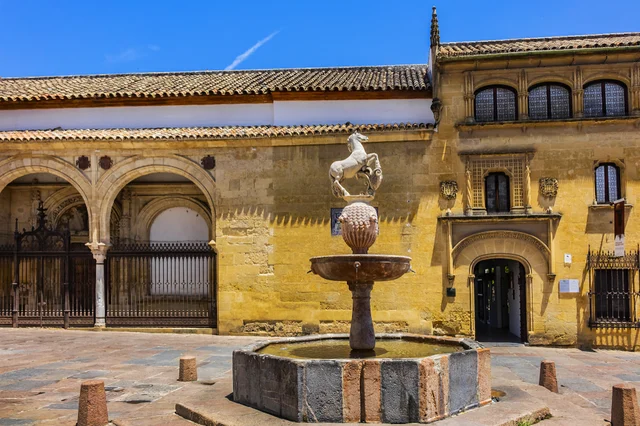
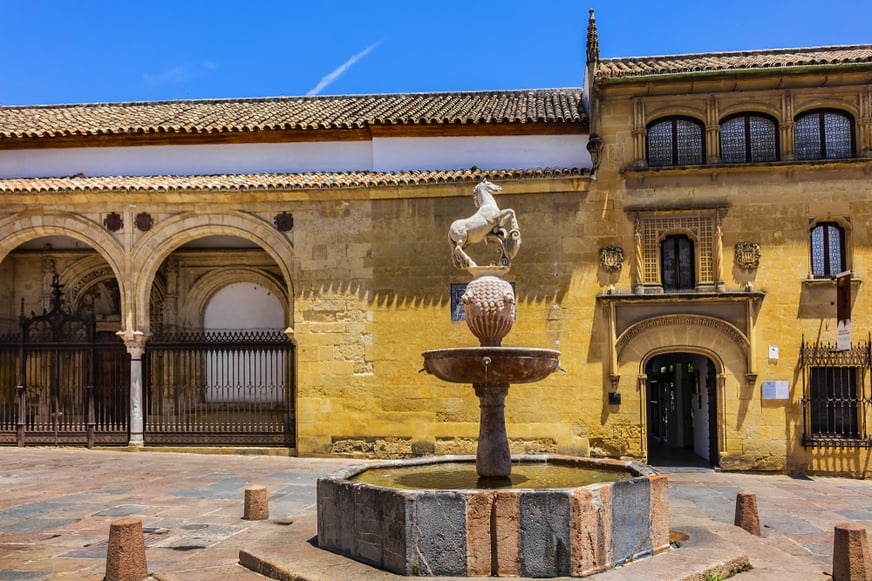
This small, historic square east of the Mezquita was originally a horse market—its central fountain is topped with a rampant colt (potro). It’s a lovely place to stroll and contains some excellent museums. The Posada del Potro gets a mention as a den of vice in Cervantes’ Don Quijote. When you enter its 15th-century courtyard you’ll be transported back to the age of stables and innkeepers. It houses the Centro Flamenco Fosforito (tel. 957-476-829; 2€ adults; Tues–Sat 8:15am–8pm, Sun until 2.45pm; summer Tues–Sat 8:15am–2:45pm), a museum tracing the roots, styles, and stars of flamenco. The modern audiovisual displays sit a little uneasily with the historic surroundings, but the explanations—in Spanish and English—are excellent. Try keeping the rhythm of various flamenco forms and ask about regular free performances.
Across the square, Museo Julio Romero de Torres (museojulioromero.cordoba.es; 📞 95-747-03-56; admission 5€, seniors and students 2.66€, free for children under 17; Tues–Fri 8:15am–8pm, Sat 9:30am–5:30pm, Sun 8:15am–2:45pm; summer Tues–Sat 8:15am–2:45pm), is dedicated to Córdoba’s beloved painter, who was born here. You’ll see reproductions of his symbolist masterpieces all over town and most of the originals are in this beautifully laid-out gallery. Especially moving: his tribute to flamenco, Cante Hondo (Deep Song), and his most famous painting La Chiquita Piconera (The Little Coal Girl), which portrays a beautiful, yet disenchanted, young woman tending a tray of embers. Symbolism indeed.
This small, historic square east of the Mezquita was originally a horse market—its central fountain is topped with a rampant colt (potro). It’s a lovely place to stroll and contains some excellent museums. The Posada del Potro gets a mention as a den of vice in Cervantes’ Don Quijote. When you enter its 15th-century courtyard you’ll be transported back to the age of stables and innkeepers. It houses the Centro Flamenco Fosforito (tel. 957-476-829; 2€ adults; Tues–Sat 8:15am–8pm, Sun until 2.45pm; summer Tues–Sat 8:15am–2:45pm), a museum tracing the roots, styles, and stars of flamenco. The modern audiovisual displays sit a little uneasily with the historic surroundings, but the explanations—in Spanish and English—are excellent. Try keeping the rhythm of various flamenco forms and ask about regular free performances.
Across the square, Museo Julio Romero de Torres (museojulioromero.cordoba.es; 📞 95-747-03-56; admission 5€, seniors and students 2.66€, free for children under 17; Tues–Fri 8:15am–8pm, Sat 9:30am–5:30pm, Sun 8:15am–2:45pm; summer Tues–Sat 8:15am–2:45pm), is dedicated to Córdoba’s beloved painter, who was born here. You’ll see reproductions of his symbolist masterpieces all over town and most of the originals are in this beautifully laid-out gallery. Especially moving: his tribute to flamenco, Cante Hondo (Deep Song), and his most famous painting La Chiquita Piconera (The Little Coal Girl), which portrays a beautiful, yet disenchanted, young woman tending a tray of embers. Symbolism indeed.
Details
Bookstore
Available as paperback
and as e-book.