Things To Do in Pontevedra
Bookstore
Available as paperback
and as e-book.
Pontevedra Attractions
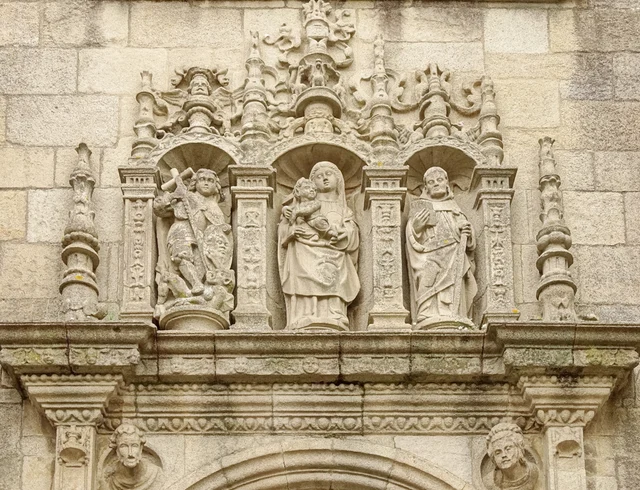
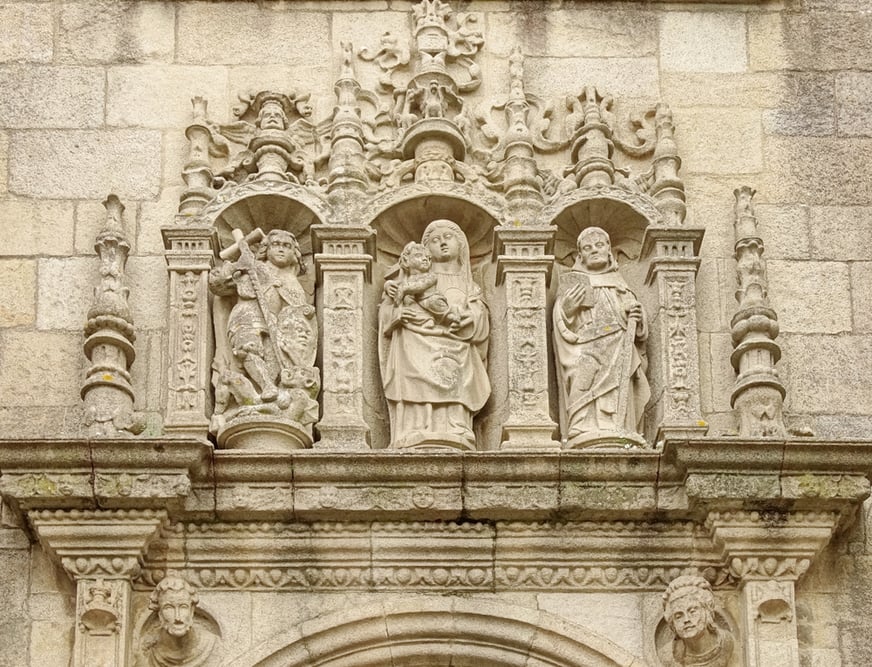
Pontevedra’s Old Quarter is almost entirely pedestrianized, making it a pleasant place to stroll. The major attraction in the old part of the city is the Basílica de Santa María la Mayor, Avda de Santa María, 24 (tel. 98-686-61-85), dating from the 16th century. All the metal decoration on the church has taken on an avocado-green patina. Its most remarkable feature is its western facade, carved to resemble an altarpiece, with a depiction of the Crucifixion at the top. The church is open Monday to Saturday 11am‒2pm, Monday to Thursday 5:30‒8:30pm. See website for Mass schedule.
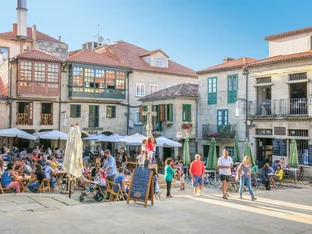
The Museo de Pontevedra, Rúa Padre Amoedo Carballo, 3 (tel. 98-680-41-00, x42416), contains a hodgepodge of everything from the Pontevedra civic attic. Displays range from prehistoric artifacts to a still life by Zurbarán. Many of the exhibits are maritime-oriented, and there is a valuable collection of jewelry. The museum is open Tuesday to Saturday 10am‒9pm, Sunday 11am‒2pm. Admission is free. The museum is steps from a major square in the old town, Praza de Leña (Square of Wood), which is lined with bars and restaurants.
Iglesia de San Francisco at Plaza de Ourense, 5, is another church of note, with a fine Gothic facade opening onto gardens. Founded in the 14th century, it contains the sepulcher of Don Payo Gómez Charino, noted for his part in the 1248 Reconquest of Seville, when the city was wrested from Moorish domination.
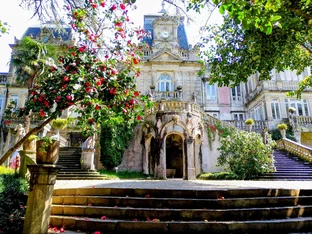
Directly south, the gardens lead to the 18th-century Capilla de la Peregrina, Plaza Peregrina, with a narrow half-moon facade connected to a rotunda and crowned by a pair of towers. It was constructed by followers of the cult of the Pilgrim Virgin, which was launched in Galicia sometime in the 17th century.
Pontevedra Nightlife
The cool temperatures that descend over the hot, sultry plain surrounding Pontevedra seem to incite local residents into after-dark promenades through the Old City. You'll find pubs and bars sprawled on either side of the streets that interconnect Plaza Santa María la Mayor, in the northwestern quadrant of the town's historic core, with the very central Plaza de la Herrería.