Alcázar de Segovia

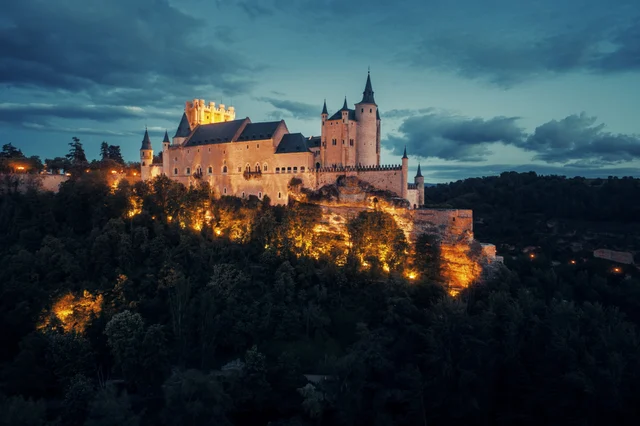
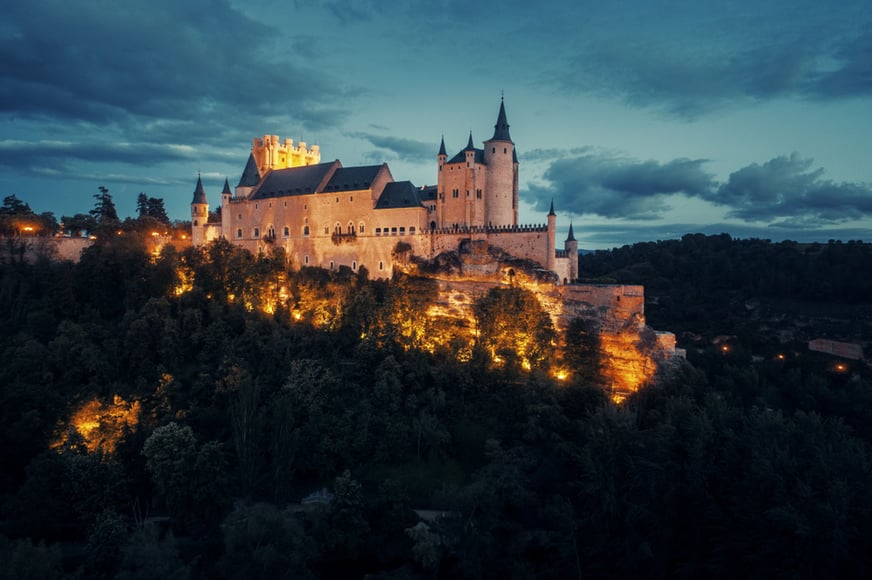
There is a good reason why this fortress looks like a late-19th-century romantic ideal of a medieval castle. Most of it burned in 1862 and was rebuilt to emulate the storybook castles of 16th-century northern Europe rather than the messy fortress-castle of Spain’s warrior monarchs of the 1300s. The reconstruction was carried out during shaky political times to burnish the otherwise tarnished the image of the monarchy. In effect, it’s a museum of the nobler side of the Reconquista.
As you enter (from the city side), the first thing you’ll spy are suits of German plate armor for knights and two for their steeds. Spanish monarchs have cultivated this chivalrous image ever since the Habsburgs came to the throne in the 1500s. The castle was a favorite residence of Castilian monarchs throughout the medieval period, and the sumptuous decoration of tapestries, tiles, and Mudéjar woodwork conjures “days of old when knights were bold.”
Isabel took refuge in the original fortress in 1474 when word came that her brother Enrique IV had died. A mural in the Galley Chamber tells the rest of that story: Having mustered the support of the royal army, she marched out of the Alcázar to Segovia’s Plaza Mayor to be proclaimed queen of Castilla. She also first met Fernando II of Aragón here, but wisely held onto her rights when they married.
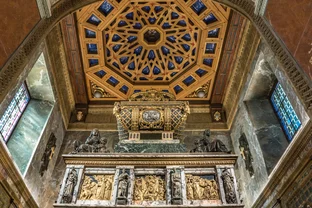
The most dramatic room of the castle is the Hall of Monarchs, with its ceiling-level frieze in a style usually reserved for the depictions of saints. Each king or queen in the Castilian line from Pelayo (Pelagius in Latin) of Asturias, credited with starting the Reconquista in the 720s, to Juana la Loca, Isabel’s mad daughter, is shown seated on a golden Gothic throne. This incredible piece of art and history was commissioned by Juana’s grandson, Felipe II, to cement his lineage’s claim to the Spanish crown.
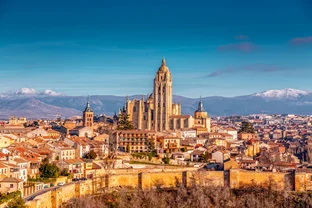
Walk the battlements of this once-impregnable castle, from which its occupants hurled boiling oil onto the enemy below. Ascend the hazardous stairs of the tower, originally built by Isabel’s father as a prison, for a panoramic view of Segovia.
There is a good reason why this fortress looks like a late-19th-century romantic ideal of a medieval castle. Most of it burned in 1862 and was rebuilt to emulate the storybook castles of 16th-century northern Europe rather than the messy fortress-castle of Spain’s warrior monarchs of the 1300s. The reconstruction was carried out during shaky political times to burnish the otherwise tarnished the image of the monarchy. In effect, it’s a museum of the nobler side of the Reconquista.
As you enter (from the city side), the first thing you’ll spy are suits of German plate armor for knights and two for their steeds. Spanish monarchs have cultivated this chivalrous image ever since the Habsburgs came to the throne in the 1500s. The castle was a favorite residence of Castilian monarchs throughout the medieval period, and the sumptuous decoration of tapestries, tiles, and Mudéjar woodwork conjures “days of old when knights were bold.”
Isabel took refuge in the original fortress in 1474 when word came that her brother Enrique IV had died. A mural in the Galley Chamber tells the rest of that story: Having mustered the support of the royal army, she marched out of the Alcázar to Segovia’s Plaza Mayor to be proclaimed queen of Castilla. She also first met Fernando II of Aragón here, but wisely held onto her rights when they married.
The most dramatic room of the castle is the Hall of Monarchs, with its ceiling-level frieze in a style usually reserved for the depictions of saints. Each king or queen in the Castilian line from Pelayo (Pelagius in Latin) of Asturias, credited with starting the Reconquista in the 720s, to Juana la Loca, Isabel’s mad daughter, is shown seated on a golden Gothic throne. This incredible piece of art and history was commissioned by Juana’s grandson, Felipe II, to cement his lineage’s claim to the Spanish crown.
Walk the battlements of this once-impregnable castle, from which its occupants hurled boiling oil onto the enemy below. Ascend the hazardous stairs of the tower, originally built by Isabel’s father as a prison, for a panoramic view of Segovia.
Details
Bookstore
Available as paperback
and as e-book.