Iglesia de la Vera Cruz

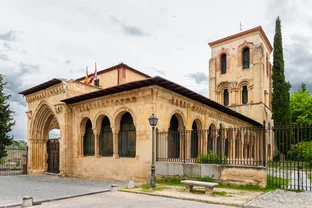
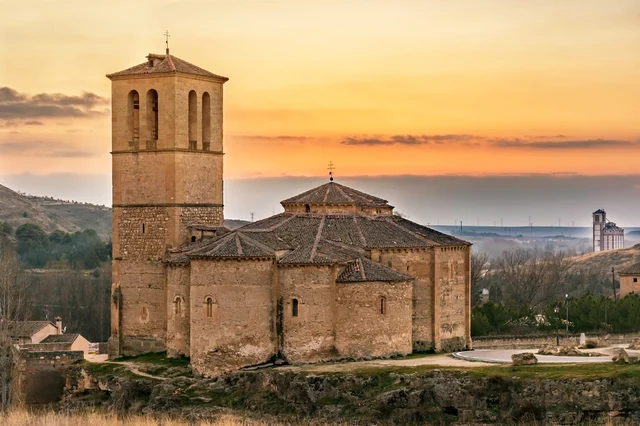
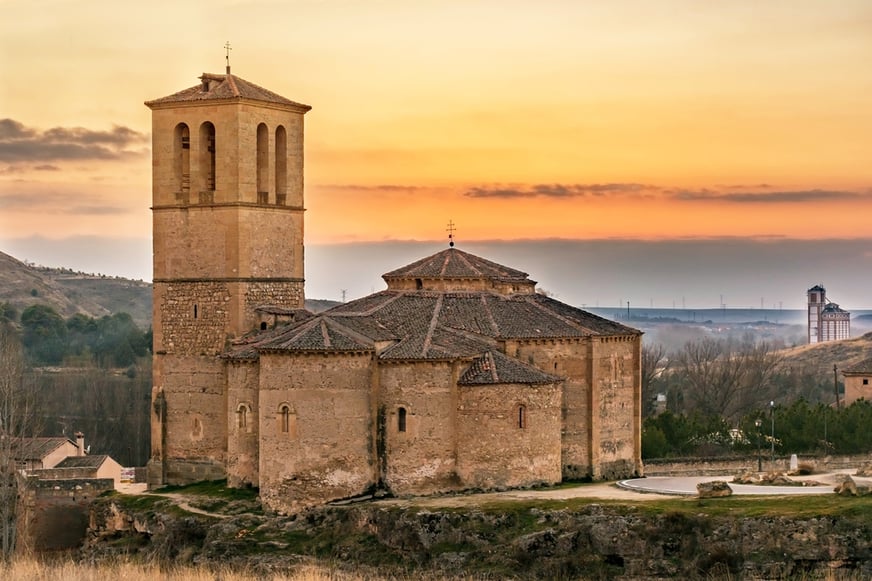
Built in the 12th century by the Knights Templar more as a shrine than a parish church, this Romanesque edifice still resonates with the rough faith of the warrior monks who founded it. The 12-sided shape (copied from Jerusalem’s Church of the Holy Sepulchre), the style of the niches, and the fragmentary wall murals all had special significance in the mystic beliefs of the crusader order that built the church to house a piece of the True Cross. Consecrated in 1246 (1208 on the Gregorian calendar), the church’s very existence illustrates the strong bond between military and religious life in Segovia. The site was abandoned when the Knights Templar were disbanded by Pope Clement V in the early 14th century, but the structure was partially restored by the Knights of Malta.
Built in the 12th century by the Knights Templar more as a shrine than a parish church, this Romanesque edifice still resonates with the rough faith of the warrior monks who founded it. The 12-sided shape (copied from Jerusalem’s Church of the Holy Sepulchre), the style of the niches, and the fragmentary wall murals all had special significance in the mystic beliefs of the crusader order that built the church to house a piece of the True Cross. Consecrated in 1246 (1208 on the Gregorian calendar), the church’s very existence illustrates the strong bond between military and religious life in Segovia. The site was abandoned when the Knights Templar were disbanded by Pope Clement V in the early 14th century, but the structure was partially restored by the Knights of Malta.
Details
Bookstore

Available as paperback
and as e-book.