Museo de Arte Contemporáneo Esteban Vicente

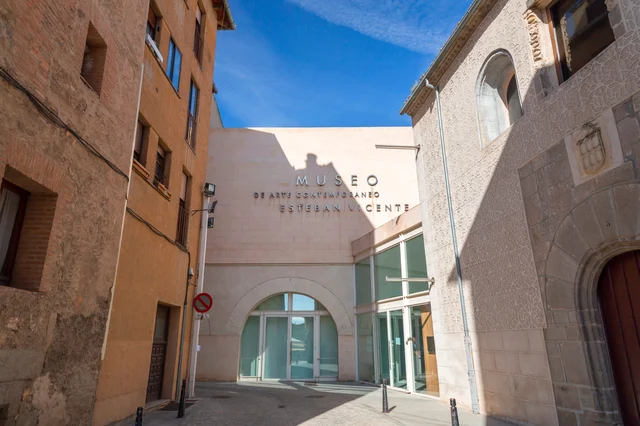
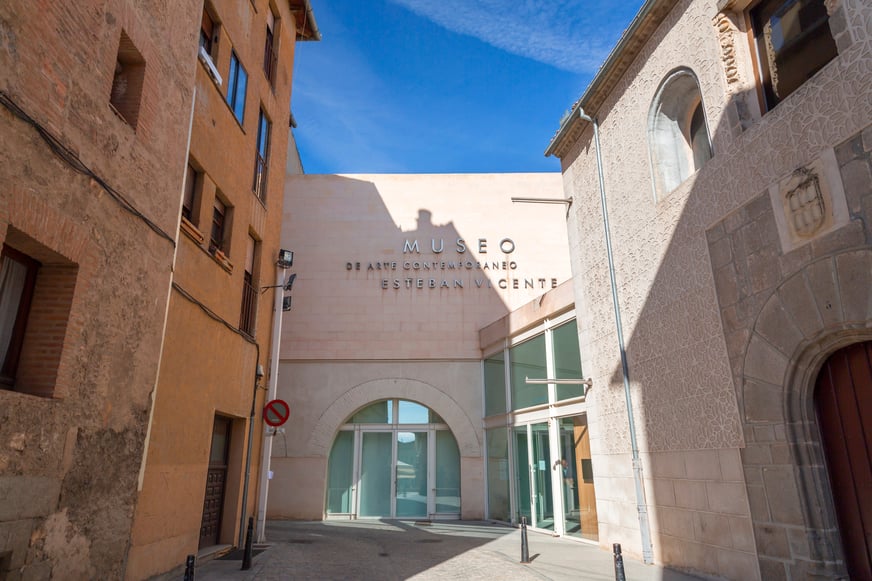
Spanish-born Estéban Vicente (1903–2001) found his artistic niche as a member of the pioneering New York school of Abstract Expressionists but chose to donate a significant body of his work to his home country. The collection includes oil paintings, collages, a tapestry, and a number of small sculptures. To house and display the collection, the mid-15th-century palace of Enrique IV of Castilla y León (Isabel I’s older half-brother) was converted to a white-walled, unadorned, contemporary gallery space. The museum aims to further the spirit of artistic inquiry, so characteristic of the first generation of Abstract Expressionists, through temporary exhibitions, which often focus on video.
Spanish-born Estéban Vicente (1903–2001) found his artistic niche as a member of the pioneering New York school of Abstract Expressionists but chose to donate a significant body of his work to his home country. The collection includes oil paintings, collages, a tapestry, and a number of small sculptures. To house and display the collection, the mid-15th-century palace of Enrique IV of Castilla y León (Isabel I’s older half-brother) was converted to a white-walled, unadorned, contemporary gallery space. The museum aims to further the spirit of artistic inquiry, so characteristic of the first generation of Abstract Expressionists, through temporary exhibitions, which often focus on video.
Details
Bookstore
Available as paperback
and as e-book.