Things To Do in Valencia, Spain
Bookstore
Available as paperback
and as e-book.
Valencia, Spain Attractions
There are three primary areas of interest in Valencia: the old city, centered on the cathedral and Plaza de la Reina; the City of Arts and Sciences, southeast of the old city on the dry riverbed; and the port and beach district, east of the old city.
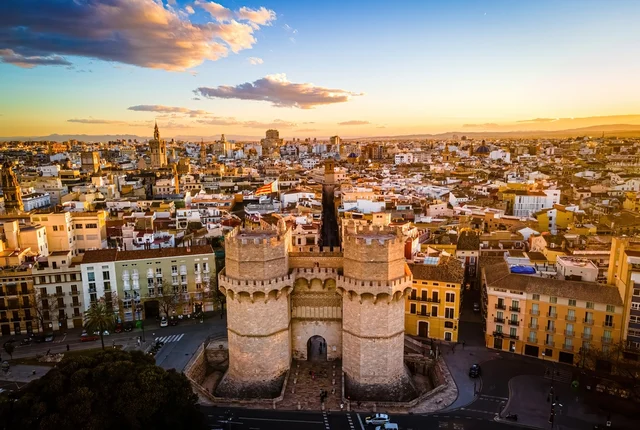
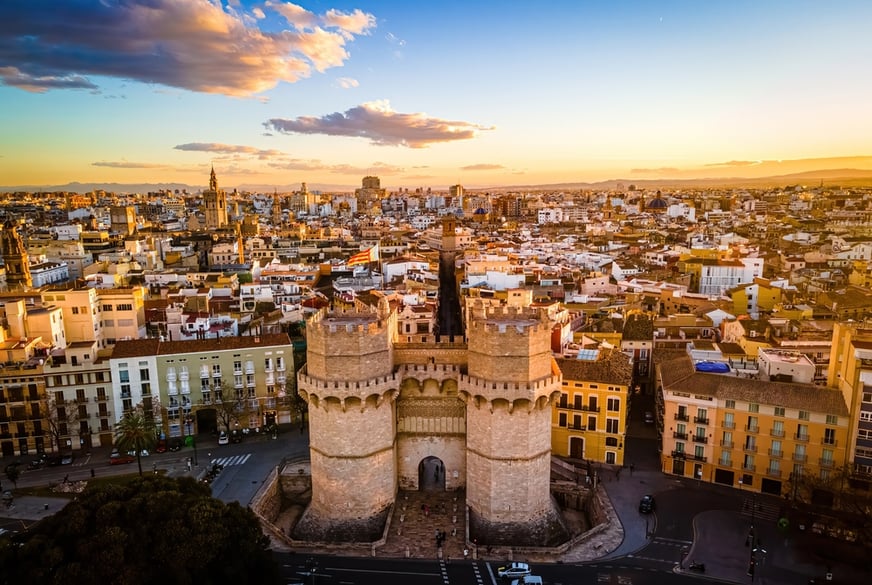
The 14th-century Gothic Torres de Serranos on the north side of the city once formed the main gate to Valencia; the old western gate was formed by the Torres de Quart. Just west of Torres de Quart, near the original University of Valencia, the Jardí Botànic (Calle Quart, 80; tel. 96-315-68-00; metro Túria or Angel Guimerà) was founded by the university in 1567 as a garden of medicinal plants. Today the botanical garden boasts one of Europe’s most important collections of varied tree life and palms, with nearly 45,000 international species displayed. Admission is 3€ adults, 1.60€ seniors and students, and free for kids 6 and under. It’s open 10am‒dusk.
The city’s other large green space is the former riverbed, now the green swath of the Jardí del Túria, great for walkers and cyclists and a main venue for festivals and events.
Valencia boasts more than 2.8km (1 3/4 miles) of beaches, with excellent facilities. The Arenas and Malvarrosa beaches are just minutes from the city center. Adjoining these beaches is the seafront promenade, Paseo Marítimo, where you can walk, jog, sunbathe, or roller-skate. The beaches to the north and south of the port, Playa de la Punta and Playa de Levante, are too polluted for swimming. However, if you head south you'll reach El Saler, where you'll see the European blue flag waving; it's awarded for clear waters and golden sands.

8 Results
- Cathedral
Catedral (Seu)
Few buildings in Valencia are as old—or as looming—as its medieval cathedral, built in fortress-like style between 1252 and 1482 on the former site of the Grand Mosque. Naturally enough, the cathedral embodies several design styles, but good old Spanish Gothic predominates. Behind… - Museum
Ciutat de les Arts i les Ciències (City of Arts and Sciences)
The City of Arts and Sciences has become as emblematic of Valencia as Frank O. Gehry’s Guggenheim Museum is emblematic of Bilbao. Valencianos’ chests swell a little bigger as they inform you that Valencia didn’t have to go overseas for a great architect. It already had native son… - Museum
Institut Valencia d’Art Modern (IVAM)
Spain's first contemporary art museum (1989) has found its footing as a showcase of international contemporary art while staying true to its genesis as a repository of works of Spanish Modernism. The ultramodern building is anchored by the signature welded-iron sculptures of… - Landmark
Lonja de la Seda
Master mason Pere Compte constructed this fortified hall between 1482 and 1533 as Valencia’s silk exchange. Listed as a UNESCO World Heritage Site, it is considered a top example of Gothic civic architecture. A forest of twisted-wheat columns supports the main trading hall, and the… - Market
Mercado Central
This Modernista cathedral of food is one of the grandest food markets in Spain, rivaling La Boqueria in Barcelona. It’s a great place to pick up Valencia oranges (in season) to snack on and to see the exquisite produce grown in the little truck farms (huertas) that surround the city.… - Museum
Museo Nacional de Cerámica
This late Gothic palace was remade in the 18th century with a rococo exterior dominated by Ignacio Vergara’s figures of “Dos Aguas” (Two Waters), now the palace’s namesake. The building was already a landmark long before 1947, when the private ceramic collections of Manuel González… - Museum
Museo de Bellas Artes
While this charming museum owns a few works by most of the major Spanish painters from Ribera and Murillo through Goya, its two primary strengths are Valencian Gothic painting and its collection of major works by the gifted Valencian painter Joaquin Sorolla (1863–1923). The Sorolla… - Museum
Palacio de Marqués de Dos Aguas
This late Gothic palace was remade in the 18th century with a rococo exterior dominated by Ignacio Vergara’s figures of “Dos Aguas” (Two Waters), the palace’s namesake. The building was a landmark long before the private ceramic collections of Manuel González Martí and his wife…
Valencia, Spain Shopping
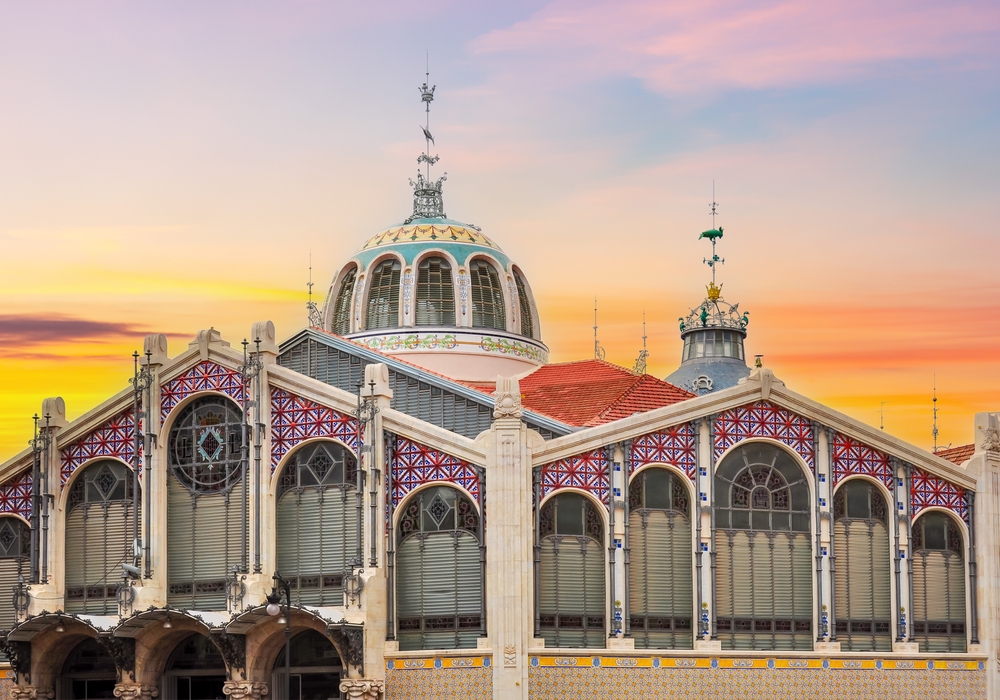
You haven’t seen Valencia until you’ve visited the 1920s Mercado Central to marvel at the beautifully displayed meats, fish, and produce, and to purchase bomba rice, smoked paprika, and a paella pan to bring home. Except on Sundays, nearby Plaza Redonda bustles with vendors selling traditional Valencian ceramics, ironwork, silver items, and inlaid marquetry. You’ll also find equally colorful items from other parts of Spain and even Morocco. On Sundays, look for a combination flea and craft market on Plaza del Ayuntamiento.
Spain’s ubiquitous El Corte Inglés department store has several locations in Valencia, including Calle Pintor Sorolla, 26, and Calle Pintor Maella, 37 (tel. 96-315-95-00). We like the fact that these stores stock local handicrafts and other goods along with more general merchandise. They are always a good bet for one-stop shopping.
Mercado de Colon (MisterVlad / Shutterstock)
Serious shoppers will enjoy browsing around the Plaza del Ayuntamiento and along the streets of Don Juan de Austria, Colón, Sorní, and Cirilo Amorós. The Mercado de Colon (Calle Jorge Juan, 19; tel. 96-352-54-78), a Gaudi-inspired fantasy dating from 1916, is a good stop for a break at one of its cafes. Several streets around the market also attract shoppers, including Calle Conde de Salvatierra.
Valencia is known for its embroidered shawls, and Nela (Calle San Vicente Mártir, 2; 📞 96-392-30-23) has an excellent selection, along with fans, leather goods, and other items. Spain’s famous Lladró porcelain figurines are made in a factory outside the city; for a full range displayed in an elegant setting, seek out Lladró (Calle Poeta Querol, 9; lladro.com; 📞 96-351-16-25). To visit the Lladró Museum in Tavernes Blanques, ask the shop staff to assist with reservations.
Valencia, Spain Nightlife
Valencia is famous for its marcha (nightlife) and for its bohemian bars, but where you go at night in Valencia depends on when you visit. Several venues vanished during pandemic lockdowns, but others have popped up to take their place.
In the cooler months, look to historic Barrio Carmen in the city center. Start at Sant Jaume, a cafe at Calle de Cavalleros, 51 (tel. 96-391-24-01), for an agua de Valencia, a mixture of orange juice, orange liqueur, and cava. The drink is said “to cure all that ails you,” so it’s appropriate that the building itself used to be an apothecary. Calle Alta is a good street on which to start your bar-crawl, as is the historic core around Plaza del Ayuntamiento. Foodies flock to Vuelve Carolina, Calle Correos, 8 (tel. 96–321–86–86), for cocktails and upscale tapas on the ground level of the same building as El Poblet.
Just south of the cathedral, the city’s most famous drink, horchata, made with ground tiger nuts, is best at the exquisitely tiled Horchatería Santa Catalina, Plaza Santa Caterina, 6 (horchateriasantacatalina.com; 📞 96-391-23-79). In the barrio just west of the cathedral, the terrace at Café Negrito, Plaza Negrito 1, (tel. 96-391-42-33) is a big draw for locals, who can be found debating all manner of left-wing politics here in the early evening before the volume gets pumped on the sound system and people drink and dance until 3am. Drink prices start at 3€, and tapas cost 4€‒6€. If you still have some moves left in you when Negrito closes, head up to Play, Calle de Cuba, 8 (no phone), for techno and indie music on two different floors on weekend nights 1‒7am.
In summer, the emphasis switches to the beach, Playa Malvarrosa. Everyone from teens to 40-somethings congregates around open-air bars, which play music, often have dance floors, and are open from late May to September. Drinks usually cost 4€‒6€. There are also discos in this part of town, one of which is the salsa room at Akuarela Playa, Calle Eugenia Viñes, 152 (akuarelaplaya.es; 📞 96-337-47-20). Cover is 12€‒17€, and drinks are several euros more than in the open-air bars.
The Performing Arts and Bullfighting in Valencia
The Palau de la Música, Paseo de la Alameda, 30 (tel. 96-357-50-20; metro Alameda), presents an impressive array of 200-plus programs a year. The most prestigious orchestras in the world, as well as directors and soloists, appear here; it’s also home to the Valencia Orchestra throughout its season. The hall seats 1,793 and has wonderful acoustics (Plácido Domingo once declared “Palau is a Stradivarius”). Ticket prices vary but usually range from as low as 10€ up 90€.
Palau de las Arts Reina Sofia (RomanSlavik.com / Shutterstock)
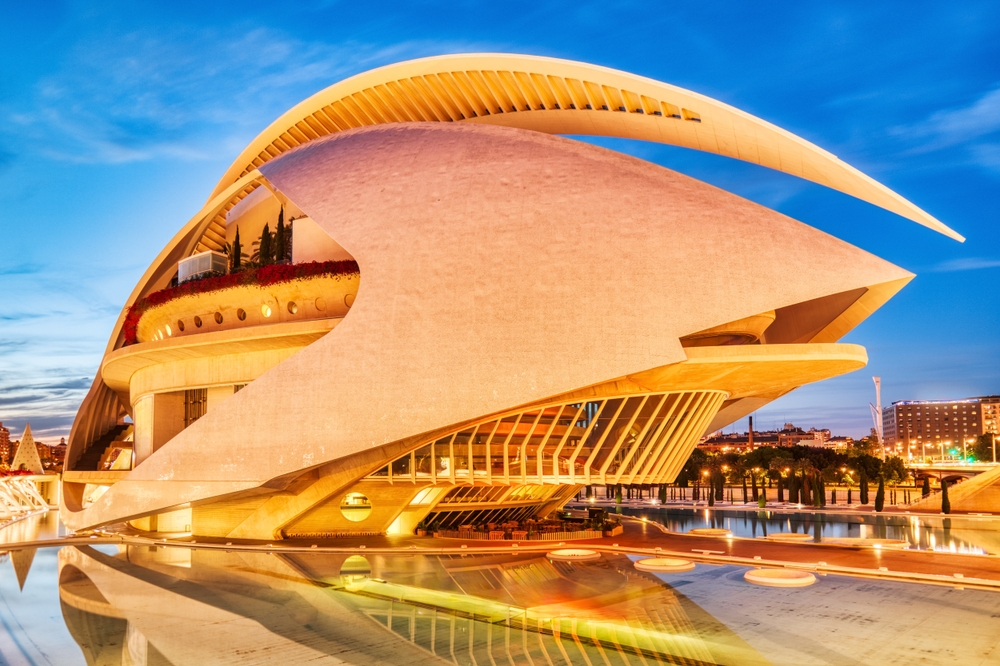
Valencia’s grand opera house, Palau de les Arts Reina Sofía, Autopista del Saler, 1 (tel. 96-197-58-00), is housed in a futuristic helmet-shaped building, part of the City of Arts and Sciences. Some of the world’s most prestigious opera companies perform here. Hour-long guided tours of this Calatrava masterpiece building are 12€ adults, 9€ seniors and students. Performance tickets range 10€‒145€ and can be purchased online or at the box office.
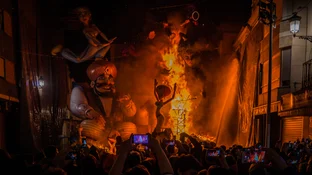
Neighboring Catalunya may have outlawed bullfights, but corridas still figure prominently in Valencian life. The first fight season of the year is during Las Fallas in March; fights resume from Easter through May and start up again in early October. Valencia’s Plaza de Toros, one of the largest rings in Spain, is adjacent to the rail station at Calle de Xàtiva, 28. If you don’t want to attend a corrida but are curious about the culture of bullfighting, you can visit the Museo Taurino, Pasatje Doctor Serra, 10 (tel. 96-388-37-38), and then enter the ring itself. The museum is open all year, Sunday 10am–2pm, Tuesday through Saturday 10am–7pm; admission is 2€ adults, 1€ seniors and students.
LGBTQ Nightlight in Valencia
Valencia is Spain’s third-largest city and, after Madrid and Barcelona, the country’s biggest gay center. Most of the action is in the historic center in the Barrio Carmen, particularly along Calle Quart. Valencia is a progressive, liberal city, and visitors need have no fear about being “out” on the street. The best publication for what’s happening, and when, is Madrid-based Shangay, distributed free in gay establishments and available online at www.shangay.com.