Cordoba Travel Guide
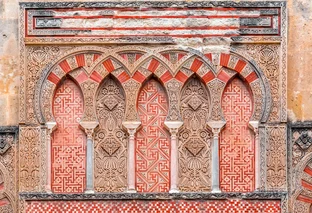
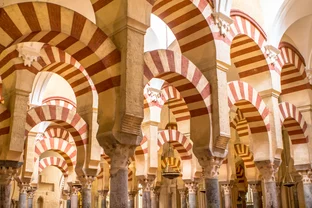
To visit Córdoba is to glimpse what might have been. A millennium ago, Muslims, Christians, and Jews lived and worked together to create western Europe’s greatest city—a cosmopolitan hub of the arts, science, and medicine. Until the 11th century, Córdoba was the capital of western Islam, described by one contemporary writer as “the ornament of the world.” With a population of 900,000, as opposed to today's population of 320,000, it was Europe's largest cultural and intellectual center. The Mezquita, the largest medieval mosque in Europe, remains its unmissable attraction, while the surrounding streets and whitewashed buildings form Andalucía’s most complete Moorish city.
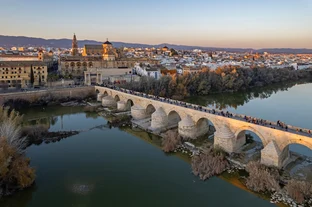
Built on the north bank of the river Guadalquivir, the city was founded by the Romans as Corduba and became the capital of Baetica, famous for its olive oil and poetry. The Moors made it their capital too, but after reconquest in 1236 Córdoba fell into a long decline, ravaged by the plague. By the 18th century its population had dwindled to just 20,000 inhabitants. A century later, the Romantic travelers, so enamored of Sevilla, Granada, and Ronda, were unimpressed by Córdoba. The English writer George Borrow called it a “mean, dark, gloomy place.”
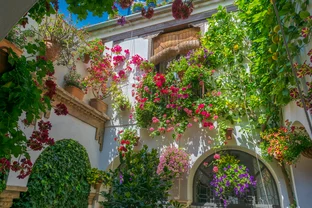
Today, it remains a smallish city, but the industries of jewelry, olive oil, and especially tourism have brought prosperity and color. The city’s strong sense of identity—in its Arab-influenced cuisine and flower-decked patios, its under-appreciated art and wine—make it a rewarding place to spend a few days, especially if you can break away from the tourist epicenter and experience something of the real Córdoba. In summer, the city gets extremely hot—registering some of Spain’s highest temperatures—so spring and fall are the best times to visit.
More on the history of Cordoba
From the 8th to the 11th centuries, the Umayyad caliphs brought an opulent lifestyle and great learning and culture to Córdoba while most of the rest of Europe languished in the Dark Ages. In those days, Córdoba -- not Madrid -- was the capital of Iberia. In its heyday, a pilgrimage to the Great Mezquita in Córdoba by a Muslim was said to have equaled a journey to Mecca.
Prior to the arrival of the Arabs, Córdoba had prospered in Roman times. Seneca the Elder (4 B.C.-A.D. 65), one of the greatest philosophers of the ancient world, lived here.
After the fall of the Romans, the city declined when it was taken over by the Visigoths, who in turn gave way to the more cultured Arabs. The invaders brought in scientists, scholars, and philosophers, while at the same time generating great prosperity from trade.
Córdoba became known for its pleasure palaces, including harems and luxurious baths. It also boasted a library with 400,000 hand-copied books. The city was host to the first university in Europe, and Cordovan silverwork and tooled leathers became famous around the world.
Infighting among the Muslims led to the collapse of Córdoba in 1031, at which time Seville replaced the city as the capital of Iberia.
Even in this period of decline, Córdoba saw the birth of Moisés Maimónides (1135-1204), the fabled Jewish philosopher and Talmudist. In time he was driven from the city by the Almohads and sought refuge in the Ayyubid court in Egypt.
The Reconquista, the recapturing of Muslim Andalusia by the Christians, occurred in 1236 long before Ferdinand and Isabella took back Granada in 1492. Under various Catholic monarchs, Córdoba went into a decline that lasted for centuries.
Córdoba today is a modern city with broad, tree-lined boulevards and an up-to-date business community, but you can still glimpse its former glory, one of the reasons it was awarded UNESCO World Heritage status. Stroll the cobblestone streets of the Judería (Jewish quarter), wander through Queen Isabella's garden in the Alcázar, visit Renaissance churches and palaces, explore some of Andalusia's finest museums, and visit the excavations of Madinat Al-Zahra, a country palace and royal city built by a 10th-century caliph.