David Ionut
Granada Travel Guide
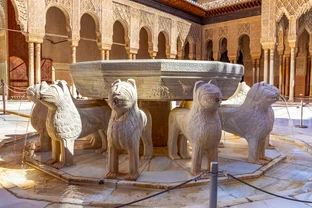
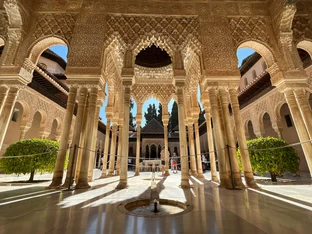
When Boabdil, the last Nasrid ruler of Granada, went into exile in 1492, he took the bones of his ancestors with him. But he left behind their magnificent fortress-palace, the Alhambra, and a legacy of nearly eight centuries of Islamic culture. Legend has it that as he turned to look back at Granada, he wept—at a mountain pass now known as Suspiro del Moro (The Moor’s Sigh).
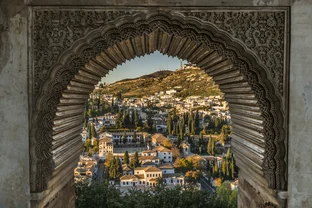
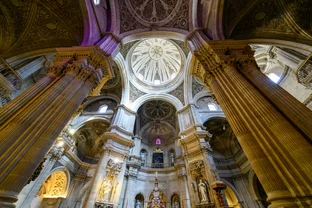
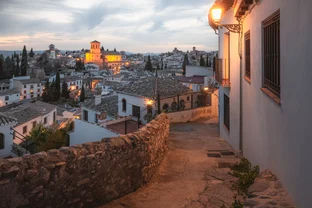
The Catholic Monarchs Isabel and Fernando had completed the reconquest of al-Andalus, but Granada’s Islamic character survived. Few come to this beautiful city to see the tombs of Los Reyes Católicos in the Capilla Real (although you should). They come for the exuberant ornamentation of the Alhambra, the unmistakably Arabic face of the Albaicín, and the haunting zambras—the Romani flamenco songs that echo around the hills of Sacromonte. “Granada is a poem that never ends”, wrote the city’s great poet and playwright Federico García Lorca.
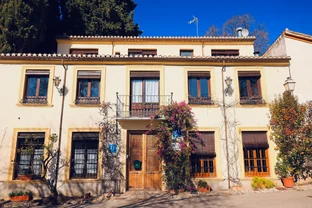
And speaking of Lorca—Spain’s greatest 20th-century poet and playwright—he wrote many elegies to his beloved home city and did much to revive interest in Andalucian cultural traditions, especially cante jondo, the “deep song” of flamenco. You’ll see his name and image all over the city, and devotees can trace his footsteps from the table at El Chikito where he held court with his literary circle, to exhibitions and events at El Centro Federico García Lorca, Plaza de la Romanilla (tel. 95-827-40-62), and at his family’s summer home Huerta de San Vicente (tel. 95-884-91-12), now a house museum. As Spain was gripped by civil war in 1936, Lorca returned to Granada but was seized by Nationalist forces and shot by the roadside near the city. His body has never been found.
Things to Do in Granada
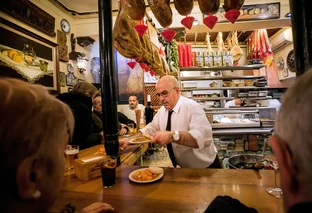
Moorish Granada rightly conjures up visions of the fairytale Alhambra, the snowcapped Sierra Nevada and passionate flamenco -- but there's more. Get lost in the winding alleys of the medina-like Albaicín, the old Muslim quarter; nibble free tapas in hole-in-the-wall tascas; and sample some of Spain's hottest nightlife -- no mean feat in a country famous for its fiestas. You too, just like sultans some 800 years ago, will be smitten with this Andalusian city.