Home > Destinations > North America > USA > New York State > New York City > Neighborhoods in Brief
Frommers.com Frommers.com
Most Recent New York City Forum Posts
Most Recommended Articles
Most Commented Articles

Neighborhoods in Brief

Because they grew up over the course of hundreds of years, Manhattan neighborhoods have multiple, splintered personalities and fluid boundaries. Still, it's relatively easy to agree upon what they stand for in general terms - so if you stop New Yorkers on the street and ask them to point you to, say, the Upper West Side or the Flatiron District, they'll know where you want to go. From south to north, here is how we've defined Manhattan's neighborhoods throughout this guide.

Free New York City Tours -- If you'd like to tour a specific neighborhood with an expert guide, call Big Apple Greeter (tel. 212/669-8159; www.bigapplegreeter.org) at least 4 weeks ahead of your arrival. You can also go to the website and fill out a visit request form. This nonprofit organization has specially trained volunteers who take visitors around town for a free 2- to 4-hour visit (with a $20 suggested donation) of a particular neighborhood. And they say New York isn't friendly!

Downtown

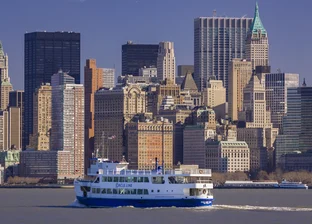
Lower Manhattan: South Street Seaport & the Financial District -- At one time, this was New York - period. Established by the Dutch in 1625 (hence the city's original name, Nieuw-Amsterdam, or New Amsterdam), the first settlements sprang up on the southern tip of Manhattan island; everything uptown was farm country and wilderness. This is the best place in the city to search for the past.

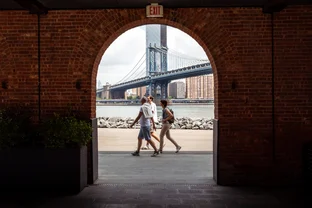
Lower Manhattan constitutes everything south of Chambers Street. Battery Park, the point of departure for the Statue of Liberty, Ellis Island, and Staten Island, is on the southern tip. The South Street Seaport, touristy but still a reminder of times when shipping was the lifeblood of the city, is a bit north on the East Side; it's south of the Brooklyn Bridge, which stands proudly as the ultimate achievement of New York's 19th-century industrial age.

The rest of the area is considered the Financial District, but may be more famous now as Ground Zero. Until September 11, 2001, the Financial District was anchored by the World Trade Center, with the World Financial Center complex and Battery Park City to the west, and Wall Street running crosstown a little south and to the east. Construction has begun on the new complex, but it will take years to complete. What won't take so long to build are the hundreds of new condo developments in the area (whether they will be able to sell them with the current economic downturn remains to be seen).

City Hall remains the northern border of the district, abutting Chambers Street (look for City Hall Park on the map). Most of the streets around here are narrow concrete canyons, with Broadway serving as the main uptown-downtown artery.

Just about all of the major subway lines congregate here before they either end or head to Brooklyn.

TriBeCa -- Bordered by the Hudson River to the west, the area north of Chambers Street, west of Broadway, and south of Canal Street is the Triangle Below Canal Street, or TriBeCa. Since the 1980s, as SoHo became saturated with chic, the spillover has been transforming TriBeCa into one of the city's more cutting-edge, exclusive neighborhoods, where celebrities and families coexist in cast-iron warehouses converted into expensive apartments. Artists' lofts and galleries as well as hip antiques and design shops pepper the area, as do some of the city's best restaurants.

Robert De Niro gave the neighborhood a huge boost when he established the TriBeCa Film Center, and Miramax headquarters gave the area further capitalist-chic cachet. Still, such historic streets as White (especially the Federal-style building at no. 2) and Harrison (the stretch west from Greenwich St.) evoke a bygone, more human-scale New York, as do a few holdout businesses and pubs.

The main uptown-downtown drag is West Broadway (2 blocks west of Broadway). Consider the Franklin Street subway station on the 1 line to be your gateway to the action.

Chinatown -- New York City's most famous ethnic enclave has burst past its 19th- and 20th-century boundaries and has encroached on Little Italy. The former marshlands northeast of City Hall and below Canal Street, from Broadway to the Bowery, are where Chinese immigrants arriving from San Francisco were forced to live in the 1870s. This booming neighborhood is a conglomeration of Asian populations. It offers tasty cheap eats from Szechuan to Hunan to Cantonese to Vietnamese to Thai. Exotic shops offer strange foods, herbs, and souvenirs; bargains on clothing and leather are plentiful. It's a blast to walk down Canal Street, peering into the stores and watching crabs escape from their baskets at the fish markets.

The Canal Street (J, Z, N, R, 6, Q) station will get you to the heart of the action. The streets are crowded during the day and empty out after around 9pm; they remain quite safe, but the neighborhood is more enjoyable during the bustle.

Little Italy -- Little Italy, traditionally the area east of Broadway between Houston and north of Canal streets, is a shrinking community, due to the encroachment of thriving Chinatown. It's now limited mainly to Mulberry Street, where you'll find most restaurants. With rents going up in the trendy Lower East Side, the chic spots are moving in, further intruding upon the old-world landscape. The best way to reach Little Italy is to walk east from the Spring Street station (on the no. 6 line) to Mulberry Street; turn south for Little Italy (you can't miss the year-round red, green, and white street decorations).

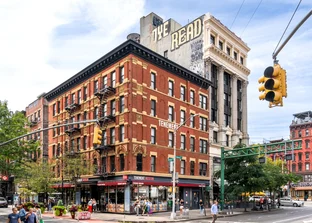
The Lower East Side -- The Lower East Side (or LES) boasts the best of both old and new New York - though the new is eking out what is left of the old. But still, witness the stretch of Houston between Forsyth and Allen streets, where Yonah Shimmel's Knish Shop sits shoulder to shoulder with the Sunshine Theater, an art-house cinema. Some say the Lower East Side has come full circle: Self-important hipsters with well-honed senses of entitlement (and trust funds) have come back to the neighborhoods their immigrant grandparents worked to escape.

Of all the successive waves of immigrants and refugees who passed through this densely populated tenement neighborhood from the mid-19th century to the 1920s, Eastern European Jews left the most lasting impression. The Jewish communities, which popped up between Houston and Canal streets east of the Bowery, are now just part of history. The neighborhood has experienced quite a renaissance over the last few years and makes a fascinating stop for both nostalgists and nightlife hounds.

There are some remnants of what was once the largest Jewish population in America along Orchard Street, where you'll find great bargain hunting in its old-world fabric and clothing stores still thriving between the club-clothes boutiques and lounges. Keep in mind these shops close early on Friday afternoon and all day on Saturday (the Jewish Sabbath). The exponentially expanding trendy set can be found in the blocks between Allen and Clinton streets south of Houston and north of Delancey, with more new shops, bars, and restaurants popping up every day.

This area is not well served by the subway system (one cause for its years of decline), so your best bet is to take the F train to Second Avenue (you can get off closer to First) and walk east on Houston; when you see Katz's Deli, you've arrived. You can also reach the LES from the Delancey Street station on the F line, and the Essex Street station on the J, M, and Z lines.

SoHo & Nolita -- No relation to the London neighborhood of the same name, SoHo got its moniker as an abbreviation of South of Houston Street. This fashionable neighborhood extends down to Canal Street, between Sixth Avenue to the west and Lafayette Street (1 block east of Broadway) to the east. It's easily accessible by subway: Take the N or R to the Prince Street station; the C, E, or 6 to Spring Street; or the F, B, D, or M train to the Broadway/Lafayette stop.

An industrial zone during the 19th century, SoHo retains the impressive cast-iron architecture of the era, and in many places, cobblestone peeks out from beneath the street's asphalt. In the early 1960s, artists began occupying the drab, deteriorating buildings, turning this into the trendiest neighborhood in the city. SoHo is now a prime example of urban gentrification and a major New York attraction thanks to its restored buildings, fashionable restaurants, and stylish boutiques. On weekends, the cobbled streets and narrow sidewalks are packed with shoppers, with the prime action between Broadway and Sullivan Street north of Grand Street.

Some critics claim that SoHo is a victim of its own popularity - witness the departure of art galleries and boutiques that have fled to TriBeCa and Chelsea as well as the influx of mall-style stores such as J. Crew and Victoria's Secret. Still, SoHo is one of the best shopping neighborhoods in the city, and few are more fun to browse. High-end street peddlers set up along the boutique-lined sidewalks, hawking jewelry, books, and their own art. At night the neighborhood is transformed into a terrific (albeit pricey) dining and barhopping neighborhood.

In recent years SoHo has been crawling east, taking over Mott and Mulberry streets'and Elizabeth Street - north of Kenmare Street, an area now known as Nolita for North of Little Italy. Nolita is becoming known for its hot shopping prospects, which include a number of pricey antiques and home-design stores. Taking the no. 6 train to Spring Street will get you closest by subway, but it's just a short walk east from SoHo proper.

The East Village & NoHo -- The East Village, which extends between 14th and Houston streets, from Broadway east to First Avenue and beyond to Alphabet City - avenues A, B, C, and D - is where you can still find some of the city's real bohemians. Once, flower children tripped along St. Marks Place and listened to music at the Fillmore East; now the East Village is a mix of affordable ethnic and trendy restaurants, clothing designers and kitschy boutiques, some music clubs, and Ukrainian dive bars. Several Off- and Off-Off Broadway theaters also call this place home.

The gentrification that has swept the city has made a huge impact on the East Village, but there's still a seedy element some won't find appealing ...and some will. It's here where you can spend an afternoon at the sparkling new New Museum of Contemporary Art, and then have a drink at the celebrity-magnet bar of the Bowery Hotel, while around the corner you'll see a line of homeless people making their way to a nearby soup kitchen. It's here where yuppies and other ladder-climbing types make their homes alongside old-world Russian immigrants, who have lived in the neighborhood forever, and the drag queens and squatters who settled here in between. The neighborhood still embraces ethnic diversity, with strong elements of its Ukrainian and Irish heritages, while 6th Street, between First and Second avenues, is referred to as Little India.

The East Village isn't very accessible by subway unless you're traveling along 14th Street (the L line will drop you off at Third and First aves.) or take the 4, 5, 6, N, Q, or R to 14th Street/Union Square; the N or R to 8th Street; or the 6 to Astor Place and walk east. Until the 1990s, Alphabet City resisted gentrification and remained a haven of drug dealers and other unsavory types - no more. Bolstered by a major real-estate boom, this way-east area of the East Village has blossomed. French bistros and smart shops have popped up on every corner, not to mention some terrific pubs where you can soak up some atmosphere.

The southwestern section of the East Village, around Broadway and Lafayette between Bleecker and 4th streets, is called NoHo (for North of Houston), and has a completely different character. As you might have guessed from its name, this area has developed much more like its neighbor to the south, SoHo. Here you'll find a crop of trendy lounges, stylish restaurants, cutting-edge designers, and upscale antiques shops. NoHo is fun to browse; the Bleecker Street stop on the no. 6 line will land you in the heart of it, and the Broadway/Lafayette stop on the F and D lines at all times (and B and M trains on weekdays) will drop you at its southern edge.

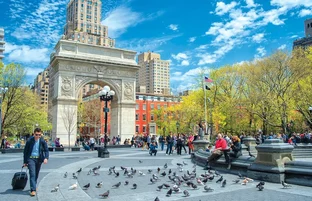
Greenwich Village -- Tree-lined streets crisscross and wind, following ancient streams and cow paths. Each block reveals yet another row of Greek Revival town houses, a well-preserved Federal-style house, or a peaceful courtyard or square. This is "the Village", from Broadway west to the Hudson River, bordered by Houston Street to the south and 14th Street to the north. It defies Manhattan's orderly grid system with streets that predate it, virtually every one chockablock with activity, and unless you live here, it may be impossible to master the lay of the land - so be sure to take a map along as you explore.

The Seventh Avenue line (1, 2, 3) is the area's main subway artery, while the West 4th Street station (where the A, C, and E lines meet the B, D, F, and M lines) serves as its central hub.

Nineteenth-century artists such as Mark Twain, Edgar Allan Poe, Henry James, and Winslow Homer first gave the Village its reputation for embracing the unconventional. Groundbreaking artists such as Edward Hopper and Jackson Pollock were drawn in, as were writers such as Eugene O'Neill, e. e. Cummings, and Dylan Thomas. Radical thinkers from John Reed to Upton Sinclair basked in the neighborhood's liberal ethos, and beatniks Allen Ginsberg, Jack Kerouac, and William Burroughs dug the free-swinging atmosphere.

Now, like so many neighborhoods, gentrification and escalating real estate values have just about pushed out the artistic element, but culture and counterculture still rub shoulders in cafes, renowned jazz clubs, neighborhood bars, Off- and Off-Off Broadway theaters, and an endless variety of tiny shops and restaurants.

The Village is probably the most chameleonlike of Manhattan's neighborhoods. Some of the highest-priced real estate in the city runs along lower Fifth Avenue, which dead-ends at Washington Square Park. Serpentine Bleecker Street stretches through most of the neighborhood and is emblematic of the area's historical bent. The anything-goes attitude in the Village has fostered a large gay community, still in evidence around Christopher Street and Sheridan Square (including the landmarked Stonewall Bar). The streets west of Seventh Avenue, the West Village, boast some of the city's most charming, historic brownstones. Three colleges: New York University, Parsons School of Design, and the New School for Social Research keep the area thinking young.

Streets are often crowded with weekend warriors and teenagers, especially on Bleecker, West 4th, 8th, and surrounding streets, and have been known to become increasingly sketchy west of Seventh Avenue in the very late hours, especially on weekends. Keep an eye on your wallet when navigating the weekend throngs.

Midtown

Chelsea & the Meatpacking District -- Chelsea has come on strong in recent years as a trendy address, especially for gay urban professionals. A low-rise composite of town houses, tenements, lofts, and factories (though a lot of high-rise apartment buildings have replaced some of the former in the last several years), the neighborhood comprises roughly the area west of Sixth Avenue from 14th to 30th streets. (Sixth Ave. itself below 23rd St. is considered part of the Flatiron District; see below.) Its main arteries are Seventh and Eighth avenues, and it's primarily served by the C or E and 1 subway lines.

The Chelsea Piers sports complex to the far west and a host of shops (both unique boutiques and big names such as Williams-Sonoma), well-priced bistros, and thriving bars along the main drags have contributed to the area's rebirth. Even the Hotel Chelsea -- the neighborhood's most famous architectural and literary landmark, where Thomas Wolfe, Edgar Lee Masters, and Arthur Miller wrote; Bob Dylan composed "Sad-Eyed Lady of the Lowlands"; Viva and Edie Sedgwick of Andy Warhol fame lived (and filmed parts of Warhol's "Chelsea Girls"); and Sid Vicious killed Nancy Spungeon - has been renovated. Chelsea is also the home of the Joyce Theater, New York's principal modern-dance venue.

One of the most influential trends in Chelsea has been the establishment of far West Chelsea (from Ninth Ave. west) and the adjacent Meatpacking District (south of West Chelsea, roughly from 17th St. to Little W. 12th St.) as the style-setting neighborhoods for the 21st century. What SoHo was in the 1960s, this industrial west world (dubbed "the Lower West Side" by New York magazine) is today. New restaurants, shopping, and superhot restaurants pop up daily in the Meatpacking District (dubbed "MePa" by ironic wags), while the area from West 22nd to West 29th streets, between Tenth and Eleventh avenues, is home to numerous dance clubs and the cutting edge of today's New York art scene. This area is still in transition and continually evolving. Like much of Manhattan, sleek glass condo towers are rising and the ambitious "High Line" project, a park along Tenth Avenue - between 30th and Gansevoort streets in the remains of an old elevated railway - first opened in spring 2009. This park is a great example of how New York keeps reinventing itself. It's well worth a visit.

The Flatiron District, Union Square & Gramercy Park -- These adjoining and at places overlapping neighborhoods are some of the city's most appealing. Their streets have been rediscovered by New Yorkers and visitors alike, largely thanks to the boom-to-bust dot-com revolution of the late 1990s; the Flatiron District served as its geographical heart and earned the nickname "Silicon Alley" in the process. These neighborhoods boast great shopping and dining opportunities and a central-to-everything location that's hard to beat. A number of impressive new hotels have been added to the mix over the last few years. The commercial spaces are often large, loftlike expanses with witty designs and graceful columns.

The Flatiron District, south of 23rd Street to 14th Street, between Broadway and Sixth Avenue, and centered on the historic Flatiron Building on 23rd (so named for its clothes-iron shape) and Park Avenue South, is littered with celebrity-chef-run restaurants. Below 23rd Street along Sixth Avenue (once known as the Ladies' Mile shopping district), mass-market discounters and others have moved in. The shopping gets classier on Fifth Avenue, where you'll find a mix of national names and hip boutiques. Lined with Oriental-carpet dealers and high-end fixture stores, Broadway is becoming the city's home-furnishings alley; its jewel is the justifiably famous ABC Carpet & Home, with eight floors of gorgeous textiles, housewares, and gifts on one side of Broadway, and an equally dazzling display of floor coverings on the other.

Union Square is the hub of the entire area; the N, Q, R, 4, 5, 6, and L trains stop here, making it easy to reach from most other city neighborhoods. Long in the shadows of the more bustling (Times and Herald) and high-toned (Washington) city squares, Union Square has experienced a major renaissance. Local businesses joined forces with the city to rid the park of drug dealers a decade or so back, and now it's a delightful place to spend an afternoon. Union Square is best known as the setting for New York's premier Greenmarket every Monday, Wednesday, Friday, and Saturday from 8am to 6pm. In-line skaters take over the market space in the after-work hours. A number of hip restaurants rim the square, as do superstores such as the city's best Barnes & Noble superstore, Whole Foods supermarket, and a W Hotel.

From about 16th to 23rd streets, east from Park Avenue South to about Second Avenue, is the leafy, largely residential district known as Gramercy Park. The pity of the Gramercy Park district is that so few can enjoy the actual park: Built by Samuel Ruggles in the 1830s to attract buyers to the area, it is the only private park in the city and is locked to all but those who live on its perimeter (the rule is that your windows have to overlook the park in order for you to have a key). At the southern endpoint of Lexington Avenue (at 21st St.), it is one of the most peaceful spots in the city. If you know someone who has a magic key, go there. Even if you don't, it's fun to stroll around its perimeter and soak in the pretty architecture.

At the northern edge of the area, fronting the Flatiron Building on 23rd Street and Fifth Avenue, is another of Manhattan's lovely little parks, Madison Square. Across from its northeastern corner once stood Stanford White's original Madison Square Garden (in whose roof garden White was murdered in 1906 by possibly deranged, but definitely jealous, millionaire Harry K. Thaw). It's now majestically presided over by the massive New York Life Insurance Building, the masterful New York State Supreme Court, and the Metropolitan Life Insurance Company, whose tower in 1909 was the tallest building in the world at 700 feet. Madison Square is also the home of Danny Meyer's insanely popular Shake Shack, a modern day "roadside burger stand."

Times Square & Midtown West -- Midtown West, the vast area from 34th to 59th streets west of Fifth Avenue to the Hudson River, encompasses several famous names: Madison Square Garden, the Garment District, Rockefeller Center, the Theater District, and Times Square. This is New York's tourism central, where you'll find the bright lights and bustle that draw people from all over. As such, this is the city's biggest hotel neighborhood, with options running the gamut from cheap to chic.

The 1, 2, 3 subway line serves the massive neon-lit station at the heart of Times Square, at 42nd Street between Broadway and Seventh Avenue, while the F, M, B, D line runs up Sixth Avenue to Rockefeller Center. The N, R, Q line cuts diagonally across the neighborhood, following the path of Broadway before heading up Seventh Avenue at 42nd Street. The A, C, E line serves the west side, running along Eighth Avenue.

If you haven't been here in a few years, you'll be surprised by the "new" Times Square. Longtime New Yorkers like to kvetch nostalgic about the glory days of the old peep-show-and-porn-shop Times Square that this cleaned-up, Disneyfied version supplanted. And there really is not much here to offer the native New Yorker. The revival, however, has been nothing short of an outstanding success for tourism. Grand old theaters have come back to life as Broadway and children's playhouses, and scores of new family-friendly restaurants and shops have opened. Plenty of businesses have moved in - MTV studios overlook Times Square at 1515 Broadway, and Good Morning America has its own street-facing studio at Broadway and 44th Street. The neon lights have never been brighter, and Middle America has never been more welcome. Expect dense crowds, though; it's often tough to make your way along the sidewalks. Note: What began as an experiment has now become reality: Mayor Bloomberg has permanently closed parts of Times Square (and Herald Square) to automobile traffic. Pedestrians, rejoice.

Most of the great Broadway theaters light up the streets off Times Square, in the west 40s, just east and west of Broadway. At the heart of the Theater District, where Broadway meets Seventh Avenue, is the TKTS booth, where crowds line up daily to buy discount tickets for that day's shows. To the west of the Theater District, in the 40s and 50s between Eighth and Tenth avenues, is Hell's Kitchen, an area that is much nicer than its ghoulish name and one of our favorites in the city. The neighborhood resisted gentrification until the mid-1990s but has grown into a charming, less touristy adjunct to the neighboring Theater District. Ninth Avenue, in particular, has blossomed into one of the city's finest dining avenues; just stroll along and you'll have a world of dining to choose from, ranging from American diner to sexy Mediterranean to traditional Thai. Stylish boutiques and bars have also popped up in this area in the last several years. Realtors have tried to rename the area Clinton, but locals have held fast to the Hell's Kitchen moniker with delight. In the last couple of years, it's become one of Manhattan's more popular gay neighborhoods, as rents in first the West Village, then Chelsea, have caused a northward migration.

Unlike Times Square, gorgeous Rockefeller Center has needed no renovation. Situated between 46th and 50th streets, from Sixth Avenue east to Fifth, this Art Deco complex contains some of the city's great architectural gems, which house hundreds of offices, a number of NBC studios (including Saturday Night Live, Late Night with Jimmy Fallon, and the famous glass-walled Today show studio at 48th St.), and some pleasing upscale boutiques (attention, shoppers: Saks Fifth Avenue is just on the other side of Fifth). If you can negotiate the crowds, holiday time is a great time to be here, as ice skaters take over the central plaza and the huge Christmas tree twinkles against the night sky.

Along Seventh Avenue, south of 42nd Street, is the Garment District, of little interest to tourists except for its sample sales, where some great new fashions are sold off cheap to serious bargain hunters willing to scour the racks. That part of town plays host to many small theater companies if you're venturing into the Off-Off Broadway scene. Other than that, it's a pretty commercial area. Between Seventh and Eighth avenues and 31st and 33rd streets, Penn Station sits beneath unsightly behemoth Madison Square Garden, where the Rangers, Liberty, and the Knicks play. Taking up all of 34th Street, between Sixth and Seventh avenues, is Macy's, the world's largest department store; exit Macy's at the southeast corner and you'll find more famous-label shopping around Herald Square. The blocks around 32nd Street just west of Fifth Avenue have developed into a thriving Koreatown, with midprice hotels and bright, bustling Asian restaurants offering some of the best-value stays and eats in Midtown.

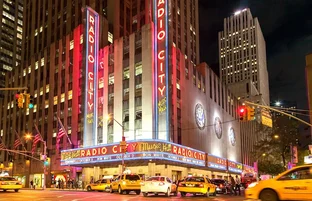
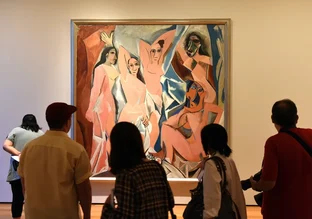
Midtown West is also home to some of the city's most revered museums and cultural institutions, including Carnegie Hall, the Museum of Modern Art, and Radio City Music Hall, to name just a few.

Midtown East & Murray Hill -- Midtown East, the area including Fifth Avenue and everything east from 34th to 59th streets, is the more upscale side of the Midtown map. This side of town is short of subway trains, served primarily by the Lexington Avenue 4, 5, 6 line.

Midtown East is where you'll find the city's finest collection of grand hotels, mostly along Park Avenue and near the park at the top of Fifth. The stretch of Fifth Avenue from Saks at 49th Street, extending to the 24-hour Apple Store and FAO Schwarz at 59th Street, is home to the city's most high-profile haute shopping, including Tiffany & Co. and Bergdorf Goodman, but more midprice names, such as Banana Republic and Gap, have moved their stores in over the last few years. The stretch of 57th Street between Fifth and Lexington avenues is also known for high-fashion boutiques (Chanel, Dior) and high-ticket galleries, but change is underway since names like Niketown have squeezed in. You'll find plenty of spillover along Madison Avenue, a great strip for shoe shopping in particular.

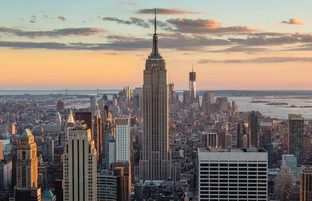
Magnificent architectural highlights include the recently repolished Chrysler Building, with its stylized gargoyles glaring down on passersby; the Beaux Arts tour de force that is Grand Central Terminal; St. Patrick's Cathedral; and the glorious Empire State Building.

Far east, swank Sutton and Beekman places are enclaves of beautiful town houses, luxury living, and pocket parks that look out over the East River. Along this river is the United Nations, which isn't officially in New York City, or even the United States, but on a parcel of international land belonging to member nations.

Claiming the territory east from Madison Avenue, Murray Hill begins somewhere north of 23rd Street (the line btw. it and Gramercy Park is fuzzy), and is most clearly recognizable north of 30th Street to 42nd Street. This brownstone-lined quarter is largely a quiet residential neighborhood, most notable for its handful of good budget and midprice hotels. The stretch of Lexington Avenue in the high 20s is known as Curry Hill and has usurped the East Village's Little India as the destination for inexpensive, high-quality Indian and Pakistani food.

Uptown

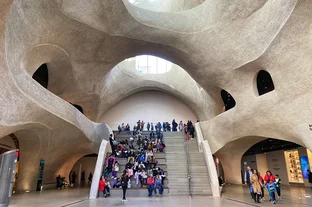
Upper West Side -- North of 59th Street and encompassing everything west of Central Park, the Upper West Side contains Lincoln Center, arguably the world's premier performing-arts venue; the Time Warner Center with its upscale shops such as Hugo Boss, A/X Armani, and Sephora; Jazz at Lincoln Center; the Mandarin Oriental Hotel; the gargantuan Whole Foods Market, and possibly the most expensive food court in the world, with restaurants such as Masa and Per Se. The Upper West Side is also the home of the American Museum of Natural History, whose Dinosaur Halls and magnificent Rose Center for Earth and Space garner rave reviews. You'll also find a growing number of midprice hotels, whose larger-than-Midtown rooms and nice residential location make them some of the best values - and some of our favorite places to stay - in the entire city.

Unlike the more stratified Upper East Side, the Upper West Side is home to an egalitarian mix of middle-class yuppiedom, laid-back wealth (lots of celebs and media types call the grand apartments along Central Park West home), and ethnic families here from before gentrification. The neighborhood runs all the way up to Harlem, around 125th Street, and encompasses Morningside Heights, where you'll find Columbia University and the perennial construction project known as the Cathedral of St. John the Divine.

But prime Upper West Side - the part you're most likely to explore - is the area running from Columbus Circle at 59th Street into the 80s, between the park and Broadway. North of 59th Street is where Eighth Avenue becomes Central Park West, the eastern border of the neighborhood (and the western border of Central Park); Ninth Avenue becomes Columbus Avenue, lined with attractive boutiques and cafes; and Tenth Avenue becomes Amsterdam Avenue, less charming than Columbus to the east and less trafficked than bustling Broadway (whose highlights are the gourmet megamarts Zabar's and Fairway) to the west; still, Amsterdam has blossomed into quite a happening restaurant-and-bar strip over the last couple of years. You'll find Lincoln Center in the mid-60s, where Broadway crosscuts Amsterdam.

Two major subway lines service the area: The 1, 2, 3 line runs up Broadway, while the B and C trains run up Central Park West, stopping at the Dakota apartments (where John Lennon was shot and Yoko Ono still lives) at 72nd Street, and at the Museum of Natural History at 81st Street.

Upper East Side -- North of 59th Street and east of Central Park is some of the city's most expensive residential real estate. This is New York at its most gentrified: Walk along Fifth and Park avenues, especially between 60th and 80th streets, and you're sure to encounter some of the wizened WASPs and Chanel-suited socialites that make up the most rarefied of the city's population. Madison Avenue, from 60th Street well into the 80s, is the moneyed crowd's main shopping strip, recently vaunting ahead of Hong Kong's Causeway Bay to become the most expensive retail real estate in the world - so bring your platinum card. You can also use it to stay at one of the neighborhood's luxurious hotels, such as the Carlyle or the Plaza Athénée, or to dine at four-star wonders such as Caravaggio and Daniel.

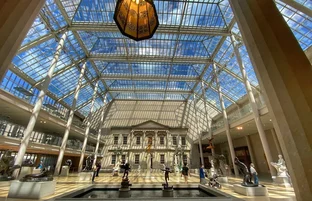
The main attraction of this neighborhood is Museum Mile, the stretch of Fifth Avenue fronting Central Park that's home to no fewer than 10 terrific cultural institutions, including Frank Lloyd Wright's Guggenheim, and anchored by the mind-boggling Metropolitan Museum of Art. But the elegant rows of landmark town houses are worth a look alone: East 70th Street, from Madison east to Lexington, is one of the world's most charming residential streets. If you want to see where real people live, move east to Third Avenue and beyond; that's where affordable restaurants and active street life start popping up.

A second subway line is under construction on and underneath Second Avenue, but years away from completion. For now, the Upper East Side is served solely by the crowded Lexington Avenue line (4, 5, 6 trains), so wear your walking shoes (or bring taxi fare) if you're heading up here to explore.

Harlem -- Harlem has benefited from a dramatic image makeover in the last few years, and, with new restaurants, condos, clubs, and stores, is becoming a neighborhood in demand.

Harlem is actually several areas. Harlem proper stretches from river to river, beginning at 125th Street on the West Side, 96th Street on the East Side, and 110th Street north of Central Park. East of Fifth Avenue, Spanish Harlem (El Barrio) runs between East 100th and East 125th streets. Harlem proper, in particular, is benefiting greatly from the revitalization that has swept so much of the city, with national-brand retailers moving in, restaurants and hip nightspots opening everywhere, and visitors arriving to tour historic sites related to the golden age of African-American culture, when great bands such as the Count Basie and Duke Ellington orchestras played the Cotton Club and Sugar Cane Club, and literary giants such as Langston Hughes and James Baldwin soaked up the scene.

Some houses date from a time when the area was something of a country retreat, and represent some of the best brownstone mansions in the city. On Sugar Hill (from 143rd to 155th sts., btw. St. Nicholas and Edgecombe aves.) and Striver's Row (W. 139th St., btw. Adam Clayton Powell Jr., and Frederick Douglass blvds.) are a significant number of fine town houses. For cultural visits, there's the Morris-Jumel Mansion, the Schomburg Center, the Studio Museum, and the Apollo Theater.

You'll find 125th Street a fun place to shop, with its mix of such national chains as Old Navy standing side by side with emporiums of hip-hop fashion.

By all means, come see Harlem - it's one of the city's most vital, historic neighborhoods, and no other feels quite so energized right now. Your best bet for seeing all the sights is to take a guided tour; if you head up on your own, come in daylight. Don't wander thoughtlessly, especially at night. If you head up after dark to a restaurant or nightspot, be clear and confident about where you're going, and stay alert.

Washington Heights & Inwood -- At the northern tip of Manhattan, Washington Heights (the area from 155th to Dyckman sts., with adjacent Inwood running to the tip) is home to a large segment of Manhattan's Latino community, plus an increasing number of yuppies who don't mind trading a half-hour subway commute to Midtown for lower rents. Fort Tryon Park and the Cloisters are the two big reasons for visitors to come up this way. The Cloisters houses the Metropolitan Museum of Art's stunning medieval collection, in a building perched atop a hill, with excellent views across the Hudson to the Palisades. Committed off-the-beaten-path sightseers might also want to visit the Dyckman Farmhouse, a historic jewel built in 1783 and the only remaining Dutch Colonial structure in Manhattan.


Back to Top


Maps

Note: This information was accurate when it was published, but can change without notice. Please be sure to confirm all rates and details directly with the companies in question before planning your trip.

Related Features
Deals & News


Destination Guide
Destination Guide Destination Guide Destination Guide
Destination Guide Destination Guide Frommer's New York City 2012 Destination Guide Frommer's New York City 2012

Author: Brian Silverman
Pub Date: September 21, 2011

Learn More
Destination Guide Destination Guide Destination Guide Related Titles:
AARP Catskill Mountain Region, New York State: ShortCuts
Destination Guide
AARP New York City 2012
Destination Guide
AARP New York State, 5th Edition
Destination Guide
Destination Guide Destination Guide
Destination Guide Destination Guide Destination Guide
Destination Guide
Destinations
Destinations
 
 
Home > Destinations > North America > USA > New York State > New York City > Neighborhoods in Brief