Home > Destinations > North America > USA > New York State > New York City > Getting to Know > City Layout
Bookstore Travel Talk - Our Message Boards Tips and Tools Book a Trip Deals and News Trip Ideas, Activities, Lifestyles Hotels Destinations Frommers.com Home
Frommer's - The best trips start here. Frommer's - The best trips start here.
Sign up for our FREE Newsletters! Win a FREE Trip
  Email This Article Email Print This Article Print Get Frommer's RSS Feed RSS

City Layout

Open the sheet map that comes with this book and you'll see that the city is comprised of five boroughs: Manhattan, where most of the visitor action is; the Bronx, the only borough connected to the mainland United States; Queens, where Kennedy and LaGuardia airports are and which borders the Atlantic Ocean and occupies part of Long Island; Brooklyn, south of Queens, which is also on Long Island and is famed for its attitude, accent, and Atlantic-front Coney Island; and Staten Island, bordering Upper New York Bay on one side and the Atlantic Ocean on the other.

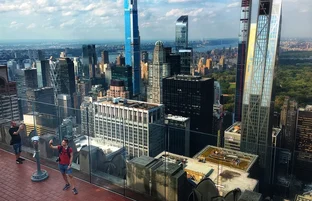
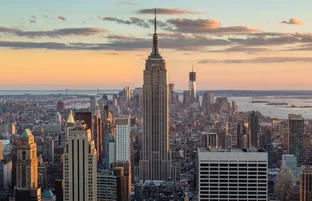
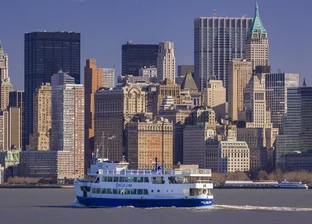
When most visitors envision New York, they think of Manhattan, the long finger-shaped island pointing southwest off the mainland -- surrounded by the Harlem River to the north, the Hudson River to the west, the East River (really an estuary) to the east, and the fabulous expanse of Upper New York Bay to the south. Despite the fact that it's the city's smallest borough (14 miles long, 2 1/4 miles wide, 22 sq. miles), Manhattan contains the city's most famous attractions, buildings, and cultural institutions. For that reason, almost all of the accommodations and restaurants suggested in this book are in Manhattan.

In most of Manhattan, finding your way around is a snap because of the logical, well-executed grid system by which the streets are numbered. If you can discern uptown and downtown, and East Side and West Side, you can find your way around pretty easily. In real terms, uptown means north of where you happen to be, and downtown means south, although sometimes these labels have vague psychographic meanings (generally speaking, "uptown" chic vs. "downtown" bohemianism).

Avenues run north-south (uptown and downtown). Most are numbered. Fifth Avenue divides the East Side from the West Side of town and serves as the eastern border of Central Park north of 59th Street. First Avenue is all the way east and Twelfth Avenue is all the way west. The three most important unnumbered avenues on the East Side you should know are between Third and Fifth avenues: Madison (east of Fifth), Park (east of Madison), and Lexington (east of Park, just west of Third). Important unnumbered avenues on the West Side are Avenue of the Americas, which all New Yorkers call Sixth Avenue; Central Park West, which is what Eighth Avenue north of 59th Street is called as it borders Central Park on the west (hence the name); Columbus Avenue, which is what Ninth Avenue is called north of 59th Street; and Amsterdam Avenue, or Tenth Avenue north of 59th.

Broadway is the exception to the rule -- it's the only major avenue that doesn't run uptown-downtown. It cuts a diagonal path across the island, from the northwest tip down to the southeast corner. As it crosses most major avenues, it creates squares (Times Sq., Herald Sq., Madison Sq., and Union Sq., for example).

Streets run east-west (crosstown) and are numbered consecutively as they proceed uptown from Houston (pronounced House-ton) Street. So to go uptown, simply walk north of, or to a higher-numbered street than, where you are. Downtown is south of (or a lower-numbered street than) your current location.

As I've already mentioned, Fifth Avenue is the dividing line between the East Side and West Side of town (except below Washington Sq., where Broadway serves that function). On the East Side of Fifth Avenue, streets are numbered with the distinction "East"; on the West Side of that avenue they are numbered "West." East 51st Street, for example, begins at Fifth Avenue and runs east to the East River, while West 51st Street begins at Fifth Avenue and runs west to the Hudson River.

If you're looking for a particular address, remember that even-numbered street addresses are on the south side of streets and odd-numbered addresses are on the north. Street addresses increase by about 50 per block starting at Fifth Avenue. For example, nos. 1 to 50 East are just about between Fifth and Madison avenues, while nos. 1 to 50 West are just about between Fifth and Sixth avenues. Traffic generally runs east on even-numbered streets and west on odd-numbered streets, with a few exceptions, such as the major east-west thoroughfares -- 14th, 23rd, 34th, 42nd, 57th, 72nd, 79th, 86th, and so on -- which have two-way traffic. Therefore, 28 W. 23rd St. is a short walk west of Fifth Avenue; 325 E. 35th St. would be a few blocks east of Fifth.

Avenue addresses are irregular. For example, 994 Second Ave. is at East 51st Street, but so is 320 Park Ave. Thus, it's important to know a building's cross street to find it easily. If you don't have the cross street and you want to figure out the exact location using just the address, use the Manhattan Address Locator, later in this chapter.

Unfortunately, the rules don't apply to neighborhoods in lower Manhattan, south of 14th Street -- such as Wall Street, Chinatown, SoHo, TriBeCa, and the Village -- since they sprang up before engineers devised this brilliant grid scheme. A good map is essential when exploring these areas.

Street Maps -- You'll find a useful pullout map of Manhattan at the back of this book. There's also a decent one available for free as part of the Official NYC Visitor Kit if you write ahead for information; you can also pick it up for free at the visitor centers listed above.

Even with all these freebies at hand, I suggest investing in a map with more features if you really want to zip around the city like a pro. Hagstrom maps are my favorites because they feature block-by-block street numbering -- so instead of trying to guess the cross street for 125 Prince St., you can see right on your map that it's Greene Street. Hagstrom and other visitor-friendly maps are available at just about any good bookstore, including the Barnes & Noble and Borders branches around town. You might also want to look for The New York Map Guide: The Essential Guide to Manhattan (Penguin), by Michael Middleditch, a 64-page book that maps the entire city, including attractions, restaurants, and nightlife spots.

Because there are always disruptions or changes in service, don't rely on any subway map that hasn't been printed by the Metropolitan Transit Authority.

Getting Oriented

I've indicated the cross streets for every destination, but be sure to ask for the cross street (or avenue) if you're calling for an address.

When you give a taxi driver an address, always specify the cross streets. New Yorkers, even most cab drivers, probably wouldn't know where to find 994 Second Ave., but they do know where to find 51st (street) and Second (avenue). If you're heading to the restaurant Aquavit, for example, tell them that it's on 55th Street between Madison and Park avenues. The exact number (in this case, no. 65) is given only for further precision.

Manhattan Address Locator

To locate avenue addresses, cancel the last figure, divide by 2, and add (or subtract) the key number below. The answer is the nearest numbered cross street, approximately.

Avenue A: add 3

Avenue B: add 3

Avenue C: add 3

First Avenue: add 3

Second Avenue: add 3

Third Avenue: add 10

Sixth Avenue: subtract 12

Eighth Avenue: add 9

Ninth Avenue: add 13

Tenth Avenue: add 14

11th Avenue: add 15

Amsterdam Avenue: add 59

Columbus Avenue: add 59 or 60

Lexington Avenue: add 22

Madison Avenue: add 27

Park Avenue: add 34

Park Avenue South: add 8

West End Avenue: add 59

York Avenue: add 4

Note special instructions for finding address locations on the following:

Fifth Avenue

63 to 108: add 11

109 to 200: add 13

201 to 400: add 16

401 to 600: add 18

601 to 775: add 20

776 to 1286: cancel last figure of house number and subtract 18 (do not divide house number by 2)

1310 to 1494: cancel last figure of house number. For 1310, subtract 20, and for every additional 20 street numbers, increase deduction by 1

Seventh Avenue

1 to 1800: add 12

above 1800: add 20

Broadway

Anything from 1 to 754 is south of 8th Street, and hence a named street.

756 to 846: subtract 29

847 to 953: subtract 25

above 953: subtract 31

Central Park West

Cancel last figure and add 60

Riverside Drive

Cancel last figure and

Up to 567: add 72

568 and up: add 78


Back to Top


Note: This information was accurate when it was published, but can change without notice. Please be sure to confirm all rates and details directly with the companies in question before planning your trip.


  Email This Article Email Print This Article Print Get Frommer's RSS Feed RSS
Frommer's New York City 2008 Frommer's New York City 2008

Author: Brian Silverman
Pub Date: September 04, 2007
Price: $17.99

Buy Now!
Related Titles:
Frommer's 24 Great Walks in New York, 1st Edition
Frommer's Irreverent Guide to Manhattan, 6th Edition
Frommer's Memorable Walks in New York, 6th Edition
Sponsored Links: What's This?
Summer Splendour at The Peninsula - special rates and exceptional benefits
Add Frommers.com RSS Feed  Add Frommers.com RSS Feed (What's This?)
Add Frommers.com Deals & News to Your Web Site
Add to My Yahoo!     Add to My MSN     More RSS Readers
Add Frommers.com Podcast Add Frommers.com Podcast (What's This?)
Home > Destinations > North America > USA > New York State > New York City > Getting to Know > City Layout