|
The Performing ArtsNobody does theater better than New York. No other city—not even London—has a big-ticket theater scene with so much breadth and depth, with so many diverse alternatives. Broadway, of course, gets the most ink and airplay. It’s where you’ll find the big stage productions, from crowd-pleasing warhorses like The Lion King to more recent hits like Jersey Boys. But today’s scene is thriving beyond the bounds of Broadway—smaller, “alternative” theater fills spaces large and small. With bankable stars on stage, crowds lining up for hot tickets, and hits popular enough to generate major-label cast albums, Off-Broadway isn’t just for culture vultures anymore. (And Off-Off Broadway is the cheapest theater in town, usually around only $20 a ticket.) Helping to ensure the recent success of the New York theater scene has been the presence of movie and television stars such as Scarlett Johanson, Julianne Moore, Jude Law, Nathan Lane, Catherine Zeta-Jones, Denzel Washington, James Gandolfini, and Daniel Radcliffe (plus directors like Sam Mendes and Julie Taymore). But keep in mind that stars’ runs are often limited, and tickets tend to sell out fast. If you hear that there’s a celeb you’d like to see on the New York stage, be sure to jump on those ticket-buying plans. (Check to see how long a star is contracted for a role, and if he or she is playing all eight shows a week.) The Basics The terms Broadway, Off-Broadway, and Off-Off Broadway refer to theater size, pay scales, and other arcane details. Most of the Broadway theaters are in Times Square, around the “Great White Way” (so named for its millions of lights), but not directly on it. Instead, you’ll find them dotting the side streets that intersect Broadway, mostly in the mid-40s between Sixth and Eighth avenues, but running north as far as 53rd Street. There’s even a Broadway theater fully outside of Times Square: the Vivian Beaumont in Lincoln Center, at Broadway and 65th Street. Off-Broadway, on the other hand, is less about location and more about the contract the production has with Actors Equity (the actors’ union). These productions usually are staged on the eight-shows-a-week performance schedule for longer runs. The theaters are all over town, but there are mini–Theater Districts within Midtown and on the Upper West Side, as well as downtown. Off-Off Broadway shows tend to be more avant-garde, experimental, and/or nomadic, generally in theaters with less than 100 seats, with fewer performances overall—and many of them staging brilliant works by yet-undiscovered talents. Broadway shows tend to keep pretty regular schedules. There are usually eight shows a week: Tuesday through Saturday evenings, plus matinees on Wednesday, Saturday, or Sunday. Evening shows are usually at 8pm, while matinees are usually at 2pm on Wednesday and Saturday, and 3pm on Sunday, but schedules can vary, especially Off and Off-Off Broadway. In recent years, especially with stagings that are popular with a younger audience, shows sometimes offer more matinees, or earlier curtain times for evening performances, particularly shows early in the work week (a 7:30pm curtain on a Tues night is a relief!). Broadway shows usually start right on time, so if you arrive late, you may have to wait until after the first act to be ushered to your seat (and with more and more shows sans intermission, you could have to watch the whole thing on a monitor in the lobby—your own Broadway tragedy). Ticket prices for Broadway shows vary dramatically. Expect to pay a lot for good seats; the high end for any given show is likely to be $100 or more (though some shows have charged “premium” prices for the very best seats, competing with the licensed ticket brokers). The cheapest end of the price range can be as low as $20 or as high as $50, depending on the theater configuration (or if they offer student, standing-room, or same-day rush tickets). Matinee tickets are cheaper than evening tickets, and midweek evenings are usually cheaper than weekend evening performances. If all tickets are the same price or close to it, you can pretty much count on all of the seats being pretty good. But if you’re buying tickets at the low end of a wide range, be wary of obstructed-view seats. Price is your barometer. These historic theaters (most Broadway theaters date from the early 20th century) are architecturally stunning both inside and out—the drawback may mean sitting behind a column that partially blocks the stage, seats way off to the side or upper rear mezzanine, and/or a lack of legroom. Tall folks should try for orchestra aisle seats; theater fanatics should splurge on reliably good seats. Off-Broadway and Off-Off Broadway shows tend to be cheaper, with tickets as low as $10 or $15. However, seats for the most established plays and those with star power can command prices as high as $50 to $75. Don’t let price be a deterrent to enjoying the theater. There are ways to pay less if you’re willing to make the effort and be flexible, especially closer to curtain time. Read on. Top Ticket-Buying Tips Before You Leave Home -- Phone ahead or go online to buy tickets to the most popular shows as far in advance as you can—in the case of such shows as The Lion King (yes, even after all these years), it’s never too early, and it will yield much better seats. Buying tickets can be simple if the show you want to see isn’t sold out. You need only call or surf to Telecharge (tel. 212/239-6200; www.telecharge.com), which handles most Broadway and Off-Broadway shows and some concerts, or Ticketmaster (tel. 212/307-4100; www.ticketmaster.com), which also handles Broadway and Off-Broadway shows and most concerts. You will pay a service fee per ticket, and sometimes a “restoration” fee for a show in an older theater. Theatre Direct International (TDI) is a ticket broker that sells tickets for select Broadway and Off-Broadway shows, including some of the most popular crowd-pleasers, such as Jersey Boys and Wicked!, directly to individuals and travel agents. Check to see if they have seats to the shows you’re interested in by calling tel. 800/BROADWAY [276-2392] or 212/541-8457; you can also order tickets through TDI via their commercial website, www.broadway.com. (Disregard the discounted prices, unless you’re buying for a group of 20 or more.) Because there’s a minimum service charge of $15 per ticket, you’ll definitely do better by trying Ticketmaster or Telecharge first; but because they act as a consolidator, TDI may have tickets left for a specific show even if the major outlets don’t. Another reputable ticket broker is the international Keith Prowse & Co. (tel. 800/669-8687; www.keithprowse.com). For a list of other licensed ticket brokers recommended by the New York Convention & Visitors Bureau (NYCVB), get a copy of the Official NYC Guide. If you don’t want to pay a service charge, head to the theater box office directly; just be sure to go during their limited open hours. Broadway theaters don’t sell tickets over the telephone—except for the always excellent Roundabout Theatre Company (tel. 212/719-1300; www.roundabouttheatre.org), with its $6-per-ticket handling fee—but a good number of Off-Broadway theaters do. Also, before you call a broker to snag tickets to a hot show, consider utilizing the concierge at the hotel where you’ll be staying. If you’ve chosen a hotel with a well-connected concierge, he or she may be able to have tickets waiting for you when you check in—for a premium, of course. Online Sources for Theatergoers & Performing-Arts Fans -- Some of your best, most comprehensive, and up-to-date information sources for what’s going on about town are in cyberspace. Three competing commercial sites—Broadway.com (www.broadway.com), Playbill Online (www.playbill.com), and TheaterMania (www.theatermania.com)—offer complete information on Broadway and Off-Broadway shows, and links to their ticket-selling agencies. Each has its own free online club, for which you register your e-mail address in exchange for savings on advance-purchase Broadway and Off-Broadway tickets. Discounts range from a few bucks up to 50% off regular ticket prices. Subscribing to e-mail newsletters also helps you keep track of changing offers—especially handy if you’re a New York regular or have a longer stay. The Playbill Club was the first of the bunch, though TheaterMania’s TM Insider and Broadway.com’s discount services are similar enough to compare and track down the best deals. The Broadway League (tel. 888/BROADWAY [276-2392]; www.livebroadway.com) is another now-playing resource, but only points you in the direction of special offers and discounts before sending you off to the box office, Telecharge or Ticketmaster. It’s also the host of www.ilovenytheater.com, home to show details and their venues, and special-partner offers for nearby restaurants and hotels. Free Broadway shows, if you can believe it, await kids ages 6 to 18 (with purchase of a full-price adult ticket) at www.kidsnightonbroadway.com—though you have to fork over your address and stuff to join the League’s Broadway Fan Club. With the promotions only for the first Tuesday and Wednesday shows of each month, you should also jump on this deal weeks or months in advance. When You Arrive -- Once you arrive in the city, getting your hands on tickets can take some street smarts—and failing those, cold hard cash. Even if it seems unlikely that seats are available, always call or visit the box office and try for single seats, since they’re often easiest to score. You should also try the Broadway Concierge & Ticket Center, run by the League of American Theatres and Producers (the same people behind www.livebroadway.com, above) at the Times Square Visitor’s Center, 1560 Broadway, between 46th and 47th streets (Mon–Fri 9am–7pm; Sat–Sun 8am–8pm; hours subject to seasonal changes; www.timessquarenyc.org). They may have tickets for otherwise sold-out shows, both for advance and same-day purchase, and charge only about $5 extra per ticket. Even if saving money isn’t an issue for you, check the boards at the TKTS Booth in Times Square for seats to same-day shows. In addition, your hotel concierge may be able to arrange tickets for you. These are usually purchased through a broker and a premium will be attached, but they’re usually good seats and you can count on them being legitimate. (A $20 tip to the concierge for this service is reasonable—maybe more if the tickets are for a hot show.) If you want to deal with a licensed broker directly, Keith Prowse & Co. has a local office that accommodates drop-ins at 234 W. 44th St., Ste. 1000, between Seventh and Eighth avenues (tel. 212/398-4175; Mon–Sat 9am–8pm, Sun noon–7pm). If you buy from one of the scalpers selling tickets in front of the theater doors, you’re taking a risk. They may be perfectly legitimate—say, a couple from the ‘burbs whose companions couldn’t make it for the evening—but they could be swindlers passing off fakes for big money. It’s probably not a risk worth taking. One preferred insiders’ trick is to make the rounds of Broadway theaters at about 6pm, when unclaimed house seats are made available to the public. These tickets—reserved for VIPs, friends of the cast, the press, or other hangers-on—offer great locations and are sold at face value. Also, note that Monday is often a good day to cop big-name show tickets. Though most theaters are dark on that day, some of the most sought-after choices aren’t. Locals are usually at home on the first night of the workweek, so odds favor the avid ticket hunter. But generally, your chances will always be better on weeknights, or for Wednesday matinees, rather than weekends. Note: If you’re in town especially to see a big star in a show, check to see that said big star is playing all eight shows a week. While most big stars’ contracts (think Catherine Zeta-Jones or Denzel Washington) require them to play every performance, if it’s a vocally demanding role, they may hand the matinees off to their understudies. Reduced-Price Ticket Deals -- The cheapest tickets are found in advance. If you can be flexible, consider purchasing them before scheduling your trip to New York. You can also buy reduced-price theater tickets over the phone, in person, or at the box office, or by joining one or more of online theater clubs. The “membership” (which is mostly just giving up your e-mail) is free and can score you discounts of up to 50% on select Broadway and Off-Broadway shows. In addition to the sites listed above, BroadwayBox.com is a source for the all-important “discount codes” you can plug into ticket-selling sites, in some cases for significant discounts. (Discount codes frequently expire, get pulled or change, so don’t rely on them until your purchase is complete.) Broadway shows—even blockbusters—sometimes have a limited number of cheaper tickets set aside for students and seniors; call the box office directly to inquire. Some popular shows have “lotteries” for cheaper tickets each day; others offer student, general “rush,” or “standing room” tickets, which are available only on the day of the show. Playbill.com usually keeps a comprehensive list of the rush/student/lottery and other special rates. The best deal in town on same-day tickets for both Broadway and Off-Broadway shows is at the Times Square Theatre Centre, better known as the TKTS booth, run by the nonprofit Theatre Development Fund in the heart of the Theater District . Its longtime home at Duffy Square, 47th Street and Broadway, was completely rebuilt in 2009. Now above the ticket-selling windows, you can relax and take in the “crossroads of the world” on the illuminated red stadium seats. Windows are open from 3 to 8pm (opening at 2pm on Tues) for evening performances, 10am to 2pm for Wednesday and Saturday matinees, and from 11am to 8pm on Sunday for all performances. You can also head to the two other TKTS booths for shorter lines. At the Times Square Booth, TKTS offers a dedicated line for non-musicals. Any show with a “P” next to the title on the board is also available at the “Play Express” window. Play Express lines are almost always shorter than the lines for musicals. But overall, depending on the season (especially around the winter holidays), there’s often a huge queue at the Times Square location, so show up early for the best availability and be prepared to wait (the usual story for big NYC entertainment)—but frankly, the crowd is all part of the fun. If you don’t care much what you see and you’d just like to go to a show, you can walk right up to the window later in the day and something’s always available. The shows available change throughout the day, and who knows—you might score a ticket to a big hit just before curtain time. The ABCs of TDF -- TDF is the Theatre Development Fund. They offer many programs for theater professionals, children, families, and for people with disabilities, but the most visible aspect of TDF, whether you’re a New Yorker who loves to go to the theater or a visitor who wants to see as many shows as you can pack into a long weekend, is "the booths," the three TKTS locations in NYC. Starting in 1973, in the heart of the Theater District at Father Duffy Square, the organization started selling half-price, same-day tickets for Broadway and Off-Broadway shows. In 1983, TKTS added a downtown branch, and 2008 saw the addition of a TKTS outlet in Brooklyn. Here's the deal:
All locations sell tickets at 50%, 40%, 30%, and 20% off full-price (plus a $4 per-ticket service charge, which helps support other TDF services and programs). The booths accept credit cards, cash, traveler's checks, or TKTS Gift Certificates. And you don’t even have to trudge to Midtown, South Street Seaport, or MetroCenter to find out what’s on the “board.” When you subscribe to the TKTS Today e-mail, you’ll get a daily message listing what’s available at the downtown and Brooklyn booths on and Off-Broadway, the curtain time(s), and the daily operating hours. Of the three booths, Times Square/Father Duffy can have the longest wait, particularly during holidays and other high-visitor periods, so if you’re comfortable navigating the subway, it's definitely worth the trip to get the tickets downtown or in Brooklyn. Here are a few more tips and hints for making your TKTS booth experience go more efficiently:
Kids Take the Stage: Family-Friendly Theater The family-friendly theater scene has been flourishing over the past years. There’s so much going on that it’s best to check Time Out New York Kids, New York magazine, or the Friday New York Times for current listings and special offers. Besides larger-than-life Broadway shows, the following offer some dependable kid-targeted entertainment options. The New Victory Theater, 229 W. 42nd St., 10th Floor, between Seventh and Eighth avenues (tel. 646/223-3010; www.newvictory.org), is a full-time family-oriented performing-arts center, and stages everything from jugglers to puppet masters to Shakespeare for kids. Since 1958 the Paper Bag Players (tel. 212/353-2332; www.paperbagplayers.org) have performed funny tales for children ages 4 to 9 in a set made from bags and boxes, at a few different theaters around the city. It’s one of the top kid-oriented companies in the country, so look into upcoming, always affordable performances. TADA! Youth Theater, 15 W. 28th St., between Fifth Avenue and Broadway, Third Floor (tel. 212/252-1619; www.tadatheater.com), is a vivacious youth ensemble that performs musicals and plays with a multiethnic perspective for kids, including teens, and their families. The Swedish Cottage Marionette Theatre (tel. 212/988-9093; www.centralpark.org) puts on marionette shows for kids at its 19th-century Central Park theater throughout the year. Reservations are a must. The “World Voices Program” of the New Perspectives Theatre, 456 W. 37th St., at Tenth Avenue (tel. 212/630-9945; www.newperspectivestheatre.org), has different seasonal puppet shows based on famous figures and fables from different world cultures. While David Mamet hardly seems like a playwright for the kiddies, the “Atlantic for Kids” series is making a go of it at the Atlantic Theater Company, 336 W. 20th St., between Eighth and Ninth avenues (tel. 212/645-8015; www.atlantictheater.org), which Mamet co-founded with Academy Award–nominated actor William H. Macy. Another award-winning troupe that excels at youth theater is the Vital Theatre Company, 2162 Broadway, between 76th and 77th streets (tel. 212/579-0528; www.vitaltheatre.org). It’s definitely worth seeing what’s on, and maybe making time for your child to participate in a postshow workshop. Look for Young People’s Concerts and Kidzone Live!, in which kids get to interact with orchestra members prior to curtain time, at the New York Philharmonic (www.nyphil.org/education). Also check to see what’s on for the entire family at Carnegie Hall (www.carnegiehall.org), which offers family concerts at prices as low as $6; plus the CarnegieKids program, which introduces kids ages 3 to 6 to basic musical concepts through a 45-minute music-and-storytelling performance. For kid-friendly classical music, see what’s on at Bargemusic, which presents occasional chamber-music concerts geared for kids. And don’t forget Jazz for Young People, Wynton Marsalis’s stellar family concert series and curriculum at Jazz at Lincoln Center (www.jalc.org/educ). More Dramatic Venues Worth Seeking Out When you want a spectacle, there’s no place like Broadway, home to the top-dollar ticket. But this is New York, where you can see amazing stage productions and performers sometimes for less than the cost of a cinema ticket (that’s around $14, as of early 2011). Off-Broadway, expect to pay $20 to $65 or so for tickets; Off-Off Broadway rarely charges more than $20—a price that rarely lets you down, even if the show does. One favorite local tip is to volunteer-usher at Atlantic, Signature, and Roundabout Theatres, and a few others, where you can hand out playbills and in return, see the show for free. See each company’s website for information about how far ahead you should sign up, and whether to do so by phone, e-mail, or in-person. Where do you find the hidden gems? The Village Voice (which sponsors the annual Obies, or Off-Broadway Awards) is a good source. Time Out New York has excellent listings and capsule descriptions for major Off-Broadway productions, as well as a decent listing of Off-Off shows. For more offerings Off-Off Broadway, check the reviews on Theatermania.com (which also lets you purchase tickets and offers regular discounts) and NYTheatre.com, which probably has the most comprehensive listings and reviews of the Off-Off scene. Three resident nonprofit theaters in New York—Lincoln Center Theater, the Roundabout, and Manhattan Theatre Club (www.manhattantheatreclub.com)—present work in Broadway houses, as well as in smaller venues Off-Broadway. You’ll pay Broadway prices (or whatever discount you can get) for the best seats in the big houses, but you can also usually find special, lower prices for students or seniors or last-minute rush tickets. In their smaller spaces (MTC’s Stage II; the Roundabout’s Laura Pels Theatre; Lincoln Center’s Mitzi Newhouse), you can find good seats for less than $50 to see excellent new plays and revivals by the likes of Terrence McNally and John Patrick Shanley. Following are a few other notable Off- and Off-Off Broadway venues, but these are just the tip of the iceberg; check out the sources listed above for many, many more options. In addition to the following venues, also see what’s on at downtown faves HERE Arts Center (www.here.org), P.S. 122 (www.ps122.org), Theater for the New City (www.theaterforthenewcity.net), and the women-strong La MaMa E.T.C. (www.lamama.org), where you can see new, innovative, and experimental work by cutting-edge international artists—très New York. If you want to dig even deeper, try the Brooklyn Lyceum in Park Slope, with it’s wild mix of events (www.brooklynlyceum.com). Uptown, check out Harlem’s National Black Theatre (www.nationalblacktheatre.org), which stages African-centric plays, cabaret, and other performances.
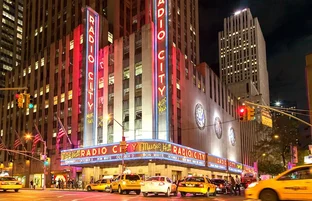
Opera, Classical Music & Dance While Broadway is the Big Apple’s greatest hit, many other performing arts also flourish in this culturally rich and entertainment-hungry town. See what’s happening at Carnegie Hall and the Brooklyn Academy of Music, two of the most esteemed and enjoyable performing-arts venues in the city. The 92nd Street Y also regularly hosts events that are worth considering, though they lean towards the academic with great speakers and panels. Operatic and symphonic companies housed at Lincoln Center are listed in our reviews, but check the center’s full calendar for its abundant offerings. Opera -- New York has grown into one of the world’s major opera centers. The season generally runs September through May, but there’s usually something going on at any time of year. Dance -- In general, dance seasons run September through February and then March through June, but there’s always something going on year-round. In addition to the major venues and troupes discussed in our listings, some other names to keep in mind are the Brooklyn Academy of Music, the 92nd Street Y, Radio City Music Hall, and Town Hall. For particularly innovative works, see what’s on at the Dance Theater Workshop, in the Bessie Schönberg Theater, 219 W. 19th St., between Seventh and Eighth avenues (tel. 212/691-6500 or 212/924-0077; www.dancetheaterworkshop.org), a first-rate launching pad since 1965. In addition to regular appearances at City Center, the American Ballet Theatre (tel. 212/362-6000; www.abt.org) takes up residence at Lincoln Center’s Metropolitan Opera House for 8 weeks each spring/early summer. The same venue also hosts such visiting companies as the Kirov, Royal, and Paris Opéra ballets. The weekly Time Out New York, available on newsstands around town, has a section dedicated to dance events around town that’s an invaluable resource to fans. Park It! Shakespeare, Music & Other Fresh-Air Fun As the weather warms, New York culture goes outside to play. Shakespeare in the Park, a New York institution since 1957, is as much a part of a New York summer as fireworks on the Fourth of July. The outdoor free event at the open-air Delacorte Theater in Central Park was the brainchild of the late Joseph Papp, former director of the Public Theater. Each summer usually features a revival of a Shakespeare play staged with a large company, including at least one or more film or TV stars—from Al Pacino to Liev Schreiber to Julia Stiles. The productions run from June to early September, and tickets are scarce. The Delacorte Theater itself, next to Belvedere Castle near 79th Street and West Drive, is a dream—on a starry night, there's no better stage in town. Tickets are distributed at the theater free on a first-come, first-served basis (two per person) at 1pm on the day of the performance. The Delacorte might have 1,881 seats, but each is a hot commodity; whatever the show, people line up next to the theater 2 to 3 hours in advance (or early in the morning if a big name is involved—a true New York cultural phenomenon). You can also sign up for the daily online ticket lottery. For more information, call the Public at tel. 212/539-8500 or Delacorte at tel. 212/535-4284, or visit www.publictheater.org. Free concerts by the New York Philharmonic and the Metropolitan Opera are held beneath the stars on Central Park’s Great Lawn and in parks throughout the five boroughs. For schedules, call the Philharmonic at tel. 212/875-5656 or the Metropolitan Opera at tel. 212/362-6000. The Philharmonic maintains a list of their upcoming gigs at www.nyphil.org; look under "Concerts & Tickets." The most active outdoor music scene in Central Park, however, is SummerStage, at Rumsey Playfield, midpark around 72nd Street. SummerStage has featured everyone from Chaka Khan to Patti Smith; recent offerings have included concerts by the Jon Spencer Blues Explosion, the Flaming Lips, and Marianne Faithfull; cabaret nights; dance companies; and more. The season usually runs from mid-June through August. Big-name shows usually charge admission, but often tickets are free (donations always encouraged). Call the hotline at tel. 212/360-2777, or visit www.summerstage.org. Beyond Central Park, more free outdoor fun includes the Bryant Park Summer Film Festival, held in Bryant Park, just behind the main branch of the New York Public Library, at Sixth Avenue between 41st and 42nd streets. Every Monday night a classic film—think Dr. Zhivago or Superman—is shown on a large screen under the stars. The lawn typically opens by 5pm for blankets and picnicking; the movie starts at dusk (about 8 or 9pm). Rain dates are Tuesdays. For the schedule and more information, call tel. 212/512-5700. The biggest free summer arts festival is way downtown, where the River to River Festival inundates lower Manhattan from June to mid-September. Stages spring up at indoor and outdoor spots like the South Street Seaport, Battery Park, and the World Financial Center, showcasing live dance, readings, and a smattering of virtually every kind music you can think of. Free indie rock shows are an increasingly impressive presence at the Seaport in particular, so check out what’s on at www.rivertorivernyc.com. Calendars of free summer events come out earlier than you’d expect, around mid-spring, so you can plan ahead. There’s also an overview of some of the city’s outdoor events at the Parks and Recreation Special Events Hot Line at tel. 888/NY-PARKS [697-2757] or 212/360-3456, or at www.nycgovparks.org under “Things to Do.”
Note: This information was accurate when it was published, but can change without notice. Please be sure to confirm all rates and details directly with the companies in question before planning your trip. Related Features Deals & News |
|